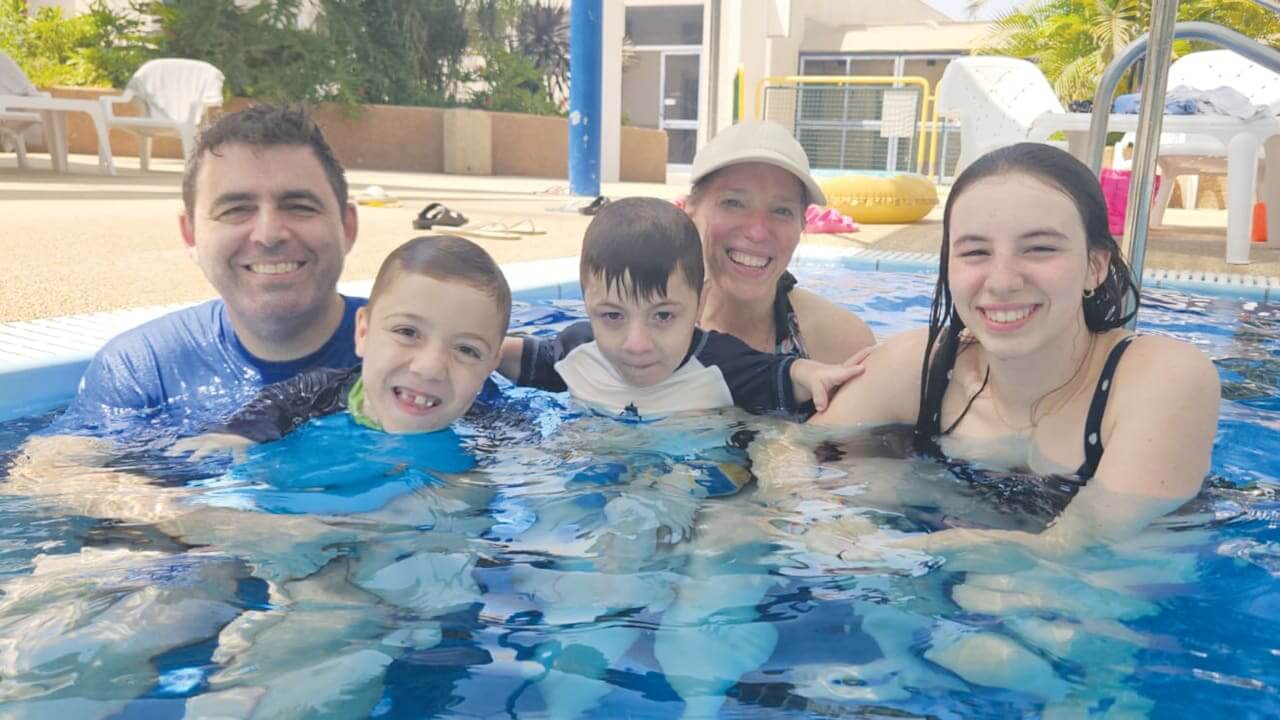
Originally appeared in Jerusalem Post Magazine on October 2, 2026
What a journey it has been from the Philadelphia suburbs and Messiah University, a private interdenominational Evangelical Christian university, to an apartment in Beersheba.
When Tiffany Schatz attended the Medical School for International Health at Ben-Gurion University of the Negev starting in 2005, living in Israel and even being Jewish were far from her mind. Now, Dr. Schatz is an olah, a Jewish mother of three, a thoracic surgeon at Soroka Medical Center, and an active member of the Beersheba musical theater community.
What a journey it has been from the Philadelphia suburbs and Messiah University, a private interdenominational Evangelical Christian university, to an apartment in Beersheba overlooking a large, beautiful park.
Schatz met Jacob, the Jewish man who would eventually become her husband, while studying for the MCATs, the medical school admission test. Schatz knew there was something special about Jacob and that they might have a future together. Nonetheless, she began her medical studies in Israel and they continued dating long distance.
“I had a crash course in Judaism in his absence,” Schatz notes playfully. “I was having really positive exposure to Jewish culture and the Jewish faith and Israel. I already had a positive outlook on Israel.”
Jacob proposed one year later and they got married the following year. “We tried to institute a lot of Jewish traditions at our wedding.”
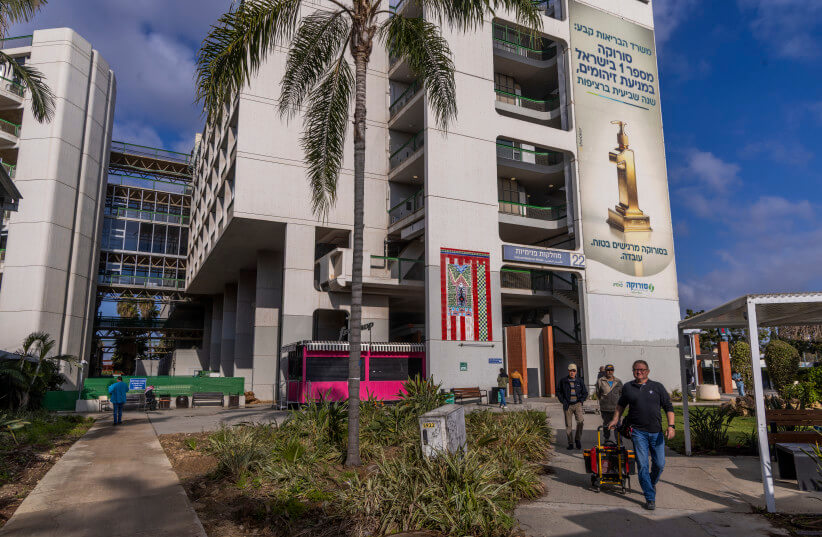
The two next came to Israel together, but their living conditions were not ideal. “It was very hot and we did not have a working air conditioner.” Schatz notes that Jacob was very clear about one thing: “I don’t think I will ever want to live here!” Tiffany reasoned that, if they were to ever return to Beersheba, they, like other professionals, would have air conditioning and a car. As far as Jacob was concerned, “Israel was off the table.”
After a year of doing research, Schatz pursued a five-year surgery residency in Waterbury, Connecticut. She marvels at the good education and training she received. Their first child and only daughter, Noa, now 16, was born there.
The next stop for the growing family was a fellowship at the Fox Chase Cancer Center in Philadelphia.
They were exploring the possibility of adopting a child, and when asked by the adoption agency, they indicated that they were open to the possibility of adopting a child with disabilities. They soon learned that Schatz was pregnant and expecting a child with significant disabilities. The Schatz family viewed Caleb’s birth as a gift from God that they were ready to receive. He is now nine.
Parenting two children, including one with high support needs – all while starting a new job – was very challenging. As they began to feel they were “figuring it out” and “coming up for air,” they learned that they were expecting a third child, a son, Eli, now seven, who also has disabilities. Schatz shares that Eli’s birth, much to her delight, “caused significant improvement” in Caleb. “He now had a brother and a playmate.”
Schatz decided to open a private practice in the Washington area to afford her greater flexibility and to balance work and home responsibilities.
When the COVID pandemic hit in 2000, they felt far from family and relocated to Philadelphia, purchasing Jacob’s childhood home, which his parents were selling and encouraged them to buy. “We had a good life and expected we’d live there forever.”
‘If I could be there to help, I wanted to be there’
THEN, OCT. 7 happened. “I heard so much about what was happening at Soroka and pictured the wards, the operating rooms, and the surgeons I knew. They were taking care of the wounded. If I could be there to help, I wanted to be there, and I signed up to be a volunteer.”
Schatz attended a webinar that discussed needs and opportunities. A presentation by Soroka Medical Center director-general Prof. Shlomi Codish both inspired her and “threw her for a loop.”
Codish thanked everyone for wanting to come and volunteer but said that it was very disruptive as doctors learn the various systems, then leave. “We really need for people to come and stay,” Codish boldly said. “It was like an arrow to my heart,” Schatz reports. “Yeah, I’ll do it. I am willing to come and stay!”
Schatz spoke a lot to herself while trying to make a decision about moving to Israel. She “spoke” about how she had decided to “throw her lot” with the Jewish people, and about how antisemitism had wreaked havoc on the Jewish people for millennia. She had a more difficult time speaking with her husband about aliyah – and waited a month.
In January 2024, Schatz shared her desire to move to Israel with Jacob. He was willing to listen and suggested that if they were going to consider it, they should be very thorough. They spoke with friends from the light opera group that Schatz had been part of in Beersheba and with a friend from Schatz’s medical school class.
They almost immediately began the aliyah process with Nefesh B’Nefesh and attended a Medix event for doctors wishing to practice medicine in Israel. The event spoke to Jacob as well. He reportedly felt “very comfortable” there. Schatz shares that gathering all of the necessary immigration documents became “like a compulsion,” and she enjoyed the feeling of making incremental progress every day.
AS THEY were making concrete plans to come on aliyah in August, they left their kids alone with relatives for the first time for an exploratory trip. Jacob’s mother was hospitalized while they were on their Israel trip – a sign that this was not the right moment for aliyah.
‘Why aren’t we there yet?’
Schatz, who had just taken herself off the on-call schedule, returned to and “ramped up” her practice. Fortunately, by January, Jacob’s mother was in better health. Schatz and Jacob checked aliyah flights and decided to make aliyah as quickly as possible. “He kicked in to high gear,” observes Schatz proudly, describing how Jacob began organizing and selling family possessions.
While some friends had cautioned against leaving school in the middle of the year, the family decided to move forward. “Fortunately, our, at the time, 14-year-old, was like super on board, and I was like, when are we going? What’s the soonest we can go? Why aren’t we there yet?”
“And so, we went in April,” reports Schatz, noting that, had they waited, the Iran war would have made their aliyah impossible. “The timing was remarkable, but it’s another piece of the remarkable story. If we had been stateside, we probably would have been like, ‘Yep, we’re not going. Never mind. That was a nice idea, but it’s not safe.’ But because we were here, we were like, we’re part of this.”
Schatz is now working as a thoracic surgeon, Jacob as a software engineer working on a start-up. Noa attends boarding school at Naale in Hod Hasharon and is now taking all classes in Hebrew – and acting, dancing, and playing piano. Caleb and Eli receive the services and support they need. “It does feel like it’s getting better and more manageable. And our kids, I think, are going to be okay.”
They are also finding their way socially. “I’m still involved with musicals. Last year, I was in the performance of the Pajama Game, and that was really fun, and I’m the producer this year.”
And they report, “We actually fit better here, because people like to have dinner at home and sit together. And it’s like we’ve slid right in, that’s exactly what we like to do – have people over and be invited to others’ homes!”
Next goal – making a few more friends who are native Hebrew speakers! ■
Tiffany Schatz, 43
From Philadelphia, PA
to Beersheba, 2025