Other

Appeared in JNS.org on October 5, 2026

Minister Katz: “In an emergency, no citizen should be left without a response.”
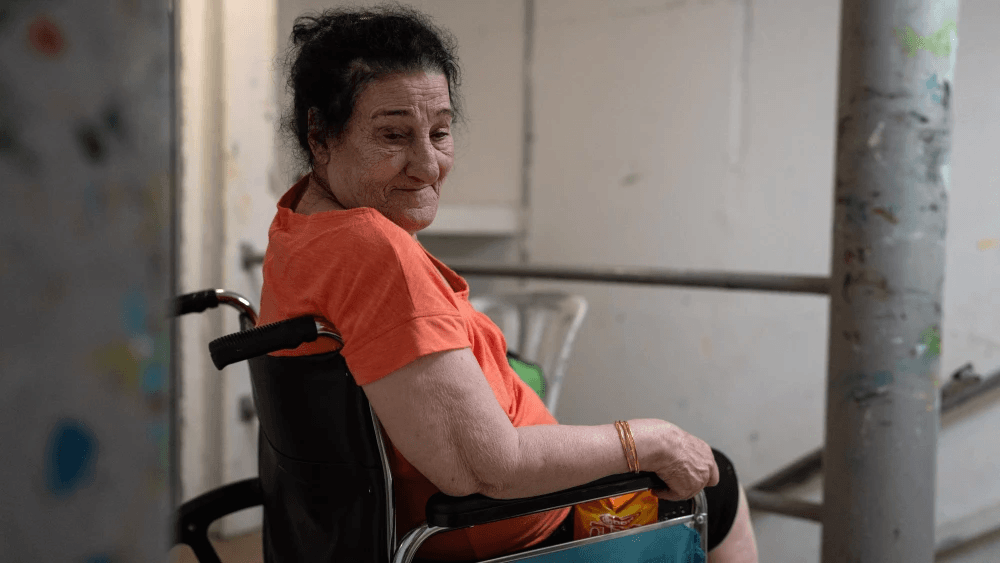
Naomi Hazon, 83, in a bomb shelter in Tel Aviv on June 13, 2025. Photo by Maya Levin/AFP via Getty Images.

(Oct. 5, 2026 / JNS) The Oct. 7, 2023, Hamas-led attacks in Israel and wars on many fronts since have continuously highlighted the many challenges people with disabilities face during time of war. Accessing bomb shelters can be difficult for those with mobility impairments and the inability to enter inaccessible shelters can be life threatening. With regulations signed on Sept. 23 by Defense Minister Israel Katz, this will soon change. The new regulation formalizes emergency response measures for people with disabilities.
The regulations regarding equal rights for people with disabilities concerning essential and life-sustaining needs during emergencies marks the completion and implementation of a comprehensive national initiative.

The initiative was led by the Defense Ministry’s National Emergency Management Authority (NEMA), in collaboration with relevant government ministries and professional bodies. Over the course of the project, five key areas were formulated to ensure the continuity of services and responses during emergencies for people with disabilities: formalizing response measures within facilities for people with disabilities; evacuation of people with disabilities; accessibility of community health services during emergencies; a dedicated information database; and a system for locating, contacting and assisting people with disabilities as well as providing essential and often life-sustaining supplies to people who choose to remain in their homes.

Katz said, “In an emergency, no citizen should be left without a response. The regulations I have signed are designed to ensure that people with disabilities receive the assistance and essential supplies they need, even while remaining in their homes. This is our responsibility as a state and our duty toward them and their families. I commend all the partners on the completion of this important initiative. Our true test lies in implementation on the ground and ensuring the aid reaches everyone who needs it.”

Shira Reifman, CEO of Keren Or: The Jerusalem Center for Children with Visual Impairments and Multiple Disabilities, said, “We welcome and applaud the recognition that people with disabilities have special concerns and needs during national emergencies. We certainly saw this to be the case during the Iran wars when Keren Or had to relocate our school—which remained open while most of the school system shut down—to a facility with sufficient bomb shelter space. This required moving standers, walkers, hoists, mattresses and trucks full of equipment to the new site. It also required us to calm and familiarize our blind students with additional complex disabilities to a new setting and physical layout.

“In addition to critical regulation, we hope that commensurate funding has been allocated for implementation. Agencies need additional staff hours to comply with new regulations, funds to build wheelchair accessible bomb shelters, and government agencies that respond quickly and efficiently to requests for help, building permits, clarifications and permissions.”

Access Israel

Yuval Wagner, chairman of Access Israel, said that his organization has been leading the effort to ensure accessibility for people with disabilities since 1999. “Legislation regarding emergency preparedness and accessibility for people with disabilities has been in the planning stages since 2006.”

Wagner shared that Access Israel has been actively lobbying the Knesset Labor and Welfare Committee, the Commission for Equal Rights of Persons with Disabilities (a statutory body under Israel’s Justice Ministry), and the Defense Ministry. Access Israel even filed a High Court petition against the Welfare Committee and the Defense Ministry to advance this issue. “Fortunately, the regulations have finally been approved and signed by the minister of defense,” Wagner said.

The organization working on the ground—handling evacuations and addressing the needs of people with disabilities living in unfortified homes under missile attacks—was Access Israel, he said. Through its Purple Vest initiative, the organization facilitated thousands of accessible evacuations and met a wide range of unique, life-saving and survival needs for people with disabilities and the elderly during wartime.

Wagner said these regulations should have been passed long ago. “Over the past three years—since the cursed events of October 7—Israel has been at war, resulting in tens of thousands of IDF soldiers and civilians suffering physical and mental injuries. Regrettably, the legislation was passed only after the fact. Israel had not been adequately prepared beforehand,” he said.

Access Israel and its Purple Vest campaign have been working to evacuate and relocate people in Israel with disabilities as well as the elderly during war time and while under missile attacks.

Wagner added, “Congratulations and appreciation go to the Ministry of Defense, the National Emergency Management Authority and all partners for the tremendous effort that led to the finalization and approval of these regulations.

“It is now vital to implement these critically important regulations. This ensures that in the event of a future war, earthquake, fire, flood or other weather-related crisis, emergency systems for assisting people with disabilities will be ready and well-practiced in providing aid and saving lives,” he said.

Read more

Israeli campers arrive at Camp Simcha in Glen Spey, N.Y., for a two-week summer session providing recreation, friendship and specialized medical support for children and young adults with serious illnesses, July 15, 2026. Credit: Chai Lifeline.

Originally appeared in Jerusalem News Syndicate on August 07, 2026.

Bike4Chai Ride supports Chai Lifeline and Camp Simcha, which provide overnight summer camping in a medically supportive environment.

When more than 700 cyclists from around the world crossed what organizers call “The World’s Greatest Finish Line” and entered Camp Simcha in Sullivan County, N.Y., on July 30 after riding up to 180 miles over two days in the annual Bike4Chai fundraiser, they were greeted by hundreds of cheering counselors, staff members, volunteers, family members—and, most important, children battling cancer and other life-threatening illnesses.

The riders knew that Camp Simcha’s world-class programs and specialized medical care are made possible by the funds they raise each year.

“This isn’t about crossing a finish line on pavement; it’s about arriving for children who need us,” said Rabbi Simcha Scholar, CEO of Chai Lifeline. “Every mile ridden and every dollar raised helps ensure that families facing serious illness have a community standing beside them. When our riders arrive at Camp Simcha, they see exactly why they ride. They’ve helped create hope.”

Funds raised through Bike4Chai support Chai Lifeline’s broad range of services, including professional case management, meal delivery to hospitals and homes, transportation to medical appointments, emergency financial assistance, insurance advocacy, crisis intervention, trauma response, the i-Shine afterschool program, Camp Simcha and Camp Simcha Special, and dozens of additional initiatives serving families year-round.

Scholar told JNS that Chai Lifeline, one of the world’s largest Jewish organizations serving children with serious illnesses, assists some 6,000 families each day through offices in the United States, Canada, Europe and Israel, benefiting an estimated 35,000 people.

“The entire family suffers where there is illness,” Scholar said. “We assess needs and offer a holistic, practical approach, from something as simple as providing dinner to arranging an appointment with a top doctor.”

‘The only place where peyot and ponytails meet’

For Scholar, Camp Simcha’s greatest achievement is creating a place where children from every background can simply be children.

“It is the only place left in this world where peyot [sidelocks] and ponytails meet—and are very happy with each other,” he said.

“We don’t have different divisions, titles, political parties or philosophies. We have one philosophy called ‘loving our fellow person.’”

Camp Simcha serves children battling cancer as well as those living with lifelong illnesses.

“We deal with sick children, but we believe that a sick child is a normal child going through an illness,” Scholar said.

“Cancer has a beginning and an end, which is sometimes great and sometimes tragic. Children with lifelong illnesses—we have to teach them how to be regular kids.”

The camp cares for children with more than 80 different medical conditions each summer.

“We don’t use the word ‘disability’ at Camp Simcha,” Scholar added. “We use the term ‘different ability.’ We all have different abilities. Some run to get to a destination, some walk and some roll.”

Scholar describes Camp Simcha as “Disneyland in New York,” with a level of medical support unmatched by most summer camps.

The camp is staffed by doctors and nurses, provides transportation free of charge, maintains an ambulance on site and can arrange emergency helicopter transport to a hospital if necessary.

A lifeline for Israeli children

Each summer, up to 90 campers from Israel attend Camp Simcha for a two-week session.

Scholar noted that overnight camping is less common in Israel than in North America, but said he has long believed it was important to give Israeli children the opportunity to experience Camp Simcha.

Since the Hamas-led terrorist attacks on Oct. 7, 2023, and the ensuing war, that mission has taken on even greater significance.

Many of the Israeli campers come from communities near the Gaza border and northern Israel that have endured years of rocket attacks and, more recently, the trauma of war.

“So camp is a reprieve,” Scholar said. “It is therapeutic. It is a lifeline for them. It gives them a sense of hope and a future.”

For two weeks, he said, children can set aside hospital visits, medical treatments and the stresses of daily life and simply enjoy being kids.

‘You’re a VIP for two weeks’

For Shimon Yarbiv, a 23-year-old yeshivah student from Bnei Brak, Camp Simcha has become much more than a summer camp.

After undergoing chemotherapy for cancer discovered in his shoulder, Yarbiv recently returned home from his third summer at Camp Simcha.

“At camp, you’re a VIP for two weeks,” he told JNS.

His days were filled with swimming, boating and sports, while special activities included baking, making havdalah candles and mezuzot, and evening performances by well-known Jewish entertainers. One highlight was performing on stage with singer Avraham Fried.

Yarbiv also appreciated the special attention given to the Israeli delegation, including a shopping trip to the American Dream mall in New Jersey, the second largest in the U.S after the Mall of America in Minnesota.

With a laugh, he recalled that the Israelis quickly made their presence felt.

“We made the most balagan,” he said, using the Hebrew word for “chaos.” “When everyone else was sitting on chairs, the Israelis were jumping off them and dancing.”

For Scholar, stories such as Yarbiv’s are the reason Camp Simcha exists.

“Our job is to make them normal,” he said. “To take a child going through this difficulty, and a family going through this crisis, and help them return to their regular lives.”

Through Chai Lifeline’s year-round programs, families receive emotional, medical and practical support before, during and after treatment.

For the cyclists who completed Bike4Chai, the cheering crowds at the finish line in Glen Spey, N.Y., were more than a celebration of endurance. They were a reminder that every mile ridden and every dollar raised helps children like Yarbiv—and thousands of other families around the world—find hope, healing and, if only for two weeks, the chance to simply be children again.

    Read more

    Originally appeared in Jerusalem Post Magazine on July 25, 2026.

    The prolific Blume, still alive and well at age 88, has sold over 80 million copies of her books worldwide.

    Mark Oppenheimer, a lifelong bookworm and author of the entertaining new biography Judy Blume: A Life, admits, “When I was 11, the only author I reread was Judy Blume.” 

    The prolific Blume, still alive and well at age 88, has sold over 80 million copies of her books worldwide. Iconic titles include Are You There God? It’s Me, Margaret (1970), Tales of a Fourth Grade Nothing (1972) and others in the “Fudge” series including Superfudge 1980) and Double Fudge (2002), as well as such classics as Forever (1975), Blubber (1974), Otherwise Known as Sheila the Great, as well as other books across all genres, including children’s young adult and adult fiction.

    Oppenheimer, who lives in New Haven, Connecticut, not far from Yale University, which houses Judy Blume’s correspondence, drafts, audiovisuals, photographs, awards, and more in its Beinecke Rare Books and Manuscripts Library, spent hours combing through and finding useful gems in the archives.  

    But it is his careful reading and rereading of all of Blume’s books and his considering the social, historical, and political contexts of the periods in which they were written that help readers understand Blume’s important contributions to children, young adult (YA), and adult literature.

    Oppenheimer masterfully weaves in the details of her life, which he learned through countless conversations, in-person meetings, and emails with Blume and members of her family. He clearly formed a meaningful, trusting, and ongoing relationship with Blume and her family.

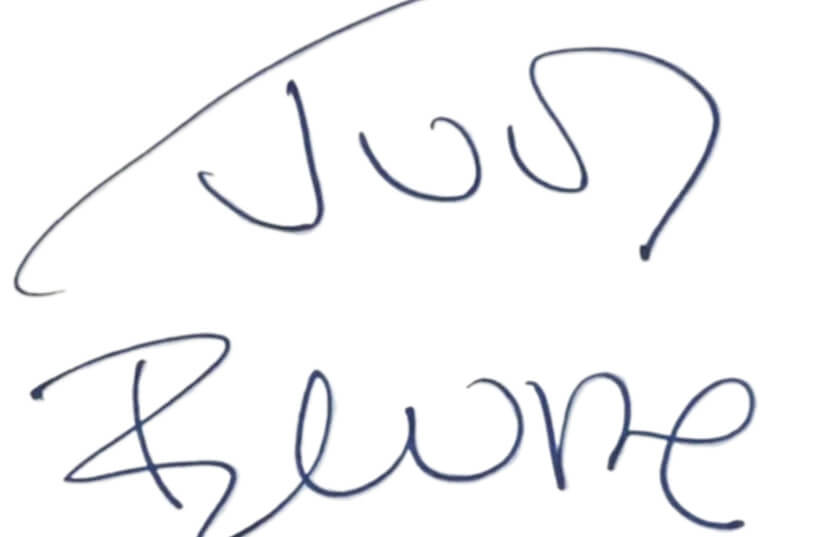
    Judy Blume's signature.
    Judy Blume’s signature. (credit: Wikimedia Commons)

    Blume’s rich and complicated life, captured, in part

    He reports that, early in his research, Blume turned over notes – some handwritten, some typed – that she had made for a memoir which she later abandoned. The two remained in touch throughout the project.

    When Oppenheimer shared his final draft of the book, he reports that Blume sent back “hundreds of comments in the margins… and a separate memoir, 40 pages long, offering suggestions, disagreements, and assorted thoughts covering every era discussed in the draft.”

    He has managed to capture details of Blume’s rich and sometimes complicated life, and her uncanny ability to understand angst and issues facing children and teens. And he tells Blume’s story in an entertaining manner.

    Oppenheimer is no stranger to telling stories both in writing and through the spoken word. He has become somewhat of a household name in his own right through his books, articles, columns and his podcasts.

    His numerous books include Squirrel Hill: The Tree of Life Synagogue Shooting & the Soul of a Neighborhood (2021), about the Tree of Life shooting in Pittsburgh; The Newish Jewish Encyclopedia (2019), Wisenheimer: A Childhood Subject to Debate, a memo of sorts about his debating years; and Thirteen and a Day, a book about bat and bat mitzvah. He is currently working on The Dirty Bicker: Princeton, the Jews, and the Scandal of 1958, about the notorious scandal when an unusually high number of Jewish students were denied admission to Princeton University’s prestigious eating clubs. 

    Oppenheimer holds a PhD in religion from Yale and has hosted the popular podcast Unorthodox for eight years – as well as the podcast Gatecrashers, about the history of antisemitism in the Ivy Leagues.

    He wrote the beliefs column for The New York Times for years and currently serves as executive editor of Arc Magazine, an online journal of the John C. Danforth Center on Religion and Politics based at Washington University in St. Louis.

    In Judy Blume: A Life, Oppenheimer tells Blume’s story in 31 chapters, each covering a chapter of her life as he brings the rich, multi-faceted, ahead-of-her-time, genre-defying author to life.

    Blume was born Judith Marcia Sussman in 1938.

    Oppenheimer captures Blume’s Jewish heritage and her upbringing in middle-class New Jersey and Miami around the time of World War II.

    He describes her childhood and relationship with her brother (who struggled with mental health issues), her dentist father (who died suddenly at an early age), her well-read homemaker mother, and various relationships and marriages.

    Blume never even considered being a writer until she was nearly 30 years old, unhappily married to “a well-meaning personal injury lawyer,” and a stay-at-home mother of two young children. It was then that she began taking the bus to New York City every Monday night to attend an evening class at New York University in writing for children.

    Her early works from the class never got published, but she persisted. Her hard work, natural ability, sense of humor, lived experience, and her keen eye for what was going on around her and deep within people of all ages allowed her to eventually deliver books that would tackle topics that had until then been mostly absent from children’s literature, including budding sexuality, puberty, divorce, loss, family complexity, and bullying.

    Blume was always “spot on” and managed to speak to generations of readers in an intimate, understanding, and practical way.

    Charming, annoying, entertaining younger siblings

    Her protagonists are almost universally known. Margaret Simon, the 11-year-old protagonist in Are You There God? It’s Me, Margaret permitted readers to explore and question their religious identity and as they learnt about puberty.

    Peter Hatcher and little brother, “Fudge” – known worldwide through Tales of a Fourth Grade Nothing and Superfudge – introduce us to charming, annoying, and entertaining younger siblings. (Who doesn’t remember two-year-old Fudge going to the hospital after swallowing Peter’s pet turtle, Dribble?)

    And Sally J Freedman in Starring Sally J. Freedman as Herself is a curious Jewish girl who, much like Blume, moves to Florida in the 1940s after WWII and deals with feeling like an outsider.

    Blume showed her versatility with the release of bestseller Wifey in 1978.  The book was groundbreaking because it marked a pivot to adult fiction. Blume was not afraid to tackle issues then still considered taboo.

    One of Oppenheimer’s significant contributions is in honestly and respectfully sharing details of Blume’s not-always-picture-perfect private life. She experienced unsuccessful – and successful – marriages, as well as aborted pregnancies.

    Blume moved a lot – to places such as New Jersey, Florida (Miami and Key West), Connecticut, New York, Los Alamos, New Mexico, and Martha’s Vineyard, Massachusetts. She loved and cared for her many homes, and she was very philanthropic. She also cheered on librarians and booksellers in ongoing battles against censorship.

    Oppenheimer gives the reader an honest and loving picture of this beloved author and leaves readers hoping that the almost nonagenarian will grace us with at least one more book.

    JUDY BLUME: 
    A LIFE

    By Mark Oppenheimer
    G.P. Putnam’s Sons
    480 pages; $20

    Read more