Originally appeared in Jerusalem Post Magazine on October 16, 2026
Peter Kurz recounts the improbable journey of Israel’s baseball team to the Tokyo Olympics, sharing behind-the-scenes stories, challenges, and personal triumphs.
The Major League Baseball World Series victory of the Amazing Mets in 1969 and the Six Day War of 1967 were two formative events that set Peter Kurz – who made aliyah in 1989 – on the path of combining his two loves, baseball and Israel, and taking baseball in Israel from almost nonexistent to Olympic competitor.
Kurz used his passion, hard work, and chutzpah to systematically shepherd Team Israel on the long and improbable road to the 2020 Olympics (postponed to 2021 due to COVID) in Tokyo – an occurrence so unlikely that it is often compared to the Jamaican bobsled team competing in the 1988 Calgary Winter Olympics.
In his new book, Where Traditions Meet: The Personal Inside Story of the Israel Baseball Quest for Olympic Gold, Kurz offers exciting anecdotes and behind-the-scenes stories, while chronicling (sometimes in laborious detail) the history of baseball’s rise in Israel.
Kurz held nearly every position in the Israel Association of Baseball over the past 25 years, including longtime president and secretary-general and general manager of Israel’s Olympic baseball team. He is still trying to understand why he was recently voted out of office – an experience he addresses in the final three pages of the 225-page book.
Where Traditions Meet is cleverly told in nine “innings” (or chapters) – the number of innings in a regulation baseball game – with a prologue and epilogue.
The First Inning shares Kurz’s experience growing up as a “typical kid born in America in the Fifties and raised in the Sixties.” His parents were Holocaust survivors who worked hard to make a living and raise their kids on Manhattan’s Upper West Side.
Kurz visited Israel for the first time just after the Six Day War in 1967 – two years before his beloved Mets would make him proud by winning the World Series. “I grew up on Israel and baseball.”
The next chapter, “Second Inning: Moving to Israel and Making Aliyah,” shares his first exposure to baseball in Israel while on IDF reserve duty in 1989. A friend told him that his son was playing baseball in a league. Peter soon sold his son Amit on the idea. At the time, fewer than 300 children played the sport.
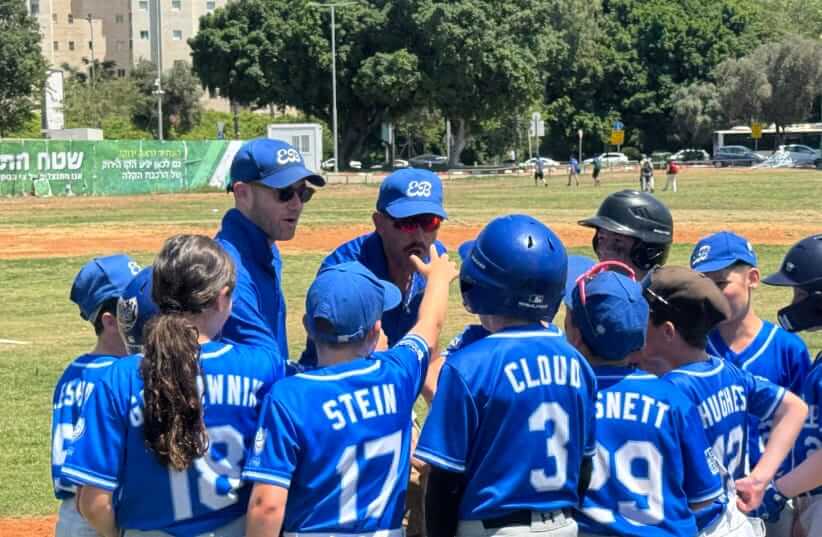
Kurz was recruited to become an assistant coach, coach, then head coach of the 10- to 12-year-old National Team. He notes that he was inexperienced and learned on the job. He next joined the board and became secretary-general in 2005.
Hardcore Baseball fans will appreciate the details of each bunt and balk he covers in chapters chronicling tournaments around the world, including World Baseball Classic (WBC) qualifiers and tournaments in the US, Korea, and Japan, various European tournaments and championships, and ultimately the Olympics.
It is clear that Kurz has an uncanny memory for game lineups and details, and cities and people encountered around the world.
But the behind-the-scenes stories of famous baseball players and emotional moments bring the book to life.
There was the time Joc Pederson, longtime major leaguer and current Texas Rangers outfielder and first baseman, was 20 and playing Single-A ball and wasn’t allowed into the team’s courtesy suite where alcohol was served, since he was underage.
Before becoming the manager of the Israel national baseball team, Brad Ausmus, who had an 18-year career in Major League Baseball, went on a team trip to Israel with his wife in 2012. He toured the country, surfed, and presented a team ball and jersey to then-prime minister Shimon Peres.
When Ty Kelly went to Israel, the former Mets and Phillies player brought his Jewish mother as his “plus one.”
Ike Davis, former first baseman for four major league teams, realized for the first time, while studying his mother’s side of the family tree, that many family members were killed in the Holocaust.
Jason Marquis, who played 16 major league seasons, including 10 playoff seasons, once surprised his teammates with 20 pizzas after a practice in Brooklyn.
Kurz gives players exposure to Jewish history, holidays
Kurz and his staff worked hard to give their players – most of whom come from fairly weak Jewish backgrounds – exposure to Jewish holidays and history, from Rosh Hashanah, Purim, Shabbat, and Tisha B’Av on the road, to visits to Holocaust sites in Lithuania, half a mile from their field, where 2,000 Jews were rounded up and murdered in the Rase Forest.
Kurz provides a fair accounting of the challenges as well as the happy moments he and his players faced on the road to qualifying for and competing in the Olympics.
For the WBC, players need only be eligible for citizenship in a country. The International Olympic Committee, however, requires players to be actual, legal citizens of the country they represent.
Israel’s Law of Return gives anyone with a Jewish parent, grandparent, or spouse the right to return to Israel and be granted Israeli citizenship.
Identifying players as Jewish was challenging and often required detective-like precision, as Kurz tracked down cemetery headstones and circumcision certificates and ketubot to verify Jewish status.
Convincing players wanting to represent Israel at the Olympics to make aliyah – and to endure the complex, bureaucratic process – was similarly challenging.
There were moments of luxury – like when the team flew to Israel on Sheldon Adelson’s private plane, and there was a great deal of discomfort and frustration navigating COVID restrictions and lodging in uncomfortable rooms at the Olympic Village in Tokyo.
Despite Kurz’s efforts to get the Israeli media on board, they mostly remained uninterested, thinking throughout that the American-heavy team was not “Israeli enough” to justify coverage.
Kurz has always viewed the team’s composition, with American stars, as a necessary step toward building a program that would ultimately produce a team of mostly native Israelis.
His efforts are paying off. It would have been interesting to hear more about Israel’s extensive youth program, from five-year-olds through adults.
For now, Israel baseball will go on without Kurz. But he admits, “An Olympic gold medal would look pretty on my wall!”■
WHERE TRADITIONS MEET:
THE PERSONAL INSIDE STORY OF THE ISRAEL BASEBALL QUEST FOR OLYMPIC GOLD
By Peter Kurz
KDP
225 pages; $15