Originally appeared in Amit Magazine on Fall 2026
Inside AMIT’s Leadership Training Program
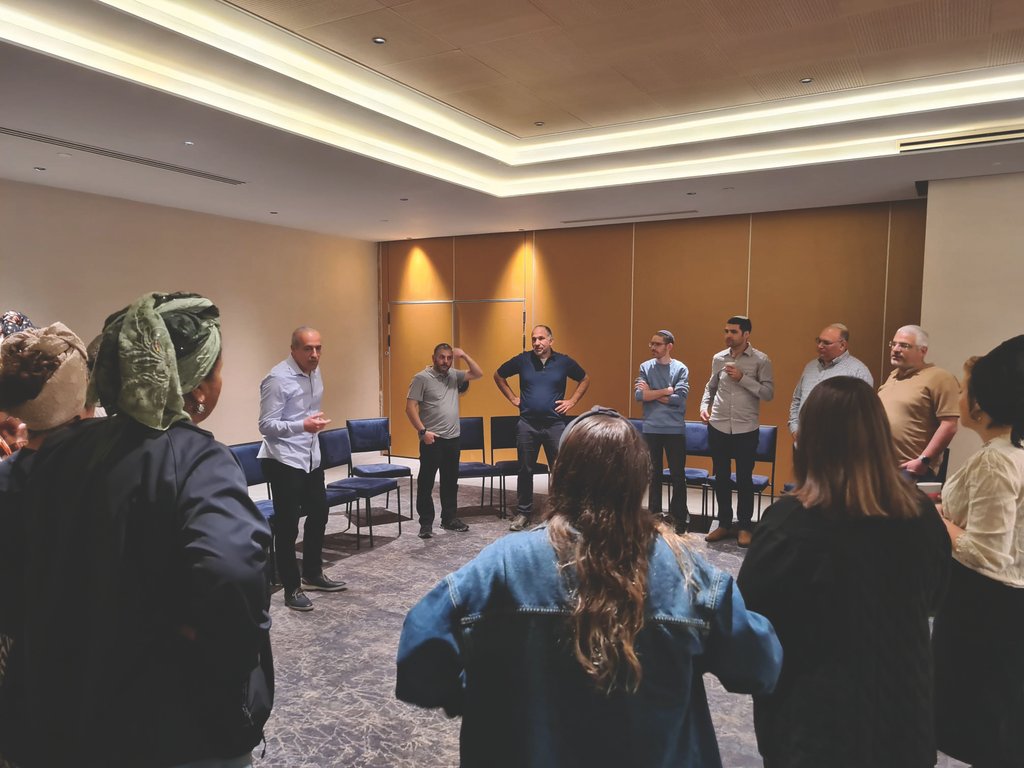
One of the cornerstone initiatives of AMIT’s new educational campus at Kfar Batya will be its Leadership Training Center. The center reflects a guiding principle of the AMIT Network: Meaningful educational transformation is woven throughout the entire organization. By investing in teachers, principals, and educational leaders, AMIT fosters a culture of shared growth, ensuring that innovation and excellence reach every classroom.
This initiative is already underway at the current Kfar Batya location in Ra’anana under the leadership of Ofra Peer, AMIT’s director of leadership development. With the opening of the new campus this September, the training center will move to its new home in the Evan & Layla Green Family Foundation Gogya Building.
Gogya (from the Hebrew word for pedagogy) is AMIT’s flagship educational platform whose holistic approach to learning integrates academic excellence, Torah values, socialization, collaboration, creativity, emotional development, and real-life experiences.
Peer’s warm and engaging demeanor masks the scope of the many projects she oversees for the network. She is passionate about maximizing educators’ strengths and teaching the skills that take their job to the next level.
“I remember when being a principal was just pedagogy,” said Peer. “Today, a principal is not only responsible for how teachers teach, but they are also a psychologist, a leader, and a source of inspiration — who also must know about budgets. Practice and tools are no longer enough. Now, we need people who inspire others and have vision.”
But vision alone is inadequate if you don’t know how to implement it. Since the job has become increasingly complex, Peer firmly believes that principals need holistic training. That’s where the Leadership Training Center comes in.
Four Pillars of Leadership
The center is based on four pillars of leadership:
- Psychological confidence
- Spiritual identification
- Implementation
- Awareness that leads to growth
Psychological confidence is the belief that principals must take initiative, and it stresses the importance of making room for failure.
“AMIT wants us to be creative and have vision,” said Peer. “If you don’t succeed, that is OK. It is OK to fail and try again; try something else. It is the same with the children we teach. We permit them to fail and try again.”
Peer strongly believes in the value of investing in others. “Not many people want to work in education,” she said. “We must demonstrate to them that at AMIT, we want them to constantly grow and learn. Organizations that study and adjust to the times and to the world are the most successful. If the principal is always learning, it models ongoing learning and motivation for the students.”
“Practice and tools are no longer enough. Now, we need people who inspire others and have vision.”

Peer described this trickle-down effect: “If the principal models this, they pass it on to the teachers, and they then pass it along to the student. In the Leadership Center, everything the principals learn they must share with their teachers.”
The second pillar of leadership is spiritual identification, which reflects the goal of everyone sharing the same values. For example: “Take care of all students, and all students can succeed.” Peer is particularly committed to the value of opening doors to all students, recognizing that each one is someone’s child — and should therefore be cared for as if they were our own child.
“If you succeed in bringing your whole community together, that is the highest level of leadership,” said Peer.
Implementation, the third pillar, is crucial because, as Peer noted, “Being charismatic is not enough if your school is not working. Principals need both a big vision and a clear plan of how to carry it out.”
The fourth pillar, awareness that leads to growth, tasks a leader to focus inward.
“A principal must know their strengths and weaknesses so they can improve in the areas that are lacking,” said Peer. For example, if a principal is not an expert in budgeting, she suggests they build a team of people to help them address that deficiency.
Peer credited AMIT Director General Dr. Amnon Eldar for his visionary leadership in this area. “Ten years ago, he believed that to make a change in the educational network, you must invest in the principal — because to make a change in the world, you must have great leadership.”
Measurable Progress
Peer described the incredible progress made in the Leadership Training Center within a few short years.
“When I came here three years ago, there were islands of leadership,” she said. “We realized we needed to build one home that would take us to the next stage.”
Today, AMIT offers 13 different programs for principals: aspiring, single grade, junior high school, senior high school, and whole school. There is also an option for new principals who prefer private conferences.
The center is designed to strengthen educational leadership at every level. The Amir Program prepares aspiring principals through a combination of leadership seminars, shadowing experienced school leaders, and one-on-one professional mentoring.
Current principals participate in specialized tracks which bring together educational leaders for monthly learning experiences from a variety of sectors, ranging from business and public service to Bedouin society, and encourages them to apply new insights to their schools.
The center also provides ongoing training for middle leadership across the network, equipping department heads, coordinators, and other educational leaders with the tools to manage teams and implement strategic initiatives.
“The center now deals with leadership at all levels and focuses on both practice and inspiration. I am very happy with our progress,” shared Peer. “We started with almost nothing. Now, we have a leadership podcast, we are drafting new talent to be principals, and we are not compromising on who we take. Our principals are the best!”
While Peer’s work is primarily centered on principals, she is aware that her programs affect students and teachers. “We believe every student has his own way to learn, and teachers have their own way to teach,” she said, understanding that every principal, teacher, and student will apply the lessons appropriately within their school communities.
A Revolution in Women’s Leadership
Taking pride in the fact that all AMIT’s schools for girls are currently run by women, Peer stressed the importance of having women in those leadership positions. “A female leader is a role model of balance and shows students they can be anything they want,” she said.
Yet she added that girls must be free to forge their own path. “The most important part is giving girls the option to choose — whether army or national service, medicine, law, or staying at home,” she said. “They must do something significant and meaningful in life, and my mission is to present their choices.”
Peer is proud to be part of the revolution in women’s leadership and has found incredible fulfillment in her chosen career.
“Being a principal is the most significant job,” she said. “You deal with children and the future of your country. It is the hardest work you can imagine, but it is very rewarding.”