Callie Mitchell at her Jerusalem home wearing a Baltimore Oriole’s shirt – one of the teams her father, Jerry Narron, coached. (photo credit: HOWARD BLAS)
Baseball in Israel gets a boost from Jerusalem’s passionate baseball mom
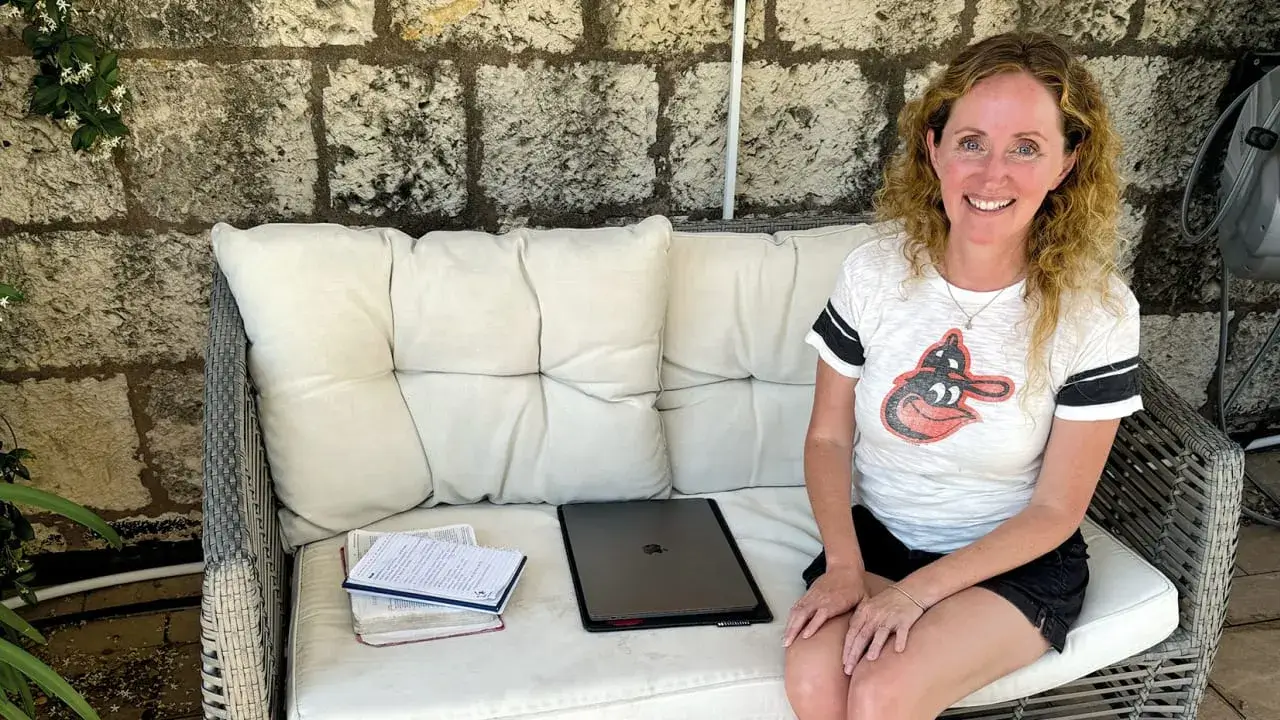
Callie Mitchell at her Jerusalem home wearing a Baltimore Oriole’s shirt – one of the teams her father, Jerry Narron, coached. (photo credit: HOWARD BLAS)
Originally appeared in Jerusalem Post on August 31, 2026
Baseball in Israel made history when more than 100 children from 11 cities across the country took part in the first-ever Under-12 National Tournament on July 9 and 10, with games being played simultaneously on four fields.
The American pastime has established a firm presence in the Israeli sports landscape and continues to grow, offering programs throughout the country for players of every age and level, from 5-year-olds all the way to the highest levels of international competition, including the World Baseball Classic.
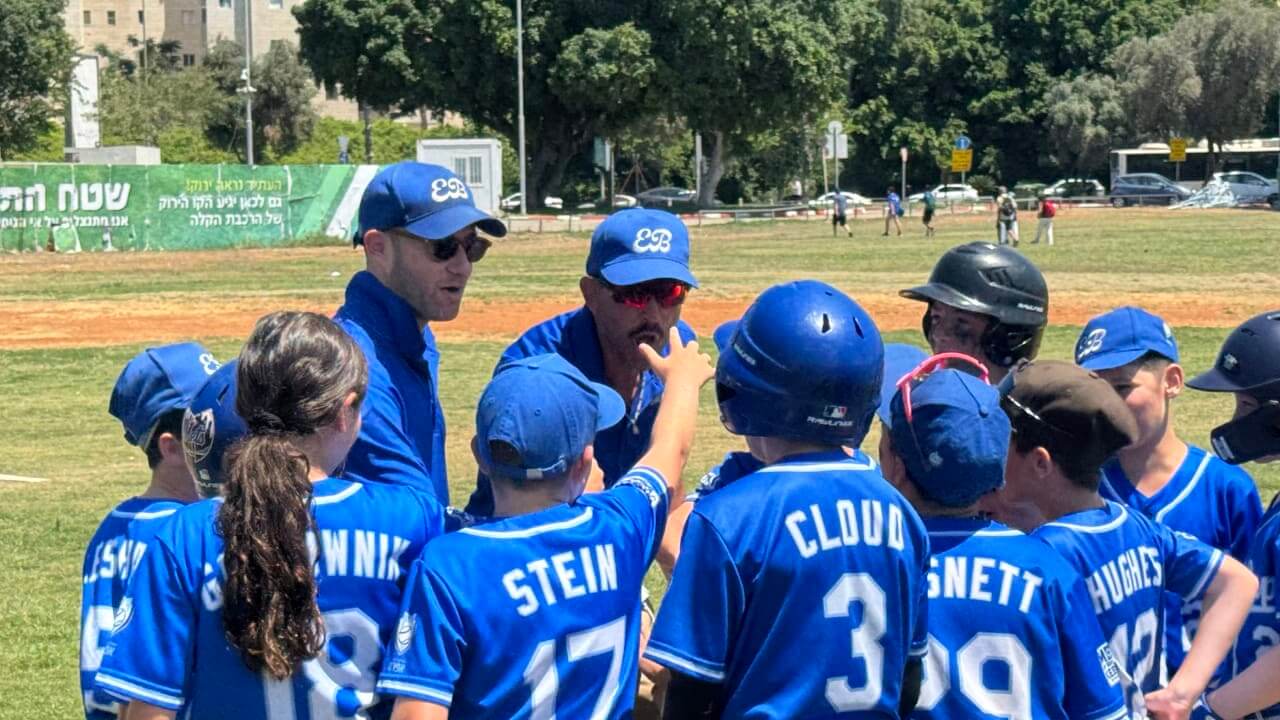
At Israel’s first-ever U12 National Championship game, played at the Sportek Field in Tel Aviv’s Hayarkon Park on a hot and humid Friday, Efrat defeated Modiin in the final. While Efrat was elated with its championship victory, the achievement represented much more than a win for the players, coaches, and parents. It was also a significant victory for the steady growth and expansion of Israel’s baseball community.
Advertisement
The final was the culmination of two days of baseball featuring nine teams from throughout the country, including Jerusalem, Tel Aviv, Ra’anana, Misgav, Efrat, Modiin, Beit Shemesh and Bat Hefer. Teams and clubs from Misgav and Efrat, which have existed for years, met for the first time in the tournament.
The tournament also featured teams from the up-and-coming community of Karmey Gat, as well as a young startup team from Beersheba, founded by one baseball-loving father, Jonathan Leiman. A die-hard Baltimore Orioles fan, Leiman was so determined to have his children fall in love with baseball that he took responsibility for starting a team himself.
Boys and a few girls from all over Israel spent the two days playing baseball, eating pizza, bantering playfully, and watching games together from the stands. At the championship game – held early enough on Friday so that Shabbat observers could get home with plenty of time before the start of Shabbat – children and adults watched together as Efrat cruised to victory.
The parents, many of them immigrants from the United States, enjoyed communicating in English with others who had similarly moved to Israel and found baseball to be a useful tool for providing what many described as a “soft landing” for their children.
The number of teams and players gathered in Tel Aviv on that sunny Friday was a testament to just how far baseball has come in Israel. It was not always this way.
For many Jews around the world, Israeli baseball has typically been associated with the storybook run of Team Israel at the World Baseball Classic and its appearances on the Olympic stage. Many baseball-loving Jews have taken pride in seeing some of their favorite Major League Baseball players – including Danny Valencia, Ike Davis, Kevin Youkilis, and Brad Ausmus – wearing yarmulkes, standing on the base paths for Hatikvah, and competing for or managing Team Israel.
But as the successful U12 championship demonstrated, baseball in Israel is about much more than its national team. It is also about the dedicated parents, coaches, players, and organizers who are building the sport from the ground up.
Each club is run by a dedicated Regional Director, who serves as the engine of growth for baseball in each city. In Jerusalem, Callie Mitchell, a Christian mother of four and daughter of longtime Major League Baseball catcher, coach, and manager Jerry Narron, serves as the Jerusalem Regional Director for the Israel Association of Baseball (IAB) and directs the Jerusalem Lions Baseball nonprofit.
Mitchell has helped introduce baseball to children ages 5 to 18, as well as to adults, and is involved in many of the day-to-day nuts-and-bolts issues unique to running a baseball program in Israel – from setting up WhatsApp groups and ordering buses to making soccer fields work as baseball practice fields and securing baseballs, gloves, and catcher’s equipment through Amazon and US-based baseball connections.
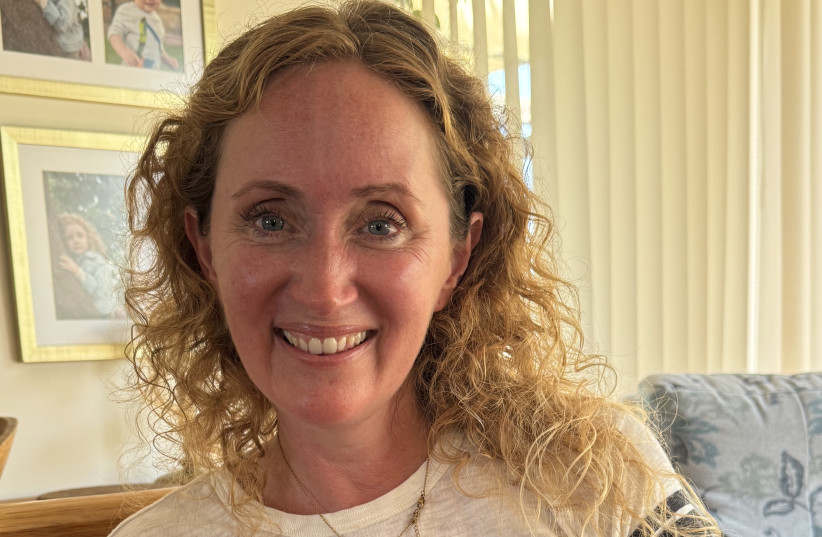
Mitchell enjoys watching what her colleagues are accomplishing with their teams and programs throughout Israel. She praises Judah in Bat Hefer, who “brings a baseball aesthetic to the field. He makes dugouts, backstops, a round portable pitcher’s mound, and beautiful shelving for his shed. It’s really inspiring, and I love what he’s doing for the children in his program.”
In Misgav, Yaniv Rosenfeld is introducing baseball to native Israeli sabras. He goes into schools and teaches baseball during sports and English classes. Rosenfeld has built the only real Hebrew-language baseball program in the country so far, expanding the sport in northern Israel even during these past years of war, sirens and conflict.
Jeff Oshrin, manager of the Efrat team, shares Mitchell’s enthusiasm for watching baseball grow in Hebrew.
“In Gezer, they play baseball in Hebrew!” he said, noting that in Misgav and Gezer, more and more Israelis are playing the sport. “There are Israelis teaching Israelis how to play baseball!”
Oshrin has enjoyed watching baseball grow and thrive in his community of Efrat and takes great pride in what the community has accomplished.
“We are immensely proud of what we have brought to Efrat. Baseball is our rock – and it has helped ease the aliyah stresses for many who have moved to Efrat. There are currently programs for all ages and batting cages, bleachers, and a lit field. We play for the love of the game. We have built something very special.”
The primary goal for 2026 and beyond, according to Israel Association of Baseball President Ari Varon, is for baseball in Israel to provide “a complete pathway from first grade through adulthood.”
Baseball is both a team sport and an individual sport, allowing players to pursue personal excellence while also emphasizing cooperation and collaboration with their teammates.
Varon and the IAB executive board, with the organization celebrating its 40th anniversary this year, are focusing on several goals and strategies to continue expanding baseball in Israel. They include an emphasis on increasing participation and strengthening local clubs.
“Excellence remains essential, but excellence cannot be built sustainably without a broad and growing base,” the IAB notes. “For this stage of baseball in Israel, quantity must come before quality.”
The organization stresses that “a larger player base is the foundation from which stronger clubs, better competition, deeper coaching systems, and higher-level national teams can emerge.”
The IAB recognizes that baseball is competing with two hugely popular sports in Israel – soccer and basketball. But the organization believes baseball can offer an important alternative for children who give up on those sports because they are too time-consuming or competitive, yet still desire the opportunity to compete.
The IAB is therefore looking for ways to get more children – especially those in first through sixth grades – playing baseball in more communities across Israel.
Varon and the IAB acknowledge that, unlike soccer and basketball, many Israelis still do not know much about baseball.
“We need school exposure, community events, introductory sessions, visible local activity, social media, tournaments, family events, and repeated opportunities to try the game,” Varon said.
He elaborated on the organization’s long-term vision.
“The long-term objective is the development of a complete baseball ecosystem in which a child can discover the game in first grade, continue through elementary and middle school, compete at higher levels in high school, play in adult and Premier League competition, and eventually return as a parent, coach, volunteer, or club leader with children of his or her own.”
During the past year, baseball has expanded into Kiryat Gat and Beersheba, with further development underway in Even Yehuda. The IAB is also working to create baseball opportunities for people living in communities near the Gaza border and to expand the sport in northern Israel.
Varon notes that “baseball can offer children routine, teamwork, physical activity, personal goals, mentorship, and a safe place to belong.” He says that growing baseball in the Gaza border communities and in the North is “part of both a sports-development strategy and a broader commitment to resilience, excellence, and community.”
The IAB sums up its growth plan with three Ps: Players, people and places.
The leagues will recruit and retain players who will progress through the various age groups. People will include more coaches, umpires, volunteers and commissioners. And places will include additional fields and facilities, including indoor training centers.
Varon concludes with a vision that extends far beyond youth baseball.
“The long-term vision is not a youth program with an endpoint. It is a baseball life cycle. A healthy sports culture should allow a player to enter elementary school, continue through teenage competition, participate in adult baseball, and remain connected to the sport even after regular competitive play ends.
“The Premier League and other adult frameworks are therefore an important part of the development model, even though the largest numerical emphasis remains on younger ages. When former players become coaches, parents, officials, donors, board members, and club founders, the sport begins to reproduce itself.
“That is the point at which baseball becomes more than a collection of programs. It becomes a sustainable community and a permanent part of Israeli sport.”
If all goes according to plan, these homegrown young 12-year-olds may one day grow up to represent Team Israel at the highest levels of international competition – perhaps even at the World Baseball Classic and the Olympics.
Originally appeared in Israel Baseball News on August 27, 2026
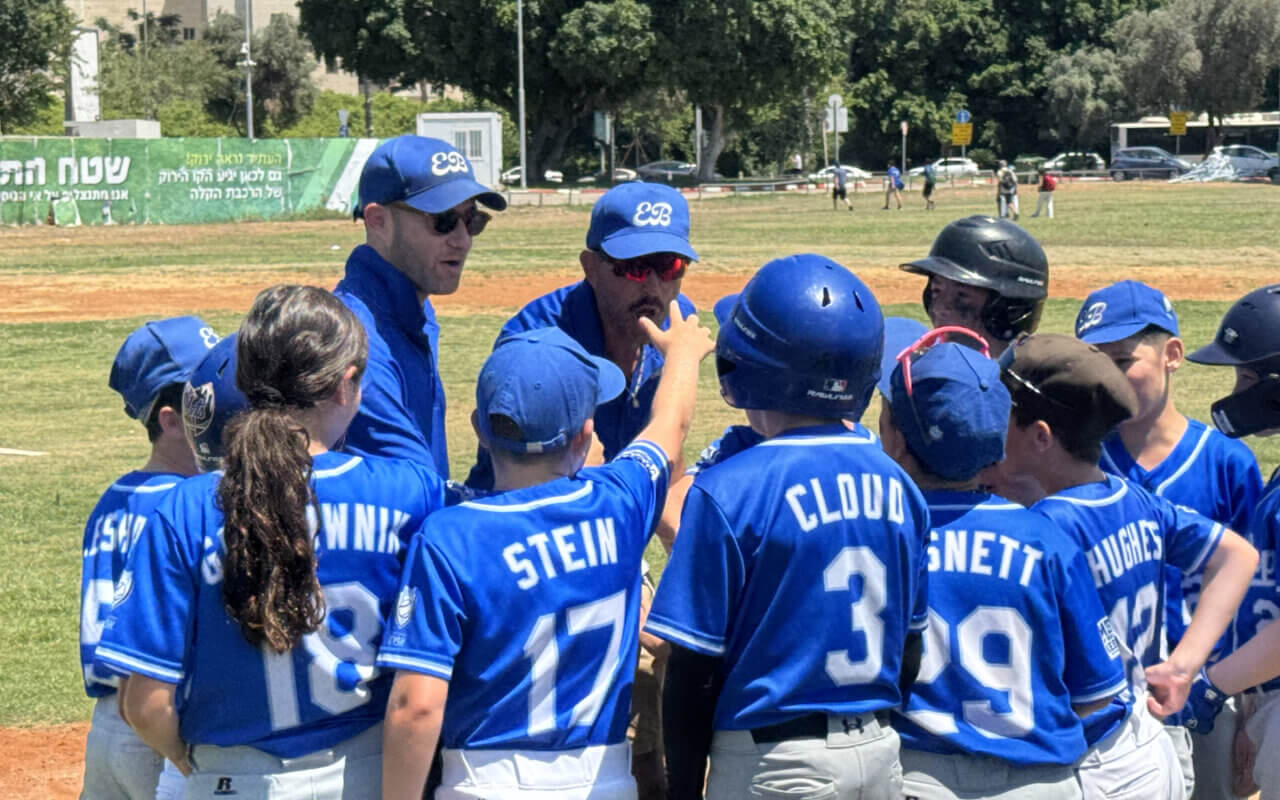
Israel Baseball hosted its Inaugural U-12 National Baseball Tournament on July 9-10 at Sportek Tel Aviv, bringing together nine teams from across the country – including Modi’in, Efrat, Jerusalem, Beersheva, Tel Aviv, Ra’anana, Carmei Gat, Tel Mond and Bat Hefer, with Tel Aviv and Ra’anana fielding a combined team – for the largest coordinated U-12 baseball gathering Israel has ever staged. Over the two-day championship weekend, clubs from the north, center and far south of the country competed at one venue for the first time, with Efrat emerging as Israel’s first U-12 national champion, Modi’in finishing second, and Tel Aviv-Ra’anana taking third.
At the tournament’s peak, four games unfolded simultaneously, and the weekend delivered real competition throughout: crisp hits, sharp defensive plays, costly errors, dramatic upsets and tight finishes decided on the final play. The championship game itself stayed close until the end, before Efrat capitalized on a late-inning lack of pitching depth for Modi’in to open up the gap and win, 12-3. Efrat General Manager, Jeff Oshin, credited the team’s pitching depth for the title. “It came down to depth of pitching – ten of our players out of 14 on the team could pitch if they needed to!”
Nine teams of Israel baseball players, 12 and under, gathered at Tel Aviv’s Sportek in Yarkon Park as Modi’in and Efrat faced off in a Friday morning U-12 National Championship game. The newest team came from Beersheva, where parent and organizer Jonathan Leiman has been working to grow baseball in Israel’s south.
While all nine clubs made their mark on the weekend, the tournament’s story crystallized on Friday (July 10), when Modi’in and Efrat – two of the programs that have shaped Israel’s baseball landscape for years – met for the title.
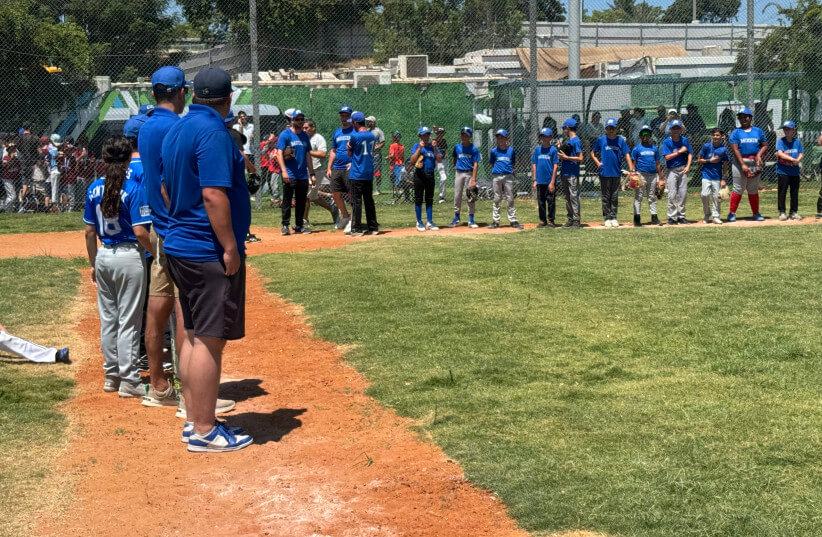
Ari Varon, president of the Israel Association of Baseball, addressed the teams lined up along the baselines prior to the singing of Hatikvah (The Hope), Israel’s national anthem. He also shared with the crowd his own long-term hope for Israel Baseball: “Competition on the field, community after the field, teammates in life.”
Varon took pride in the growth of baseball in Israel. “Our main goal here is to build up a group of people throughout the country that have a common identity that work together… and give ourselves values and a break from the craziness (of life) by playing baseball.”
From Modi’in to Beit Shemesh to Gezer, Jerusalem, Tel Aviv and beyond, baseball has been taking root in Israel. The common feature, as Varon noted, has been growing the game — and a community of teammates — for life. This included players, coaches, managers and family members. Yet, the unique ta’am (flavor) of the sport has been a bit different in each town and city.
Interviews with coaches and parents affiliated with the Modi’in and Efrat teams revealed that U-12 baseball in Israel is about so much more than winning and losing games and tournaments. Baseball has had an incredible impact on the lives of their children, teaching them useful skills on the field and life skills off the field.
Tani Glazer, 24, an accounting student by day and lifelong baseball enthusiast and coach for the Modi’in team, spoke movingly about the impact baseball has had on his life and those of Modi’in children. Glazer played on and off as a child, went to Poland to play on the U-12 national team, and returned as a coach.
Glazer humbly felt “I was more fit to be a coach,” a role which he has taken very seriously. He has strived to teach baseball skills as well as life skills and menschlichkeit (human decency) behavior. “I want them to deal with bad calls and cope with mistakes — as a player and as a person.”
As a coach, he had the opportunity to accompany the team this past February to a three-day tournament in Eilat, which took place over Shabbat. He especially liked seeing his players meeting people from other cities and connecting with them as they played together and stayed in the same hotel.
Having players from all over Israel competing and watching the games together at the recent U-12 national tournament helped players from around the country begin to get to know each other. “Hopefully it will serve as a breaking the ice for the future — next year they will say, ‘I know you’ and they will get to know each other a little better.”
Glazer noted that the background of the players varied by community. In Efrat, he observed the team members were mostly olim (immigrants to Israel) or children of olim — some with parents who continued to play baseball in the adult Premier League. In Modi’in, it was “more integrated,” with a nice mix of Americans and Israelis in recent years — a change he observed from when he played 10 to 15 years ago. “Now, word of the game is getting more spread around.” In Bat Hefer, the players were almost exclusively native Israelis.
While Glazer would have liked to have won the tournament, he was pleased with his team’s second place finish. “We got lucky with the schedule,” he noted playfully. Following a “tough, low scoring” game against Jerusalem, Glazer felt they had two easy games against newish teams from Carmei Gat and Tel Mond, and a game against a “young team” from Bat Hefer.
“Efrat is a whole different program,” Glazer observed somewhat longingly, noting unique features of the champion-winning program that include their field, a pitching machine and a batting cage. “They take the league to a new level!”
Ely Cole’s 11 1/2-year-old son, Nadav, was hooked on everything baseball: he loved to play, watch and talk baseball at every opportunity. Father Ely, who served as a coach, shared that baseball “is the one thing that Nadav looks forward to — even if he is sick on a Wednesday, he prays that he will be okay for practice on Friday!” Nadav dreams of playing in Major League Baseball (MLB) or at least on Israel’s national team.
Like coach Glazer, Ely saw baseball’s impact firsthand. “Baseball has been the biggest influence on Nadav’s life. Through baseball, he has learned so many life skills — like patience, teamwork and supporting someone else.” He proudly recounted a time a friend struck out and cried — and Nadav supported him.
Ely reported, “His social group has totally changed from baseball.” This past year, Nadav and his friends spent hours playing baseball every Shabbat. And he made friends from other cities through baseball — at games, at tournaments, and especially through their participation in the three-day Eilat tournament. Ely shared that he and his friends stayed up late one night in Eilat to watch an MLB Spring Training game between the Atlanta Braves and the New York Yankees. “Baseball is a catalyst to make everything happen!”
Shira Greenspan, a Modi’in parent who made aliyah (immigration to Israel) nine years ago, had not initially imagined that baseball would become so important in the life of her family — especially for her son, Akiva. “It is so much more than we could have hoped for!”
While Greenspan noted the commitment of time and resources including practices and games three times a week and the financial investment, she believes the immense benefit it has on children’s physical and mental health makes it worth the expense. “If you consider the costs of OT, therapy and more, you can’t put a price tag on it!”
Greenspan especially appreciated coach Glazer’s approach to the game — as well as educating her son and his peers about much more than the technical aspects of the game. “At the end of the game, they all reflect on something they have learned, and they compliment each other. They have become open to discussing feelings, vulnerabilities and reflecting.”
Glazer also helped Akiva break down goals. Greenspan shared that the coach observed Akiva’s reluctance to swing and worked on the youngster’s self-trust. “Your goal is NOT to get a hit — but to get out with three strikes swinging,” he told Akiva. Mom recounted, “At his first at bat, when he got out swinging, he was so proud. Then, he came to bat, got a hit and won the game for his team!” Greenspan added, “Tani (Glazer) is amazing! He shows what real coaching means!”
Andrew Stein grew up as a self-described “big time baseball nerd” in Kingston, Pennsylvania. He followed the New York Mets, collected baseball cards, and played lots of catch, but noted, “There was no baseball for a shomer shabbat (Sabbath observing) kid.” When Stein made aliyah 20 years ago and began to build a family in Efrat, all of that changed — his children all had the benefit of a well-oiled baseball program.
When members of the Efrat baseball league noted that Stein “never missed a game” and exhibited a “love of the game,” he noted, “they sucked me in” and recruited him to become a coach.
For Stein, baseball in Efrat gave his children “a way to have something similar to their dad.” He described with pride the “culture of baseball in Efrat,” which has fed many players into the Israel national team. “Kids in Efrat know that being on the Wild Pups is something to work for. Being a Wild Pup is something special!” Stein was proud of the team’s seriousness and its desire to win.
For one of Stein’s children, Matar, baseball taught “real person responsibility.” Matar has enjoyed traveling with the team to other countries and was pleased to have friends in such places as Rotterdam (Netherlands). Another son, Netzach, learned about accountability through the sport.
Stein, like other parents interviewed, spoke about the skills learned that would benefit his children on and off the field. “Matar has a sense of pride of being a Wild Pup — and a confidence that translates outside of baseball. He will bring this to his daily life.”
Jeff Oshrin, manager of the Efrat team, enjoyed watching baseball grow and thrive in Efrat. Oshin said, “We are immensely proud of what we have brought to Efrat. Baseball is our rock — and it has helped ease the aliyah stresses for many who have moved to Efrat. There are currently programs for all ages and batting cages, bleachers and a lit field. We play for the love of the game. We have built something very special.”
Beyond the physical amenities the Efrat fields offer, Oshin saw the opportunities for friendships and meaningful relationships that Israel Baseball provides — both with fellow Efrat players and those who play baseball in other towns. “Along the way, our kids have seen each other as opponents on the field, competing against each other, and they have also been on Team Israel together and walked out as friends.” He noted that, during tournaments, players often ate pizza together, or used the batting cage together, and they became friends.
It was exciting for Oshin to see the growth of baseball in Israel, and to see slight differences in each program. “In Gezer, they play baseball in Hebrew!” And he noted that, in Misgav and Gezer, more native Israelis were playing. “There are Israelis teaching Israelis how to play baseball!”
Back in Efrat, the players and families have been celebrating their U-12 title. But across all nine towns, players headed home with something bigger than a final score: new friends from cities they had never visited, phone numbers traded on the field, and a shared sense that Israeli baseball is now a national community, not just a handful of separate clubs.
Some of these clubs have fielded teams for more than a decade without ever facing one another, and this tournament changed that in a single weekend. The friendships formed at Sportek now form the foundation for what could come next — future tournaments, mixed-team play, and a stronger baseball culture stretching from the north to the far south.
; ; ; ; ;