jerusalem

Originally appeared as a cover story in Jerusalem Post’s In Jerusalem Magazine, on June 19, 2026

From apartments to synagogues, Jerusalem’s young adults are reinventing kiddush as a social gathering that fits modern life.

For young Jerusalemites, mainly olim, the Shabbat kiddush experience is evolving from the in-shul “cholent and herring” of their grandfathers into an important social function.

The kiddush serves as an essential weekly “hub” for busy young professionals who are creatively finding post-synagogue, pre-lunch ways to see friends, have a nibble, drink a l’chaim, and maybe even learn a little Torah.

Max Koffler, who has been working in his start-up and serving in milium since completing college five years ago, acknowledged that “the kiddush [itself] is not something new at all.” He shared his observations on how it has changed for him over the years.

“From a young age, after shul, you kibbitz and schmooze at kiddush. In college, it becomes a kiddush at Hillel or people’s apartments or houses before lunch, and then in Israel, especially in Jerusalem, where there isn’t one centralized shul where everybody goes to all the time, it is a fun way to see your friends. And it is a little more distributed and dispersed than places like Tel Aviv. It is a great time to hang out.

“People are so busy during the week. You don’t necessarily have time to schmooze with all of your friends in one place. You get coffee here and there, but for five or 10 friends all at once who don’t necessarily live near each other, kiddush is a good chance to hang.

‘L’chaims’ add good cheer. (credit: Illustrative; Shutterstock)

“It is at different apartments. I host sometimes; friends host sometimes. It is usually an open-house format for people to mingle. We usually have the [standard] kiddush nosh – cholent, deli roll, kugel, desserts and, of course, l’chaims.”

Interviews with young, mostly observant Jerusalemites reveal the important role “the kiddush” plays in their lives as single or young married 20- and 30-somethings.

Avi Levisohn, 28, a rabbinical student, and his wife, Judith, host a kiddush in their home every other Shabbat. “It is kind of an open secret – those who know, know – and you can bring a friend.”

Their kiddush regularly includes a learning component. To date, the Levisohns have taught about the weekly haftarah, and are currently studying the biblical Book of Ruth with friends. 

They love the after-shul time slot for such kiddush get-togethers: “It is the best time to do anything social. People have been sitting in shul, they haven’t done anything yet and have lots of social energy,” he said. He also reported that it is a “very concentrated window.”

“It is 45 minutes, everyone is free, and they can all come at the same time. Otherwise, you can’t corral people to come in such a short window,” he added.

Levisohn noted that they tried hosting what is traditionally known as seuda shlishit or shaleshudes (third Shabbat meal), the late-afternoon time between Mincha and Maariv. 

Jerusalemites are putting down their phones and seizing a new slot on Shabbat to socialize. (credit: Illustrative; Shutterstock)

“People are tired after lunch,” he observed. Getting everyone there at the same time is unpredictable given the different times lunch ends, and some choose to take walks, naps, or see other friends.

Levisohn typically sends a WhatsApp to his friends every other week, reminding them of the Shabbat gathering. He and his wife prepare “cholent, some herring, or cookies,” and guests bring food as well. The couple co-lead the learning. Fifteen males and females attend on a given week.

“It is a really easy way to see a lot of people without a lot of effort and commitment – both as a host and as a guest!” he said.

Chicken poppers are a fun food to find at your kiddush table. (credit: Illustrative; Shutterstock)

Shlomo Eli Schweitzer, 27, a Jerusalem resident who between his job in cybersecurity and his IDF reserve duty, “likes to volunteer with JLIC,” where he organizes the shul kiddush that takes place after prayer services each week.

JLIC, a program of the OU that typically serves students on college campuses in the US and Israel, as well as recent graduates and young professionals, hosts a minyan each week in Jerusalem. It mostly serves 20- and 30-somethings. Schweitzer referred to his JLIC group as “Jewish Life in the City.”

Schweitzer proudly described the range of kiddushes held each week after services, including many that have themes: “We have done cholent and chicken fingers, and other times wine and cheese.”

He playfully described a recent kiddush in the park for nearly 100 people on the Shabbat after Shavuot. “It was the Shlomo Eli is Going to Heaven Kiddush!”

He explained that it was in honor of the third couple he set up for marriage – and the belief that you automatically have a “seat” in heaven after the third successful shidduch.

While post-shul JLIC kiddushes are slightly different in nature from “at home” kiddushes, they serve the same function.

“It gives people the opportunity to spend time and be with friends – and you don’t have to rely on being invited,” Schweitzer said. He also found that people are a more captive audience after shul and would not likely attend in the afternoon if offered then.

Popular kiddush foods

Popular kiddush foods include kugel and schnitzel, but he is particularly proud of a recent kiddush which consisted of poke bowls: “Competitions are also popular – people have made cookies or cakes, or challah and dips, chicken poppers [bite-sized breaded or battered chicken] or cheesecake – and people vote on which ones are the best!”

Miriam Blum is very involved with the Nadiv Minyan, a popular independent minyan for young adults in their 20s and 30s, that meets at the Ohel Nechama Synagogue. She reported that they attract 100-200 young people each week, including Anglos and young Israelis – many of them the children of English-speaking olim.

Blum sets up the shul kiddush every week and reported, “I want it to be a social scene” when people arrive for kiddush.

While her minyan is “one popular hub” for young adults, Blum is pleased there are “different hubs and choices one can go to.” She noted that there are “other hubs” which host people in the “post-shul, pre-12:30, 1 p.m. lunch” slot.

“Some host games and schmoozing. They help expand people’s circles. It is really cool!” she said.

For Jerusalemites, there is an increasing number of fun ways to meet nice people in and out of synagogue, build community, and enjoy tasty food – all before lunch is served – and with plenty of time to get in a nap on those long summer Shabbats.

Chances are, your zaide wouldn’t recognize these kiddushes – but he would be very proud!
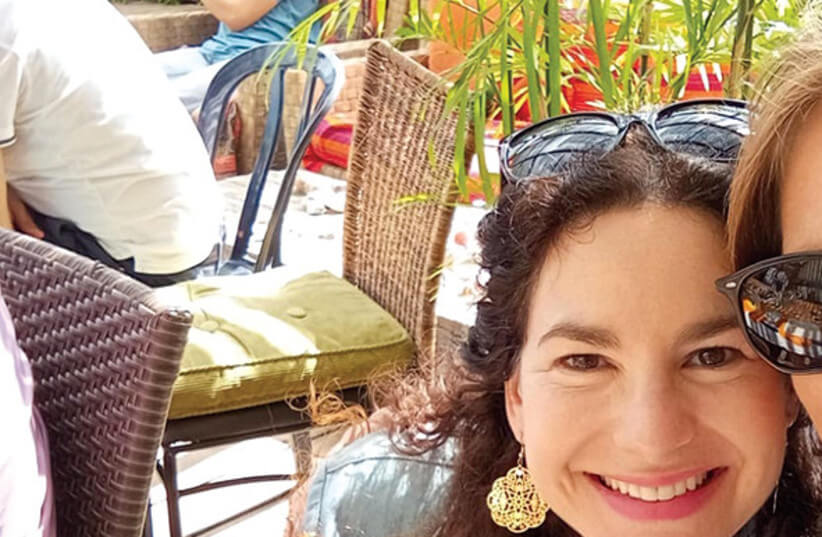
Dena Dworin of Rassco has been known to throw a kiddush or two. (credit: Dena Dworin)

Yes, you can host a kiddush

A simple kiddush really is the perfect way to host without making the rest of your week toast (har har). Being in my 40s – unlike the creative youngsters interviewed – I’m busy enough to appreciate what a great outlet it could be.

Just how do I know this? Because my former neighbor and continued good friend Dena Dworin introduced me to the art, having me over numerous times at her casa for a pre-Shabbat lunch soiree with flair and ease.

Raised in Chicago, she’s lived in Jerusalem for 13 years – first in the super-social neighborhood of Katamon and now in the emerging hotspot of Rassco (on Katamon’s edges). Dena was kind enough to enlighten us on how to throw together a kiddush with a minimum of stress, using what you have in your kitchen, and perhaps a quick jaunt to the makolet.

Dena’s baked goods: chocolate chip cookies. (credit: Dena Dworin)

“The beauty of a kiddush is you’re not as limited,” Dena shares. “You can invite more people and different social circles, and they can circulate freely.”

“If you have a special occasion, like moving into a new apartment, saying goodbye to an old one, welcoming a visiting guest, an aliyahversary or a yahrtzeit, a kiddush strikes the perfect balance,” she points out. And, if you’re cheekily trying to set up a potential couple, you can invite them to meet naturally!

Here are some of her tips for a fun and fancy-free gathering:

• People love bite-sized morsels like cookies and brownies. However, while Dena is an amazing baker (in fact, I am going to ask her for a chocolate chip mug cake after this interview), not everyone is. It’s totally acceptable to buy something sweet at Duvshanit or the supermarket.

• To contrast, it’s nice to have something healthy – vegetables with tehina or seasonal fruit.

• A must-have is coffee (and for those under the King’s banner, tea), so set up that urn and put out the Taster’s Choice. Being lactose intolerant, I ask: Is soy/oat milk a must? Jury is out, she says, so think about who’s coming.

• Round it out with something crunchy like Bamba, pretzels, or Doritos.

• Make sure to have a few drink options – wine/grape juice and soda/cola.

• In the summer, she stresses, A/C is a must.
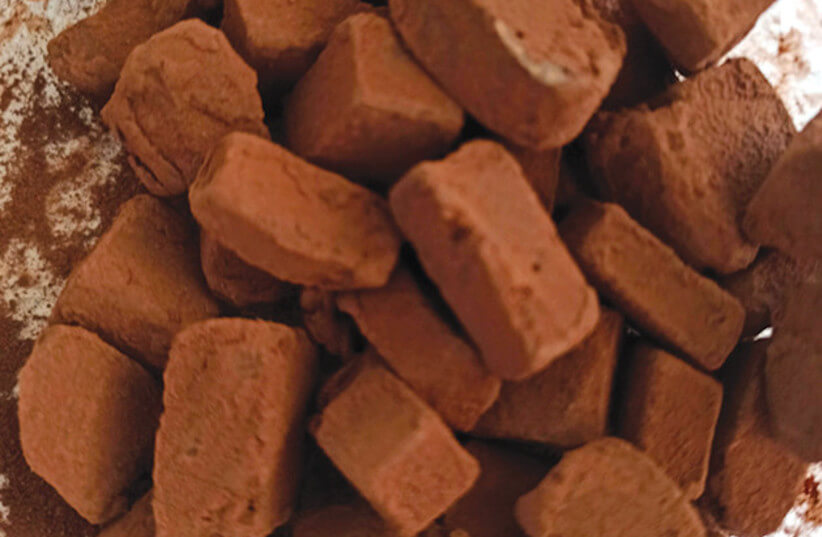
Dena’s baked goods: Chocolate truffles. (credit: Dena Dworin)

• Keep the food self-contained – chips as opposed to pistachios with shells – for a minimum of mess.

• Get some pretty, disposable plates/napkins/cups, and you’re in business!

Unlike at a meal, when you’re bringing out multiple courses, Dena notes, once you put everything out, you’re all set. So get out there and enjoy your guests!
Read more

Originally appeared in Jerusalem Post, www.jpost.org, Feb 20, 2026, IN JERUSALEM magazine.

When the Birthright group I was leading, comprised of 23 people with autism, found ourselves unable to leave Jerusalem for the Dead Sea and Ein Gedi because the roads were closed due to rain, we had to find an alternative plan – FAST! And it had to be in Jerusalem so we would stay on track for our lunch reservations at Focaccia Bar and doing community service at Colel Chabad’s Pantry Packers. With such a busy day ahead, the chosen activity would have to start in half an hour! 

The tour guide and I got off the bus when we got the last-minute news of the road closure, took out our phones, put on our thinking caps, and began to brainstorm from the limited number of indoor options that could accommodate a fairly large group at a moment’s notice. We took a chance and called a place we hadn’t known about: The Hebrew Music Museum.

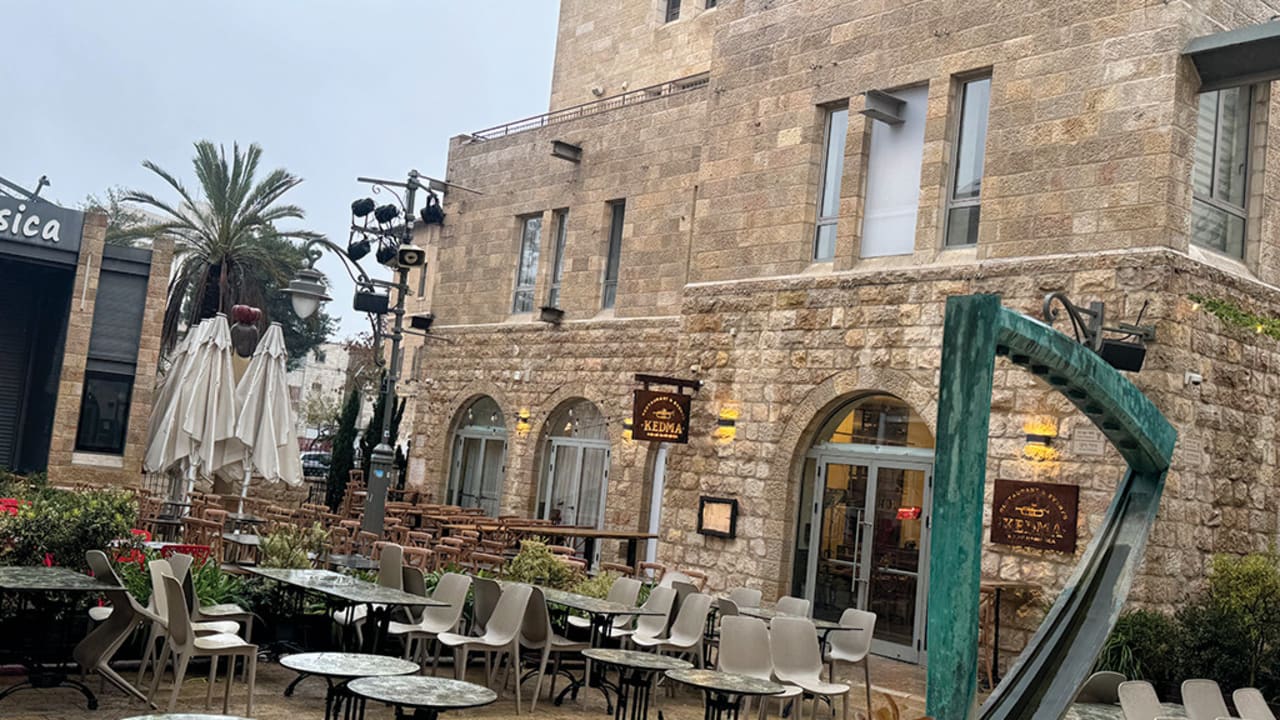
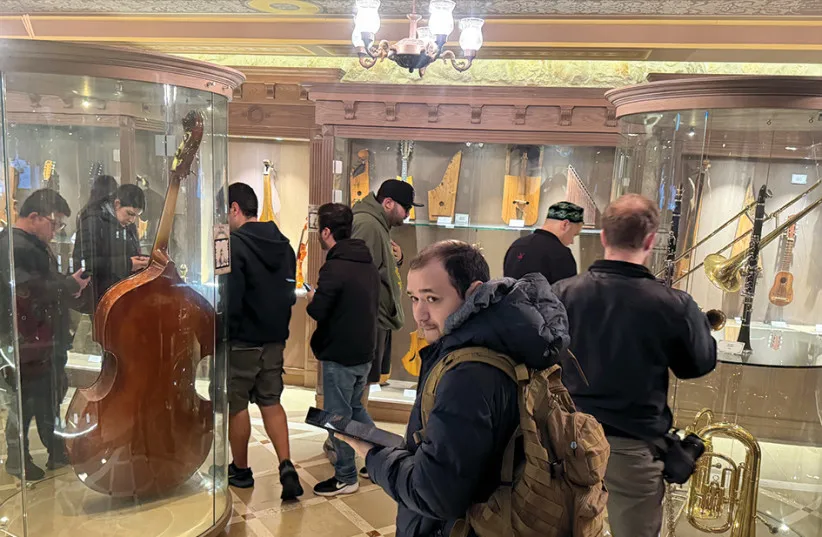
Within 30 minutes, our group, which included a participant with quadriplegia who required a fully accessible space, were exploring and sampling instruments which most of us had never heard of from various countries and periods of history. This gem of a museum, in the Nahalat Shiva neighborhood at Kikar Hamusica (Music Square), had a talented musician and guide on hand, Roi Baruch, who could demonstrate the instruments and explain them in English. Available languages for tours also include Spanish, Hebrew, French, and Russian – but not usually at the drop of a hat like ours.

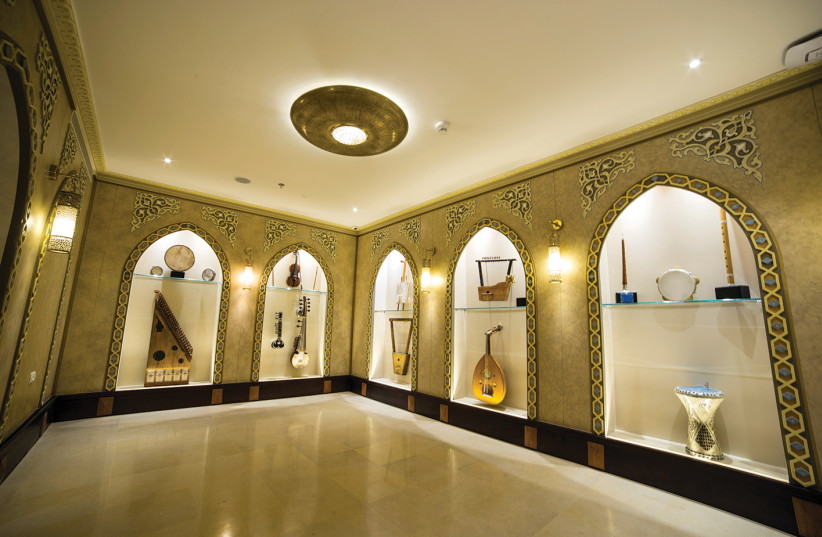
Our tour included explanations, stories, and demonstrations – and, perhaps most importantly, a chance for our Birthright participants to try out the instruments. It is also possible to tour the museum’s seven rooms in a most impressive architectural structure using audio-visual technology with “Grandpa Levi,” its animated guide.

Each room presented a different region or culture: Central Asia; Morocco-Andalusia; Europe-Ashkenaz; Africa, Ethiopia, and Yemen; the Balkan Peninsula; Iraq, Syria, and Egypt; and ancient Hebrew nations. The latter includes instruments of ancient times and a virtual reality tour of the instruments used by the Levites in the Temple.

Birthright group for people with autism spectrum disorder enjoy the Hebrew Music Museum, a fortunate last-minute substitution when the road to the South was closed due to heavy rain. (credit: HOWARD BLAS)

It was my first time experiencing virtual reality, and I was mesmerized by the Holy Temple – and its sacrifices – coming alive. I should have listened to Baruch when he suggested that I take a seat. The 3-D experience was so realistic, that I felt unstable standing while watching the action unfold in front of me.

School groups and most casual visitors will be so taken by the instruments and the Temple that they may not stop to contemplate how this privately funded museum got here and how it fits into the larger gem of a “musical square” in the heart of Jerusalem. Museum founder Laurent Levy, a lifelong lover of music – and CEO of the successful Optical Center chain – has reported that he draws inspiration from many places, including the Temple Mount in Jerusalem.

“The idea becomes tangible, and I conceptualize innovative concepts to the last detail,” Levy said. “I instill in each of these works a strong desire that every user can see the beauty and hear the good, and hence make the world a better place.” He added, “I am also inspired from study of the Torah, the Talmud, the Kabbalah, and the biblical prophets. I consider every human being a source of inspiration and try to learn from everyone, regardless of age, culture, or nationality.”

Instruments on display at the Hebrew Music Museum. (credit: Courtesy Hebrew Music Museum)

Levy made aliyah in 2005, established an online optical center in 2006, and opened his first Israel Optical Center in Jerusalem in 2007. A year later, the center also included a hearing aid department.

Music Square becomes cultural hub

The entrepreneurial, creative Levy next launched a Jerusalem apartment rental website, wrote a book titled The Seven Keys to Success, and in 2014 ventured into the Jerusalem music sphere. He opened Kikar Hamusica that year, followed by the Blue Hall Music pub and the Kinor b’Kikar (Violin in the Square) restaurant. In 2016, he opened the Hebrew Music Museum and has since established his sixth restaurant in Music Square.

Thanks to Levy, visitors of all ages to Jerusalem have ample opportunities to experience music – and get a great pair of glasses! Our Birthright group is appreciative that Levy and the talented staff of the museum truly helped turn our rainy-day disappointment into a morning of fun and engagement through music. I look forward to bringing future groups in nicer weather to experience daily live performances in Music Square of every genre – from jazz and samba to rock and roll, reggae, and klezmer.

Live music, interesting instruments, and flavorful food – all in one place, all provided by one enterprising guy!

Hebrew Music Museum 
10 Yoel Moshe Salomon St. 
Tel: (02) 540-6505 
Sun.-Thurs., 10 a.m.-7 p.m. 
Fri., 10 a.m.-2 p.m.
NIS 60 adults. NIS 45 children 
and senior citizens. 
NIS 40 students. NIS 32 soldiers and people with disabilities.
hebrewmusicmuseum.com/

Read more

Original Article Published On the Jerusalem Post

A new exhibit at the New-York Historical Society brings the famous writer’s journey back to life.

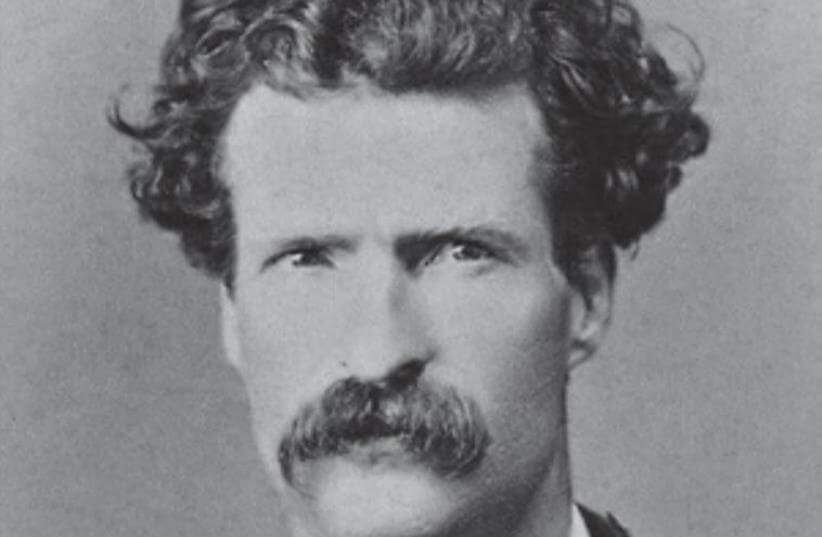
NEW YORK – In 1867, future Zionist leader Theodor Herzl was seven years old, and the Civil War in the United States had ended two short years ago. That same year, Samuel Langhorne Clemens, known to fans of Tom Sawyer and Huckleberry Finn books as “Mark Twain,” did what a handful of Protestant lovers of the bible did in those days – he set off for the Holy Land.

Twain found a clever way to get himself aboard a luxury cruise trip of a lifetime. He arranged to write a series of newspaper columns for a California newspaper and set off from New York’s harbor on the steamship Quaker City. The five-and-a-half-month excursion featured stops in Europe, the Mediterranean and the Holy Land.

An impressive collection of maps, documents, costumes and photographs – mostly from the Shapell Manuscript Foundation – and the only known film clip of Mark Twain, shot in 1909 (incorporated in to the 2017 documentary Dreamland: Mark Twain’s Journey to Jerusalem, narrated by Martin Sheen), are on display in the Mark Twain and the Holy Land exhibit, through February 2 at the New-York Historical Society’s museum and library in New York City.

The exhibit, which occupies a very small, narrow room on the second floor of the impressive museum, was packed on a recent Friday on the day after American Thanksgiving.

“You don’t usually associate Mark Twain with Israel,” observes Jody Friedman of Manhattan’s Upper West Side. “It is cool to see Israel through his eyes.” Friedman was here with sons Ethan, 9, and Caleb, 6, and enjoyed showing them such familiar scenes as the Western Wall and the Damascus Gate as they appeared in photos from Twain’s trip more than 150 years ago. Friedman plans to go back for a guided tour of the exhibit with her congregational rabbi, Dr. Meir Soloveichik of Congregation Shearith Israel. Soloveichik is also the director of the Zahava and Moshael Straus Center for Torah and Western Thought at Yeshiva University.

Another visitor, Eric Douglas, learned of the exhibit when in Manhattan from Sacramento, California, six weeks ago visiting his daughter. He was looking forward to visiting the Twain exhibit on his Thanksgiving trip to New York.

“I love Mark Twain and am a lifelong student,” he says. “I read Innocents Abroad, and I am a lover of travel and travel writing.” Douglas is referring to Twain’s 1869 travel book entitled, The Innocents Abroad, or The New Pilgrims’ Progress, which chronicles his half-year journey in a humorous, irreverent, incisive fashion. The book sold more than 70,000 copies in its first year and remained the best-selling of Twain’s books throughout his lifetime – outselling his better known classics, The Adventures of Tom Sawyer (published in 1876) and The Adventures of Huckleberry Finn (1884). “In a way, he is the funniest and most engaging travel writer of all time,” says Douglas.

Douglas observes, “The exhibit is very compact and packs a wallop!” He enjoyed the “interactive case” with maps, photos and narrations. Visitors can view “Follow the Journey at Sea,” “Explore Maps from Twain’s Time,” and “Meet the Photographers,” including Francis Frith, Felix Bonfils and William E James. Douglas’s favorite object on display was the Parker Brothers board game, The Amusing Game of the Innocents Abroad. Douglas remarks with a smile, “I would love to rip it out of the case and take it home!”

TOVA WARREN, in town from Hampton, Virginia, with her husband to spend Thanksgiving with her daughter, son in law and granddaughter, also enjoyed seeing familiar scenes. “I lived and worked in Israel for three years,” she reports. “We go back five generations in Jerusalem!”

Warren was especially impressed with the large map tracing Twain’s travels – by ship and train – from New York City on June 8, 1867, via Marseilles, Paris, Milan, Venice, Florence, Rome, Naples, Athens, Constantinople, Odessa, Smyrna, Beirut, Damascus, before arriving in Jerusalem on September 23. He arrived back in New York on November 19, 1867, after stops in Cairo, Alexandria, Tangiers and Bermuda. “Now that I am 70, I don’t take planes anymore,” says Warren. She can relate to Twain’s boat travels, as she and her husband recently returned from a trip they took in May on the cruise ship Queen Mary from the United States to the UK and Ireland and back to the US.

When Twain read an advertisement for a voyage to Europe and the Holy Land, he sensed a golden opportunity. He persuaded the Alta California newspaper to cover the $1,250 cost of the trip in return for weekly columns. Twain next convinced the captain to give him a spot on this high-end steamship, which featured a library, printing press, piano and pipe organ.

As the free museum pamphlet outlining the five parts to the exhibit notes, “For American Protestants, the Holy Land conjured up awe, reverence and mystery. Their visions were shaped by romantic travel literature that described Palestine as majestic and grand. In reality, this area, known as Palestine, was a province of Syria and an impoverished backwater of the declining Ottoman Empire.”

Visitors to the exhibit were similarly impressed in a nostalgic kind of way by the maps and photos of the Holy Land, and by the fact that Twain had ventured there so many years before such travel was in vogue. Twain, however, found the Holy Land disappointing. Israel was not all what he had expected.

Benjamin Shapell, president of the Shapell Manuscript Foundation, observes, “Musing about the voyage in a passage later published in Innocents Abroad, Twain so aptly noted: ‘Travel is fatal to prejudice, bigotry, and narrow-mindedness.’”

“That his travelogue espoused such a liberal sentiment while at the very same time also exposing the deep closed-mindedness of his fellow shipmates is the very reason why Twain’s biting perspective comes across as so fresh to us even today,” Shapell says.

Twain was not the only famous person of his time to visit the Holy Land in the 1800s. Author Herman Melville traveled there in 1857. The exhibit features letters by such notable fellow travelers to Palestine as President Ulysses S. Grant, Gen. William T. Sherman and Theodore Roosevelt.

A lithograph by David Roberts, the first professional artist to visit the Near East without a patron or a connection to a military expedition or missionary group, is also on display. Roberts sailed to Alexandria in 1838 and for 11 months traveled up the Nile River, across deserts and mountains, through Egypt and the Holy Land. He arrived in Jerusalem on Easter 1839 – almost 30 years before Twain’s arrival. His sketches and paintings provided the basis for the 247 lithographs published with text between 1842 and 1849.

Shapell notes, “We are pleased that the New-York Historical Society has brought together these rare manuscripts and artifacts, bringing Twain’s lively, influential, and singular experience to life.” The exhibit also provides useful backdrop and insight for students of Middle East history as they continue to discuss and debate various narratives about Palestine (the Land of Israel) in the 1800s.

Read more