Originally appeared at JNS.org on July 2, 2026
Thousands of Jewish athletes from a record 43 countries gathered at Teddy Stadium to launch the “Jewish Olympics,” with moving tributes to hostages, wounded soldiers and Israel’s fallen.
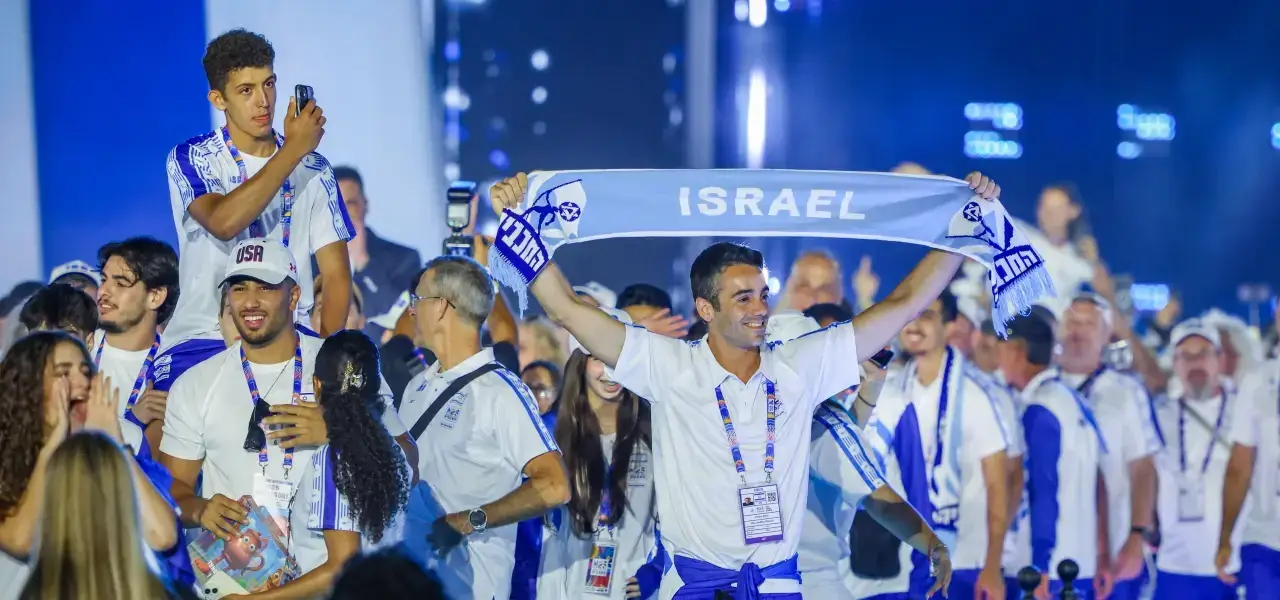
Delegations of Jewish athletes from a record 43 countries entered a packed Teddy Stadium on Wednesday night to cheers from family members, fellow countrymen, Israelis from across society, government officials and a lineup of Israeli performers, officially opening the 22nd Maccabiah Games.
Some 3,000 athletes—from children to seniors and Paralympians—from five continents traveled to Israel for “Maccabiah 2026: More Than Ever!”—which was postponed from 2025 because of the war. They are joined by about 2,000 Israeli athletes competing in events across the country through July 13.
While Israel’s political leaders and dignitaries delivered brief remarks, the evening belonged to the athletes. The dominant theme—felt throughout the stadium and by millions watching on television—was Jewish unity and Israel as the homeland of the Jewish people.
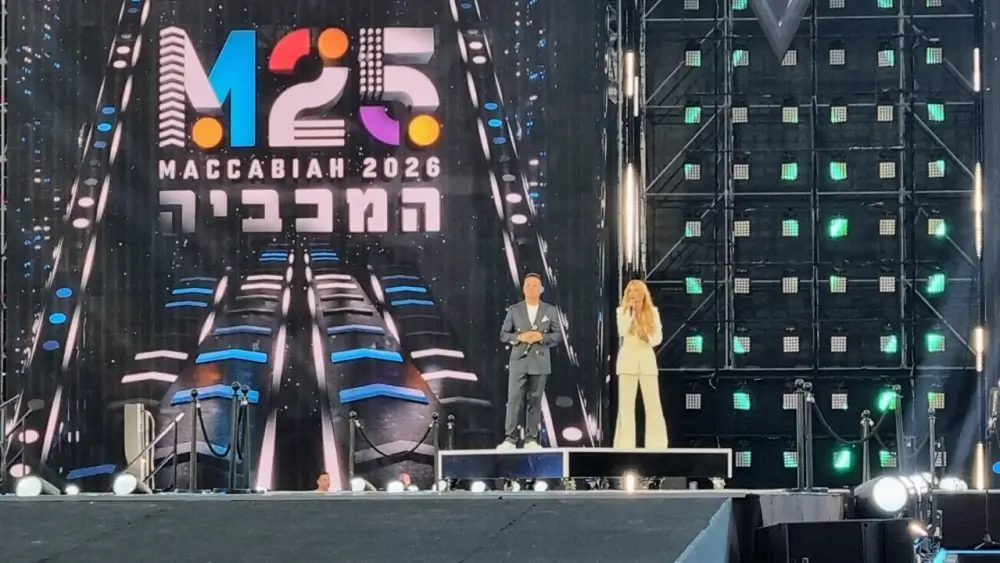
That message came through in musical performances, dance numbers, inspiring videos and commentary by hosts Michael HarPaz and Montana Tucker, who introduced each delegation with anecdotes highlighting the athletes’ journeys to Jerusalem.
Determination to be here
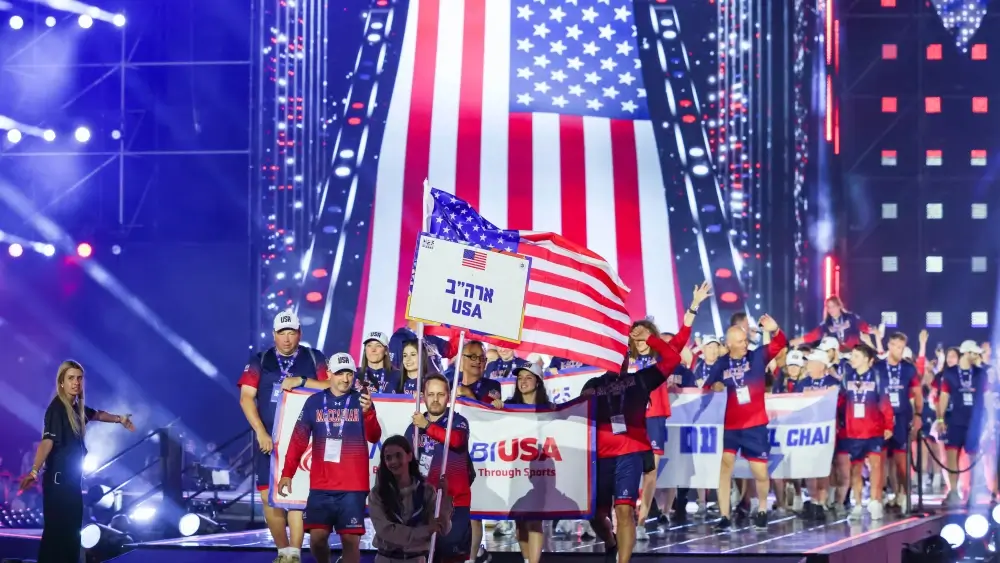
The delegations entered alphabetically, from Argentina—with 272 athletes ages 13 to 85 following a journey of more than 24 hours—to Zimbabwe. Host nation Israel, with approximately 2,000 athletes, entered last to a thunderous ovation.
HarPaz and Tucker highlighted stories from many delegations. Australia’s participation remained uncertain until just 15 days before the Games. Austria has participated in every Maccabiah since 1936. Cuba brought 51 athletes, many of whom have made aliyah in recent years. Hungary’s delegation included an 87-year-old Holocaust survivor. India, home to some 4,000 Jews among a population of 1.4 billion, sent a delegation, while Mexico arrived with 353 athletes, including three generations of one family. A father-and-son team from the Philippines switched from squash to table tennis simply to compete. Taiwan participated for the first time.
The United States, with about 900 athletes—the second-largest delegation after Israel—entered to Bruce Springsteen’s “Born in the U.S.A.”
Celebration and remembrance
The ceremony blended celebration with remembrance.
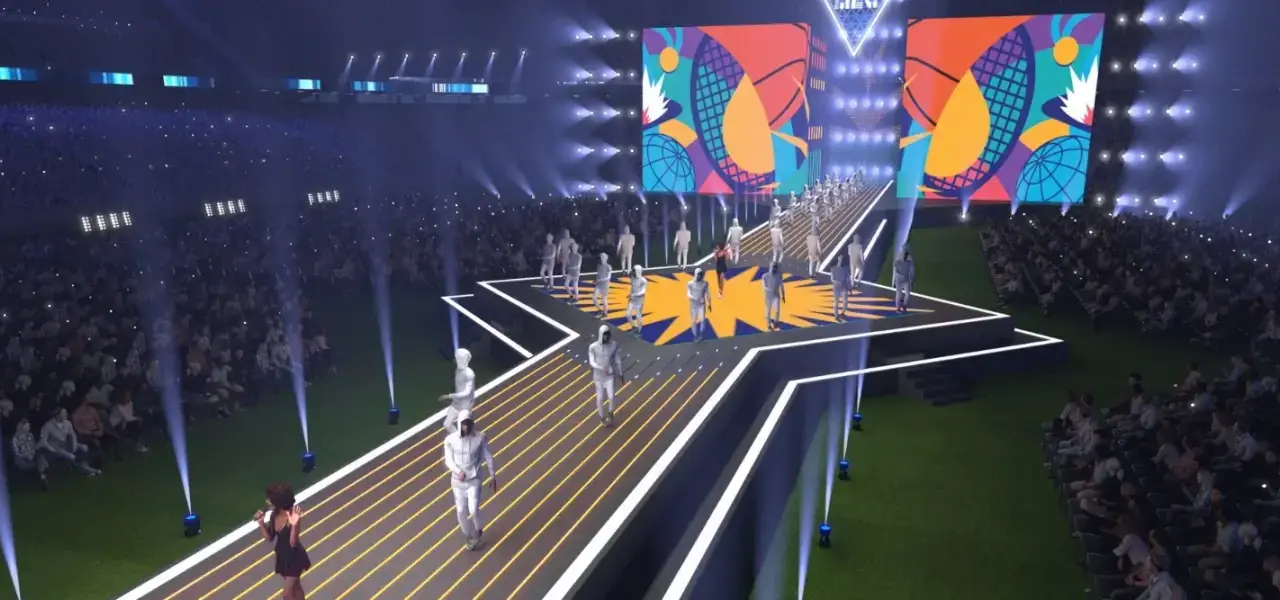
Athletes on the field and spectators in the stands witnessed the raising of the Israeli, Jerusalem and Maccabiah flags, the singing of “Hatikvah,” fireworks, musical performances, dance routines and tributes to Israel’s heroes. Audience members were encouraged to sing, dance and illuminate the stadium with their cellphones.
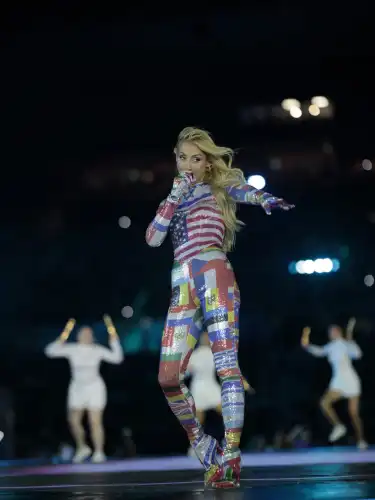
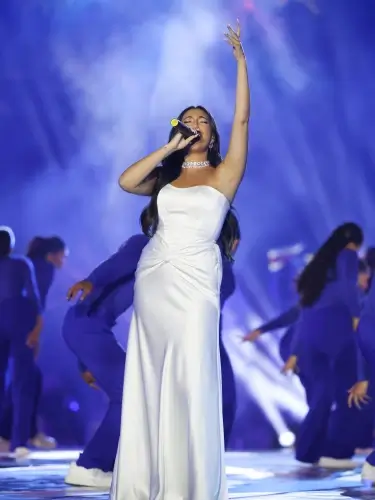
Among the evening’s performances, American singer, actress and influencer Montana Tucker debuted her new song, “We’re Not Strangers,” while wearing an outfit adorned with flags from around the world. 2018 Eurovision Song Contest winner Netta Barzilai and Israeli pop star Anna Zak performed a duet, while Eurovision 2026 runner-up Yuval Raphael also took the stage.
Israeli musician Idan Raichel performed with former hostage Daniella Gilboa, and Itay Levy appeared alongside dozens of dancers. Television host Assi Azar and dancer Anna Aronov co-hosted portions of the ceremony.
Some of the evening’s most emotional moments included a video message from former hostage Edan Alexander, who returned to IDF service after spending 584 days in Hamas captivity; the entrance of the Maccabiah flag carried by family members of the 12 Druze children killed in the 2024 Hezbollah rocket attack on Majdal Shams; the traditional Yizkor memorial service; and the traditional torch procession led by Evyatar Zeituni, an IDF Paratroopers Brigade officer seriously wounded while defending Kibbutz Kissufim on Oct. 7, 2023.
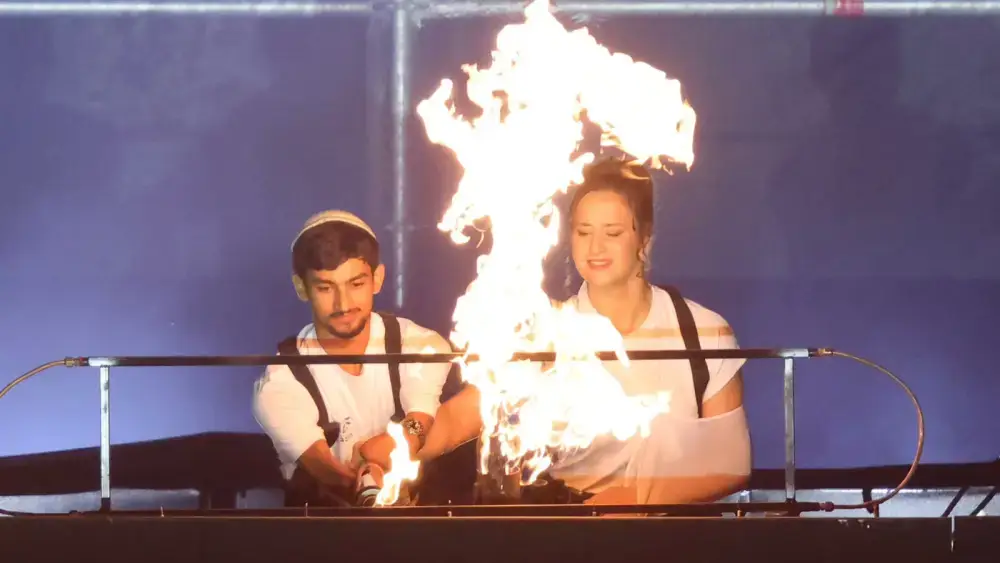
Israeli Paralympic taekwondo champion Asaf Yasur passed the torch to Olympic silver medalist Inbar Lanir, and together they lit the Maccabiah flame.
Athletes also recited the traditional Maccabiah oath—“Ani Nishbah” (“I swear”)—pledging to compete fairly and uphold the spirit of the Games.
Danny Maron/Flash90
Leaders emphasize Jewish unity
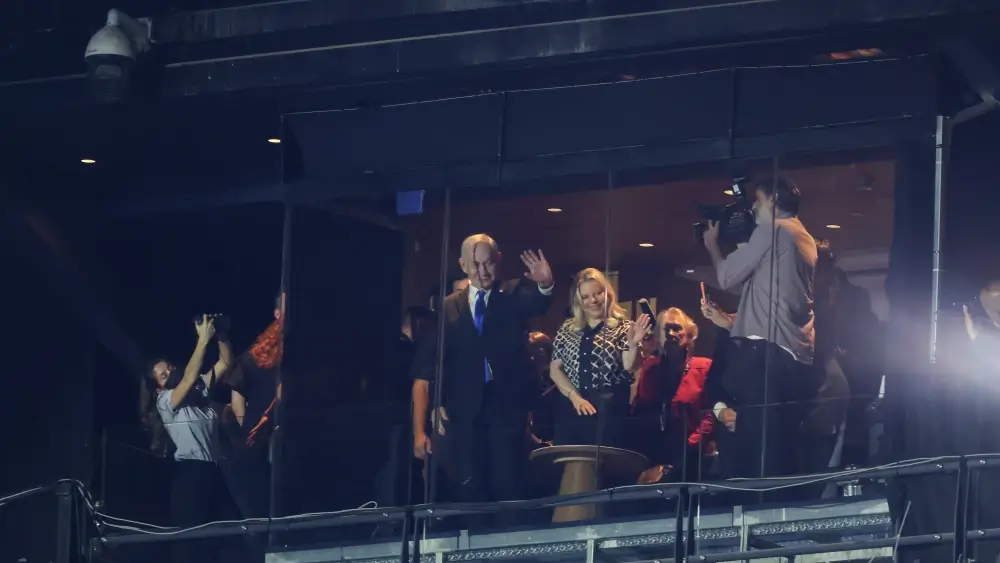
IsraeliPresident Isaac Herzog, Prime Minister Benjamin Netanyahu, Jerusalem Mayor Moshe Lion and Maccabiah leaders delivered brief remarks focused on Jewish unity. Culture and Sports Minister Miki Zohar also attended.
“The energy at Teddy Stadium is electrifying,” Herzog said. “There is no doubt that Am Yisrael Chai (The Nation of Israel Lives).” He welcomed participants to their “home away from home” and spoke of partnership, determination and the need to confront rising antisemitism.
Netanyahu began his remarks in Hebrew before switching to English. “If you don’t know Hebrew, study it,” he told participants. “It is your country. We welcome you with open arms.”
Calling Jerusalem Israel’s “eternal and undivided capital” and asserting that the Jewish people are “one nation, one family with one destiny,” he urged Jews worldwide to stand proudly in the face of rising antisemitism.
“People respect only those who respect themselves,” he said. “In the face of antisemitism, stand tall! Say, ‘Yes, I am a Jew. I am proud to be a Jew.’ We will win. Am Yisrael Chai!”
Lion emphasized the bond between Israel and the Diaspora.
“I hope the Maccabiah will serve as a true bridge connecting brothers and sisters in the Diaspora to Israel,” he said. “The most important victory is that we are gathered together in Jerusalem.”
Maccabi World Union Chairman Amir Peled addressed participants by video, while Maccabiah World Union President Michael Siegal welcomed athletes and spectators to the Games.
“We are thrilled that the Games are taking place,” Siegal told JNS. “The fact that thousands of people have chosen to come to Israel at this moment is tremendously important for the connectivity of the Jewish people. To bring Israel what is considered a normal event is historic. And to celebrate sports, mindfulness and strength—we are ecstatic.”
Siegal and Herzog then jointly declared, “Light the torch,” initiating the ceremony’s official torch-lighting procession.
Families reunite
Many spectators came to support relatives competing in the Games.
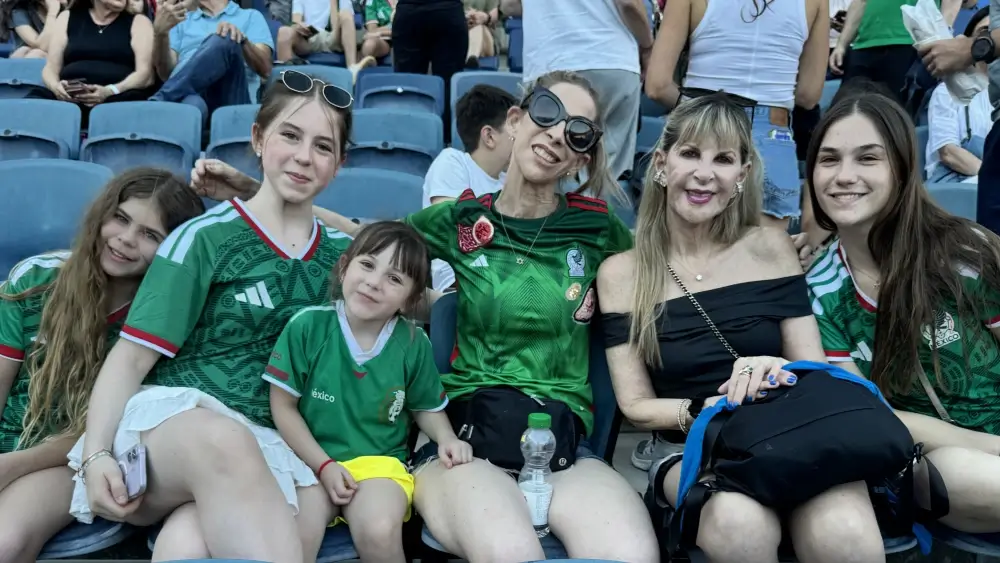
Sophia Cohen, 20, of Miami, attended with fellow students from Reichman University. Having attended five previous Maccabiahs with her family, she hoped to cheer on relatives competing for Venezuela.
“It is such a fun event,” she said. “You see Jews from all over the world. It’s our version of the Jewish Olympics.”
One cousin was unable to compete for Venezuela because of the war and the recent earthquake but instead played soccer for Spain.
Karla Berman of Mexico City came to cheer several family members. Her father, Jorge Berman, competed in the men’s 70-and-over tennis division, her husband Carlos Schwartzman played soccer and her 16-year-old daughter competed in her first Maccabiah.
“Our family is very sports-oriented and very Zionistic,” she said. “I think the Maccabiah, the State of Israel and Chabad are the three greatest movements of the Jewish people in modern times.”
The opening ceremony marked the official start of the Games, although some competitions began earlier in the day. The Maccabiah continues through July 13 with competitions in more than 40 sports across junior, open, masters and Paralympic divisions, along with community events including fun runs and Expo Maccabiah City in Tel Aviv.
The opening ceremony and sports competitions can be viewed on the Maccabiah 2026 website.