Originally appeared in JNS, www.jns.org, Mar 06, 2026.
From roadside missile strikes to reinforced wards, two physicians tell JNS how their hospitals adapt under fire—and why they remain committed to their work.
Before March 1, all of Dr. George Asfour’s medical interventions took place in hospital operating rooms. They did not involve running from his car on a highway after a missile attack, assessing the wounded, extracting a patient with a head injury and treating him on the spot.
But that changed one night in Jerusalem, a day after the United States and Israel launched a joint military operation against Iran.
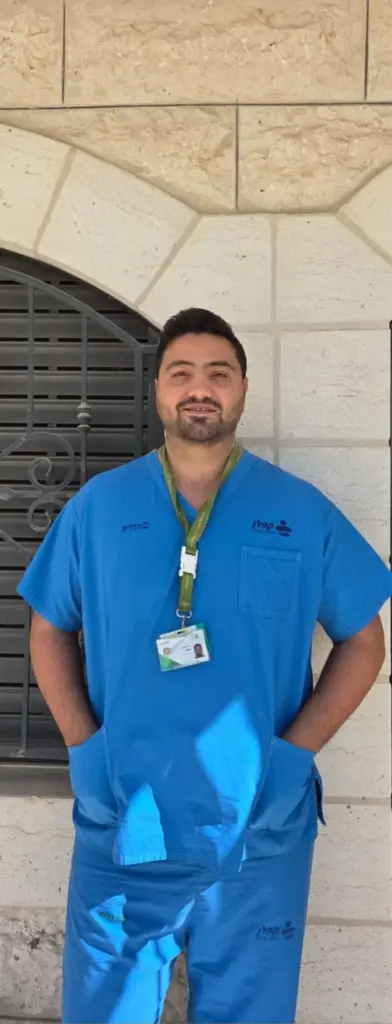
Asfour, 36, thought his day of caring for patients—which began at 7 a.m. that Sunday—had ended after completing his rounds, performing three scheduled surgeries and checking on his patients one last time.
The Jerusalem resident, a senior surgeon at Kaplan Medical Center in Rehovot, was driving home around 10 p.m. when he heard sirens on a main road near the Ramat Shlomo neighborhood.
“I heard a siren, then saw and heard a missile explode on the opposite side of the road,” Asfour tells JNS in a video interview.
“I stopped the car, checked to make sure there were no injuries, saw three damaged cars and heard people shouting. Without thinking, I ran and removed a man from the car and helped evacuate them.”
“When I saw these cars, I only thought if they needed help—and jumped from the car. In that moment, I didn’t think of anything else,” he adds.
One man had head and eye injuries, while two others sustained milder wounds, he recalls. After ambulances and police arrived and transported the injured to the hospital, Asfour drove home.
Back home, he turned on the television and reflected on what had just happened. His wife questioned his decision to run toward the blast scene. He did not tell his daughter, 7, or his son, 3, about the incident, though he acknowledges they may eventually see footage of it online.
Even his boss, Dr. Barak Bar-Zakay, director of the Hepatopancreatic and Biliary Tract Surgery Unit at Kaplan Medical Center, was surprised to see him back at work early the next morning.
“He was in shock,” Asfour says. “He asked, ‘What are you doing here?’ and said what I did was fabulous.”
For Asfour, his response was part of the job—especially during wartime.
The Jerusalem native studied medicine for six years in Egypt before completing internships and residencies at Hadassah Medical Center in Jerusalem and Kaplan Medical Center in Rehovot.
He had originally been scheduled to be off on Saturday, Feb. 28. Instead, a call from Bar-Zakay changed his plans.
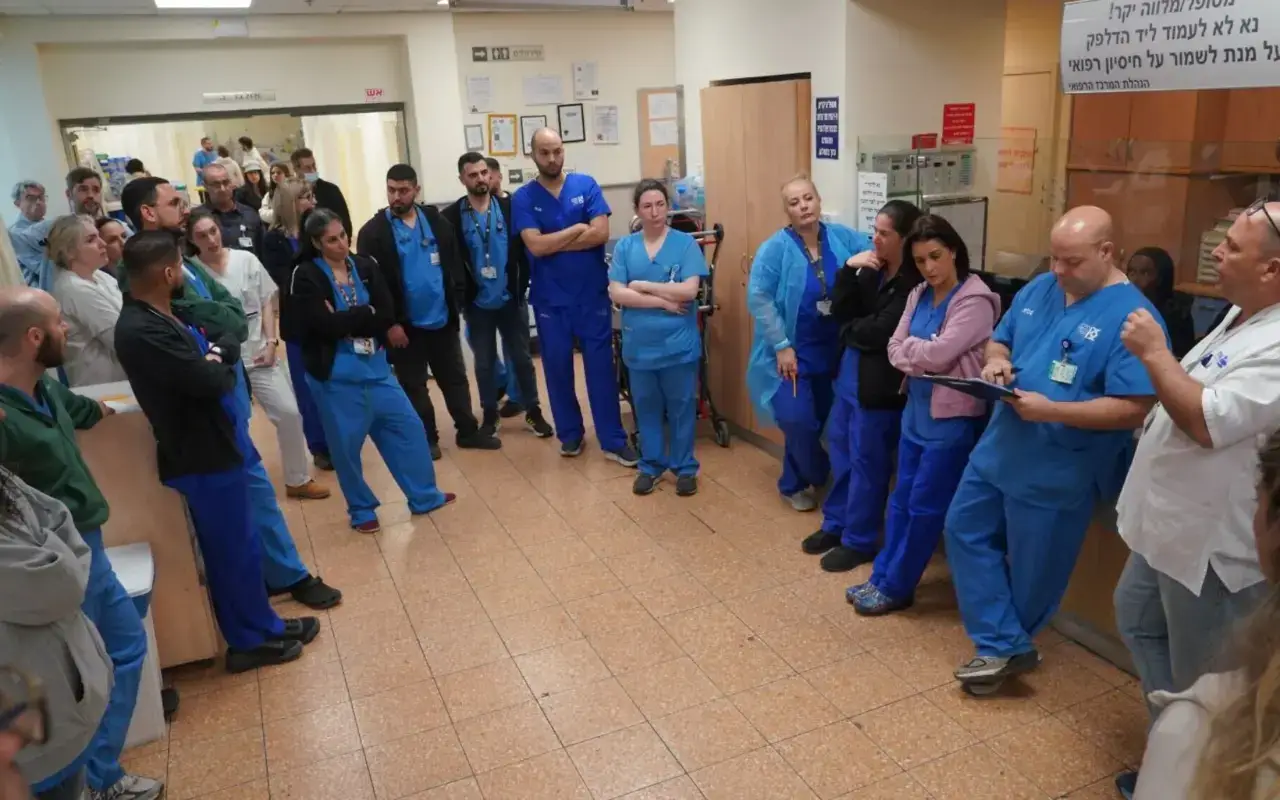
By 10 a.m., he and his team had moved patients, equipment, supplies and medications from the fourth floor to the safer first floor.
“It was a hard day,” Asfour recalls. He left the hospital around 9 p.m. and returned by 7 a.m. the next morning.
After 8 a.m. rounds, the team discovered that three patients—including one suffering from sepsis, a potentially life-threatening condition that can lead to shock and organ failure—required surgery.
“We prepare for surgery at 9 a.m., but there are only a limited number of operating rooms because not all of them are protected,” he says.
War transformed the hospital environment dramatically, he explains. “Everything changes,” Asfour says. “It is a stressful place.”
Patients were moved to the first floor, where departments shared crowded spaces.
“It is not your department with patients in their own rooms,” he says. “It feels like the emergency room with all the beds together. No one feels comfortable because there is another patient right next to you.”
Asfour and his colleagues divided their time among the emergency room, intensive-care unit and operating rooms.
Despite the pressure, he says the hospital staff functions like a family. “All of the doctors respect each other and treat each other like family,” he tells JNS.
He adds that he has never been treated differently because he is an Arab physician. “I feel like I am home,” he says “Everyone in the hospital loves each other.”
For that reason alone, he says, he is willing to drive 40 minutes each way to the hospital every day.
The patient he treated at the roadside, he reported, is now recovering at Shaare Zedek Medical Center in Jerusalem.
From Philadelphia to Beersheva
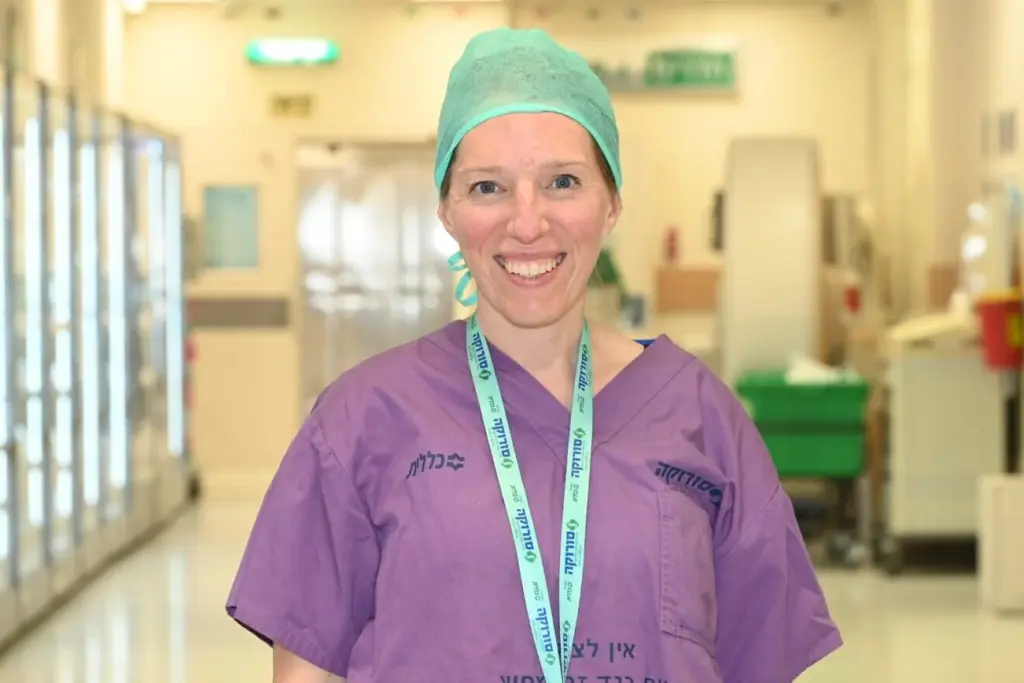
At Soroka Medical Center in Beersheva, cardiothoracic surgeon Dr. Tiffany Schatz says her patient care has remained inside the hospital.
The Philadelphia native, a mother of three children aged 7 to 15, completed medical school at Ben-Gurion University of the Negev in Beersheva and surgical training in the United States. After years of practice in the U.S., she and her family made aliyah in April 2025, and she began working as a surgeon at Soroka.
Schatz, 43, says her medical expertise is frequently sought outside the hospital as well. “Last week we were having dinner with friends who mentioned a respiratory problem going on for two months,” she tells JNS. “I helped him get admitted to Soroka.”
Since the start of the current war, dubbed “Operation Roaring Lion,” Schatz says the hospital has maintained a sense of normalcy while adapting to wartime conditions.
Patients who could be discharged were sent home and elective surgeries were canceled. But cancer operations—her specialty—continued. “There is still lots of cancer surgery,” she says, as the hospital continues handling routine emergencies. “We treat someone who falls from a ladder and are ready for anything to happen.”
On Purim, nurses tried to maintain a festive spirit. “They wore silly wigs and took normal care of patients,” she says, smiling. “But the news was playing at the corner of the desk—a reminder that things are not normal.”
Another reminder came when a nurse arrived for work, reporting that a rocket strike in her neighborhood had blown out the windows of her home.
“There is no ability to stop and lament,” Schatz says. “Israelis just show that life goes on.”
Although her duties had not changed significantly so far, Schatz says staff members remained ready to be reassigned wherever needed. One colleague, she notes, was recently relocated to Yoseftal Medical Center in Eilat.
Balancing hospital responsibilities while her children remained home from school during wartime was challenging. Some acquaintances in the United States asked whether she planned to return.
But Schatz says she has no regrets about making aliyah. “Some people think we are nuts,” she says. “But this is where we are supposed to be. The war is not a reason to reconsider. This is part of the deal. This is our chance to help keep Israel going and be part of its future.”