Peter Kurz

Originally appeared in Jerusalem Post Magazine on October 16, 2026

Peter Kurz recounts the improbable journey of Israel’s baseball team to the Tokyo Olympics, sharing behind-the-scenes stories, challenges, and personal triumphs.

The Major League Baseball World Series victory of the Amazing Mets in 1969 and the Six Day War of 1967 were two formative events that set Peter Kurz – who made aliyah in 1989 – on the path of combining his two loves, baseball and Israel, and taking baseball in Israel from almost nonexistent to Olympic competitor.

Kurz used his passion, hard work, and chutzpah to systematically shepherd Team Israel on the long and improbable road to the 2020 Olympics (postponed to 2021 due to COVID) in Tokyo – an occurrence so unlikely that it is often compared to the Jamaican bobsled team competing in the 1988 Calgary Winter Olympics.

In his new book, Where Traditions Meet: The Personal Inside Story of the Israel Baseball Quest for Olympic Gold, Kurz offers exciting anecdotes and behind-the-scenes stories, while chronicling (sometimes in laborious detail) the history of baseball’s rise in Israel.

Kurz held nearly every position in the Israel Association of Baseball over the past 25 years, including longtime president and secretary-general and general manager of Israel’s Olympic baseball team. He is still trying to understand why he was recently voted out of office – an experience he addresses in the final three pages of the 225-page book.

Where Traditions Meet is cleverly told in nine “innings” (or chapters) – the number of innings in a regulation baseball game – with a prologue and epilogue.
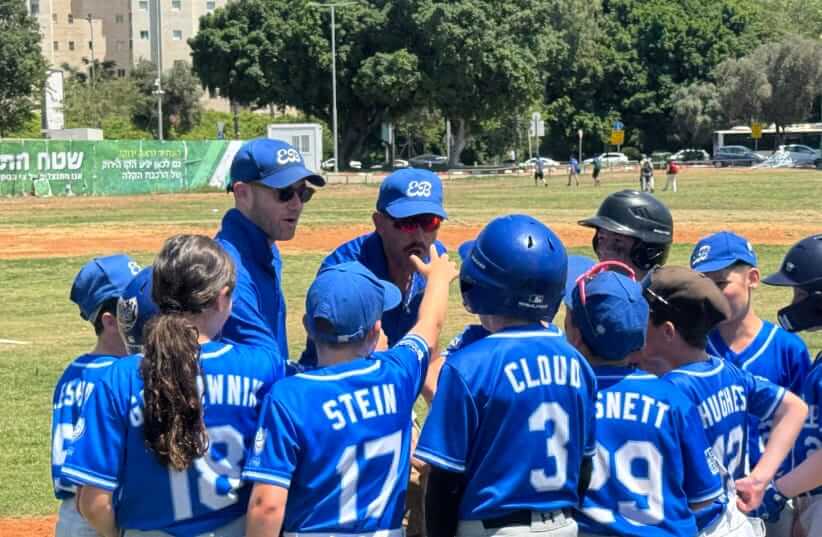
Young Israeli baseball players take part in a practice session as the sport continues to grow, with youth programs expanding into communities across the country. (credit: IAB/Courtesy)

The First Inning shares Kurz’s experience growing up as a “typical kid born in America in the Fifties and raised in the Sixties.” His parents were Holocaust survivors who worked hard to make a living and raise their kids on Manhattan’s Upper West Side.

Kurz visited Israel for the first time just after the Six Day War in 1967 – two years before his beloved Mets would make him proud by winning the World Series. “I grew up on Israel and baseball.”

The next chapter, “Second Inning: Moving to Israel and Making Aliyah,” shares his first exposure to baseball in Israel while on IDF reserve duty in 1989. A friend told him that his son was playing baseball in a league. Peter soon sold his son Amit on the idea. At the time, fewer than 300 children played the sport.

Kurz was recruited to become an assistant coach, coach, then head coach of the 10- to 12-year-old National Team. He notes that he was inexperienced and learned on the job. He next joined the board and became secretary-general in 2005.

Hardcore Baseball fans will appreciate the details of each bunt and balk he covers in chapters chronicling tournaments around the world, including World Baseball Classic (WBC) qualifiers and tournaments in the US, Korea, and Japan, various European tournaments and championships, and ultimately the Olympics.

It is clear that Kurz has an uncanny memory for game lineups and details, and cities and people encountered around the world.

But the behind-the-scenes stories of famous baseball players and emotional moments bring the book to life.

There was the time Joc Pederson, longtime major leaguer and current Texas Rangers outfielder and first baseman, was 20 and playing Single-A ball and wasn’t allowed into the team’s courtesy suite where alcohol was served, since he was underage.

Before becoming the manager of the Israel national baseball team, Brad Ausmus, who had an 18-year career in Major League Baseball, went on a team trip to Israel with his wife in 2012. He toured the country, surfed, and presented a team ball and jersey to then-prime minister Shimon Peres.

When Ty Kelly went to Israel, the former Mets and Phillies player brought his Jewish mother as his “plus one.”

Ike Davis, former first baseman for four major league teams, realized for the first time, while studying his mother’s side of the family tree, that many family members were killed in the Holocaust.

Jason Marquis, who played 16 major league seasons, including 10 playoff seasons, once surprised his teammates with 20 pizzas after a practice in Brooklyn.

Kurz gives players exposure to Jewish history, holidays

Kurz and his staff worked hard to give their players – most of whom come from fairly weak Jewish backgrounds – exposure to Jewish holidays and history, from Rosh Hashanah, Purim, Shabbat, and Tisha B’Av on the road, to visits to Holocaust sites in Lithuania, half a mile from their field, where 2,000 Jews were rounded up and murdered in the Rase Forest.

Kurz provides a fair accounting of the challenges as well as the happy moments he and his players faced on the road to qualifying for and competing in the Olympics.

For the WBC, players need only be eligible for citizenship in a country. The International Olympic Committee, however, requires players to be actual, legal citizens of the country they represent.

Israel’s Law of Return gives anyone with a Jewish parent, grandparent, or spouse the right to return to Israel and be granted Israeli citizenship.

Identifying players as Jewish was challenging and often required detective-like precision, as Kurz tracked down cemetery headstones and circumcision certificates and ketubot to verify Jewish status.

Convincing players wanting to represent Israel at the Olympics to make aliyah – and to endure the complex, bureaucratic process – was similarly challenging.

There were moments of luxury – like when the team flew to Israel on Sheldon Adelson’s private plane, and there was a great deal of discomfort and frustration navigating COVID restrictions and lodging in uncomfortable rooms at the Olympic Village in Tokyo.

Despite Kurz’s efforts to get the Israeli media on board, they mostly remained uninterested, thinking throughout that the American-heavy team was not “Israeli enough” to justify coverage.

Kurz has always viewed the team’s composition, with American stars, as a necessary step toward building a program that would ultimately produce a team of mostly native Israelis.

His efforts are paying off. It would have been interesting to hear more about Israel’s extensive youth program, from five-year-olds through adults.

For now, Israel baseball will go on without Kurz. But he admits, “An Olympic gold medal would look pretty on my wall!”■

WHERE TRADITIONS MEET: 
THE PERSONAL INSIDE STORY OF THE ISRAEL BASEBALL QUEST FOR OLYMPIC GOLD
By Peter Kurz
KDP
225 pages; $15
Read more

The original article is published at JPost.com

Blue-and-white baseball and softball players wear their support on their hands.

When Cincinnati Reds assistant pitching coach and former Team Israel Olympian Alon Leichman unveils his special Independence Day baseball glove next week, he will have a special group of unlikely supporters to thank.

Leichman, 34, the only native-born Israeli coaching in Major League Baseball, spent time in Israel from October 18, 2023 to February 1, 2024, where he picked oranges and avocados with Team Israel teammates, and received a great deal of support from the Reds and former teams and players, and contemplated ways he could continue to be supportive to his homeland.

When Leichman returned to the United States for Reds Spring Training, a picture on social media of a unique baseball glove caught his attention – and it would send him down the road to producing two unique mitts of his own which would contain powerful messages in support of Israel.

Leichman initially saw a photo of a two-toned blue softball glove, shared by Team Israel softball player Maddy Lewis. Her glove contained the word “Hazakim B’yachad” (“stronger together”). Her own glove story would inspire Leichman.

Lewis, 26, had a distinguished college softball career at the University of California San Diego, where she also worked in the athletics communication department. Lewis was longing to stay connected to softball after graduation. She tried out and made Israel’s national team and became an Israeli citizen in July 2023. Lewis is currently the social media and community manager for Blast Motion, a company that created a device that attaches to the knob of a baseball bat to monitor bat speed and rotation. To stay in shape for softball, she often trains on her own.

BASEBALL GLOVE designer Jake Hale (right) has been working with Cincinnati Reds assistant pitching coach Alon Leichman (left) and other Israeli athletes to create unique Israel-themed mitts (inset) in the aftermath of October 7 and the ensuing war. (credit: Jake Hale/Courtesy)

“I was running bases, hitting off a tee, and throwing against a wall at a park in San Diego when a friendly guy came up to me,” she told The Jerusalem Post.

The friendly man was Jake Hale, a self-described “old country boy from Ohio” who played minor league baseball for ten years without seeing a single day in the majors. Hale started a company called JH Performance, which includes a division that sells baseball equipment and accessories.

“I saw a girl there all the time working out,” noted Hale. “I spoke to her, and she told me she plays for Team Israel.”

Showing support through sports

Hale was trying to get into the softball glove market and offered to create a customized glove for Lewis, who immediately knew the color scheme she wanted but asked a friend to help her find a slogan to put on the glove to help remind her of the purpose and values after all that happened on October 7.

Lewis appreciated how careful Hale was in getting the Hebrew just right.

“Hebrew is right to left, which is confusing. He wanted it to be perfect!”

Fellow Team Israel softball player, Ruby Salzman, who played at West Texas A&M University, reports, was also inspired by Lewis.

“I asked, ‘what is one thing that means a lot?” recounted the self-reported “committed Jew.”

“It was cool having a glove with the Israel flag on it.”

She added the flag and the Star of David to the Hebrew word “Linshom,” (“breathe”) to her specially designed glove.

Hale is pleased with the way news of his gloves – and their messages – are spreading.

“I got Maddy her glove, she made a post, and Alon saw it.”

“When I saw it, I thought ‘maybe I should get a glove too’” said  Leichman, who decided to design his own red and black glove which he notes are “the colors of Bring Them Home.”

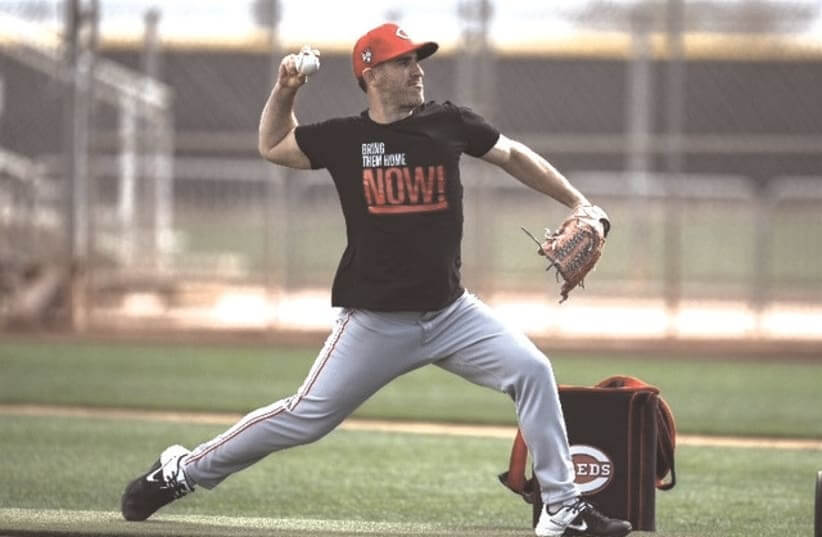
Leichman also regularly sports a “Bring Them Home” shirt on the field while practicing with his Cincinnati teammates.

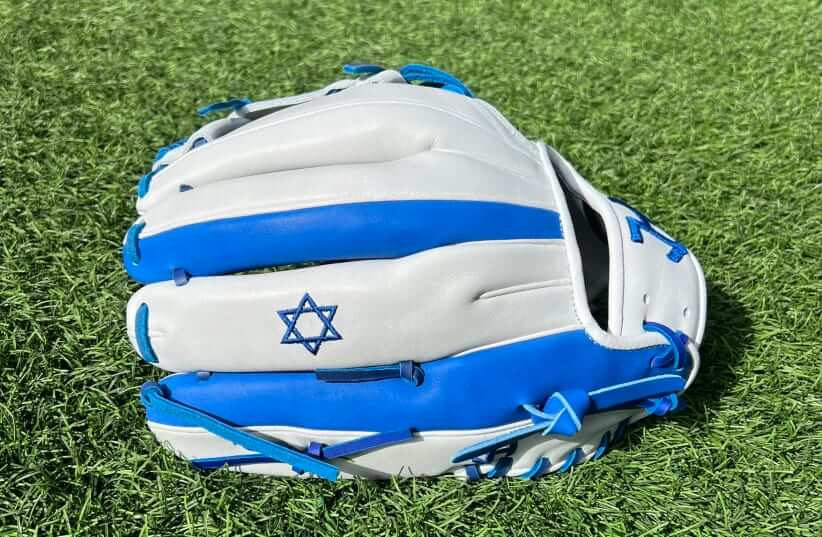
Leichman proudly noted that he has “two more gloves coming – a blue-and-white for Remembrance Day and Independence Day and a catcher’s glove.”

Hale proudly delivered the blue and white glove to Leichman when the Reds were in San Diego recently to play against the Padres.

As excited as he is about the initiative, Leichman added with concern and optimism: “I am hoping things get better back home and [wearing special gloves] won’t be a thing anymore.”

Read more

The original article is published at JPost.com

MLB’s lone Sabra stands strong with Israel from near and far as Reds’ assistant pitching coach.

In most ways, Cincinnati Reds assistant pitching coach Alon Leichman looks like all other players and coaches on the National League Central team. During games, all are clad in white pants and shirts with the word “Reds” inscribed inside of a large letter “C,” and all wear red baseball caps with the same letter “C.” And all are focused on the game.

As Leichman sits on the bench in the dugout taking copious notes on his pitchers’ form and delivery, it is not obvious that the 34-year-old is the only native-born Israeli in the major leagues (though there are other Israeli citizens throughout MLB who are not native born, including Baltimore Orioles pitcher and fellow Team Israel player Dean Kremer).

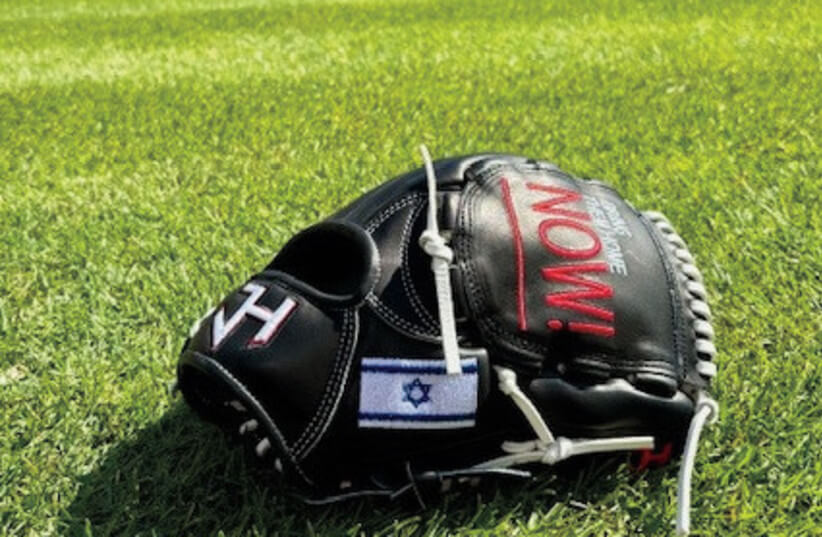
Leichman’s mind is on the game, and it is also on the situation back home in Israel. The generally quiet and humble Leichman has not been afraid to stand up for his country during these difficult times. Pictures abound of Leichman wearing a “Bring Them Home” T-shirt pitching batting practice, while sporting a black glove with an Israeli flag and the words “Bring Them Home” stitched in white capital letters and the word “NOW!” in even bigger red letters.

Leichman grew up playing baseball, a somewhat surprising fact for a Sabra. He was reared in Kibbutz Gezer, near Latrun on the road from Tel Aviv to Jerusalem. While his New York-born father and Michigan-born mother, who met in Israel after making aliyah in their 20s, were not particularly big baseball fans, the kibbutz had an affinity to American baseball.

“The kibbutz was founded by Americans and wanted to bring American culture to Israel, so all kids on the kibbutz play baseball. I happened to really like it,” exclaimed Leichman, who started playing shortstop and pitcher on his first team at age six.

Leichman’s custom designed glove. (credit: Alon Leichman/Courtesy)

Peter Kurz, former President of the Board of Directors of the Israel Association of Baseball and current General Manager of Team Israel, has known Leichman for over 20 years.

“I took Alon on his first Israel National Team trip – and my first as well – to Holland as a 10-year-old kid in 1999 – the youngest on a team of 12 year olds.”

Leichman graduated from the Brenner Regional School in 2007 and went on to serve in the Israel Defense Forces as an “outstanding athlete.”

He went on to attend junior college at Cypress College in Cypress, California, and pitched on their baseball team from 2010-2013.

“My parents supported my going to college in America to play baseball – they knew it’s what I always wanted to do.”

While at Cypress, Leichman required Tommy John surgery for a torn ulnar collateral ligament in his elbow. He then attended University of California-San Diego, where he pitched and graduated with a history degree. Leichman always knew he would continue either to play baseball, coach or serve as a scout.

The likable Israeli maintained what he describes as a “good connection” to his junior college coach, Scott Pickler, who always told him, “You will be a good coach someday.”

Leichman then had an opportunity to coach in the Cape Cod Baseball League, where he helped the Yarmouth-Dennis Red Sox win the 2016 Championship.

“I had been helping out as pitching coach and the pitcher did pretty well. It gave me the stage to work. People know each other in baseball and it kept leading to other opportunities.”

In 2017, Leichman began a six-year career in a variety of roles with the Seattle Mariners organization. In 2022, he served as pitching coach of the AAA Tacoma Rainiers of the Pacific Coast League.

Leichman continually stresses how gradual the progression is from playing in college to coaching at the various levels in professional baseball. In December, 2022, Leichman was named assistant pitching coach for the Cincinnati Reds.

“It has been a good dream come true to coach here,” Leichman said of Cincinnati. “Every step of the way prepares you for the next step.”In his current role, he charts each game from the dugout.

“I make sure guys are on track and help them make adjustments if needed. If I see they are off, I talk to them.”

Kurz is proud of Leichman

“No one was more thrilled than I was to see his meteoric rise as a coach in minor league and MLB baseball, and he will be an MLB manager one day soon. His determination, grit, rise to excellence, ability to reach out to everyone at any level, and perseverance always made him stand out.”

Throughout Leichman’s impressive baseball career in America, he has always maintained strong ties with Team Israel and to his native Israel. In his post-college years, he proudly coached junior 12 to 18 year olds in Israel.

“I always liked coaching and knew I would do it after I was done playing.”

Kurz has been with him through almost two decades and countless milestones.

“I have been involved with Alon on countless National Teams, the IBL, the WBC and the Olympic team.”

Leichman competed for Israel during the qualifying round of the 2010, 2012 and 2016 European Baseball Championship.

Leichman was on the roster for Israel during 2013 World Baseball Classic, though he did not make any appearances. He later served as the bullpen coach for Israel at the 2017 World Baseball Classic qualifier and at the World Baseball Classic.

Leichman competed on the Israel National Team for qualifying for the 2020 Olympics. He pitched one perfect inning for Team Israel against Team USA in the 2020 Summer Olympics in Tokyo in the summer of 2021.

“Pitching in the Olympics was the highlight of my baseball career,” reported Leichman beaming with pride.

When Israel was attacked by Hamas on October 7, 2023, Leichman was in the United States. He was touched and appreciative when the Reds came out with a public statement a day later, on October 8, which said that they “mourn the loss of life and suffering of innocent people caused by the terrorism perpetrated against Israel. We condemn these senseless acts of hate and stand in solidarity with the people of Israel as we pray for peace and an end to terrorism.”

Leichman didn’t take that public show of support for granted.

“It was a big deal… Both the manager and GM reached out and offered support if I needed anything.”

In addition, Leichman said that his former team, the Mariners, reached out, as have several past and current Jewish major leaguers.

Leichman returned to Israel on October 18 and remained there with family until returning to the US and the Reds on February 1 for the new season. Kurz shared how Leichman spent his time in Israel.

“Even over the last few winter months when he was in Israel during the war, and we volunteered together to help Israeli agriculture and picked oranges and avocados together with Assaf Lowengart and the Olympic IOC, Alon was always one of the guys, and spent time with our budding athletes, teaching them and showing them the finer points of the game that he learned. And with all that, he has always been humble, appreciative, and understood where he came from and has always given back.”

Leichman returned to the Reds for spring training and for the start of the MLB season. He chanced upon a picture of a glove posted on social media by a female friend who played softball for Team Israel.

When he saw Maddy Lewis’s two-toned blue glove, designed by JH Performance with the words “chazakim b’yachad” (“we are strong together”) Leichman thought, “Maybe I should get a glove too.”

With Israel still at war and the hostages still in captivity, Leichman decided to design his own red and black glove which he notes are “the colors of Bring Them Home.”

Kurz was touched

“When he publicized the mitt he had made, and whenever he uploads a picture of himself at Reds camp with the “Bring them Home” T-shirt, I get goosebumps and the value of that simple PR act is incredible.

“Alon is indeed the first Sabra to reach this coaching level in MLB and he will achieve greater things as well, but he will always remember his roots and support them. I am very proud to have mentored and taught him over the years.”

Leichman prays for the day he will no longer need to wear the “Bring Them Home” shirt or glove.

“I hope things get better back at home. I hope it won’t be a thing anymore.”

Read more

Original Article Published On The JNs

Still, it has its work cut out for it at the World Baseball Classic in Miami, where some of the best teams share its division, says Peter Kurz.

Team Israel is currently battling it out in the World Baseball Classic in Miami, where it’s part of a grouping with powerhouses the Dominican Republic, which many are picking to win; Venezuela and Puerto Rico. Nicaragua rounds out the five-team Pool D, whose games will be held from March 11 to March 15.

Still, the team’s coach and general manager are optimistic. “We will be the underdog like always, and we will be overlooked,” former professional baseball player Ian Kinsler, who coaches the Israeli team, told JNS. “I have a pretty easy message for the players. We are showing up to win, not just to participate.”

Peter Kurz, the team’s general manager, told JNS that he has a lot of confidence after Israel’s “incredible run” in the 2017 World Baseball Classic. Israel was the lowest-ranked team “by far” to make the Olympics, and it won Israel’s first-ever Olympics team game.

It also came in second in the 2021 European Championship “on a team that was over 50% locally grown sabra ballplayers,” he said. “Those were incredible achievements, and they have certainly put Israel baseball on the map.”

This year, Israel’s team has 13 current or former Major League Baseball players and eight Minor League prospects, who might play in the majors next year. Ten hold Israeli citizenship.

“Team Israel will surprise a lot of people,” said Kurz.

Ian Kinsler, part of Team Israel, is playing in the World Baseball Classic in Miami from March 11 to March 15, 2023. Credit: Israel Association of Baseball.

‘It was a great trip for the family’

JNS reached Kinsler—himself one of the most decorated professional baseball players—in early March before he left his home in Texas to fly to Miami with his son, Jack.

A former four-time All-Star and holder of a World Series ring, Ian Kinsler won two gold gloves at second base during his 14-year career: eight with the Detroit Tigers. He won the World Series in 2018 with the Boston Red Sox. Throughout his career, he stole 243 bases, recorded 1,999 hits, belted 257 home runs and batted in 909 runs. In 2022, the Texas Rangers Hall of Fame inducted him.

Kinsler grew up in Tucson, Ariz., the son of a Jewish father and a Catholic mother. He has told reporters often that he did not grow up religiously observant but that playing for Israel, including going through the process of making aliyah in 2020 to be eligible for the Olympics, has connected him more strongly with his Jewish relatives.

He was one of five torchbearers at the Maccabiah opening ceremonies in Jerusalem in 2022 and threw out the opening pitch at a Maccabiah game. On that trip, he told JNS, he and his family spent Shabbat at the home of Jordy Alter, president of the board of directors of the Israel Association of Baseball.

“We got to experience Jerusalem and Tel Aviv,” he said. “It was a great trip for the family.”

Experiencing the history in Israel made Kinsler feel more connected, and it “brings out feelings of lineage and heritage—that it is really your people,” he told JNS. “The more you experience Israel, the more you feel connected.”

Kinsler’s 14-year-old daughter, Rian, felt like she was participating in a high school learning field trip, and his 11-year-old son, who answered every question with “King David,” ended up being right half the time, he said. At Israeli sporting events, Kinsler appreciated how relaxed it was.

The Israel team arrived in Miami on March 6 before nightfall and the start of the Jewish holiday of Purim. On Tuesday, Jordy Alter arranged a Megillah reading for the team, which also watched the 2022 film “Israel Swings for Gold,” about Israel’s baseball team competing in the Olympics in 2021.

After exhibition games on Wednesday and Thursday, the team will work out on Friday at the Miami stadium, take Shabbat off and play the first game on March 12 at noon against Nicaragua.

Read more