Originally appeared in Jerusalem Post Magazine (Cover Story) on August 28, 2026
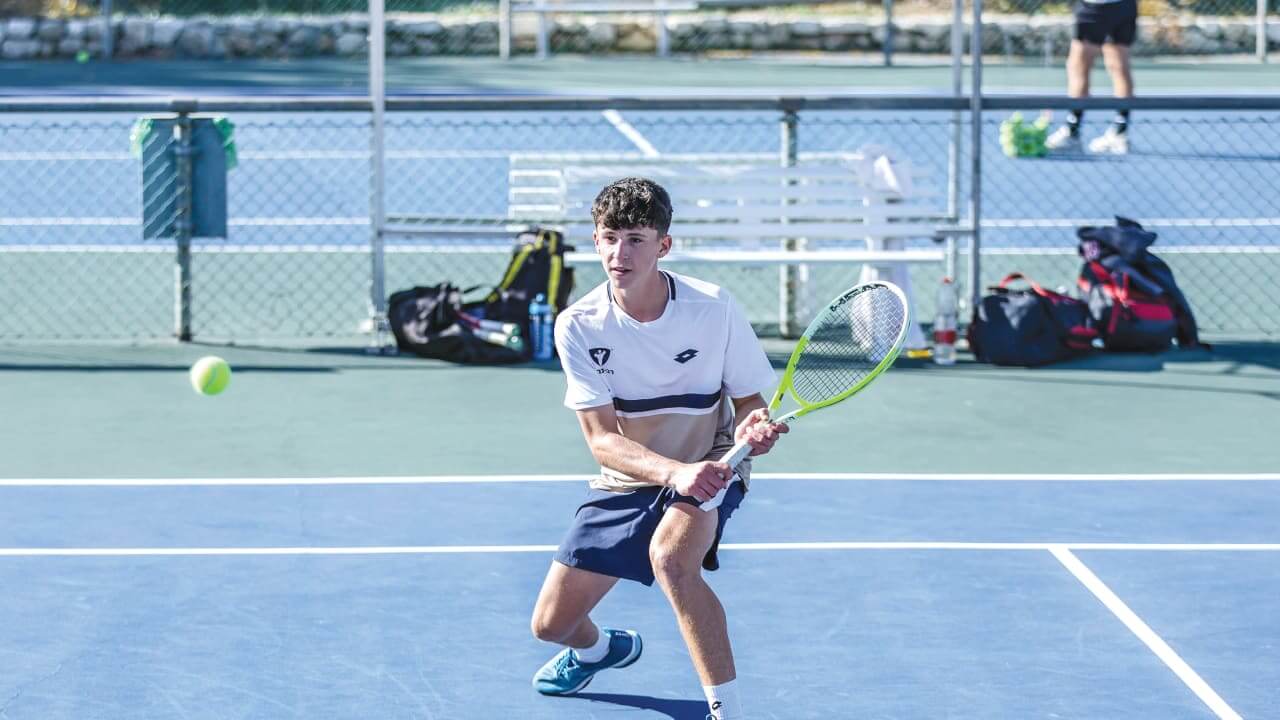
Dan Brand, a 17-year-old right-handed tennis player from Kfar Saba, is ranked 24th in the world for junior boys and is likely to climb even higher in the next few months.
While Israelis have been focusing their attention on soccer and baseball in recent months, carefully following the results of the recent World Cup and the many accomplishments of Israeli Deni Avdija and the Portland Trail Blazers NBA basketball team, a talented young teenager from Kfar Saba has been quietly making his way to the top of the international tennis world.
Dan Brand, a 17-year-old right-handed tennis player from Kfar Saba, is ranked 24th in the world for junior boys and is likely to climb even higher in the next few months. He competed this year at the French Open at Roland Garros and at Wimbledon. In both events, he played singles and doubles.
At Roland Garros, he lost a tough first-round, three-set singles match 3-6, 7-5, 6-1 to France’s Mathys Domenc; he and partner Safir Azam of the United States lost in the doubles quarterfinals.
At Wimbledon, Brand advanced to the second round for both singles and doubles. He will play in the upcoming US Open in both singles and doubles. The juniors tournament gets underway September 8 in Queens, New York.
“Dan is absolutely our next hope,” says Yoni Erlich, Israel’s Davis Cup captain and tennis director at the Israel Tennis and Education Centers. “He is on the right track to be in the top 20 for juniors. He had a few very nice wins in a men’s Futures tournament a few weeks ago, where he reached the quarterfinals. So hopefully in the next few years, we can see another Grand Slam player. We can only hope and be patient.”
Time for new Israeli top player
It has been quite a while since Israel has had a player at the top of the tennis world. Shahar Peer, the highest-ranked Israeli tennis player, reached a career-high singles ranking of world No. 11 in 2011. Grand Slam doubles champions Andy Ram and Jonathan Erlich reached a top ranking of fifth in the world in July 2008, just after winning the Australian Open men’s doubles title.
Amos Mansdorf, who now serves as Brand’s coach, is Israel’s highest-ranking men’s singles player of all time; he reached a career-high singles ranking of 18th in the world in November 1987.
Mansdorf has been working with Brand since he was 12 years old. “It is nice to see him coming along and moving in a nice direction. He plays clever tennis and is quite good all around,” reports Mansdorf. He also views his student as “nice, quiet, low-key, hard-working, and dedicated.”
Mansdorf sees Brand as a calm player who “doesn’t panic.” He would like to see Brand ultimately reach the top 50 in the men’s professional tour. “He likes to compete, and does everything well. We are hoping he will get stronger; he still [is] young. In the future, we want him to have all the weapons for pro play – a big serve with enough power and precision to stay in with good players.”
Mansdorf anticipates that, given the young tennis star’s accomplishments and potential, he will likely receive a deferment from the IDF and play tennis “for a good US college.”
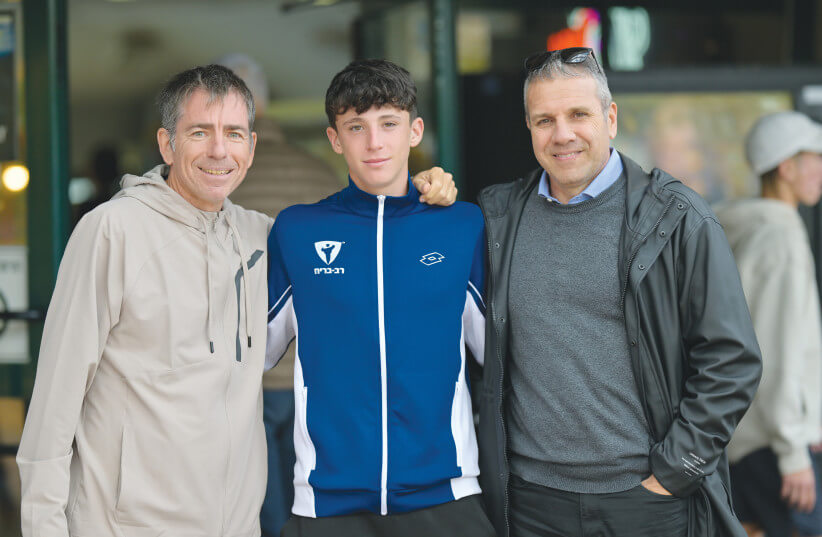
Shai, Brand’s father, considers it serendipitous, if not almost miraculous, that the Brands crossed paths with Mansdorf soon after he unexpectedly learned of his son’s potential as a tennis player. Shai, a lawyer specializing in torts as well as a Brazilian jiu-jitsu black belt competitor and former two-time world champion, recounts a meeting with the National Sport Center Tel Aviv.
“Dan was a soccer player. His coach told the kids to try other sports. I tried to get him into jiu-jitsu, but he said it was too boring!” Dan then began playing tennis in school.
“His coach said, ‘I trained hundreds of kids; your son is something special,” recalls Shai. The coach encouraged Shai to “put [Dan] in a national competition,” but Shai was reluctant. “It was too early.”
As his son continued to show potential, Shai approached Mansdorf. He has continued working privately with Mansdorf, who became the head coach at the Ra’anana City Tennis Center not far from Brand’s Kfar Saba home. Shai is proud that his son has continued playing “in a local club,” as opposed to training in Europe “at a fancy club.”
As the young Brand’s career took off, and as demands to travel around the world to tournaments have increased, Shai often travels with Dan – to watch over him, monitor his health, and look out for his safety. When he is unable to accompany his son, Shai has a network around the world that he turns to “look out for Dan.”
Shai is pleased with his son’s maturity, independence, and ability to “just be a kid who is still in a regular school.”
Dan is the oldest of three Brand children. Shai and Ruth, his speech therapist wife, also have a 15-year-old son, Nadav, and a 10-year-old daughter, Shira. “Dan’s got his mother’s calm!”
Brand spoke with the Magazine just after a driving lesson while home in Israel briefly before setting out for a pre-US Open International Tennis Federation (ITF) Grand Slam Player Development Program at the Junior Tennis Champions Center in College Park, Maryland, near Washington, DC. He is one of the few Israelis to be selected for this group.
He talks candidly about school, his hobbies, and his friends, explaining that he does all of his learning on his own, on the road, and attends school when in Israel only to take tests. He then sheepishly concedes, “My mother is pretty smart and helps a little with math and other subjects!”
In many ways, Brand is a fairly typical teenager. He reports that he enjoys playing basketball and spending time with his family and friends who “treat me the same as before.”
He reports that he has developed some warm friendships with peers from around the world, and has not experienced antisemitic incidents, with some fellow players “asking about the situation in Israel, and listen and try to understand.”
He is also reflective, self-aware, and insightful about himself as a tennis player. He describes himself as a “solid player and a counter-puncher,” acknowledging that he needs to be more aggressive and serve faster, and that he is “a pretty focused, chill guy.”
Brand enjoys playing on grass, noting, “It’s not a surface you play on every day.” He likes routine, and admires tennis legend Novak Djokovic, winner of 101 Association of Tennis Professionals (ATP) Tour-level singles titles, including 24 Grand Slam titles and an Olympic gold medal. “I like his mentality. He is so focused on the match!”
Despite Brand’s rising fame, Shai is pleased that his son continues to be “so humble,” noting that Dan’s school friends have begun to “see him on TV and hear that he is famous.”
“He’s a good example. He will play with, and talk with, everyone. He is shy.” Shai is also pleased that “everywhere he goes, people fall in love with his son and say, ‘Dan is amazing.’” He admits that “this is more important to me than the tournaments” – though he is happy with Dan’s focus and accomplishments on the court as well. Shai is particularly proud of Brand’s 6-3, 6-2 win against Jordan Lee in May, in the finals of the J300 Charleroi-Marcinelle/Astrid Bowl Charleroi Belgian International Championships. Lee is ranked eighth in the world and recently won the Wimbledon championship.
As the young Brand continues to succeed on the court, he is attracting the attention of US colleges. Shai reports that Brand may receive “ilui” (prodigy) status from the army, an even higher status than the “sportai mitstayen” (outstanding athlete) status granted to other very accomplished athletes.
The latter usually perform desk jobs in the IDF, so that they can continue practicing their sport. “Iluim” are given exemptions from the army, as they are seen to be serving their country in other ways. Yet, Shai – who notes that both he and his own father were IDF combat soldiers – predicts that Dan will serve in the IDF at some point.
Shai does not worry about his son’s safety, though he does note that “after Oct. 7, you can feel people turning their backs on you.” His son, who has reached out to some European players, hoping to team up with them as potential doubles partners, has yet to receive replies. In contrast, players from the US, South America, and Asia have been responsive and kind to the young Israeli.
Shai is proud that his son continues to proudly represent Israel, even though “a kid with a flag [of Israel]” is like a target.” He notes that his son had the opportunity to play for Germany, since he has a German passport, as his maternal grandfather is German. “He would have gotten more money, but Dan said ‘no,’ – he wants to do it the hard way!”
To prepare for the upcoming US Open, Brand is off to the International Tennis Federation’s pre-tournament grand slam player development program in Maryland. Coach Mansdorf will not be able to accompany Brand to the US Open.
Shai, as well as Danny Perekalsky, CEO of the Israel Tennis Association (ITA), will be by Brand’s side as the juniors’ tournament kicks off on September 6. Perekalsky is pleased with Brand – for his tennis accomplishments, his overall demeanor and behavior, and for the genteel way that he represents Israel.
“Dan is a really great kid. He shows a great mentality and behavior on and off the court, and he is a really great example for other kids with his behavior and style.”
Perekalsky recounts some of Brand’s recent successes: his wins in tournaments in Thailand and Belgium; and in the recent August 3-9 ITF M15 tournament two weeks ago in Astana, Kazakhstan, where he earned ATP ranking points for reaching round 16 and defeating fellow Israeli Oren Shimanov 6-3, 4-6, 7-5. “He has really made a big jump in the last six months!”
Perekalsky notes that the ITA has been providing support for Brand, along with sponsors such as Rav Bariach, the Israeli company known for its security doors and high-end locking systems.
Brand also receives support from Netanya’s prestigious Wingate Institute, the National Center for Physical Education and Sport. “He is now under their care,” reports Shai. “I am just looking out for my son as a father.”
Perekalsky adds, “We are proud to support Dan and to have such a developing talent! Bravo also to Dan’s family and to coach Mansdorf. Amos is doing a great job with Dan. It is not a coincidence he is achieving the results he has been in the past six months.”
He predicts that Brand will “be in the top 10 in January, if all goes according to plan.” He notes that as all 18-year-olds move out of this competition category, it will create an opportunity for Brand to advance his standing.
In the meantime, Perekalsky and all of Israel, which is discovering the 17-year-old Brand, are excited for what Brand has accomplished so far, and for what lies ahead. Perekalsky shares that, when he speaks with young kids, they say that they want “to play in Wimbledon like Dan.” This is no small matter given that, as Perekalsky notes, “in Israel, tennis is third after soccer and basketball.”
“Israeli is waiting to have something to be proud of in tennis. And we need more than one Dan. We are proud, but it is only a start!”

