Originally appeared in Jerusalem Post Magazine on July 25, 2026.
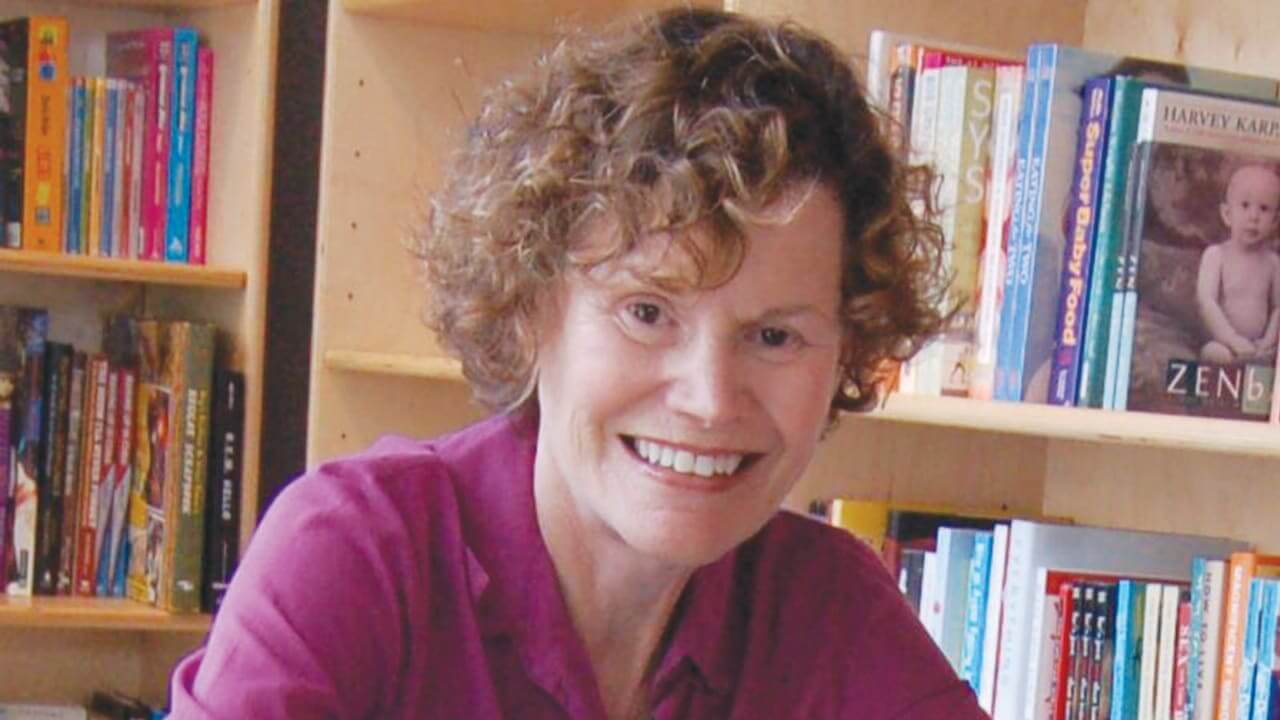
The prolific Blume, still alive and well at age 88, has sold over 80 million copies of her books worldwide.
Mark Oppenheimer, a lifelong bookworm and author of the entertaining new biography Judy Blume: A Life, admits, “When I was 11, the only author I reread was Judy Blume.”
The prolific Blume, still alive and well at age 88, has sold over 80 million copies of her books worldwide. Iconic titles include Are You There God? It’s Me, Margaret (1970), Tales of a Fourth Grade Nothing (1972) and others in the “Fudge” series including Superfudge 1980) and Double Fudge (2002), as well as such classics as Forever (1975), Blubber (1974), Otherwise Known as Sheila the Great, as well as other books across all genres, including children’s young adult and adult fiction.
Oppenheimer, who lives in New Haven, Connecticut, not far from Yale University, which houses Judy Blume’s correspondence, drafts, audiovisuals, photographs, awards, and more in its Beinecke Rare Books and Manuscripts Library, spent hours combing through and finding useful gems in the archives.
But it is his careful reading and rereading of all of Blume’s books and his considering the social, historical, and political contexts of the periods in which they were written that help readers understand Blume’s important contributions to children, young adult (YA), and adult literature.
Oppenheimer masterfully weaves in the details of her life, which he learned through countless conversations, in-person meetings, and emails with Blume and members of her family. He clearly formed a meaningful, trusting, and ongoing relationship with Blume and her family.
Blume’s rich and complicated life, captured, in part
He reports that, early in his research, Blume turned over notes – some handwritten, some typed – that she had made for a memoir which she later abandoned. The two remained in touch throughout the project.
When Oppenheimer shared his final draft of the book, he reports that Blume sent back “hundreds of comments in the margins… and a separate memoir, 40 pages long, offering suggestions, disagreements, and assorted thoughts covering every era discussed in the draft.”
He has managed to capture details of Blume’s rich and sometimes complicated life, and her uncanny ability to understand angst and issues facing children and teens. And he tells Blume’s story in an entertaining manner.
Oppenheimer is no stranger to telling stories both in writing and through the spoken word. He has become somewhat of a household name in his own right through his books, articles, columns and his podcasts.
His numerous books include Squirrel Hill: The Tree of Life Synagogue Shooting & the Soul of a Neighborhood (2021), about the Tree of Life shooting in Pittsburgh; The Newish Jewish Encyclopedia (2019), Wisenheimer: A Childhood Subject to Debate, a memo of sorts about his debating years; and Thirteen and a Day, a book about bat and bat mitzvah. He is currently working on The Dirty Bicker: Princeton, the Jews, and the Scandal of 1958, about the notorious scandal when an unusually high number of Jewish students were denied admission to Princeton University’s prestigious eating clubs.
Oppenheimer holds a PhD in religion from Yale and has hosted the popular podcast Unorthodox for eight years – as well as the podcast Gatecrashers, about the history of antisemitism in the Ivy Leagues.
He wrote the beliefs column for The New York Times for years and currently serves as executive editor of Arc Magazine, an online journal of the John C. Danforth Center on Religion and Politics based at Washington University in St. Louis.
In Judy Blume: A Life, Oppenheimer tells Blume’s story in 31 chapters, each covering a chapter of her life as he brings the rich, multi-faceted, ahead-of-her-time, genre-defying author to life.
Blume was born Judith Marcia Sussman in 1938.
Oppenheimer captures Blume’s Jewish heritage and her upbringing in middle-class New Jersey and Miami around the time of World War II.
He describes her childhood and relationship with her brother (who struggled with mental health issues), her dentist father (who died suddenly at an early age), her well-read homemaker mother, and various relationships and marriages.
Blume never even considered being a writer until she was nearly 30 years old, unhappily married to “a well-meaning personal injury lawyer,” and a stay-at-home mother of two young children. It was then that she began taking the bus to New York City every Monday night to attend an evening class at New York University in writing for children.
Her early works from the class never got published, but she persisted. Her hard work, natural ability, sense of humor, lived experience, and her keen eye for what was going on around her and deep within people of all ages allowed her to eventually deliver books that would tackle topics that had until then been mostly absent from children’s literature, including budding sexuality, puberty, divorce, loss, family complexity, and bullying.
Blume was always “spot on” and managed to speak to generations of readers in an intimate, understanding, and practical way.
Charming, annoying, entertaining younger siblings
Her protagonists are almost universally known. Margaret Simon, the 11-year-old protagonist in Are You There God? It’s Me, Margaret permitted readers to explore and question their religious identity and as they learnt about puberty.
Peter Hatcher and little brother, “Fudge” – known worldwide through Tales of a Fourth Grade Nothing and Superfudge – introduce us to charming, annoying, and entertaining younger siblings. (Who doesn’t remember two-year-old Fudge going to the hospital after swallowing Peter’s pet turtle, Dribble?)
And Sally J Freedman in Starring Sally J. Freedman as Herself is a curious Jewish girl who, much like Blume, moves to Florida in the 1940s after WWII and deals with feeling like an outsider.
Blume showed her versatility with the release of bestseller Wifey in 1978. The book was groundbreaking because it marked a pivot to adult fiction. Blume was not afraid to tackle issues then still considered taboo.
One of Oppenheimer’s significant contributions is in honestly and respectfully sharing details of Blume’s not-always-picture-perfect private life. She experienced unsuccessful – and successful – marriages, as well as aborted pregnancies.
Blume moved a lot – to places such as New Jersey, Florida (Miami and Key West), Connecticut, New York, Los Alamos, New Mexico, and Martha’s Vineyard, Massachusetts. She loved and cared for her many homes, and she was very philanthropic. She also cheered on librarians and booksellers in ongoing battles against censorship.
Oppenheimer gives the reader an honest and loving picture of this beloved author and leaves readers hoping that the almost nonagenarian will grace us with at least one more book.
JUDY BLUME:
A LIFE