Yale University

Originally appeared in Jerusalem Post Magazine on July 25, 2026.

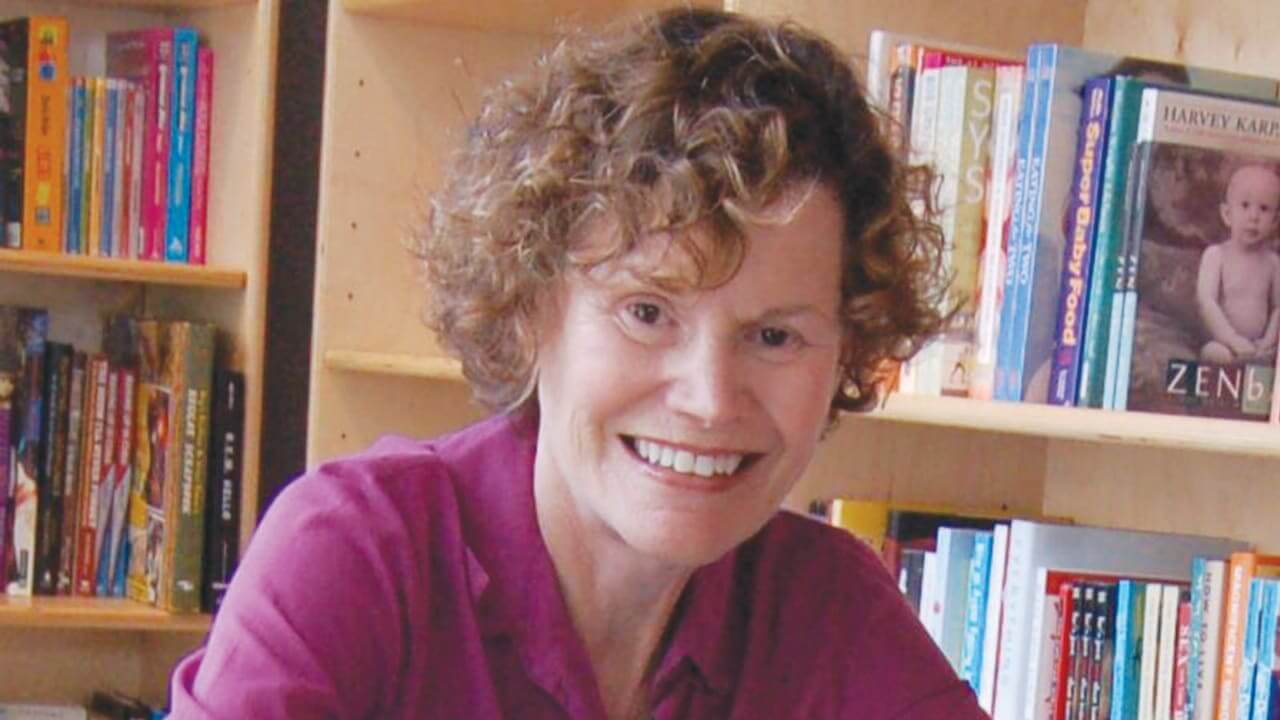
The prolific Blume, still alive and well at age 88, has sold over 80 million copies of her books worldwide.

Mark Oppenheimer, a lifelong bookworm and author of the entertaining new biography Judy Blume: A Life, admits, “When I was 11, the only author I reread was Judy Blume.” 

The prolific Blume, still alive and well at age 88, has sold over 80 million copies of her books worldwide. Iconic titles include Are You There God? It’s Me, Margaret (1970), Tales of a Fourth Grade Nothing (1972) and others in the “Fudge” series including Superfudge 1980) and Double Fudge (2002), as well as such classics as Forever (1975), Blubber (1974), Otherwise Known as Sheila the Great, as well as other books across all genres, including children’s young adult and adult fiction.

Oppenheimer, who lives in New Haven, Connecticut, not far from Yale University, which houses Judy Blume’s correspondence, drafts, audiovisuals, photographs, awards, and more in its Beinecke Rare Books and Manuscripts Library, spent hours combing through and finding useful gems in the archives.  

But it is his careful reading and rereading of all of Blume’s books and his considering the social, historical, and political contexts of the periods in which they were written that help readers understand Blume’s important contributions to children, young adult (YA), and adult literature.

Oppenheimer masterfully weaves in the details of her life, which he learned through countless conversations, in-person meetings, and emails with Blume and members of her family. He clearly formed a meaningful, trusting, and ongoing relationship with Blume and her family.

Judy Blume's signature.
Judy Blume’s signature. (credit: Wikimedia Commons)

Blume’s rich and complicated life, captured, in part

He reports that, early in his research, Blume turned over notes – some handwritten, some typed – that she had made for a memoir which she later abandoned. The two remained in touch throughout the project.

When Oppenheimer shared his final draft of the book, he reports that Blume sent back “hundreds of comments in the margins… and a separate memoir, 40 pages long, offering suggestions, disagreements, and assorted thoughts covering every era discussed in the draft.”

He has managed to capture details of Blume’s rich and sometimes complicated life, and her uncanny ability to understand angst and issues facing children and teens. And he tells Blume’s story in an entertaining manner.

Oppenheimer is no stranger to telling stories both in writing and through the spoken word. He has become somewhat of a household name in his own right through his books, articles, columns and his podcasts.

His numerous books include Squirrel Hill: The Tree of Life Synagogue Shooting & the Soul of a Neighborhood (2021), about the Tree of Life shooting in Pittsburgh; The Newish Jewish Encyclopedia (2019), Wisenheimer: A Childhood Subject to Debate, a memo of sorts about his debating years; and Thirteen and a Day, a book about bat and bat mitzvah. He is currently working on The Dirty Bicker: Princeton, the Jews, and the Scandal of 1958, about the notorious scandal when an unusually high number of Jewish students were denied admission to Princeton University’s prestigious eating clubs. 

Oppenheimer holds a PhD in religion from Yale and has hosted the popular podcast Unorthodox for eight years – as well as the podcast Gatecrashers, about the history of antisemitism in the Ivy Leagues.

He wrote the beliefs column for The New York Times for years and currently serves as executive editor of Arc Magazine, an online journal of the John C. Danforth Center on Religion and Politics based at Washington University in St. Louis.

In Judy Blume: A Life, Oppenheimer tells Blume’s story in 31 chapters, each covering a chapter of her life as he brings the rich, multi-faceted, ahead-of-her-time, genre-defying author to life.

Blume was born Judith Marcia Sussman in 1938.

Oppenheimer captures Blume’s Jewish heritage and her upbringing in middle-class New Jersey and Miami around the time of World War II.

He describes her childhood and relationship with her brother (who struggled with mental health issues), her dentist father (who died suddenly at an early age), her well-read homemaker mother, and various relationships and marriages.

Blume never even considered being a writer until she was nearly 30 years old, unhappily married to “a well-meaning personal injury lawyer,” and a stay-at-home mother of two young children. It was then that she began taking the bus to New York City every Monday night to attend an evening class at New York University in writing for children.

Her early works from the class never got published, but she persisted. Her hard work, natural ability, sense of humor, lived experience, and her keen eye for what was going on around her and deep within people of all ages allowed her to eventually deliver books that would tackle topics that had until then been mostly absent from children’s literature, including budding sexuality, puberty, divorce, loss, family complexity, and bullying.

Blume was always “spot on” and managed to speak to generations of readers in an intimate, understanding, and practical way.

Charming, annoying, entertaining younger siblings

Her protagonists are almost universally known. Margaret Simon, the 11-year-old protagonist in Are You There God? It’s Me, Margaret permitted readers to explore and question their religious identity and as they learnt about puberty.

Peter Hatcher and little brother, “Fudge” – known worldwide through Tales of a Fourth Grade Nothing and Superfudge – introduce us to charming, annoying, and entertaining younger siblings. (Who doesn’t remember two-year-old Fudge going to the hospital after swallowing Peter’s pet turtle, Dribble?)

And Sally J Freedman in Starring Sally J. Freedman as Herself is a curious Jewish girl who, much like Blume, moves to Florida in the 1940s after WWII and deals with feeling like an outsider.

Blume showed her versatility with the release of bestseller Wifey in 1978.  The book was groundbreaking because it marked a pivot to adult fiction. Blume was not afraid to tackle issues then still considered taboo.

One of Oppenheimer’s significant contributions is in honestly and respectfully sharing details of Blume’s not-always-picture-perfect private life. She experienced unsuccessful – and successful – marriages, as well as aborted pregnancies.

Blume moved a lot – to places such as New Jersey, Florida (Miami and Key West), Connecticut, New York, Los Alamos, New Mexico, and Martha’s Vineyard, Massachusetts. She loved and cared for her many homes, and she was very philanthropic. She also cheered on librarians and booksellers in ongoing battles against censorship.

Oppenheimer gives the reader an honest and loving picture of this beloved author and leaves readers hoping that the almost nonagenarian will grace us with at least one more book.

JUDY BLUME: 
A LIFE

By Mark Oppenheimer
G.P. Putnam’s Sons
480 pages; $20

Read more

The original article is published at JPost.com

Check out the original article as featured in the JPost magazine here.

The troubling story of Michael Laudor leaves many unanswered questions, including the central one: How do we respect the autonomy and decision-making of a person with serious mental illness?

When author Jonathan Rosen was growing up in the New York suburbs of New Rochelle in the 1970s, he had no idea that he and his friend Michael Laudor, two smart Yale-bound Jewish boys, sons of professors with similar backgrounds, would ultimately encounter such different life paths.

The Best Minds: A Story of Friendship, Madness and the Tragedy of Good Intentions is Rosen’s latest and longest book (by far), which reportedly took 10 years of time, research, and emotional energy to write. It is part memoir, part history of mental health and mental illness, and part psychology text.

Rosen and Laudor went on to graduate from Yale. Rosen then completed coursework toward a PhD in literature at University of California, Berkeley; married a rabbi; had two children; and began to write and edit for such publications as The New York Times and The Forward. He has written five books so far – two novels and three nonfiction books.  

Laudor, the more naturally gifted of the two, graduated Yale summa cum laude within three years. Subsequently, he worked for a year in a high-pressured job in management consulting at the prestigious firm of Bain and Company.

His life then took an unexpected turn when he began to experience auditory hallucinations and paranoia.Laudor was hospitalized for eight months in a locked ward at Columbia Presbyterian Hospital, where he was diagnosed with schizophrenia. Following a stint in a halfway house where it was suggested that he might ease back into life by working as a clerk at Macy’s department store, he surprisingly decided to attend Yale Law School.

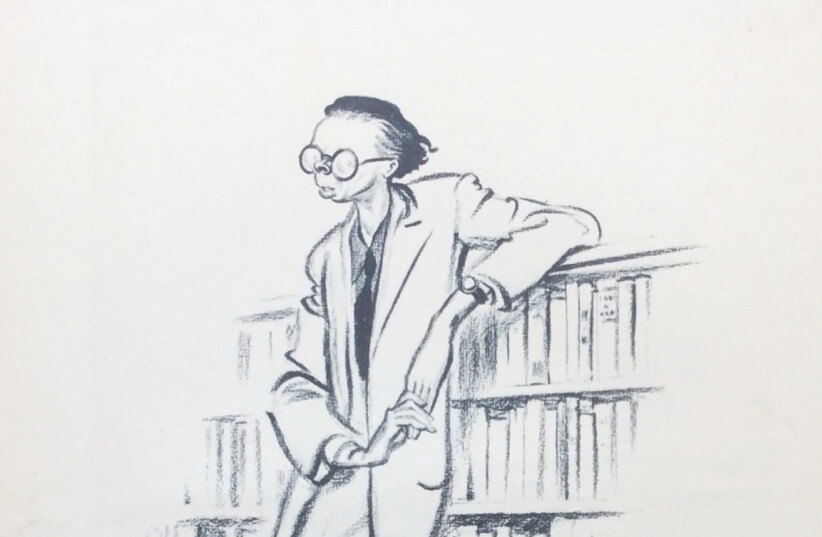
1933 caricature of Aldous Huxley by cartoonist David Low. (credit: Wikimedia Commons)

Thanks to the support and kindness of professors, deans, and fellow students, Laudor managed to graduate, although he wasn’t able to secure employment as a lawyer in a firm. He did, however, achieve notoriety and an extremely highly paid book and movie deal when his story was featured in a 1995 New York Times article titled “A Voyage to Bedlam and Partway Back: Yale Law Graduate, a Schizophrenic, Is Encumbered by an Invisible Wheelchair.”

Laudor ultimately had difficulty making progress on the book and eventually went off his medication and experienced worsening symptoms of psychosis and paranoia.

In 1998, Laudor killed his live-in girlfriend and future wife, who, the reader painfully learns, was pregnant with their first child. Laudor was ultimately found not responsible for the killing “by reason of mental disease or defect” (also known as “not guilty by reason of insanity”). He has spent the last 25 years at the Mid-Hudson Forensic Psychiatric Center, a secure psychiatric facility 55 miles northwest of New York City, where Rosen has visited him on several occasions.


The Best Minds represents Rosen’s attempt to examine their unremarkable suburban New York childhoods, their mostly similar but ultimately very different paths, and the multiple ways the mental health establishment failed Laudor and society at large.

It has taken Rosen over 500 pages to chronicle this heartbreaking story, with an additional three pages of “notes on the sources” and a 21-page index, all well worth the time, effort, and emotional energy the reader will need to invest in this book.

Rosen’s former department in the literature graduate program at UC Berkeley might retrospectively consider granting him the PhD he never received when he failed to complete his doctoral dissertation.

The dense, heavy book contains beautiful prose and consists of four distinct parts, of eight to 15 chapters each.

The parts of the book

Rosen has a keen memory and an eye for detail and recounts many events small and large from childhood, adolescence, and young adulthood, making important connections to world events, larger societal trends, and phenomena.

PART I: “The House on Mereland Road” poignantly and playfully recounts the two men’s childhood, capturing the sights, sounds, and smells of the late 1960s and early ‘70s with references to everything from Jim Croce and Jethro Tull to Annie Hall and Rosen’s anxiety-filled bar mitzvah.

Part II: “The House of Psychiatry” weaves his experience at Berkeley, describing brilliant creative types such as Aldous Huxley who lived life with mental illness, and recounts a period in psychiatry when schizophrenia was considered by some to be a “social construct,” and hallucinations were equated with genius. Rosen has clearly dedicated an inordinate amount of time to reading and learning about the history of mental health and policy in America, including deinstitutionalization [a movement advocating the transfer of mentally disabled people from institutions, back to their families or into community-based homes] and the community mental health movements.

Part III: “The House of Law” describes the supportive environment Laudor found at Yale Law School, the school he had deferred while in the hospital and in the halfway house. Rosen describes surprisingly supportive professors and deans (many who helped write decisions about deinstitutionalization which would impact mental health policy) while clerking for Supreme Court justices who were invested in making things work for Laudor but may have inadvertently done him a disservice through their coddling and protecting of him while in law school.Rosen writes, “Michael found an adoptive Jewish father behind every classroom door. These brilliant, egotistical, softhearted men, as impossible to please as they were idealistic, terrorize students without even knowing it.” 


Part IV: “The House of Dreams” details an important New York Times article about Laudor; his $600,000 book deal with Scribner; the movie in the works by actor and director Ron Howard, with Brad Pitt slated to be the lead actor; and Laudor’s life in Hastings-on-Hudson with his fiancée, Caroline Carrie Costello, known affectionately as “Carrie.” The harrowing story of Laudor’s time on the lam before being caught, featured on the cover of the New York Post with the simple caption “Psycho,” and his long-term fate are chronicled in this final part of the book.In many ways, the title of the book says it all and, at the same time, requires some rabbinic unpacking.  The reference to “best minds” refers to the brilliance of Laudor, as well as to the legal and medical experts, judges, Yale Law School professors, mental health advocates, the Beat generation who saw people with mental illness as misunderstood geniuses, and even New York Times writers, book publishers, and movie houses that embody what Rosen refers to in the subtitle as The Tragedy of Good Intentions.


It was their “good intentions” that led to the deinstitutionalization of the mentally ill – even when there were not adequate community services available to support the formerly institutionalized. Their intentions also led to articles in leading papers focusing more on the accomplishments than the struggles of people living with and sometimes “battling” schizophrenia, such as Laudor and University of Southern California (USC) Gould Law School’s Elyn Saks, professor of law, psychology, psychiatry, and behavioral sciences.  

It was those with “good intentions” that helped create a system where psychotic people who refuse medication can only be “committed” against their will once they are a true danger to self or others – even while worried family members beg for police and psychiatric intervention.  

“Best minds” also refers to a line in a 1954 Allen Ginsberg poem titled “Howl” or “Howl for Carl Solomon.” Ginsberg met Solomon while both were hospitalized at the New York State Psychiatric Institute. Ginsberg, no stranger to mental illness, grew up with a paranoid schizophrenic mother. “Howl” includes the line “I’ve seen the best minds of my generation destroyed by madness.”

Rosen provides the reader with hours of material to read and digest.

In the end, however, the troubling story of Michael Laudor leaves many unanswered questions, including the central one: How do we respect the autonomy and decision-making of a person with serious mental illness – through the calm phases and when he or she decides to go off medication? And how do we protect family members and society from a person and a system that can do nothing until he or she is dangerous to himself or others?  

THE BEST MINDS: A STORY OF FRIENDSHIP, MADNESS, AND THE TRAGEDY OF GOOD INTENTIONS By Jonathan Rosen Penguin 562 pages; $25

Read more

NEW HAVEN — Connecticut has an illustrious history of hosting visiting Israeli professors on sabbatical.  Over the years, Israeli professors have come from Bar Ilan University, Hebrew University, Ben Gurion University, The Schechter Institute and other esteemed Israeli institutions to teach at Wesleyan, University of Hartford, the Hartford Seminary and Yale University.

This semester, Yale University and the New Haven Jewish community are proud to serve as home to two Bar Ilan University professors and their families.

Professor Gershon Bacon, and his wife Brenda, and Professor Gil Diesendruck, with wife Vivian and children Alon, Talia and Noa, are both currently living in the Westville neighborhood of New Haven. Both families are attending the Westville Synagogue.

“It is wonderful to have families like the Bacons and the Diesendrucks in our communities each year,” said Rabbi Wes Kalmar of the Westville Synagogue. “They add immeasurably to the community and the synagogue, bringing with them a taste of the land of Israel, its Torah, scholarship, and vibrancy. The warm friendships that they develop within the community make it very hard to see them go at the end of the year, although we look forward to visiting them in Israel. It is a special brocha that our shul merits to have such a wonderful rotating membership.”

The memory of Polish Jewry Professor Gershon Bacon, professor of Jewish History at Bar Ilan University, lives in the Ramot Bet neighborhood in Jerusalem. He is primarily interested in the history of Jews in Eastern Europe, particularly Poland, during the 19th and 20th centuries.

“I am interested in the memory of Polish Jewry that has become enshrined in our collective consciousness,” reports Professor Bacon.

Bacon recently delivered the Irving Kroopnick Memorial Lecture at Westville Synagogue, entitled, “Polish Jewry on the Eve of the Holocaust: Historical Memory and Historical Reality.”

Bacon, at Yale for the fall semester, is teaching a course entitled “Jews of Poland in the Interwar Years,” which is jointly offered by the history and religious studies departments. During his sabbatical, he is working on a book entitled, “The History of the Jews of Poland in Modern Times,” to be published as part of the University of California Series on Modern Jewish communities.

Bacon has been in contact with graduate students and colleagues throughout the semester and notes playfully that, “in an era of email, cell phones and Skype, it is not hard to be in contact with Bar Ilan.”

The Bacons say they have enjoyed their stay in New Haven.

“All of the preliminary advertisements about the warmth and welcoming nature of the New Haven community have been borne out,” reports Bacon, who has become an active member of the daily and Shabbat minyanim at the Westville Synagogue. His wife, Brenda, is a participant in Westville’s weekly Shabbos text study group.

Prof. Bacon also praises the “Jewish and general goings on in the Yale community.” In particular, he has enjoyed the programs offered by the Yale Initiative for the Study of Anti-Semitism.

But the Bacons say that the do miss their family and friends in Israel. While four adult children and three grandchildren live in Israel, one son is temporarily living in Philadelphia as part of his wife’s University of Pennsylvania graduate studies.

Prof. Bacon jokes that, after many years of living in Israel, after making aliyah from America, he has “rediscovered that institution known as Sunday” which is typically a work day in Israel.

The Bacons have used Sundays to explore Connecticut, Rhode Island and other sites in the northeast. The Bacons return to Israel at the end of January.

An amazing adjustment
Prof. Gil Diesendruck, a resident of Renana, is a professor of psychology at Bar Ilan University. His primary area of interest is cognitive development and language acquisition in typically developing children.

Prof. Diesendruck will be at Yale for the entire academic year. In the fall semester, he is teaching a course entitled, “The Psychology of Culture.” While at Yale, Diesendruck hopes to write academic articles based on data he brought with him from Israel, and he hopes to collaborate with psychology department colleagues on projects of common interest.

In considering sabbatical destinations, Diesendruck selected Yale and New Haven for two reasons. 

“I know at least five people at Yale who are doing work related to what I do. And, we heard great things about the New Haven Jewish community-without the community and the knowledge that we’d find a Jewish day school and a community, we wouldn’t have been able to come.”

The Diesendruck’s three children attend the Ezra Academy in Woodbridge. “Ezra has been extremely welcoming and supportive-helping with English and with extra Hebrew attention.” The Diesendrucks further report, “We like the connection to Israel and Zionism in the school-singing Hatikvah every morning, etc.”

They have also found the Westville Synagogue to be “extremely welcoming” and report that the community, lectures, etc. have been intellectually stimulating.

The Diesendrucks, whose families are originally from South America, also rely on Skype and email to remain in contact with family and friends. “Our closest family is in Israel-it is tough for the kids to be separated from family.” But the Diesendrucks have made an amazing adjustment to life in America. The kids have made enormous strides with English, and they have made many friends at Ezra. And the family has also discovered Sundays, which they have spent exploring the Connecticut coast, Mystic, and Litchfield County.

“The biggest surprise for us has been the amount of water! In Israel, people travel to the north in the winter to see waterfalls and flowing rivers. Here, there are so many rivers. We are so envious!”

Read more

NEW HAVEN — Rabbi Lauren Holtzblatt, new assistant rabbi at Yale Universitys Slifka Center, has quickly fallen in love with her job and the Yale community.

One of the great things about Jewish life at Yale is that you dont have to define yourself here, she notes. There are people who are comfortable not committing themselves to one movement.

Holtzblatt explains that some students comfortably attend both the Conservative minyan and either Minyan Urim (separate seating minyan with women permitted to read Torah and lead parts of the prayer service) or the Orthodox minyan. While Holtzblatt, recently ordained at the Jewish Theological Seminary of America, will be working with the Conservative minyan, she will also be involved with many Slifka Center-wide programs including teaching classes and reaching out to unaffiliated students.

Holtzblatt praises the already strong Carlebach-style Friday night minyan and the Downtown (Conservative) (Shabbat morning) Minyan, which tends to mainly attract somewhat older community members. Holtzblatt will be working with Conservative students on campus by listening to what they need and helping them figure out who they are. Holtzblatt has thus far organized a meeting of 12 students who are committed to setting up a once a month Shabbat morning Conservative minyan, scheduled to start Oct. 20, which may evolve into a service which meets more often.

While Holtzblatt only joined the Slifka team at the end of the summer, she has already implemented and been actively involved with some out of the box programs, including a Rosh Hashanah Block Party on Wall Street-complete with apple tasting and honey bobbing–and a post Kol Nidrei Bang Out Your Sins drumming circle-a combination of drumming and learning about the meaning of teshuva (repentance).

Holtzblatt is a keen observer of the Slifka scene. She has noticed that 100-150 students walk through the doors at Slifka on a given Friday night and are finished Shabbat dinner by 8pm. She notes, We need to ask, What can we do to enhance their Shabbat?

Holtzblatt will undoubtedly draw from the training she received at Manhattans famed Bnai Jeshurun (BJ) Synagogue, known for its commitment to social justice and its innovative use of music in prayer services. At Bnai Jeshurun, she was actively involved in running programs for 20 and 30 somethings, which included Friday night dinners and a post-dinner tisch.

According to BJ Rabbi Roly Matalon, Lauren has made a tremendous impact here at BJ during her two-year Marshall Meyer fellowship. She has a strong commitment to building community through serious learning, prayer, and gemilut hasadim. She is passionate about social justice and has a clear understanding of how Judaism mandates our concern and involvement.

Read more