pw-admin's Posts

Originally appeared at JNS.org on on June 28, 2026

From apartments to synagogues, Jerusalem’s young adults are reinventing kiddush as a social gathering that fits modern life.

Sixty delegates attending the three-day JNS International Policy Summit on June 21-23 toured Sheba Medical Center in Tel Aviv, where they witnessed firsthand how Israeli medical innovation is helping wounded soldiers and civilians recover physically and emotionally while driving the development of cutting-edge healthcare technologies.

The delegation visited Sheba’s hydrotherapy department, the Immersive Rehabilitation Room and the ARC (Accelerate, Redesign, Collaborate) Center for Digital Innovation, where doctors and researchers showcased advances developed at what Newsweek ranks as the world’s seventh-best hospital.

Water as medicine

“For me, water is medicine,” said Dr. Caroline Barmatz, who has spent 30 years at Sheba and heads its Hydrotherapy Department.

Barmatz introduced the group to Sheba’s three hydrotherapy pools and an ice bath, which together treat more than 30,000 patients annually. The aquatic therapies are used for wounded soldiers, trauma survivors, premature babies and elderly patients. Since Oct. 7, 2023, the department has cared for more than 300 wounded soldiers and civilians.

Visitors watched patients undergoing treatment while one patient’s therapy dog waited attentively beside the pool.

“Therapy dogs are trained to look after their masters,” Barmatz said with a smile. “One time, a dog saw his master very relaxed and thought he drowned and he jumped in to the pool. The therapist needed to save both!”

She described how the department has adapted to the influx of wounded soldiers, including developing more physically demanding rehabilitation programs for highly fit patients.

“What happens to a person with a gunshot and glass wounds? How soon can we get him into the pool?” she asked, noting that one soldier had begun hydrotherapy just 18 days after surgery.

Barmatz demonstrated adjustable therapy pools equipped with treadmills that reduce the amount of body weight patients must bear during rehabilitation, as well as virtual reality systems that incorporate activities such as catching a ball or driving a car into therapy sessions.

She also pointed to an overhead obstacle course designed specifically for recovering soldiers.

“We built Ninja equipment because what we had wasn’t enough for these guys with such strong arms and legs!” she said.

The department’s ice baths, which expose patients to temperatures ranging from 12 to 3 degrees Celsius, have also become increasingly popular.

“Since Oct. 7, more soldiers want it—there is not enough research—we need more,” Barmatz said. Some soldiers, she added, seek out the ice baths “to feel they can defeat their fears. They want to spend five minutes at 3 degrees!”

Barmatz admitted she is not an avid swimmer herself. “I like to look at the water as medicine, not sport!”

Among those visibly impressed was Dr. Daryl Temkin, a psychologist who made aliyah from Los Angeles just over a year ago.

Having previously worked with stroke patients at Cedars-Sinai Medical Center in Los Angeles, Temkin said rehabilitation is “the story of hope and reinstilling hope.”

“They don’t have anything there like this,” he said.

Maya Erhlich demonstrates the various uses of the immersion room at Sheba Medical Center, June 24, 2026. Photo by Howard Blas.

Delegates also toured Sheba’s Immersive Rehabilitation Room, where rehabilitation psychologist Maya Ehrlich, the innovation coordinator at Sheba’s Integrated Rehabilitation Hospital, demonstrated how interactive projection technology helps patients regain cognitive and physical abilities.

The room transforms into environments such as grocery stores and banks, allowing patients to practice real-world tasks while improving memory, balance and coordination.

“We saw the potential for use in rehabilitation—it is interactive and fun and the software allows us to create our own scenarios,” Ehrlich said.

She noted that while the project was already under development before Oct. 7, the war accelerated its implementation.

“The effects of Oct. 7 and the subsequent war did help us push this project forward much faster,” she said. “We have lots of young soldiers injured in the war that benefit from this room as it is now starting to be part of their rehab.”

Angie Segal, media liaison for the South African Zionist Federation, said the immersive rehabilitation room left the greatest impression.

“More than any technology or medical breakthrough, it was the Immersive Rehabilitation room that I couldn’t stop thinking about,” she said. “After watching my own father struggle through desperately needed physical and cognitive rehabilitation a year ago, I found myself wondering how different his journey—and perhaps even his outcome—might have been if he had been treated in a place like this.”

A delegation of guests attending the JNS International Policy Summit visits Sheba Medical Center, June 24, 2026. Credit: Sheba Medical Center.

Rehabilitation through innovation

The tour concluded at Sheba’s ARC Center for Digital Innovation, where delegates learned how clinicians are transforming frontline medical challenges into new technologies.

Dr. Karny Ilan, a surgical resident and CEO and co-founder of health-tech startup Feminai, demonstrated a wearable breast cancer screening patch that is expected to enter clinical trials soon. The device uses wearable sensors and artificial intelligence to detect physiological changes associated with breast tissue density and blood flow.ARV

Delegates praised the innovations they had seen throughout the day and left with a deeper appreciation of Israel’s medical ingenuity and resilience as the country continues recovering from nearly three years of war.

; ;; ; ; ; ; ;

Read more

Originally appeared as a cover story in Jerusalem Post’s In Jerusalem Magazine, on June 19, 2026

From apartments to synagogues, Jerusalem’s young adults are reinventing kiddush as a social gathering that fits modern life.

For young Jerusalemites, mainly olim, the Shabbat kiddush experience is evolving from the in-shul “cholent and herring” of their grandfathers into an important social function.

The kiddush serves as an essential weekly “hub” for busy young professionals who are creatively finding post-synagogue, pre-lunch ways to see friends, have a nibble, drink a l’chaim, and maybe even learn a little Torah.

Max Koffler, who has been working in his start-up and serving in milium since completing college five years ago, acknowledged that “the kiddush [itself] is not something new at all.” He shared his observations on how it has changed for him over the years.

“From a young age, after shul, you kibbitz and schmooze at kiddush. In college, it becomes a kiddush at Hillel or people’s apartments or houses before lunch, and then in Israel, especially in Jerusalem, where there isn’t one centralized shul where everybody goes to all the time, it is a fun way to see your friends. And it is a little more distributed and dispersed than places like Tel Aviv. It is a great time to hang out.

“People are so busy during the week. You don’t necessarily have time to schmooze with all of your friends in one place. You get coffee here and there, but for five or 10 friends all at once who don’t necessarily live near each other, kiddush is a good chance to hang.

‘L’chaims’ add good cheer. (credit: Illustrative; Shutterstock)

“It is at different apartments. I host sometimes; friends host sometimes. It is usually an open-house format for people to mingle. We usually have the [standard] kiddush nosh – cholent, deli roll, kugel, desserts and, of course, l’chaims.”

Interviews with young, mostly observant Jerusalemites reveal the important role “the kiddush” plays in their lives as single or young married 20- and 30-somethings.

Avi Levisohn, 28, a rabbinical student, and his wife, Judith, host a kiddush in their home every other Shabbat. “It is kind of an open secret – those who know, know – and you can bring a friend.”

Their kiddush regularly includes a learning component. To date, the Levisohns have taught about the weekly haftarah, and are currently studying the biblical Book of Ruth with friends. 

They love the after-shul time slot for such kiddush get-togethers: “It is the best time to do anything social. People have been sitting in shul, they haven’t done anything yet and have lots of social energy,” he said. He also reported that it is a “very concentrated window.”

“It is 45 minutes, everyone is free, and they can all come at the same time. Otherwise, you can’t corral people to come in such a short window,” he added.

Levisohn noted that they tried hosting what is traditionally known as seuda shlishit or shaleshudes (third Shabbat meal), the late-afternoon time between Mincha and Maariv. 

Jerusalemites are putting down their phones and seizing a new slot on Shabbat to socialize. (credit: Illustrative; Shutterstock)

“People are tired after lunch,” he observed. Getting everyone there at the same time is unpredictable given the different times lunch ends, and some choose to take walks, naps, or see other friends.

Levisohn typically sends a WhatsApp to his friends every other week, reminding them of the Shabbat gathering. He and his wife prepare “cholent, some herring, or cookies,” and guests bring food as well. The couple co-lead the learning. Fifteen males and females attend on a given week.

“It is a really easy way to see a lot of people without a lot of effort and commitment – both as a host and as a guest!” he said.

Chicken poppers are a fun food to find at your kiddush table. (credit: Illustrative; Shutterstock)

Shlomo Eli Schweitzer, 27, a Jerusalem resident who between his job in cybersecurity and his IDF reserve duty, “likes to volunteer with JLIC,” where he organizes the shul kiddush that takes place after prayer services each week.

JLIC, a program of the OU that typically serves students on college campuses in the US and Israel, as well as recent graduates and young professionals, hosts a minyan each week in Jerusalem. It mostly serves 20- and 30-somethings. Schweitzer referred to his JLIC group as “Jewish Life in the City.”

Schweitzer proudly described the range of kiddushes held each week after services, including many that have themes: “We have done cholent and chicken fingers, and other times wine and cheese.”

He playfully described a recent kiddush in the park for nearly 100 people on the Shabbat after Shavuot. “It was the Shlomo Eli is Going to Heaven Kiddush!”

He explained that it was in honor of the third couple he set up for marriage – and the belief that you automatically have a “seat” in heaven after the third successful shidduch.

While post-shul JLIC kiddushes are slightly different in nature from “at home” kiddushes, they serve the same function.

“It gives people the opportunity to spend time and be with friends – and you don’t have to rely on being invited,” Schweitzer said. He also found that people are a more captive audience after shul and would not likely attend in the afternoon if offered then.

Popular kiddush foods

Popular kiddush foods include kugel and schnitzel, but he is particularly proud of a recent kiddush which consisted of poke bowls: “Competitions are also popular – people have made cookies or cakes, or challah and dips, chicken poppers [bite-sized breaded or battered chicken] or cheesecake – and people vote on which ones are the best!”

Miriam Blum is very involved with the Nadiv Minyan, a popular independent minyan for young adults in their 20s and 30s, that meets at the Ohel Nechama Synagogue. She reported that they attract 100-200 young people each week, including Anglos and young Israelis – many of them the children of English-speaking olim.

Blum sets up the shul kiddush every week and reported, “I want it to be a social scene” when people arrive for kiddush.

While her minyan is “one popular hub” for young adults, Blum is pleased there are “different hubs and choices one can go to.” She noted that there are “other hubs” which host people in the “post-shul, pre-12:30, 1 p.m. lunch” slot.

“Some host games and schmoozing. They help expand people’s circles. It is really cool!” she said.

For Jerusalemites, there is an increasing number of fun ways to meet nice people in and out of synagogue, build community, and enjoy tasty food – all before lunch is served – and with plenty of time to get in a nap on those long summer Shabbats.

Chances are, your zaide wouldn’t recognize these kiddushes – but he would be very proud!

Dena Dworin of Rassco has been known to throw a kiddush or two. (credit: Dena Dworin)

Yes, you can host a kiddush

A simple kiddush really is the perfect way to host without making the rest of your week toast (har har). Being in my 40s – unlike the creative youngsters interviewed – I’m busy enough to appreciate what a great outlet it could be.

Just how do I know this? Because my former neighbor and continued good friend Dena Dworin introduced me to the art, having me over numerous times at her casa for a pre-Shabbat lunch soiree with flair and ease.

Raised in Chicago, she’s lived in Jerusalem for 13 years – first in the super-social neighborhood of Katamon and now in the emerging hotspot of Rassco (on Katamon’s edges). Dena was kind enough to enlighten us on how to throw together a kiddush with a minimum of stress, using what you have in your kitchen, and perhaps a quick jaunt to the makolet.

Dena’s baked goods: chocolate chip cookies. (credit: Dena Dworin)

“The beauty of a kiddush is you’re not as limited,” Dena shares. “You can invite more people and different social circles, and they can circulate freely.”

“If you have a special occasion, like moving into a new apartment, saying goodbye to an old one, welcoming a visiting guest, an aliyahversary or a yahrtzeit, a kiddush strikes the perfect balance,” she points out. And, if you’re cheekily trying to set up a potential couple, you can invite them to meet naturally!

Here are some of her tips for a fun and fancy-free gathering:

• People love bite-sized morsels like cookies and brownies. However, while Dena is an amazing baker (in fact, I am going to ask her for a chocolate chip mug cake after this interview), not everyone is. It’s totally acceptable to buy something sweet at Duvshanit or the supermarket.

• To contrast, it’s nice to have something healthy – vegetables with tehina or seasonal fruit.

• A must-have is coffee (and for those under the King’s banner, tea), so set up that urn and put out the Taster’s Choice. Being lactose intolerant, I ask: Is soy/oat milk a must? Jury is out, she says, so think about who’s coming.

• Round it out with something crunchy like Bamba, pretzels, or Doritos.

• Make sure to have a few drink options – wine/grape juice and soda/cola.

• In the summer, she stresses, A/C is a must.

Dena’s baked goods: Chocolate truffles. (credit: Dena Dworin)

• Keep the food self-contained – chips as opposed to pistachios with shells – for a minimum of mess.

• Get some pretty, disposable plates/napkins/cups, and you’re in business!

Unlike at a meal, when you’re bringing out multiple courses, Dena notes, once you put everything out, you’re all set. So get out there and enjoy your guests!

Read more

Originally appeared at JNS.org on June 17, 2026

CEO Roy Hessing says “the Games must go on,” describing the event as an opportunity for young Jews from the Diaspora to experience the “real” Israel.

With just over two weeks until the opening ceremony of the 2026 Maccabiah, Roy Hessing, CEO of Maccabi World Union, is projecting confidence despite ongoing regional tensions and travel challenges facing some international delegations.

“It is 16 days until the opening ceremonies of the Maccabiah,” Hessing told JNS in an exclusive interview on Sunday. “We are very excited and happy that people want to come, and we are sure we will have a very meaningful Maccabiah.”

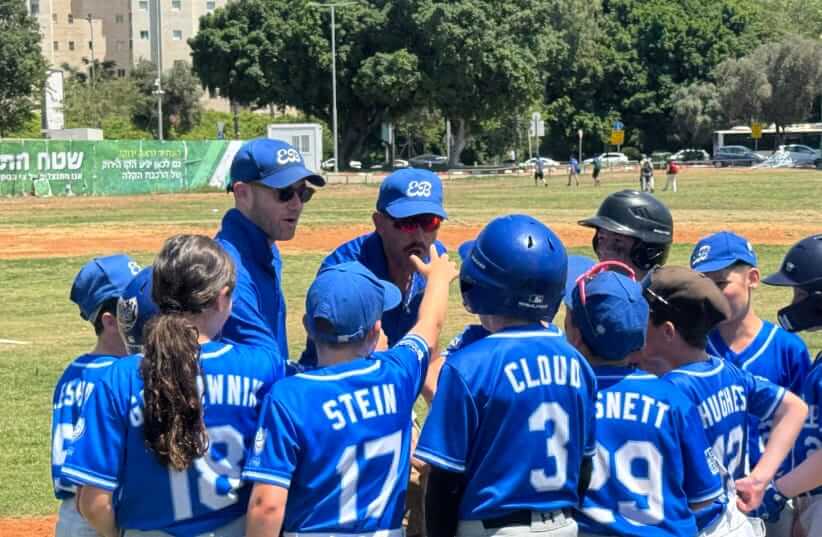
The Games, often referred to as the “Jewish Olympics,” are expected to bring approximately 3,100 athletes from abroad and 2,000 from Israel to compete in 45 sports from July 1 to 14 at venues across the country.

Hessing acknowledged that government travel advisories in countries including Australia, Austria, Britain and South Africa have complicated group participation.

“They are still coming as individuals and will have a great time,” he said. “Our message is very clear—we will give the opportunity to anyone who wants to come and celebrate. No one will be left out.”

For those still waiting to see developments involving Iran before committing to travel, organizers have extended the registration deadline.

“The only time the Maccabiah was ever cancelled was during the Holocaust,” Hessing said. “This is an important message for Israel, the Jewish community and our neighbors that it must go on.”

Founded in 1932 in Tel Aviv, the Maccabiah is held every four years and brings together Jewish athletes from around the world in Open, Junior, Masters and Paralympic competitions. Past participants have included Mark Spitz, Lenny Krayzelburg, Angela Buxton, Brad Gilbert, Dick Savitt and Mitch Gaylord.

This year’s sports include basketball, swimming, surfing, rugby, baseball, squash, table tennis, judo, football, pickleball, handball and padel.

Hessing said one of the most encouraging developments has been the age of this year’s participants.

“We were very surprised and happy that the majority of the athletes are under 19 years old,” he said. “We know what is happening in this generation. We will give them a great time and they will go back to their colleges and their lives and will have a better opinion of Israel.”

Beyond competition, participants will take part in educational and cultural programming designed to deepen their connection to Israel and Jewish identity.

“They are here for at least two weeks—even if they compete in six games of football or in two days of judo,” Hessing said. “They will visit the Nova festival site in the Gaza Envelope, participate in a festival with residents of the south, experience Kabbalat Shabbat and have a chance to celebrate bar and bat mitzvah. They will have a full program, which is very attractive.”

He described the Games as an opportunity to expose young Jews to the reality of Israel beyond the headlines and to strengthen their connection through sport and personal experience.

The Maccabiah is the flagship event of Maccabi World Union, whose roots date back to 1895, when Jewish gymnasts in Constantinople established their own sports club after being barred from joining a local organization because of antisemitism. The movement grew into a worldwide network that today encompasses hundreds of clubs and hundreds of thousands of members.

Its global headquarters at Kfar Maccabiah in Ramat Gan also houses a museum chronicling the organization’s history since its founding.

“It is a must-visit for people who love sports and Zionism,” Hessing said.

A former member of Israel’s national water polo team, Hessing has spent nearly three decades in Israeli sports administration. He previously served as CEO of the Israel Water Polo Association, sports director of the Maccabiah Games and CEO of the Games before being appointed CEO of Maccabi World Union in 2025.

The 2025 Maccabiah was postponed to 2026 because of the war. Despite continuing regional uncertainty, Hessing stressed that organizers are working closely with Israeli security authorities.

“Israel is a safe place to be,” he said. “Security is our first priority.”

He added that Maccabiah maintains close coordination with the army, police and other security bodies and expressed confidence that the event will send an important message to the international community.

“It is our biggest international event in Israel since Oct. 7,” Hessing said. “It sends an important message that Israel is a safe place and that we are happy to host all teams and performers—and that we are waiting for you to come to Israel.”

Read more

Originally appeared in JNS.org June 11, 2026

Jewish National Fund-USA brought together 40 Israeli architectural firms to explore plans for a new hub for Zionist education, leadership and innovation in the Negev.

Top Israeli architects and planning teams spent five action-packed hours on Wednesday in Beersheva learning about the Jewish National Fund-USA’s ambitious plans for the World Zionist Village, a transformative center for Zionist education, leadership, innovation, community-building and lifelong engagement with the land and people of Israel.

When completed, the 48,000-square-meter global hub in the growing Negev city will host the Alexander Muss High School, an English-language high school for Israelis, a gap-year program, a pre-army mechina, apartments for interns and seniors and a guesthouse hotel.

Plans also include a Global Learning and Leadership Center, a Zionist Heritage Center, a Living Lab for Innovation showcasing Israeli breakthroughs in sustainability, agricultural technology, climate technology and desert survival technology, as well as cultural and wellness spaces.

Russell Robinson, CEO of Jewish National Fund-USA, welcomed the delegation at Beersheva River Park Lake, highlighting the 12,000-seat amphitheater, athletic fields, man-made lake and thousands of apartments that have sprung up nearby as a result of the park’s success.

Robinson reflected on the area’s transformation in recent years. “They used to dump cars and trash here,” he said, before sharing his vision for the future. “The last part of our plan is the World Zionist Village.”

He thanked the architects and planning teams for coming “to understand our vision.”

The delegation then traveled to the nearby Abraham’s Well International Visitors’ Center for refreshments and a guided tour tracing the history of Beersheva—and its tradition of hospitality—back to the time of the biblical patriarch Abraham.

Erez Ella, founder and partner at HQ Architects, presented a detailed overview of the vision and technical design plans for the World Zionist Village.

Beersheva Mayor Ruvik Danilovich, who has served in the role since 2008, expressed enthusiasm for the project, emphasizing the importance of further developing the Negev and praising Jewish National Fund-USA for initiating the effort.

“They are crazy! They came with the idea and got the State of Israel on board!” he said.

Danilovich added that “a strong Negev is a strong Israel and a solution for Israel.”

Russell Robinson, CEO of Jewish National Fund-USA, leads a golf-cart tour of Beersheva River Park Lake for a delegation of Israeli architects, June 10, 2026. Photo by Howard Blas.

Golf-cart tour

Guests then boarded buses for a golf-cart tour of Beersheva River Park Lake led by Robinson.

Shira Englander of Mosessco Architects drove from Tel Aviv to learn more about the project and explore the possibility of participating in its design. She said she was drawn to a project that “connects Jewish people in Israel and around the world and creates a place for education and culture.”

She also praised its emphasis on sustainability and noted that “something like this doesn’t exist in Israel.”

Yoel Rosby, director of the World Zionist Village, observed: “This is the first time that this many architects from around the country have gotten together for an initiative around world Zionism.”

He added: “This initiative will help open the eyes of society to what the future of Zionism can and should look like.”

Tali Tzour Avner, Jewish National Fund-USA’s chief Israel officer, said she envisions the center as a place “for all Zionists around the world to gather, speak, discuss and communicate with each other.”

She said she is proud that “JNF is leading in speaking about Zionism without hesitation” and emphasized that the center is intended for “Zionists—Jews and non-Jews of all ages, from all places.”

From the opening presentation at 9 a.m. through lunch and a question-and-answer session at Ivri restaurant overlooking the lake, the architects experienced firsthand the enthusiasm and investment that Jewish National Fund-USA, Beersheva and Israel are bringing to the World Zionist Village.

By participating in the site visit and presentations, the firms are now eligible to submit bids to help design the ambitious project.

Read more