pw-admin's Posts

Originally appeared in Jerusalem Post Magazine (Cover Story) on August 28, 2026

Dan Brand, a 17-year-old right-handed tennis player from Kfar Saba, is ranked 24th in the world for junior boys and is likely to climb even higher in the next few months.

While Israelis have been focusing their attention on soccer and baseball in recent months, carefully following the results of the recent World Cup and the many accomplishments of Israeli Deni Avdija and the Portland Trail Blazers NBA basketball team, a talented young teenager from Kfar Saba has been quietly making his way to the top of the international tennis world. 

Dan Brand, a 17-year-old right-handed tennis player from Kfar Saba, is ranked 24th in the world for junior boys and is likely to climb even higher in the next few months. He competed this year at the French Open at Roland Garros and at Wimbledon. In both events, he played singles and doubles.  

At Roland Garros, he lost a tough first-round, three-set singles match 3-6, 7-5, 6-1 to France’s Mathys Domenc; he and partner Safir Azam of the United States lost in the doubles quarterfinals.

At Wimbledon, Brand advanced to the second round for both singles and doubles. He will play in the upcoming US Open in both singles and doubles. The juniors tournament gets underway September 8 in Queens, New York.

“Dan is absolutely our next hope,” says Yoni Erlich, Israel’s Davis Cup captain and tennis director at the Israel Tennis and Education Centers. “He is on the right track to be in the top 20 for juniors. He had a few very nice wins in a men’s Futures tournament a few weeks ago, where he reached the quarterfinals. So hopefully in the next few years, we can see another Grand Slam player. We can only hope and be patient.”

BRAND WITH Israel Tennis Association CEO Danny Perekalsky (L) and chairman Avi Perets at a Ra’anana tournament, 2025. (credit: ITA)

Time for new Israeli top player

It has been quite a while since Israel has had a player at the top of the tennis world. Shahar Peer, the highest-ranked Israeli tennis player, reached a career-high singles ranking of world No. 11 in 2011. Grand Slam doubles champions Andy Ram and Jonathan Erlich reached a top ranking of fifth in the world in July 2008, just after winning the Australian Open men’s doubles title. 

Amos Mansdorf, who now serves as Brand’s coach, is Israel’s highest-ranking men’s singles player of all time; he reached a career-high singles ranking of 18th in the world in November 1987.

Mansdorf has been working with Brand since he was 12 years old. “It is nice to see him coming along and moving in a nice direction. He plays clever tennis and is quite good all around,” reports Mansdorf. He also views his student as “nice, quiet, low-key, hard-working, and dedicated.”

Mansdorf sees Brand as a calm player who “doesn’t panic.” He would like to see Brand ultimately reach the top 50 in the men’s professional tour. “He likes to compete, and does everything well. We are hoping he will get stronger; he still [is] young. In the future, we want him to have all the weapons for pro play – a big serve with enough power and precision to stay in with good players.”

Mansdorf anticipates that, given the young tennis star’s accomplishments and potential, he will likely receive a deferment from the IDF and play tennis “for a good US college.”

Shai, Brand’s father, considers it serendipitous, if not almost miraculous, that the Brands crossed paths with Mansdorf soon after he unexpectedly learned of his son’s potential as a tennis player. Shai, a lawyer specializing in torts as well as a Brazilian jiu-jitsu black belt competitor and former two-time world champion, recounts a meeting with the National Sport Center Tel Aviv.

“Dan was a soccer player. His coach told the kids to try other sports. I tried to get him into jiu-jitsu, but he said it was too boring!” Dan then began playing tennis in school.

“His coach said, ‘I trained hundreds of kids; your son is something special,” recalls Shai. The coach encouraged Shai to “put [Dan] in a national competition,” but Shai was reluctant. “It was too early.”

As his son continued to show potential, Shai approached Mansdorf. He has continued working privately with Mansdorf, who became the head coach at the Ra’anana City Tennis Center not far from Brand’s Kfar Saba home. Shai is proud that his son has continued playing “in a local club,” as opposed to training in Europe “at a fancy club.”

As the young Brand’s career took off, and as demands to travel around the world to tournaments have increased, Shai often travels with Dan – to watch over him, monitor his health, and look out for his safety. When he is unable to accompany his son, Shai has a network around the world that he turns to “look out for Dan.”

Shai is pleased with his son’s maturity, independence, and ability to “just be a kid who is still in a regular school.”

Dan is the oldest of three Brand children. Shai and Ruth, his speech therapist wife, also have a 15-year-old son, Nadav, and a 10-year-old daughter, Shira. “Dan’s got his mother’s calm!”

Brand spoke with the Magazine just after a driving lesson while home in Israel briefly before setting out for a pre-US Open International Tennis Federation (ITF) Grand Slam Player Development Program at the Junior Tennis Champions Center in College Park, Maryland, near Washington, DC. He is one of the few Israelis to be selected for this group.

He talks candidly about school, his hobbies, and his friends, explaining that he does all of his learning on his own, on the road, and attends school when in Israel only to take tests. He then sheepishly concedes, “My mother is pretty smart and helps a little with math and other subjects!”

In many ways, Brand is a fairly typical teenager. He reports that he enjoys playing basketball and spending time with his family and friends who “treat me the same as before.”

He reports that he has developed some warm friendships with peers from around the world, and has not experienced antisemitic incidents, with some fellow players “asking about the situation in Israel, and listen and try to understand.”

He is also reflective, self-aware, and insightful about himself as a tennis player. He describes himself as a “solid player and a counter-puncher,” acknowledging that he needs to be more aggressive and serve faster, and that he is “a pretty focused, chill guy.”

Brand enjoys playing on grass, noting, “It’s not a surface you play on every day.” He likes routine, and admires tennis legend Novak Djokovic, winner of 101 Association of Tennis Professionals (ATP) Tour-level singles titles, including 24 Grand Slam titles and an Olympic gold medal. “I like his mentality. He is so focused on the match!”

Despite Brand’s rising fame, Shai is pleased that his son continues to be “so humble,” noting that Dan’s school friends have begun to “see him on TV and hear that he is famous.”

“He’s a good example. He will play with, and talk with, everyone. He is shy.” Shai is also pleased that “everywhere he goes, people fall in love with his son and say, ‘Dan is amazing.’” He admits that “this is more important to me than the tournaments” – though he is happy with Dan’s focus and accomplishments on the court as well. Shai is particularly proud of Brand’s 6-3, 6-2 win against Jordan Lee in May, in the finals of the J300 Charleroi-Marcinelle/Astrid Bowl Charleroi Belgian International Championships. Lee is ranked eighth in the world and recently won the Wimbledon championship.

As the young Brand continues to succeed on the court, he is attracting the attention of US colleges. Shai reports that Brand may receive “ilui” (prodigy) status from the army, an even higher status than the “sportai mitstayen” (outstanding athlete) status granted to other very accomplished athletes.

The latter usually perform desk jobs in the IDF, so that they can continue practicing their sport. “Iluim” are given exemptions from the army, as they are seen to be serving their country in other ways. Yet, Shai – who notes that both he and his own father were IDF combat soldiers – predicts that Dan will serve in the IDF at some point.

Shai does not worry about his son’s safety, though he does note that “after Oct. 7, you can feel people turning their backs on you.” His son, who has reached out to some European players, hoping to team up with them as potential doubles partners, has yet to receive replies. In contrast, players from the US, South America, and Asia have been responsive and kind to the young Israeli.

Shai is proud that his son continues to proudly represent Israel, even though “a kid with a flag [of Israel]” is like a target.” He notes that his son had the opportunity to play for Germany, since he has a German passport, as his maternal grandfather is German. “He would have gotten more money, but Dan said ‘no,’ – he wants to do it the hard way!”

To prepare for the upcoming US Open, Brand is off to the International Tennis Federation’s pre-tournament grand slam player development program in Maryland. Coach Mansdorf will not be able to accompany Brand to the US Open.

Shai, as well as Danny Perekalsky, CEO of the Israel Tennis Association (ITA), will be by Brand’s side as the juniors’ tournament kicks off on September 6. Perekalsky is pleased with Brand – for his tennis accomplishments, his overall demeanor and behavior, and for the genteel way that he represents Israel.

“Dan is a really great kid. He shows a great mentality and behavior on and off the court, and he is a really great example for other kids with his behavior and style.”

Perekalsky recounts some of Brand’s recent successes: his wins in tournaments in Thailand and Belgium; and in the recent August 3-9 ITF M15 tournament two weeks ago in Astana, Kazakhstan, where he earned ATP ranking points for reaching round 16 and defeating fellow Israeli Oren Shimanov 6-3, 4-6, 7-5. “He has really made a big jump in the last six months!”

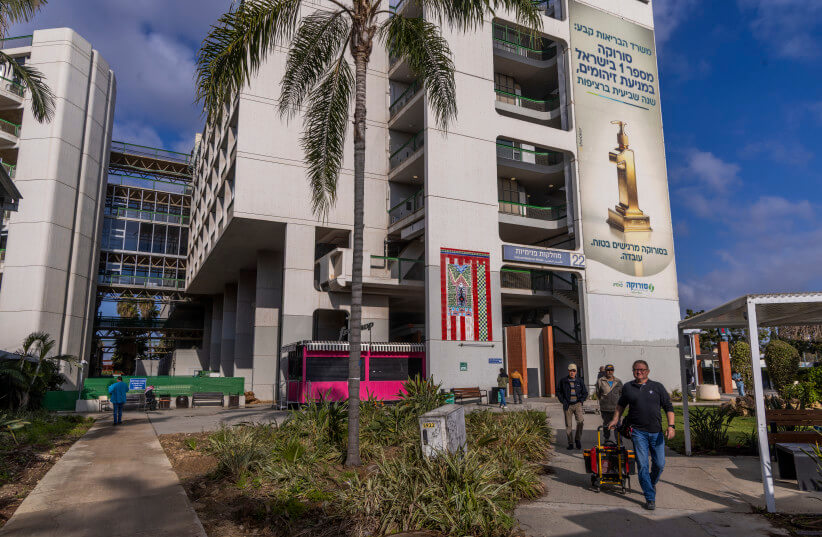
Perekalsky notes that the ITA has been providing support for Brand, along with sponsors such as Rav Bariach, the Israeli company known for its security doors and high-end locking systems.

Brand also receives support from Netanya’s prestigious Wingate Institute, the National Center for Physical Education and Sport. “He is now under their care,” reports Shai. “I am just looking out for my son as a father.”

Perekalsky adds, “We are proud to support Dan and to have such a developing talent! Bravo also to Dan’s family and to coach Mansdorf. Amos is doing a great job with Dan. It is not a coincidence he is achieving the results he has been in the past six months.”

He predicts that Brand will “be in the top 10 in January, if all goes according to plan.” He notes that as all 18-year-olds move out of this competition category, it will create an opportunity for Brand to advance his standing.

In the meantime, Perekalsky and all of Israel, which is discovering the 17-year-old Brand, are excited for what Brand has accomplished so far, and for what lies ahead. Perekalsky shares that, when he speaks with young kids, they say that they want “to play in Wimbledon like Dan.” This is no small matter given that, as Perekalsky notes, “in Israel, tennis is third after soccer and basketball.”

“Israeli is waiting to have something to be proud of in tennis. And we need more than one Dan. We are proud, but it is only a start!”

Read more

Originally appeared in Israel Baseball News on August 27, 2026

Israel Baseball hosted its Inaugural U-12 National Baseball Tournament on July 9-10 at Sportek Tel Aviv, bringing together nine teams from across the country – including Modi’in, Efrat, Jerusalem, Beersheva, Tel Aviv, Ra’anana, Carmei Gat, Tel Mond and Bat Hefer, with Tel Aviv and Ra’anana fielding a combined team – for the largest coordinated U-12 baseball gathering Israel has ever staged. Over the two-day championship weekend, clubs from the north, center and far south of the country competed at one venue for the first time, with Efrat emerging as Israel’s first U-12 national champion, Modi’in finishing second, and Tel Aviv-Ra’anana taking third.

At the tournament’s peak, four games unfolded simultaneously, and the weekend delivered real competition throughout: crisp hits, sharp defensive plays, costly errors, dramatic upsets and tight finishes decided on the final play. The championship game itself stayed close until the end, before Efrat capitalized on a late-inning lack of pitching depth for Modi’in to open up the gap and win, 12-3. Efrat General Manager, Jeff Oshin, credited the team’s pitching depth for the title. “It came down to depth of pitching – ten of our players out of 14 on the team could pitch if they needed to!”

Israel U-12 Baseball: Alive, Well, and Changing Lives

Nine teams of Israel baseball players, 12 and under, gathered at Tel Aviv’s Sportek in Yarkon Park as Modi’in and Efrat faced off in a Friday morning U-12 National Championship game. The newest team came from Beersheva, where parent and organizer Jonathan Leiman has been working to grow baseball in Israel’s south.

While all nine clubs made their mark on the weekend, the tournament’s story crystallized on Friday (July 10), when Modi’in and Efrat – two of the programs that have shaped Israel’s baseball landscape for years – met for the title.

Ari Varon, president of the Israel Association of Baseball, addressed the teams lined up along the baselines prior to the singing of Hatikvah (The Hope), Israel’s national anthem. He also shared with the crowd his own long-term hope for Israel Baseball: “Competition on the field, community after the field, teammates in life.”

Varon took pride in the growth of baseball in Israel. “Our main goal here is to build up a group of people throughout the country that have a common identity that work together… and give ourselves values and a break from the craziness (of life) by playing baseball.”

From Modi’in to Beit Shemesh to Gezer, Jerusalem, Tel Aviv and beyond, baseball has been taking root in Israel. The common feature, as Varon noted, has been growing the game — and a community of teammates — for life. This included players, coaches, managers and family members. Yet, the unique ta’am (flavor) of the sport has been a bit different in each town and city.

Interviews with coaches and parents affiliated with the Modi’in and Efrat teams revealed that U-12 baseball in Israel is about so much more than winning and losing games and tournaments. Baseball has had an incredible impact on the lives of their children, teaching them useful skills on the field and life skills off the field.

A Modi’in Coach Shares His Insights on Baseball’s Growth and Impact on Youth

Tani Glazer, 24, an accounting student by day and lifelong baseball enthusiast and coach for the Modi’in team, spoke movingly about the impact baseball has had on his life and those of Modi’in children. Glazer played on and off as a child, went to Poland to play on the U-12 national team, and returned as a coach.

Glazer humbly felt “I was more fit to be a coach,” a role which he has taken very seriously. He has strived to teach baseball skills as well as life skills and menschlichkeit (human decency) behavior. “I want them to deal with bad calls and cope with mistakes — as a player and as a person.”

As a coach, he had the opportunity to accompany the team this past February to a three-day tournament in Eilat, which took place over Shabbat. He especially liked seeing his players meeting people from other cities and connecting with them as they played together and stayed in the same hotel.

Having players from all over Israel competing and watching the games together at the recent U-12 national tournament helped players from around the country begin to get to know each other. “Hopefully it will serve as a breaking the ice for the future — next year they will say, ‘I know you’ and they will get to know each other a little better.”

Glazer noted that the background of the players varied by community. In Efrat, he observed the team members were mostly olim (immigrants to Israel) or children of olim — some with parents who continued to play baseball in the adult Premier League. In Modi’in, it was “more integrated,” with a nice mix of Americans and Israelis in recent years — a change he observed from when he played 10 to 15 years ago. “Now, word of the game is getting more spread around.” In Bat Hefer, the players were almost exclusively native Israelis.

While Glazer would have liked to have won the tournament, he was pleased with his team’s second place finish. “We got lucky with the schedule,” he noted playfully. Following a “tough, low scoring” game against Jerusalem, Glazer felt they had two easy games against newish teams from Carmei Gat and Tel Mond, and a game against a “young team” from Bat Hefer.

“Efrat is a whole different program,” Glazer observed somewhat longingly, noting unique features of the champion-winning program that include their field, a pitching machine and a batting cage. “They take the league to a new level!”

Modi’in Parent Sees Baseball as a Game Changer

Ely Cole’s 11 1/2-year-old son, Nadav, was hooked on everything baseball: he loved to play, watch and talk baseball at every opportunity. Father Ely, who served as a coach, shared that baseball “is the one thing that Nadav looks forward to — even if he is sick on a Wednesday, he prays that he will be okay for practice on Friday!” Nadav dreams of playing in Major League Baseball (MLB) or at least on Israel’s national team.

Like coach Glazer, Ely saw baseball’s impact firsthand. “Baseball has been the biggest influence on Nadav’s life. Through baseball, he has learned so many life skills — like patience, teamwork and supporting someone else.” He proudly recounted a time a friend struck out and cried — and Nadav supported him.

Ely reported, “His social group has totally changed from baseball.” This past year, Nadav and his friends spent hours playing baseball every Shabbat. And he made friends from other cities through baseball — at games, at tournaments, and especially through their participation in the three-day Eilat tournament. Ely shared that he and his friends stayed up late one night in Eilat to watch an MLB Spring Training game between the Atlanta Braves and the New York Yankees. “Baseball is a catalyst to make everything happen!”

Modi’in Mom Sees Baseball Ease Aliyah, Become Central for Her Son

Shira Greenspan, a Modi’in parent who made aliyah (immigration to Israel) nine years ago, had not initially imagined that baseball would become so important in the life of her family — especially for her son, Akiva. “It is so much more than we could have hoped for!”

While Greenspan noted the commitment of time and resources including practices and games three times a week and the financial investment, she believes the immense benefit it has on children’s physical and mental health makes it worth the expense. “If you consider the costs of OT, therapy and more, you can’t put a price tag on it!”

Greenspan especially appreciated coach Glazer’s approach to the game — as well as educating her son and his peers about much more than the technical aspects of the game. “At the end of the game, they all reflect on something they have learned, and they compliment each other. They have become open to discussing feelings, vulnerabilities and reflecting.”

Glazer also helped Akiva break down goals. Greenspan shared that the coach observed Akiva’s reluctance to swing and worked on the youngster’s self-trust. “Your goal is NOT to get a hit — but to get out with three strikes swinging,” he told Akiva. Mom recounted, “At his first at bat, when he got out swinging, he was so proud. Then, he came to bat, got a hit and won the game for his team!” Greenspan added, “Tani (Glazer) is amazing! He shows what real coaching means!”

A Baseball Parent’s and Coach’s View from Efrat

Andrew Stein grew up as a self-described “big time baseball nerd” in Kingston, Pennsylvania. He followed the New York Mets, collected baseball cards, and played lots of catch, but noted, “There was no baseball for a shomer shabbat (Sabbath observing) kid.” When Stein made aliyah 20 years ago and began to build a family in Efrat, all of that changed — his children all had the benefit of a well-oiled baseball program.

When members of the Efrat baseball league noted that Stein “never missed a game” and exhibited a “love of the game,” he noted, “they sucked me in” and recruited him to become a coach.

For Stein, baseball in Efrat gave his children “a way to have something similar to their dad.” He described with pride the “culture of baseball in Efrat,” which has fed many players into the Israel national team. “Kids in Efrat know that being on the Wild Pups is something to work for. Being a Wild Pup is something special!” Stein was proud of the team’s seriousness and its desire to win.

For one of Stein’s children, Matar, baseball taught “real person responsibility.” Matar has enjoyed traveling with the team to other countries and was pleased to have friends in such places as Rotterdam (Netherlands). Another son, Netzach, learned about accountability through the sport.

Stein, like other parents interviewed, spoke about the skills learned that would benefit his children on and off the field. “Matar has a sense of pride of being a Wild Pup — and a confidence that translates outside of baseball. He will bring this to his daily life.”

Jeff Oshrin, manager of the Efrat team, enjoyed watching baseball grow and thrive in Efrat. Oshin said, “We are immensely proud of what we have brought to Efrat. Baseball is our rock — and it has helped ease the aliyah stresses for many who have moved to Efrat. There are currently programs for all ages and batting cages, bleachers and a lit field. We play for the love of the game. We have built something very special.”

Beyond the physical amenities the Efrat fields offer, Oshin saw the opportunities for friendships and meaningful relationships that Israel Baseball provides — both with fellow Efrat players and those who play baseball in other towns. “Along the way, our kids have seen each other as opponents on the field, competing against each other, and they have also been on Team Israel together and walked out as friends.” He noted that, during tournaments, players often ate pizza together, or used the batting cage together, and they became friends.

It was exciting for Oshin to see the growth of baseball in Israel, and to see slight differences in each program. “In Gezer, they play baseball in Hebrew!” And he noted that, in Misgav and Gezer, more native Israelis were playing. “There are Israelis teaching Israelis how to play baseball!”

Back in Efrat, the players and families have been celebrating their U-12 title. But across all nine towns, players headed home with something bigger than a final score: new friends from cities they had never visited, phone numbers traded on the field, and a shared sense that Israeli baseball is now a national community, not just a handful of separate clubs.

Some of these clubs have fielded teams for more than a decade without ever facing one another, and this tournament changed that in a single weekend. The friendships formed at Sportek now form the foundation for what could come next — future tournaments, mixed-team play, and a stronger baseball culture stretching from the north to the far south.

; ; ; ; ;

Read more

Originally appeared at Jerusalem Post on August 24, 2026

The United States leads all nations with 28 players earning direct entry into the main draw, split evenly between 14 women and 14 men.

Tennis fans and lovers of the see-and-be-seen excitement surrounding the US Open will have plenty to enjoy when they enter the USTA Billie Jean King National Tennis Center in Queens, New York, for Fan Week and the qualifying tournament, which runs through August 27.

The festivities include Arthur Ashe Kids’ Day, the 2026 US Open Mixed Doubles Championship, a concert by The Lumineers and an exhibition match featuring tennis legend Roger Federer alongside longtime rival Andy Roddick and fellow US Open champions, Andre Agassi and John McEnroe.

And all of that comes before the two-week Grand Slam officially gets underway on August 30. The US Open features the world’s top players competing across men’s and women’s singles and doubles, as well as junior, wheelchair and quad divisions.

This year’s tournament takes place during Rosh Hashanah, which begins on the evening of September 11, and concludes with the men’s singles final on September 13 at 2 p.m.

 class=
A general view shows Arthur Ashe Stadium during the men’s singles final tennis match between Spain’s Carlos Alcaraz and Italy’s Jannik Sinner on day fifteen of the US Open tennis tournament at the USTA Billie Jean King National Tennis Center in New York City on September 7, 2025; illustrative (credit: MANDEL NGAN/AFP via GETTY IMAGES)

The tournament at a glance

Many of the sport’s biggest stars and fan favorites are scheduled to compete in Flushing Meadows. World No. 1s and reigning US Open champions Aryna Sabalenka and Jannik Sinner lead the women’s and men’s fields, respectively.

Just prior to the tournament, Sinner withdrew due to an ongoing right knee injury. Sabalenka, who won the title in both 2024 and 2025, is aiming to become the first woman since Serena Williams in 2012-14 to win three consecutive US Open singles titles.

Sabalenka and Sinner are followed by world No. 2s Elena Rybakina, the reigning Australian Open champion, and Alexander Zverev, the 2026 French Open champion. World No. 3s Carlos Alcaraz, a two-time US Open champion, and Jessica Pegula, the 2024 US Open runner-up, are also among the leading names.

Alcaraz has been away from competitive tennis since April after suffering a right wrist injury during his opening-round match against Otto Virtanen at the Barcelona Open. His most recent withdrawal came from the Cincinnati Open, which was scheduled for August 11-23 at the Lindner Family Tennis Center in Mason, Ohio. The US Open field includes 17 former Grand Slam singles champions — 11 women and six men — including 10 former US Open champions.

The United States leads all nations with 28 players earning direct entry into the main draw, split evenly between 14 women and 14 men.

The American women are led by Pegula, world No. 4 Coco Gauff and No. 9 Amanda Anisimova, while the men’s field includes top-10 players Ben Shelton and Taylor Fritz.

Eight players — five women and three men — are entering the tournament using special or protected rankings, including Lois Boisson (No. 38), Juncheng Shang (No. 56), Irina-Camelia Begu (No. 82) and Thanasi Kokkinakis (No. 84).

Both the men’s and women’s main-draw entries were based on the July 20 rankings. The women’s cutoff was No. 102, while the men’s was No. 101.

No Israelis will compete in the main men’s or women’s draw or in the qualifying tournament this year.

The US Open runs through September 13, with the singles main draws beginning August 30.

Top players team up for mixed doubles

Fans once again have an opportunity to see some of the world’s greatest players in unusual pairings before the singles and doubles main draws get underway.

The 2026 US Open Mixed Doubles Championship runs August 24-26 at the USTA Billie Jean King National Tennis Center, with Monday and Tuesday’s matches free to attend in Grandstand and Louis Armstrong Stadiums.

Among the star-studded pairings are Sabalenka and Novak Djokovic, Rybakina and Taylor Fritz, Mirra Andreeva and Andrey Rublev, Iga Swiatek and Casper Ruud, and Venus Williams and Alexander Bublik.

USTA CEO Craig Tiley said the mixed doubles competition provides an opportunity to showcase the sport in a different way.

“Anytime you can bring women and men together on the same team, you showcase tennis at its best,” Tiley said. “This is exactly what the Mixed Doubles Championship does.”

The event is designed to engage new audiences while giving fans another chance to see some of the biggest stars in tennis competing together.

A new look for Arthur Ashe

The greatest stage in tennis is also in the midst of a major makeover.

The US Open is undertaking the largest single investment in its history, with the modernization of Arthur Ashe Stadium and the construction of a new, state-of-the-art Player Performance Center.

The project represents an $800 million investment in the US Open and the USTA Billie Jean King National Tennis Center, entirely self-funded by the USTA. New York City continues to benefit from more than $1.2 billion in annual economic impact generated by the three weeks surrounding the US Open.

Combined with the most recent transformation project, completed in 2018, the USTA has invested nearly $2 billion into the US Open and its home facility without using public, taxpayer or government funding.

The transformation is taking place in three phases and is scheduled to be completed by the 2027 US Open without interrupting play or limiting fan access during the tournament.

This year will be a transition period, with much of the interior of Arthur Ashe Stadium revamped. Some areas, however, will remain temporary until the project is completed in 2027.

For 2026, fans will see an upward extension of the courtside-level bowl, adding 2,000 seats and expanding the courtside experience from 3,000 to 5,000 seats. A 40% increase in the promenade-level concourse will also create significantly more open space for fans at the promenade and loge levels.

Once completed in 2027, the stadium will feature two new dedicated luxury-suite levels, fully modernized concourses, redesigned retail spaces and upgraded food and beverage areas.

The project also includes a $250 million Player Performance Center, which will provide US Open competitors with expanded, state-of-the-art amenities.

Israel’s presence at the US Open

Israeli and Jewish fans make their way to the US Open each year hoping to see Israeli and Jewish players in action. They keep an eye out for Israeli flags beside players’ names on scoreboards and comb through draw sheets for names that might have a Jewish connection.

This year, the only Jewishly identified players in any of the draws appear to be junior boys player Dan Brand, wheelchair player Sergei Lysov, and quad wheelchair star Guy Sasson.

Brand, 17, represents one of Israel’s brightest hopes for the future. The right-hander from Kfar Saba, who is coached by former Israeli tennis great Amos Mansdorf, is ranked among the top 24 junior boys in the world.

Brand competed in both singles and doubles at the French Open and Wimbledon this year. He reached the second round of both events at Wimbledon, while at Roland Garros he advanced to the doubles quarterfinals. He will compete in both singles and doubles at the US Open, with junior play beginning September 6. Lysov, 22, is the world No. 12-ranked men’s wheelchair tennis player. He lost in the first round of the singles competitions at this year’s French Open and Wimbledon but reached the doubles quarterfinals at both Grand Slam events. He also competed at last year’s US Open and will return this year.

Sasson, 46, is perhaps the best-known tennis player representing Israel. The Ramat Gan resident has won six Grand Slam titles in the quad division.

Sasson was paralyzed 11 years ago in a snowboarding accident in France but went on to build an extraordinary wheelchair tennis career. Most recently, he won the quad wheelchair doubles title at the 2026 Wimbledon Championships with Dutch partner Niels Vink.

Sasson is currently ranked No. 3 in the world in quad singles and No. 2 in doubles. He will compete in both singles and doubles at the US Open, with wheelchair matches taking place September 8-12.

Miznon makes its US Open debut

Israel will also have a presence at the US Open beyond the courts, with chef and restaurant owner Eyal Shani making his US Open debut with Miznon.

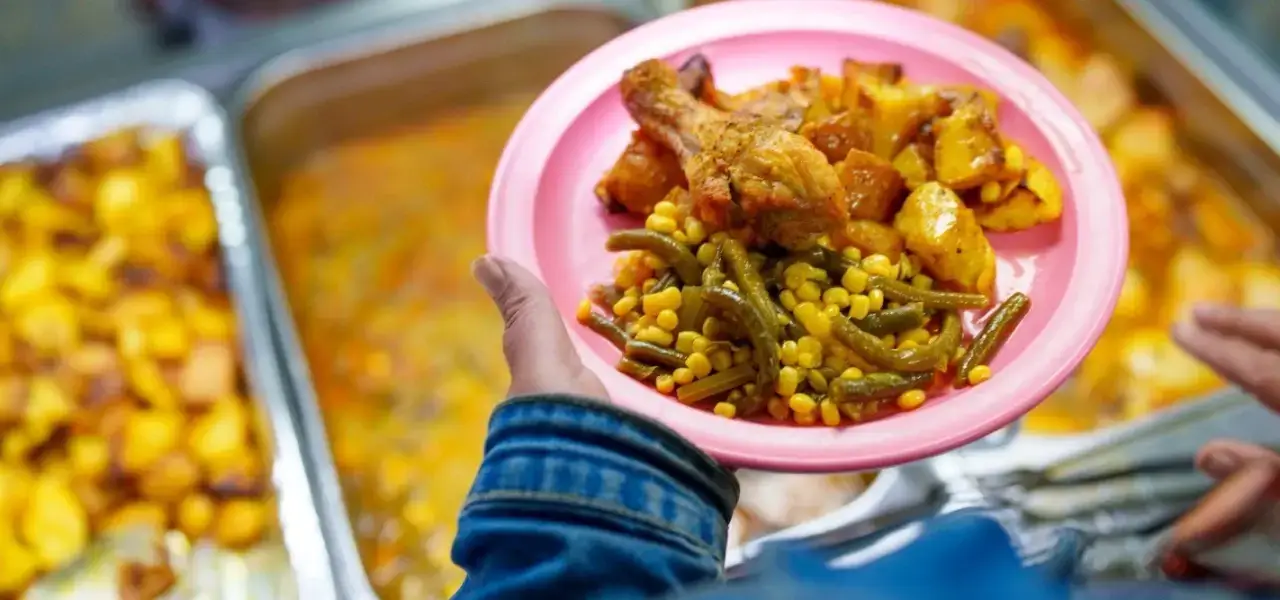
Miznon will bring its Mediterranean street food to the tournament, offering such favorites as rib-eye roast beef pita, chicken schnitzel pita, hummus with falafel, pita chips salad with schnitzel, and its signature green beans.

Fans will have plenty of other food and beverage options throughout the tournament, including the US Open’s signature cocktail, the Grey Goose Honey Deuce, as well as offerings from official partners including Dobel Tequila’s Ace Paloma, Moët & Chandon’s Moët Serve and Clos du Bois wine at the newly opened Club du Bois Wine Lounge.

With tennis, entertainment, new facilities, star-studded mixed doubles and an Israeli presence both on the courts and in the food courts, the 2026 US Open promises to offer plenty for fans even before the first Grand Slam singles ball is struck.

Read more

Originally appeared at jns.org on August 20, 2026

Sandy Goldstein moved to Israel at 102 with his wife, Rosalie. As he approaches his birthday, his advice is simple: “Do not wait.

When Sandy Goldstein turns 105 on Aug. 28, he and his wife of 78 years, 100-year-old Rosalie Goldstein, may be among the oldest living olim in Israel.

The centenarian couple, who have three children, six grandchildren and 13 great-grandchildren, made aliyah from Englewood, N.J., to Ir Yamim in Netanya in March 2023.

Sandy, born in Fall River, Mass., and raised in Borough Park, Brooklyn, worked as a certified public accountant and served the U.S. government in Washington during World War II.

His decades-long involvement in Jewish causes included work with the Jewish Defense League on behalf of Soviet Jews seeking to emigrate, whose eventual aliyah provided Goldstein with great inspiration.

“When Soviet Jews were finally able to come, their aliyah transformed the State of Israel. They brought incredible strength, talent, determination, and commitment. They helped build the Israel we know today,” he said.

Sandy and Rosalie’s only regret about making aliyah at ages 102 and 97—when both felt they needed the support of family—was that they had not moved to Israel earlier.

Their daughter, Risa Shapiro, has lived in Israel for more than 20 years.

“Do not wait. Make Israel your home,” Goldstein advises, noting that he had begun the aliyah process many times and was repeatedly told that he was “too old.”

“My own heart was always connected to Israel. I wanted to live here and be part of the Jewish homeland. But life does not always unfold the way we imagine,” he said.

Goldstein says he has lived his life according to two principles: The best helping hand is at the end of your own arm, and never give up.

“These are lessons I passed on to my children. It is okay to make mistakes. It is okay to face difficulties. But never give up. Have faith. Trust that with courage and determination, you can overcome challenges and find blessings you never expected,” he said.

Goldstein believes those blessings have surpassed anything he could have anticipated.

“The blessings we have received have been greater than I ever imagined. To watch my grandchildren and great-grandchildren grow, to hear my great-grandchildren happily speaking Hebrew as true Israeli sabras, to experience family life together, share celebrations and visits, and be part of the everyday moments that create memories—these are gifts beyond measure,” he said.

“No success in any aspect of life could ever replace what I have been blessed to experience in Israel by being together with my family here. Have faith. Be courageous. Do not wait too long.”

Read more