Originally appeared in jns.org, December 24, 2025

Six months after losing her lab to Iranian missiles, Prof. Yifat Merbl is honored by “Nature” magazine for groundbreaking immune-system research.

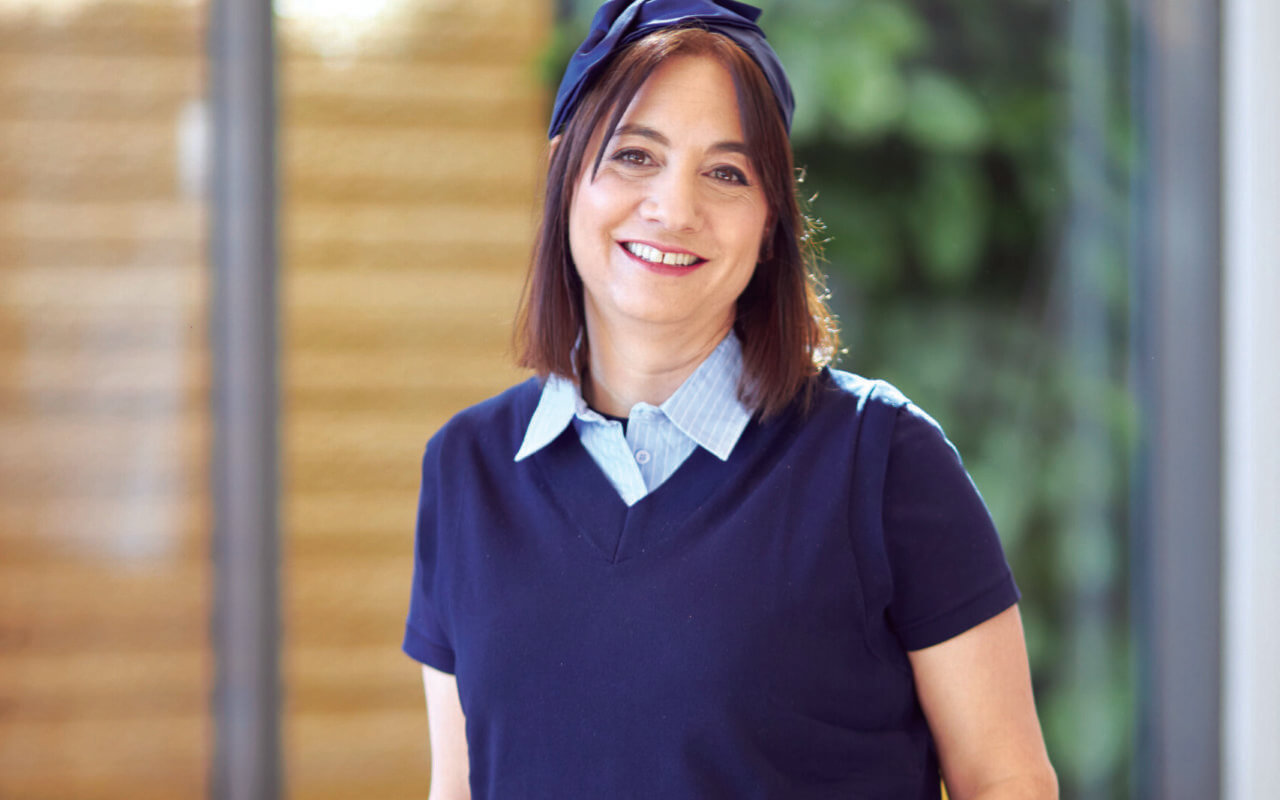
t has been a year of both devastation and distinction for Yifat Merbl, a professor in the Department of Systems Immunology at the Weizmann Institute of Science in Rehovot.

Merbl was recently named one of Nature magazine’s “Ten people who shaped science in 2025,” a prestigious honor recognizing her groundbreaking work on the human immune system.

“It’s an amazing recognition in what we do and provides an amazing boost, also to my incredible team, to keep pushing the boundaries of science,” Merbl told JNS in a recent phone interview.

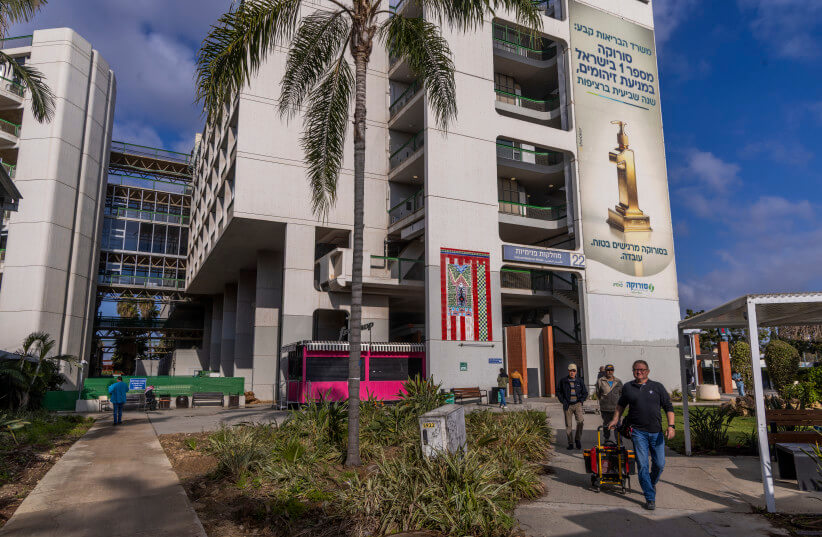
The accolade came just six months after her laboratory in the Wolfson Building at the Weizmann Institute was largely destroyed by Iranian missile strikes. Her home on the institute’s campus also sustained major damage in the attack.

Merbl was in her campus apartment when the missiles hit on June 15. She ran to her lab to close freezer doors in an effort to salvage irreplaceable research samples.

“It was the hardest day of my life,” said Merbl, a mother of three. “Some very expensive equipment was gone as well as clinical samples from oncology, cerebral spinal fluid and brain tissue from all over the world.”

She praised the Weizmann Institute for its rapid response, noting that the university helped relocate some 50 damaged or destroyed laboratories so research could continue. Her team is now operating out of a nearby plant biology lab using salvaged and newly purchased equipment.

Merbl is acutely aware that her personal story is only one chapter in Israel’s broader ordeal. “How does the country do it?” she asked.

Still, she remains resolutely optimistic. “We have to go forward. We wake up each day, hope for better days, find other solutions and get creative. It could have been worse—our house could have been ruined. And our kids and students weren’t hurt.”

Merbl’s journey

Raised in Givat Shmuel, Merbl served as an officer in the Israeli Air Force before earning a bachelor’s degree in computational biology from Bar-Ilan University. She went on to complete a master’s degree in immunology at the Weizmann Institute under the guidance of Prof. (Emeritus) Irun Cohen.

In 2010, she earned her doctorate in systems biology under the guidance of Prof. Marc Kirschner at Harvard Medical School, where she also completed postdoctoral training. She then returned to Weizmann as a principal investigator to establish her own lab.

“One aspect of our lab focuses on trying to understand what happens when proteins are degraded,” Merbl explained.

Her research centers on proteasomes—the cellular “waste disposers” responsible for breaking down damaged or unneeded proteins. “It is like a home garbage can, where you throw out all you don’t need.”

Her work builds on the seminal discoveries of Israeli scientists Aaron Ciechanover and Avram Hershko, who shared the 2004 Nobel Prize in Chemistry with Irwin Rose for uncovering the mechanism of protein degradation by the proteasome.

Merbl has earned the affectionate nickname “dumpster diver” for her deep exploration of this molecular machinery. Her lab developed novel technology allowing researchers to track proteasomes under different disease conditions, generating vast datasets of degraded protein fragments.

Her team suspected that these so-called “waste” products might serve an additional purpose.

“We took a broad look at all the data and asked ourselves: could the products of degradation play an additional role?”

The answer, it turned out, was yes. Merbl’s research revealed that proteasomes routinely produce small protein fragments, known as peptides, and that their production increases sharply during bacterial infections. Some of these fragments were found to kill harmful bacteria.

Many resembled components of the body’s innate immune system—the first line of defense against bacteria, viruses and parasites.

The findings suggest that the cell’s “dumpsters” may actually play a key role in fighting infection, opening a potential new frontier for personalized treatments at a time of growing antibiotic resistance.

Reflecting on her recognition by Nature, Merbl said the honor underscores how much remains unknown.

“It serves as a reminder of how much we still do not understand,” she said. “What excites me most is realizing how much there is still to uncover. Each answer opens a new set of questions, and each question expands the map of what is possible.”

Read more

Originally appeared in jns.org, December 22, 2025

“Your connection to Israel can never be disputed—read the Koran!” says Anila Ali, a Pakistani-American educator, author and civil-rights activist.

(Dec. 22, 2025 / JNS) For 13 Muslim influencers and imams visiting Israel, this was a Chanukah to remember. The annual fourth candle “Light Up Tel Aviv” celebration, sponsored by CAM, the global Combat Antisemitism Movement, was attended by hundreds at the Daniel Rowing Center on Tel Aviv’s Yarkon River. This event was the group members’ last stop on their tour of the Holy Land.

U.S. Army veteran and Pakistani-Muslim Mansoor Hussain Laghari at the “Light Up Tel Aviv” Chanukah celebration on Dec, 17, 2025. Photo by Howard Blas.

Their trip included visits to the site of the Oct. 7, 2023, Supernova music festival massacre and kibbutzim facing the Gaza Strip, Haifa, the Druze village of Isfiya and the Lebanese border. It included U.S. Army veteran and Pakistani-Muslim Mansoor Hussain Laghari getting kicked off the Temple Mount in Jerusalem’s Old City, where he came to pray, for wearing a yellow pin in support of the hostages held in Gaza.

The Chanukah party was part lovefest, celebrating the relationships CAM fosters between Jews and Gentiles, part tribute to those recently killed in Sydney, Australia, and part acknowledgement that antisemitism continues to be a major issue in the world.

Attendees heard short speeches by Muslim and Jewish influencers and leaders, including Loay Alshareef, a leading influencer from the United Arab Emirates, and Montana Tucker, an American Jewish influencer and advocate, who came to the event directly from the White House Chanukah party.

Muslim influencers visiting Israel attend the “Light Up Tel Aviv” Chanukah celebration on Dec, 17, 2025. Photo by Howard Blas.

Sacha Roytman, the CEO of the five-year-old organization, which pioneers global efforts to combat hatred, safeguard Jewish life and address the broader societal impacts of antisemitism, opened the evening by welcoming the diverse group, which included Ambassador Ezra Cohen of Panama. Rashi Elmaliah, board member of the Israel-Australia Chamber of Commerce, paid tribute to those slain in Sydney.

Anila Ali, a Pakistani-American educator, author, civil-rights activist and the founder of the American Muslim and Multifaith Women’s Empowerment Council, is known for interfaith dialogue and combating extremism. The crowd clapped and cheered as she made the case for the right of the Jewish people to Israel.

“Your connection to Israel can never be disputed—read the Koran!” she said. She spoke movingly of her visit to the Supernova festival site and kibbutzim and assured the assembled that she is working to “build a new generation of Muslim leaders in America.”

Roytman encouraged Ali, who has visited Israel several times, including in 2022 on a mission with Pakistani expatriates. “Come with twice as many next time,” he said.

UAE-based, Saudi-born Egyptian activist Loay Alshareef speaks at the annual “Light Up Tel Aviv” Chanukah celebration, sponsored by the Combat Antisemitism Movement, at the city’s Daniel Rowing Center on Dec. 17, 2025. Photo by Howard Blas.

‘Proud to stand with my Jewish brothers

Alshareef also made the case for Israel. He playfully noted, “My love for Israel is not because of how great it is, how friendly it is, or for the great food. All true.” He continued, “The greatest thing about Israel is its history, which can never be disputed. I am proud to be here and stand with my Jewish brothers.”

Sheikh Musa Drammeh, a former Wall Street investment banker, at the “Light Up Tel Aviv” Chanukah celebration on Dec, 17, 2025. Photo by Howard Blas.

Alshareef singled out Gambian-born Sheikh Musa Drammeh, a community organizer and television host of “Muslim World News,” who is visiting Israel for the first time.

Drammeh, a former Wall Street banker, told JNS that his commitment to Israel and activism dated to 9/11. “My wife and I were both investment bankers until 9/11. We saw what happened and decided to pack up and fix the world. We realized we need to focus on Israel and Palestine. We needed to make sure the Muslim world recognized Israel like all other nations.” 

He views support of Israel as based on the Koran. “Any Muslim who is anti-Zionist, anti-Israel or antisemitic is either ignorant or a hypocrite, because the Koran is the most pro-Israel book you can find.”

He proudly notes that he has been critical of New York Mayor-elect Zohran Mamdani. “I told him there are lots of Muslims for Israel, and you don’t speak for us.”

Sava Diamandi, counsellor at the Romanian embassy in Israel, spoke of his country’s fight against antisemitism. “We have a history during the Holocaust and had to face the truth because it was hidden for years.

“We see the ghost of the past coming out in the form of antisemitism. We feel it is our historical legacy to connect and build bridges between Romania and Israel.”

Diamandi said that Romania is “on the side of the peace process” and that his country supports an eventual two-state solution.

Ron Segev, a survivor of the Supernova massacre, lit candles for the fourth night of Chanukah. Segev shared his story of survival and rescue of others and his devotion to helping other survivors “as part of my healing journey.”

Read more

Originally appeared in The Jerusalem Post, December 19, 2025

Daddy Daily Deli (est. 1979) cites New York’s Katz’s Deli as inspiration. The menu is as diverse as its clientele. Customers can purchase an assortment of meat and vegetarian options.

The new eatery in Tel Aviv’s quaint Basel Square – Daddy Daily Deli (est. 1979) – cites New York’s Katz’s Deli as inspiration. However, there are no drying salamis, no baskets filled with rye bread, and no fresh coleslaw. Deli it is not, even though there is an offering of deli sandwiches. But it is an upscale gourmet shop with items at an impressive price point.

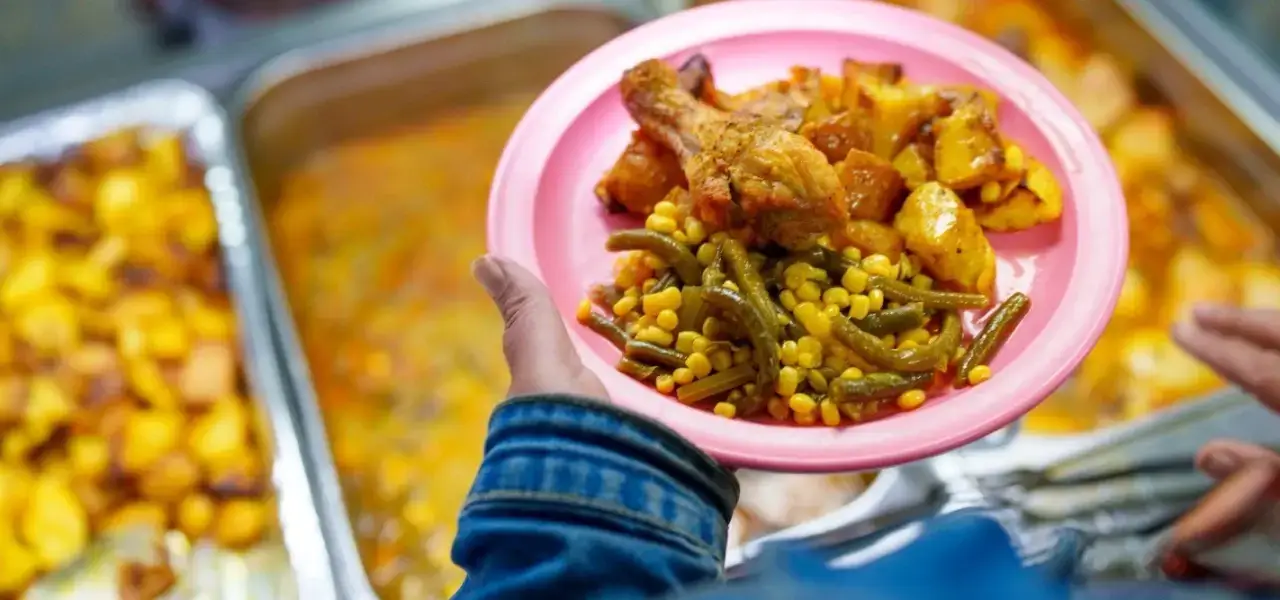
A treasure trove of carefully prepared fresh dishes rotates daily. The tremendous range of items – from home-style and traditional to internationally inspired – are prepared each morning in an Acre plant and transported to Tel Aviv, where they adorn the immaculately clean glass case at the front of the store, and line the refrigerated shelves and the frozen food case.

Welcome to Daddy, a collaborative venture of the Malka family, one of Israel’s leaders in cooking kitchens, and culinary entrepreneur Nadav Neeman, who is responsible for the business vision.

Daddy is so many things at once, with something for everyone. Customers can purchase an assortment of meat and vegetarian options to eat on-site outside (an enclosed area will be constructed soon for the colder weather), take home, or (very soon) have delivered by Wolt.

WOLT FOOD delivery drivers in Tel Aviv. (credit: MIRIAM ALSTER/FLASH90)

A few highlights from my visit included fish balls (NIS 15 per 100 gr.); chicken meatballs (NIS 12.50); three types of schnitzel (NIS 12.50); sliced brisket (NIS 20); roast turkey (NIS 16); chestnut squash (NIS 9); arook (potato) latkes (NIS 9.50); egg salad (NIS 9.80); and vegetarian kubbeh.

Prepackaged meals for one or two in the refrigerated case include items such as quinoa (NIS 24 for 300 gr.); grilled chicken (NIS 40 for 300 gr.); chicken pancakes (NIS 38 for 300 gr.); and noodles with vegetables (NIS 28 for 400 gr.).

Freezer items include phyllo dough chicken (NIS 50 for 400 gr.); fish fingers in panko (NIS 65 for 500 gr.); and their signature chorizo hot dogs (NIS 79 for 690 gr.).

The menu is as diverse as its clientele.

On a warm Sunday morning, as I awaited my food, two elderly women with caretakers arrived. Both women said that they had been there nearly daily since the store’s opening in early November. A mother mentioned that her two-year-old in the stroller, a picky eater had ordered her to get “ketzitzot she’yeladim ohev” (“kebabs children love”) and sugar-free “mitz shel yeladim” (“children’s juice boxes ”).

Daddy accepts Cibus vouchers for the lunch crowd and offers a set lunch menu: main course, two sides, and a small salad (NIS 55). There is also a children’s set lunch special (NIS 35).

My dining partner and I sampled a little bit of everything.

The bean soup was hot and well seasoned (NIS 5 for 100 ml.); had we come another day, we might have experienced another of the five soups they serve in the rotation, such as harissa, orange vegetables, and pea.

Couscous pride

Our waiter was particularly proud of the homemade couscous (NIS 5.50) with special sauce (NIS 7.50), which takes three hours to prepare, as well as the spicy red-colored merguez sausage, one of five types of sausages they make.

The brisket was lean and thinly sliced, accompanied by roasted potato boats (NIS 6.20). My dining companion, who is a connoisseur of mafrum (a Libyan meat and potato dish), found it to be among the best she’s tasted (NIS 11).

For the vegetarian crowd, Lee – the store manager – insists that even meat eaters would have a hard time telling that Daddy’s vegetarian shwarma wasn’t “the real thing.”

On Thursdays, Daddy carries cholent, kugel, Vishnitz challah, and just about anything a family who doesn’t want to cook for Shabbat dinner or lunch might need.

If you are invited as a Shabbat or weekday guest, you can find all kinds of host gifts, such as fancy olive oil from Pinchas Farm; Noam Tor honey; Shulman chocolate; sauces (BBQ, chili mango); and jellies, cookies, and coffee beans.

Oddly, Daddy offers packaged cheeses – unusual for a kosher gourmet meat store. The manager assured us that it is permitted, as it the packages are sealed. We will save the purchase of various cheeses from Gvinage at Rom Farm for another time – though the Galil Gouda and Pecorino Galil caught our attention.

As we prepared to leave this great new spot, I realized I was so taken by the range of selections that I had overlooked an important fact – that Daddy indeed serves juicy Katz Deli-style sandwiches, such as thick slices (200 gr.) of brisket or turkey with house sauces, soft bread, and pickles, with crispy fries on the side. There is truly something for everyone at Daddy.

Daddy Daily Deli

40 Basel St.

Tel Aviv

Tel: (03) 544-5445

Hours: Sunday-Thursday, 7 a.m.-7 p.m.

Friday and holiday eves, 8 a.m.-3 p.m.

daddydeli.co.il

Kashrut: Tel Aviv Rabbinate

The writer was a guest of the restaurant.

Read more

Originally appeared in Jewish News Syndicate, December 11, 2025

The goal, Rabbi Shlomo Gestetner told JNS, is to cultivate “Jewish leaders of the future.”

Drivers slowed along Sderot Ben Tzvi on Monday afternoon, curious about the crowds spilling onto the roadway outside a gleaming new building draped in red banners. Moments later, major donors Igor Tulchinsky and Yitzchak Mirilashvili joined leading Chabad rabbis from around the world in cutting a ceremonial ribbon, officially dedicating the Mayanot World Center—a $20 million campus that will serve as the new home of the Mayanot Institute of Jewish Studies.

For Rabbi Kasriel Shemtov, Mayanot’s executive director, and Rabbi Shlomo Gestetner, the institution’s dean, the moment was the fulfillment of a decades-long vision.

“Mayanot was established to give young adults the ability to come to Israel and Jerusalem to study about Jewish heritage and become knowledgeable Jews with a strong identity,” Gestetner told JNS. The goal, he said, is to cultivate “Jewish leaders of the future.”

In the same conversation, Shemtov emphasized Mayanot’s focus on identity-building. “Many go back to their communities and the world—as the Rebbe wanted—to become leaders with the passion and the gift that keeps giving,” he said. “They integrate into their communities, businesses and families, who see the excitement which they take to the masses and inspire.”

A dream come true’

Hundreds of guests filled the campus courtyard for the first of two receptions following the dedication of the executive offices and learning centers. Three current students—Mayer Weiss, Ari Kuptchik and Meir Solomon—shared their enthusiasm for the program.

“I like the way they run it and the great programs,” said Weiss, 18, of Miami. Kuptchik, also 18, called the experience “eye-opening,” adding, “They really push things forward.” Solomon, 18, from Los Angeles, who grew up in a Modern Orthodox family with Chabad roots, said he came to deepen his understanding of Chasidut. All three plan to attend college or start work after their year of study.

The new campus will significantly expand Mayanot’s capacity. In the past year alone, more than 400 students from 16 countries and 94 universities took part in 85 weekly classes, with thousands more accessing online learning. The upgraded facility will allow for immersive study programs, Israel-advocacy seminars, educational tours, internships and volunteer opportunities.

Shemtov believes the center will fill a crucial gap for young Jews seeking continued learning after programs like Birthright Israel. “What happens on day 11?” he asked. “We can facilitate for those who want a deeper look into Israel and their heritage—to take it to the next level.”

A state-of-the-art home for Torah

Both Shemtov and Gestetner highlighted that all of this takes place in a modern, beautifully designed space. “Many people feel that studying in a beit midrash means compromising—of food and physical place,” Shemtov said. “Here is one of the most gorgeous yeshivas. The upgraded, state-of-the-art building goes with the vision of the Rebbe, who wanted to transform the world for holier and better purposes.”

Guests touring the facility shared that sense of awe. Davida Zimble of Boston and Rechavia admired the gym, mikvah and dining hall housed in the renovated structure, built atop the former Vaisra Itzhak Assisted Living Facility. “A place of Jewish learning doesn’t have to be decrepit!” she quipped.

The World Center features a spacious Beit Midrash, rooftop event space overlooking Jerusalem, dormitories with kitchenettes, a meditation garden, and a dedicated Lone Soldier Center supporting IDF service members.

As the sun set, guests gathered for a mincha prayer service and a rooftop reception accompanied by live music, celebrating the launch of a campus aimed at shaping Jewish life for decades to come.

“As Jews face unprecedented challenges worldwide—from college campuses to small town America—Mayanot empowers the next generation with Jewish pride, confidence and clarity of purpose,” said Yaakov Cohen, chairman of the board.

Read more