A safe haven. Jewish life-rich, antisemitism-free, Hebrew language-focused, cost-effective, three-year options for studying for a bachelor’s degree in Israel.

Original article published on The Jerusalem Post

Featured image: A PROTESTER raises a flag that states ‘Free Palestine’ at an encampment at the Auraria Campus in Denver, Colorado. Since the October 7 attacks, university campuses across North America have witnessed protests and encampments in support of the Palestinians.(photo credit: KEVIN MOHATT/REUTERS)

When students at Manhattan’s Ramaz Upper School meet with director of college guidance Raphael Blumenthal this fall as part of their college search process, he will have more options to share than in past years – as long as students and parents are willing to expand their search to include institutions of higher learning in the Holy Land.

Blumenthal and nine other college advisers from Jewish day schools in the United States – including SKA, Ramaz, Ma’ayanot, Yeshiva High School for Girls, Bnei Akiva Schools, RASG Hebrew Academy, Frisch School, Beth Tfiloh Dahan Community School, Schechter School of Long Island, and the Melvin J. Berman Hebrew Academy – recently returned from an exhausting, exhilarating, and eye opening trip to Israel from June 24-27 where they visited nine colleges in four days to learn about Jewish life-rich, antisemitism-free, Hebrew language-focused, cost-effective, three-year options for studying for a bachelor’s degree in Israel.

While many of the college advisers were already familiar with such Israel study options as the decades-old Hebrew University and Tel Aviv University (TAU) overseas programs and the 30-year-old Reichman University (formerly known as IDC Herzliya), the trip was an opportunity to refresh their memories about them and learn about a range of additional options at Ben-Gurion University of the Negev, Ariel University, Bar-Ilan University, Jerusalem College of Technology/Machon Lev, Technion-Israel Institute of Technology, and the University of Haifa.

While the Reichman degree program is in English, most programs involve students spending the first year taking academic courses in one’s major area of study in English while simultaneously taking intensive Hebrew language courses. 

The goal is for students to transition to the university’s regular Hebrew language academic program where they will complete their degree. 

 An aerial view shows the Dome of the Rock in front and the Hebrew University of Jerusalem, in Jerusalem, April 26, 2023. (credit: AMIR COHEN/REUTERS)
An aerial view shows the Dome of the Rock in front and the Hebrew University of Jerusalem, in Jerusalem, April 26, 2023. (credit: AMIR COHEN/REUTERS)

Many will elect to stay in Israel – which is in line with the goal of its funder, David Magerman.

MAGERMAN HAS long been a supporter of Jewish day schools through his Kohelet Foundation, which was in operation from 2009-2019. His newer venture, the Tzemach David Foundation, founded in 2022, is a grant-giving and operational foundation that is “dedicated to transform the Israeli educational system by providing comprehensive support and fostering innovation.”

A University of Pennsylvania graduate and until recently, a Penn donor, Magerman has been very public in criticizing his alma mater in recent months over both the Palestine Writes festival held a UPenn last September, and anti-Israel and antisemitic protests on the Penn campus in the wake of the Gaza War. The philanthropist has discontinued millions of dollars in support for Penn and has redirected some of his money to Israeli institutions of higher learning.

Magerman, who is also a member of Yeshiva University’s board of directors, recently gave $1 million to Jerusalem College of Technology/Machon Lev and announced additional $1 million gifts to the Technion-Israel Institute of Technology, Bar-Ilan University and two others to be announced soon.

TAMAR KRIEGER, executive director of the Tzemach David Foundation, notes that supporting institutions of higher learning in Israel “became a natural outgrowth” of his previous support of higher education in the United States. 

It also fits in with an important goal of Magerman and the foundation – to encourage young people to make aliyah at a period in their lives before they have become settled in to careers and married life.

Krieger shares that one goal of Magerman’s new foundation is to “make aliyah easier,” stressing that “olim integration should be a goal.” They are hoping that mastery of Hebrew and obtaining a bachelor’s degree from a top Israeli university – while socializing with Israelis and enjoying rich Jewish life on campus – will help their ultimate successful integration into Israeli society.

Krieger is working to operationalize and implement this vision and ultimately share it with college advisers at Jewish day schools in the US. She observes, playfully, “We found college advisers to be the low hanging fruit – they are the ones who tell the students where to go – they have to have info about student life, in the same way they know about Penn and Binghamton,” a leading SUNY university.

Before putting together the Israel trip, Krieger and the foundation needed to learn more about the programs the Israeli universities already offer as well as the types of support they offer students.

ONE HELPFUL starting point was Maureen Adiri Meyer, who for thirteen years has served as director of Lowy International School at TAU. 

She explains that the university already has a long history of supporting the specialized and evolving needs of students, which predate October 7. The director notes that their support of current students from India, China, the EU and the US, through their dual degree program with Columbia University reflects their ability to meet unique needs of various groups of students. 

Adiri Meyer offers that their experience meeting such needs will be helpful in supporting future students. 

As an example of TAU’s ability to adapt, she shares that it began realizing the needs of Modern Orthodox students who began participating in the Columbia program during the Covid pandemic in 2020. 

“They were used to Hillel and Chabad on campus and were looking for something,” she says.

 “Some of our kids were living in Herzliya and coming to Ramat Aviv to learn.” These students were choosing to live close to Reichman University where they could take advantage of the robust Jewish Learning Initiative on Campus program of the Orthodox Union. 

As a result, Adiri Meyer and her team collaborated with JLIC to start a program at TAU.

RABBI JONATHAN Shulman, who served as the initiative’s director at Penn from 2010-2014 and now serves as director of OU-JLIC in Israel, actually credits a pioneering group of gap-year students who approached him nearly ten years ago who pointed out the lack of supports for students from abroad. “They came to me and said, ‘Why should we lose out?’” 

In 2017, a JLIC couple came to Reichman. “Increasingly, an idealistic group of students chose to be here,” Shulman reports, noting that Hillel on Israeli campuses has always focused on Israelis, but there was “no one working in the international student space.” The initiative’s work then expanded to Bar-Ilan and has continued to grow on campuses throughout Israel.

Adiri Meyer feels that creating community for these students on campus – through JLIC and in general – will be a major key to the success of the students in Israel. She has enjoyed working with Rabbi Shulman, noting, “It has been fabulous working with him since day one.”

Shulman credits Magerman for his long-time support of JLIC and for helping set up a structure to support foreign students. “David has been a visionary and took it to the next level – even before 10/7.” Shulman notes that over 20% of gap-year students remain in Israel and that “not all go right to college first.” Shulman is pleased to partner “with great universities” and credits them with continuing to grow and evolve as they offer hybrid programs for these students.

The Israel OU-JLIC director also praises the Diaspora Affairs Ministry for their support. Amichai Chikli, Israel’s Minister of Diaspora Affairs and Combating Antisemitism, connects his support of the new initiative to current events in Israel and around the world. 

An entire nation under attack 

“On October 7, a severe war began not only against the State of Israel, but against the entire Jewish people,” he says. “Jewish communities worldwide found themselves under severe attack, culminating in violent riots and displays of hate on elite campuses in North America. The State of Israel serves as a home and refuge for every Jew regardless of their background, and makes great efforts to assist as much as possible. 

“The ministry is proud to promote this program in collaboration with the Tzemach David Foundation, aiming to increase awareness of the various study programs offered by universities in Israel,” Chikli said. “We invite all students to consult with the advisers about the many academic opportunities in Israel.”

Adiri Meyer is happy to welcome these students to TAU. She feels having these American students complete their undergraduate degrees there can be beneficial both to them and to the university community. She notes that they will receive a top level, affordable, Jewishly rich education in Israel in three years, while also enhancing life on campus.“We are the largest university in Israel with 30,000 students,” she says proudly, noting that most undergraduates are 23 and after their army service. “Having these American students study in the university will add a lot to the university. The more integrated they become, and the more our Israeli students meet smart, talented kids from around the world, the more global they will be.”

Once Krieger and the foundation better understood the landscape of higher education in Israel, they decided to move quickly to invite college advisers on the quickly but carefully planned Israel trip.

ESTHER GENUTH, a member of the College Guidance department at the Frisch School in Paramus, New Jersey, was delighted at the invitation to participate on the trip. 

She notes that her entire department has been observing a trend in the past five years towards more gap year participants staying in Israel to complete army or national service and to remain in Israel for college. She notes that Frisch even offered a panel this year where three Israeli universities shared information about their programs. “There has been an even bigger shift this year toward exploring Israel study options,” she says.

Genuth was pleased with how they were received and with what they learned. “The schools were so grateful for us coming,” she observes, adding that she was pleased to learn how “Israeli schools are adapting and forming new programs for both those who plan to make aliyah or [who] go back to America.” 

She feels well prepared to share updated information with her students, which she obtained first hand. “Seeing places and meeting people was invaluable,” she reports. “After the trip and after meeting with JLIC, I have no doubt our students will be successful!”

 ANNE GREENSPOON is co-director of college guidance at Berman Hebrew Academy in Rockville, Maryland, where she reports that more than 90% of students traditionally participate in gap year programs in Israel, mostly yeshiva or seminary. “In the past, a handful had plans to do a gap year, then IDF service, then maybe come back for college. Now, parents want a backup plan,” she says.

Greenspoon has observed a shift in her students as they consider post gap-year plans. “This year, we saw more students who planned to return to America for college changing their minds. Many are choosing to stay and serve in the IDF.” Many of those students may elect to remain in Israel for college.

The college guidance co-director further notes that, when she and her Berman colleagues began one-on-one meetings with 11th graders and their parents in January to discuss college options, “Many said they were only considering Yeshiva University or Touro (Jewishly affiliated) colleges – or college in Israel. 

After Passover and the pro-Gaza/anti-Israel encampments, more people asked, ‘what do you know about universities in Israel?’ We have been talking about this a lot.” She notes that the school hosted a webinar in May with Rabbi Shulman of JLIC for their college counselors.

For Greenspoon, the Israel trip came at a perfect time. “The big thing for our students is that they feel they will miss out on campus life. I think these new programs, where they can attend university in Israel alongside a JLIC community, is a big game changer for our students!” She also notes that “these new hybrid programs will attract students who are a little older and may be good for those who served in the IDF or did national service.”

 She anticipates the concerns of her students’ parents about both just how competitive the Israel universities are, and how the Israel degree will be viewed if they come back to the US.

ADIRA MEYER of TAU assures potential applicants that “students will be studying with top academics in a top university.” 

And while Ramaz’s Blumenthal knows that the Israel university option is not for everyone, he already has a top student in mind for university study in Israel. “I am thinking of a student who will thrive at the Technion or Jerusalem College of Technology/Machon Lev – he will love having Torah learning alongside the academics. 

“I am intrigued, excited and impressed with the level of education that Israel universities provide,” he says. “They clearly have top-notch experts in their fields. When you think about the Start-Up Nation, they are providing an education that is producing world leaders.”

It is now up to the college advisers to share their newly acquired knowledge of the Israel university option with their students and their families. Magerman, the universities and the Start-up Nation eagerly await their arrival.

Read more

Original article was published on The Jerusalem Post

Sababa attendees had the opportunity to experience the best aspects of a traditional music festival while also sampling workshops and merchandise from vendors.

In many ways, the four-day Sababa Music Festival in Hammonton, New Jersey, was like other music festivals – top bands on many stages, vendors, barbecues, merch, camping, cornhole, yoga, frisbee, lake swimming, alcohol, some recreational drugs, people milling about barefoot, and unlimited opportunities to socialize with old and new friends.

But Sababa, held this year on June 27-30 and nearly every year since 2017 at a number of locations in the New York area, is quite unique. The 1,300 festival attendees were almost exclusively Jewish. They came together from extremely diverse backgrounds and locations such as New York, New Jersey, Maryland, Pennsylvania, Texas, Wisconsin, Arizona, Canada, and Israel. Some were looking to get closer to traditional Judaism and enjoyed putting on tefillin (phylacteries) for the first time. The large group of Rabbi Nahman of Breslov followers blasted music, danced, and shared soup with anyone who visited their large “Nanachville” village.

This year, there was added significance to many of the attendees due to connections to music festivals, particularly the Nova Festival, which took place last Simchat Torah in Israel and was among the targets of the October 7 Hamas massacre, resulting in hundreds of celebrants’ deaths.

When Riverdale resident Barry Kanner visited The Nova Music Festival Exhibition – The Moment Music Stood Still recently in New York, he knew instantly that he needed to participate in the Sababa festival.

“While fighting back the nausea and tears, there was one thought that gave me solace,” he said. “It was my plan to be at Sababa, where, as a proud Jew, I will counter evil, blind hatred, and darkness with friendship, celebrating Shabbat and great music. We will dance again!”

 RAPPER KOSHA DILLZ in performance. (credit: HOWARD BLAS)
RAPPER KOSHA DILLZ in performance. (credit: HOWARD BLAS)

Veteran concert promoter Peter Shapiro, owner of the Brooklyn Bowl and The Capitol Theater, shared Kanner’s sentiments about the need to dance again. “The only way to pick ourselves back up from the terrible trauma that October 7th has caused for all humans is to dance again, so I am very much looking forward to how we can pick up the pieces through the spiritually replenishing magic of a live music festival.”

The themes of love for Israel and “dancing again” were everywhere. Many tents and campsites featured Israeli flags and the Nova festival; enthusiastic fans waved the flags as Matisyahu, who has done so in Israel since October 7, performed “One Day” and “Jerusalem.”

 MANY TENTS and campsites featured flags of Israel. (credit: HOWARD BLAS)
MANY TENTS and campsites featured flags of Israel. (credit: HOWARD BLAS)

Artist Michal Neiman created a large, colorful “We Will Dance Again” mural featuring 364 butterflies that were filled in by attendees with the names of people murdered at the Nova Festival.

Neiman, 27, a nurse and artist who also constructed a whimsical Shabbat Table in a covered tent, where attendees could go for solace throughout the festival, noted that “we have all been thinking about Nova and will, at some point, while here.” For that reason, she decided to create a “visual tribute.” Participants chose file cards with names of the Nova victims, which they wrote on blank butterflies on the exhibit, and kept the file cards for remembrance. “Everyone could pick a card and hold on to it and dance with it,” Neiman said.

Harrison Ferber and his fiancée, from Lower Manhattan, picked a blue card and added the names of Lori Vardi, 26, of Raanana, and Einav Elkayam Levy, 32, of Givatayim. They were proud to write the names inside the butterflies and take the cards home with them to continue remembering the victims.

SABABA ATTENDEES had the opportunity to experience the best aspects of a traditional music festival while also sampling workshops and merchandise from vendors. The musical offerings kicked off Thursday with Mun on the main stage and Chillz/Jammz at the bonfire stage.

Others were looking for their place in the Jewish world as they moved beyond haredi Judaism.  A 20-something woman in shorts and a t-shirt was speaking with another attendee in Yiddish, describing her Satmar background. Another man was telling a new friend that he grew up ultra-Orthodox in Baltimore and remained religious “until five years ago.”

Liba Yoffe, who led a Saturday afternoon workshop on “Breaking the Chains of Fear,” is a formerly religious, divorced mother of four who shared her story of being the first woman to compete on the TV show American Ninja in a long dress and wig. A blonde, American-born 20-something, draped in an Israeli flag throughout the weekend, described herself as living “somewhere in Gush Etzion” where she “does farming.”

Friday’s musical highlights, which went from 1:30 pm until just before 8:13, the time for Shabbat candle-lighting, included rapper Kosha Dillz, who also led a Shabbat day workshop on “How to Become a Jewish Rapper in 57 Minutes,” Souls on Fire, Top Cats, a versatile Grateful Dead cover band, and others. 

On Friday, following optional morning prayers, the Zen Zone featured communal shakshuka cooking with chef Nir Margalith and pre-Shabbat shakshuka tasting to raise awareness of Havat Marpe (Healing Space), located in Rishpon, Israel, and its unique, integrated response to collective trauma  “Our organization wants to support Nova. We have hosted 3,500 survivors so far,” he said. Their work has also impacted young adults from Kibbutz Re’im, 2,300 combat soldiers, and others. They expect to help 28,000 by the end of 2024. Margalith, a chef who has worked in the tourism industry, is traveling to America every six weeks to cook at private events that raise money for the organization.

 LIBA YOFFE led a workshop on ‘Breaking the Chains of Fear. (credit: HOWARD BLAS)
LIBA YOFFE led a workshop on ‘Breaking the Chains of Fear. (credit: HOWARD BLAS)

Pre Shabbat events featured a healing session with Tamar, team-building activities with Shilo, Kabalah Yoga, and a Wrapunzel head-wrapping workshop.

While many came to Sababa for the music and workshops, many elected to spend a great deal of time socializing and hosting dance parties and dining events in specially designated camping villages with names such as The Persian Peninsula, The Jungle, The Chevre (Philadelphia-area young professionals), Burning Heart/Vallevue, and Nanachville.

 Sababa attendees had the opportunity to experience the best aspects of a traditional music festival while also sampling workshops and offerings from vendors. (credit: HOWARD BLAS)
Sababa attendees had the opportunity to experience the best aspects of a traditional music festival while also sampling workshops and offerings from vendors. (credit: HOWARD BLAS)

AS SHABBAT approached, some lined up for the modern showers trucked in for the event. Others continued dancing, swimming, and hanging out. For the fully Sabbath-observant, an extensive eruv (enclosure) was constructed to permit carrying, and a sophisticated apparatus was built to constantly replenish hot water, thereby enabling the drinking of hot coffee on Shabbat.

A spirited song-and-dance-filled Kabalat Shabbat (Welcoming of Shabbat) took place after candle lighting near the main stage; no one seemed in a rush to get to dinner, and it continued until 10 p.m. Everyone then proceeded to the packed dinner tent, where there was ample and tasty food for all 1,300 guests. It was still rocking well past midnight, when two recently married couples celebrated Sheva Brachot (the “Seven Blessings” recited over wine during the wedding ceremony, after the wedding feast, and following festive meals during the next seven days). The festival organizers were proud that 15 couples have married after meeting at previous Sababa festivals.

On Shabbat morning, Rabbi Shraga Sherman of Chabad of the Main Line (Philadelphia) and father of Mendel Sherman, one of the organizers, delivered an optional 10:30 am class on hassidism, followed by traditional davening and an equally well-attended yoga session.

There was something for everyone on Shabbat day, including workshops by Spirit Fit Life founder Liba Yoffe, Kosha Dillz, presenters on Jewish comedy and Jewish poetry, a panel on second chances, and a popular, interactive session on self-defense. The lake was open for swimming, and at least one young married couple was observed fighting and the wife crying. They apparently worked hard to resolve their differences and were seen holding hands while walking away.

Those who were not fully Sabbath observant were asked to respect the sanctity of the day for those who were. No one seemed to object to those who chose to enhance their Shabbat with barbecues or weed smoking.

Live music took a break over Shabbat, though it resumed promptly as the sun went down with a spirited 10 p.m. musical havdalah (end of Shabbat ceremony) and bonfire with Binyomin Lerner at the Bonfire Stage. The music continued all night long on both the Bonfire Stage and the Main Stage. Headliner Matisyahu had the crowd singing, dancing, and waving Israeli flags as he performed from 12 midnight until1:30 a.m., accompanied by one of his sons for two of the songs). The other headliner, Zusha, took to the stage at 2:15 a.m.; the crowd was not bothered by the rainstorm, including thunder and lightning, as the remaining performers, Levyticus and FreeJ, were still scheduled for sets at 4 and 5 a.m.

Matisyahu was excited to perform, and he appreciated just how different Sababa is from most other events.

 “After 10/7, there has been a shift in the world. We are more united now as a Jewish people.  Obviously, some Jews are running in the opposite direction. For many, coming together is very important. Sababa is a perfect example. Jewish bands, Jews from different walks of life, camping, Shabbat. It’s a chance to experience a real sense of ahdut (unity), healing, and empowerment that we are all desperate to have now,” he said.

Festival co-founder Mendel Sherman, 31, describes himself as “always out of the box and not fitting the mold.” He always loved music but never found a “creative outlet.” However, a Phish concert that he attended in 2012 was life changing for him. “It lit a fire under me,” said Sherman. “We need to do this in the Jewish world – a fusion to tie it all together.” Friends introduced him to Alter Deitsch. and the first Sababa was born in June 2017. “It snowballed from there,” noted Deisch, 33, as the two described the growth and evolution of Sababa. 

Deitsch, who was content to simply “have a lot of fun around music and camping,” said they “realized, after the first year, that it is way deeper; people from different cultures start to meet.” He proudly shared the story of a shidduch (matchmaking) that occurred in the first event between “people who wouldn’t have met” otherwise. He used the word “cross-pollination” to describe what takes place regularly at Sababa. “There is real interconnection and pollination of all types of Jews,” he said.

Deitsch and Sherman feel their job is “to set the ground for people to be comfortable and to be their fullest selves, with no judgment, within Judaism.” In the wake of Nova, their conviction was strengthened that “Sababa has to be Sababa. The need for this has intensified.”

Participants have been home already for days and continue to post in the Sababa WhatsApp group and Instagram, and many are still proudly wearing their festival bracelets. And they are discussing next year’s festival and other meaningful opportunities for Jews to gather together. 

Sababa has danced and will dance again.

Read more

The original article is published on Jewish Disability Inclusion News

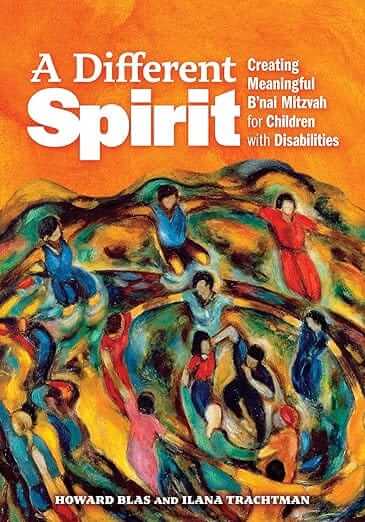
In 2010, I had the privilege of participating in the inaugural cohort of the Jim Joseph Foundation Fellows – Leading Educators Online.  During one of our Israel training trips, I made a comment which caught the attention of our program directors.  I made the bold statement that, in my experience, the ONLY place in the Jewish world where people of diverse backgrounds regularly meet and engage meaningfully is in the Jewish disabilities world.  I cited a story I had heard of a woman Reconstructionist rabbi and a Chabad rabbi sitting around the table—not discussing practice or ideology, but rather sharing the experience of parenting autistic children.  

The program director encouraged me to “say more” and write an article for the Lookstein (Jewish Education) Journal.  In the process of writing “Special Needs Brings People Together” (a title that I would change in 2024), I began thinking of places where the Jewish community has historically come together.  I considered the Soviet Jewry movement, Hillel on campus, Chabad early childhood programs, and the biblical notion that we were ALL Standing (Parshat Nitzavim) and that we were ALL at Sinai (for the receiving of the Ten Commandments and torah).  

I proceeded to focus on one compelling, modern day example–the Shefa School in Manhattan, a community Jewish day school which attracts Jewish students with learning disabilities from every possible background.

In recent years, Jews with disabilities and professionals committed to Jewish disability inclusion have come together in two spaces–conferences sponsored by the Ruderman Family Foundation and in the pages of the New Normal, a former publication of the New York Jewish Week.  Subscribe

When both of these important pillars of the Jewish disabilities community ceased to exist, a number of us–people with disabilities, advocates and people working in the disability field–got together to brainstorm ways to keep bringing all of us together and ways we could share our messages with the rest of the world.  

a graphic showing different kinds of accessibility with physical, heaing, vision and other disabilities

Happily and proudly, the Jewish Disability Inclusion News (JDIN) was born!  And many of those original thought partners are now contributors and members of our advisory board.  We are pleased to celebrate our FIRST anniversary this July.

In one short year, with the help of contributors with and without disabilities, and thanks to the efforts of our amazing editor, Gabrielle Kaplan-Mayer, we have managed to share dozens of articles on our Substack focusing on disability advocacy, education and awareness in the Jewish community and beyond.

We now have over 50,000 readers across 35 states and 35 countries. We are grateful that you are one of them and hope that in our second year, we will reach even more readers.

Some of our most viewed articles this year include:  “Why we should not wish everyone a meaningful fast,” written by a professional and person with a disability, Jason Lieberman, “My daughter is my best teacher,” by Dr. Len Felder, parent of a child with a disability, and “Four March Musts for the Jewish Disability Community,” by Rabbi Michael Levy, a disabilities professional and advocate, who has written numerous articles for our publication.  A piece that I wrote about Israel gearing up for more people with disabilities given the current war was our 4th most read piece with some very moving follow up posted recently.

We invite you to join us on our JDIN journey!  We are always looking for new and repeat contributors—as well as new subscribers. Every rabbi, cantor, Jewish educator and Jewish organization should know about us—and we are free!  We are also always seeking support of donors and foundations.  We operate independently of any organization and are therefore free to truly share the widest possible range of perspectives.  Feel free to contact me with if you have interest in supporting us or know of foundations aligned with our mission:  howardblas@hotmail.com.

Thank you for being part of our growing efforts!

Read more

The original article is published at JPost.com

Nate Fish, heading to the 2020 Olympics with Team Israel, filmed their journey. Now CEO of Israel Baseball Americas, he continues to support Israel baseball, fostering talent and resources.

When Nate Fish was about to head off to Japan with Team Israel for the 2020 Olympics (played in 2021 due to the COVID pandemic), Jeremy Newberger, CEO of Ironbound Films, handed him six camcorders and asked him to give them out to players to film their experiences in the Olympic Village and at the Games. Fish was instructed to send the memory cards back when they returned from Tokyo.

‘Israel Swings for Gold’

“I had no idea if we got enough footage or even if the cards were received,” said Fish, who has worn many hats for Israel baseball. Fish has served as the Olympic team’s third-base coach, a member of Team Israel for three World Baseball Classics, and head coach of the Israel National Team.

He is currently CEO of the newly created Israel Baseball Americas, a non-profit organization that aims to create a pipeline of talent for the Israel National Team program, and provide human and financial resources to the Israel Association of Baseball.

“18 months later, I was invited to the premiere of the ‘Israel Swings for Gold’ film in Atlanta. It was awesome!”

Israel baseball swag is on display during last week’s New York premiere of ‘Israel Swings for Gold’ (credit: HOWARD BLAS)

Daniel A. Miller, along with Newberger and Seth Kramer, also co-directed and produced “Heading Home: The Tale of Team Israel,” the 2018 documentary about the underdog Israel National Team competing for the first time in the World Baseball Classic. Miller recalls the camera hand-off story and the ongoing collaboration differently.

Miller emphasizes the confidence he and his team had in Fish to deliver under unique circumstances.

Capturing the moment

“It was COVID at the time and the Olympic Village was secure and there was no media allowed, and we were thinking of how we could follow the team. We knew that Nate was a big social media type and was media savvy. He got exactly the right things from the team. They captured everything!”

Fans of Team Israel and those who love a good Israel and Jewish story packed the Carole Zabar Center for Film at the Marlene Meyerson JCC Manhattan last Tuesday to view the recently released 77-minute film of the footage.

Through their skilled camera work, viewers witness the players flying to Japan – on the same flight as rival Teams USA and Dominican Republic. The film shows team members giving each other haircuts, eating in the Olympic Village dining room, and waiting in a long line for much needed pre-Opening Ceremonies alterations to their uniforms.

The players film themselves jumping on the carefully constructed Japanese cardboard beds to see how many players it would take to break the bed. 

The film takes the audience through each game, sharing footage of exciting wins, and disappointing losses. Players try to maintain a sense of normalcy on and off the field, though it quickly becomes clear that their experience as Israelis is anything but normal.

Munich olympics 1976

Footage of Munich’s 1976 Olympics incorporated into the movie helps viewers appreciate the significance of the Israeli flag display in the Olympic Village for the first time since 1976. In addition, the 2020 Olympics paid tribute to the murdered Israeli athletes at the Opening Ceremony for the first time since 1976.

Viewers learn the painstaking process of how players are kept safe throughout their stay in Japan. They wear tracking devices at all times, they pass through facial recognition machines, and their bus is searched regularly by dogs and security officials.

The film shows the audience firsthand how Israeli athletes were regularly rebuffed by athletes from other countries. When athletes regularly exchange pins from other countries, most refuse pins from Israel. Israeli players frequently encountered Palestinian flags and chants of “Free, Free Palestine” in their travels.

Read more