ANU Museum of the Jewish People

Originally appeared in Jerusalem Post Magazine, January 2, 2026

A 12-year-old’s love for Israel inspired her entire family to leave Paraguay and start a new life in Ra’anana

Had Esther Levin, now 21, not fallen in love with Israel on a trip to the Holy Land when she was 12 years old and decided on the spot that she was making aliyah, her parents and three siblings might still be living in Paraguay. Now they live in Ra’anana, a city with a population of approximately 84,000 Jews – a big step up from the reported mere 1,100 Jews in Paraguay

Levin owes that first trip to the ANU Museum of the Jewish People, the museum’s My Family Story project, and the project she created that won her a free trip to Israel, which she took with her father, Ariel.

She describes her shorashim (“roots,” or family tree) project, which she called “A Never Ending Story.” “It had a circle with steps and a mirror on the bottom…”

Nine years later, Levin is enthusiastic as she describes the project, the competition, and her first trip to her ancestral land.

“I fell in love with Israel! In Paraguay, there is not a big Jewish community. We have no kosher restaurants, it is hard to eat kosher, and no one knows about Shabbat or the Jewish people. In Israel, I felt free. I felt a sense of belonging.

In Paraguay, I never felt I belonged. In Israel, I felt I belonged – there were shuls everywhere, the smell of flowers on Fridays, and they were selling challah. In Paraguay, we had to make our own. I felt this is where I belonged, and I told my Dad, ‘I am making aliyah – I want and need to come!’”
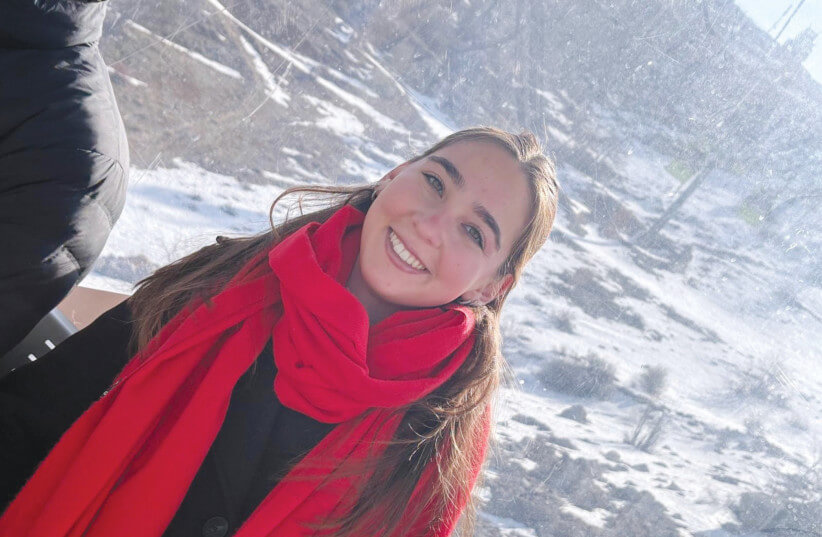
Levin in the Golan. (credit: Courtesy)

To Levin’s surprise, her father confided, “I also want to make aliyah. We have to come up with a plan to convince your mother!” Levin laughs as she recounts the plan they hatched. “We were going to tell her every day, ‘We want to make aliyah’ until she got tired of hearing it.”

Her mother, Sandra Zarecki, wasn’t buying it: “Israel is scary. We don’t have wars in Paraguay!”

‘In Israel, it was the safest I ever felt’

Levin countered, “You just hear the news. In Israel, it was the safest I ever felt.” She began exploring options for boarding schools. Ultimately, though, she and her parents agreed that it made the most sense for her to complete high school first. She graduated in December 2022 and made aliyah on her own in January 2023, at age 18.

“My goal was to join the army – I really wanted to join,” Levin says, recalling seeing IDF soldiers when she was 12. “It was really exciting. They were my heroes. They were close to my heart.  For us, it was the most special thing.”

She spent five months at Kibbutz Ma’agan Michael, studying Hebrew four hours a day and working another four hours in the garden, zoo, or kitchen. She followed that with a month’s employment in a Tel Aviv hotel, which provided accommodation before she returned to the kibbutz for another round of ulpan.

Levin’s second stint on kibbutz coincided with Oct. 7. “It was really scary. For us, it was our first war.” 

To her delight, however, her parents and siblings made aliyah while she was on ulpan. She left ulpan in December 2023 and spent one Shabbat at her family’s new home in Ra’anana ahead of being drafted into the Israel Air Force (IAF) on January 1, 2024.

Levin considers that she was at a disadvantage in navigating the army system. Peers who grew up in Israel were much more familiar with the process, options, and various units. “I didn’t know what to do. I had no family in the army. I didn’t get much help.”

While she had combat soldier aspirations, things didn’t work out that way. Levin has been serving as an Air Force airplane technician and will complete her service in a few months. She maintains what seems like an always positive attitude, though she concedes that it has been tough.

“At the end of the day, I came to give,” she declared. Her mother points out, “Her service has been all during the war – they work 24 hours.”

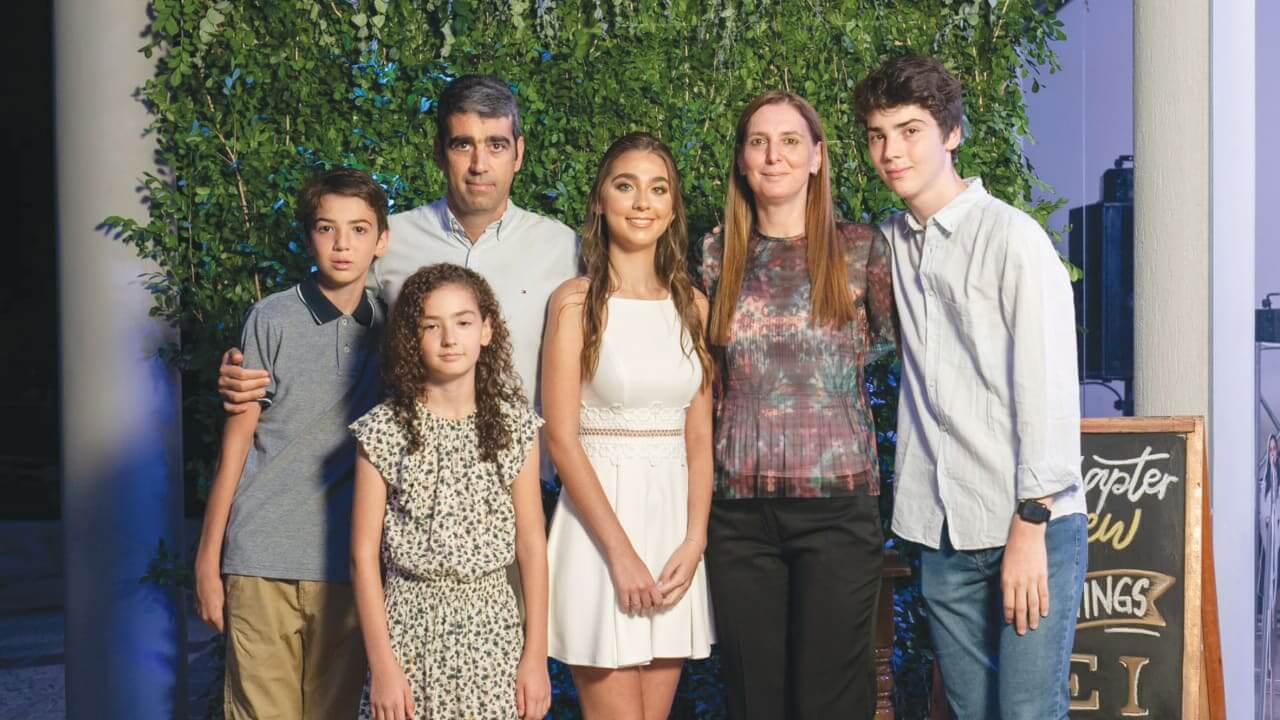
Sandra Zarecki and Ariel Levin are proud of their daughter for leading the way for the family to make aliyah.  They openly share their sometimes complicated aliyah process, along with both the challenges and the pleasures they experienced upon arrival.

How did Zarecki eventually come around to deciding to make aliyah?  “When Esther said, ‘I want to make aliyah, we thought, ‘We are a family and don’t want to be apart,’” she recounts. She also knew how much Ariel wanted to make aliyah.

She suggests that there were additional signs directing the family toward aliyah. Both sons – Uriel (18) and Yaakov (15) had won the same ANU “My Family Story” competition as their sister and earned a free trip to Israel. Uriel got to go, but Yaakov’s trip had been postponed due to COVID. Currently, their youngest has her sights set on the competition.

Deep down, Levin’s parents always knew there was no future for Jews in Paraguay and that Israel was the only option. They point to very high intermarriage rates. “We couldn’t continue in Paraguay,” Ariel says.

While he grew up in Paraguay, his wife lived in Argentina with a father and two grandparents who had been in the Vilna Ghetto and fought as partisans.

THEIR ROAD to Israel was not simple. “We don’t have Nefesh B’Nefesh or even a Jewish Agency in Paraguay,” says Ariel.

They worked with the Jewish Agency in Uruguay and Argentina, and a staff member even went to Paraguay for their in-person interview.

Thirteen days before their aliyah date, Zarecki’s mother, who was to make aliyah with them, broke her hip. Ariel and the children traveled ahead of her to Israel, and Zarecki stayed behind for two months to help her mother. Eventually, she asked her husband to come back to Paraguay to help finalize the move. He flew back, and then Oct. 7 happened.

With a great deal of persistence and advocacy, Zarecki, her mother, and Ariel were able to fly from Asuncion, Paraguay, to Sao Paolo, Brazil, to Paris, France, where they boarded an El Al flight to Israel. Unlike most new immigrants, who are greeted with great fanfare, they report, “We were alone in the airport.” Sadly, Zarecki’s mother passed away three months later.

DESPITE THESE initial difficulties, the family continues to adjust to life in Ra’anana and Israel. They have a number of relatives living in Ra’anana and other places in the country, which is helpful. Levin’s parents work as architects, though Zarecki is currently on a leave of absence in order to continue with ulpan and improve her Hebrew. Their eldest son, Uriel, also attended ulpan, in anticipation of drafting to the IDF. The other children – Yaakov (15) and Tali (12) – as expected, have been acclimating to a new language, culture, and social scene – all during wartime.

The family continues to smile and remain upbeat. Their advice to new olim and those considering aliyah is to get a jump on Hebrew. They note that learning Hebrew is useful, though Zarecki notes that it is “not enough – it is a bridge.”

Levin’s dad offers this: “Don’t wait for everything to be 100% before coming on aliyah. If you do, then two years will pass, and then 20 or 30. It is okay to come, even if not everything is perfect!”
Read more

After the experience, participants asked a single question: “When can we come back and do this again?”

View the original post on the Jewish News Syndicate

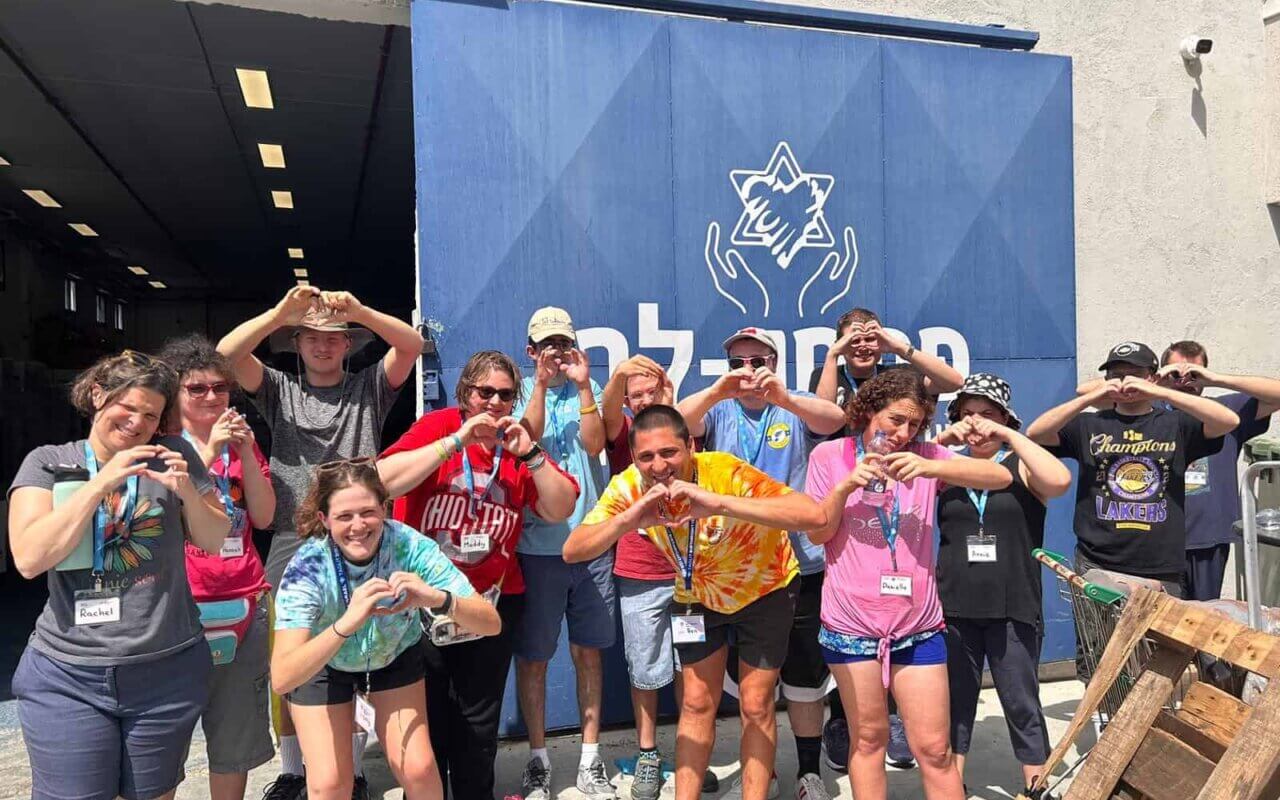
Volunteers on a disability inclusion trip sponsored by Birthright Israel, September 2024. Photo by Howard Blas.

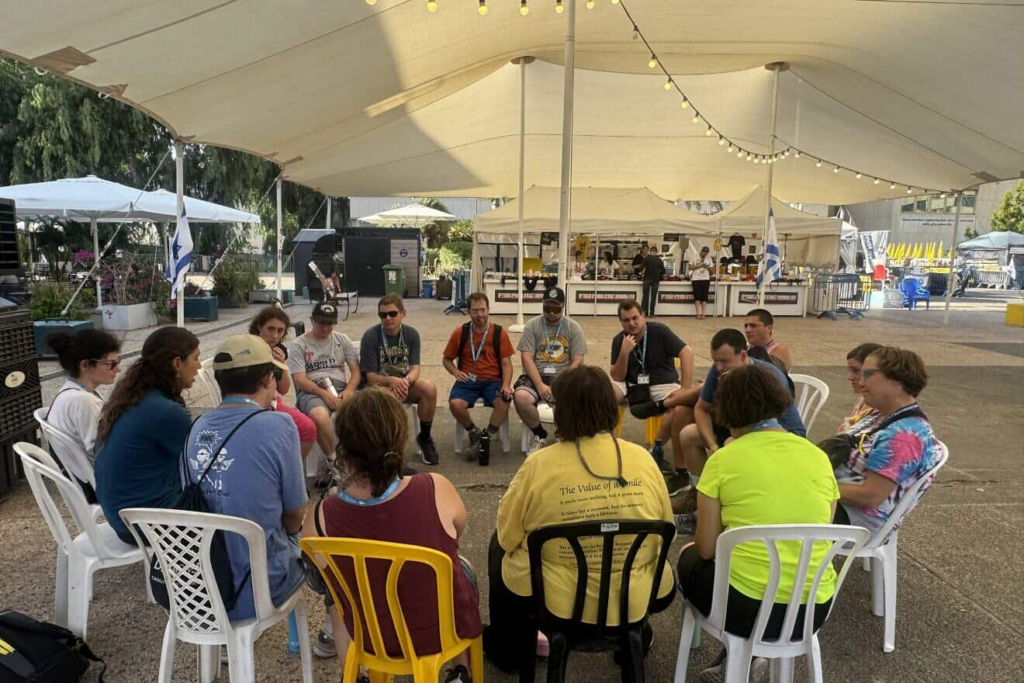
(Oct. 8, 2024 / JNS) Eight days in Israel leading the first-ever Ramah Tikvah Birthright Israel Onward disabilities service trip provided insight into how a group of adults ages 21 to 41—all with intellectual and developmental disabilities (most on the autism spectrum)—are capable of connecting deeply with the Jewish homeland and its people, and of making important contributions through their volunteer efforts.

The delegation, all current participants or alumni of Ramah Tikvah disability inclusion programs, have spent many summers at Ramah camps, where they have forged ties with Israelis from their mishlachot (Israeli delegations), learned Israeli songs and dances, and grown to appreciate the importance of the Jewish state in their lives.

When the war with Hamas in Gaza broke last October following the Hamas terrorist attacks in southern Israel, participants in Ramah Tikvah programs began seeing community and family members—and friends from their respective camp communities—travel to Israel on service trips. They began to wonder if they might have a similar opportunity to contribute during Israel’s time of extreme need.

Perhaps Birthright Israel Onward would offer a solution?

Taglit Birthright Israel offers a dozen “classic” trips with necessary supports and accommodations for participants with mobility challenges, inflammatory bowel disorders and other medical issues, as well as an American Sign Language program, a trip for those in 12-step recovery programs and more. In addition, the Birthright Israel Onward program facilitates internships, fellowships, academic study and volunteer opportunities in Israel.

When I pitched the idea of a volunteer trip for people with disabilities, Onward Israel CEO Ilan Wagner immediately gave the green light. This group would need accommodations not usually provided to typical Birthright Israel Onward participants, including staff accompanying the group on the flight and 24/7 throughout the trip; three meals daily; hotel rather than group apartment accommodations; and additional structured activities once their morning of volunteering was over.

Last month, even as the war in the Gaza Strip and the hostage situation continued and with an escalation of war looming between Hezbollah in the north, 12 participants and four staff members boarded flights or took cars or trains from St. Louis, Detroit, Columbus, Minneapolis, Phoenix, Berkeley, Calgary, New Jersey and New Haven for flights to Israel. We arrived at a hotel in Tel Aviv ate dinner, got some rest and hit the ground running the next day.

Birthright Disability Inclusion Trip
Volunteers pack boxes on a disability inclusion trip sponsored by Birthright Israel, September 2024. Photo by Howard Blas.

We recited the Shehecheyanu prayer in honor of this pioneering trip and had morning services at the Nahum Gutman Mosaic Fountain in Tel Aviv. We then headed out—Bingo cards in hand—in search of various famous Tel Aviv landmarks on the Independence Trail. After lunch, we visited the Israel ParaSport Center in Ramat Gan. Our guide, Caroline, who was born paralyzed, is the No. 6 wheelchair table-tennis player in the world and shared what sports means to her. We also had a chance to watch Israel’s national wheelchair basketball team engage in a tough practice, and after speaking with team members, got to try out the specially designed chairs.

Then, it was off to a small Chabad shul in Tel Aviv to do our part for the Tzitzit for Tzahal project—an initiative to prepare 200,000 pairs of ritual army-green fringes for soldiers.

The next day saw us at Pitchon Lev: Breaking the Cycle of Poverty in Rishon Letzion, where we assembled 180 large boxes and filled each with diapers and four packs of wipes. Following our busy and satisfying morning of volunteering, we had lunch—pizza and grill were both exciting options for the hungry volunteers—before setting off for a special tour of the ANU Museum of the Jewish People on the campus of Tel Aviv University. After dinner, we ended our day with a rhythmic movement activity.

On Friday, we made a trip to Jerusalem so the few first-time visitors to Israel could visit the city. Everyone enjoyed shopping on Ben-Yehuda Street, riding EZRaider electric motorized vehicles, and touring the Old City and the Western Wall before heading back to Tel Aviv in time for prayers, Shabbat dinner and an Oneg Shabbat, complete with an UNO card-game marathon.

Shabbat started with morning prayers at the beach, followed by swimming in the Mediterranean, a walk, lunch and visits by Israeli friends and family members. We ended with a beautiful Havdalah service that reminded participants of the many similar ones at their respective camps.

On Sunday, we set off for the first of two days of olive picking at Harvest Helpers Leket Israel in Rishon Letzion. We learned that our olives would be made into olive oil for Israelis in need. Our participants once again felt a connection between their volunteer work and people receiving direct benefits.

Our afternoon visit to Hostage Square in Tel Aviv was quite emotional. We walked through a makeshift tunnel, looked at the empty Shabbat table and chairs (now under a sukkah) in tribute to the hostages, viewed art installations and purchased “Bring Them Home Now” shirts, dog tags and ribbons.

On Monday, in the middle of our breakfast, the staff learned that out of an abundance of caution as the situation in the north was heating up, we were being instructed by the Situation Monitoring Room to leave the hotel in under an hour and relocate to Jerusalem after our morning of olive-picking. Participants remained calm, adjusting to an abrupt change of plans (not usually easy for people with autism) and quickly packing up. Our scheduled culinary tour in Tel Aviv turned into a similar tour in Jerusalem’s Machane Yehuda open-air market, a walk through the adjoining Nachlaot neighborhood and a stop for some ice-cream.

Our last full day in Israel began at Pantry Packers, where we worked in four-person teams to pack peas and other dried goods for Israel’s needy. After putting on aprons and hairnets, two team members placed separate labels on bags, one operated the machine that dispensed the grains into bags, and one used the sealing machine. Our day—and rewarding week in Israel—began winding down with pizza and a swim party at a brand-new pool at a country club in Har Homa.

Birthright Disability Inclusion Trip
Volunteers outside a warehouse on a disability inclusion trip sponsored by Birthright Israel, September 2024. Photo by Howard Blas.

Back at the hotel, participants shared highlights of the trip. Annie thanked her “lovely roommate.” She added that “the trip was a good experience for me. I’m going to start crying.” Maddy, who noted that she volunteers thousands of hours per year, felt that the Israel ParaSport visit “got me thinking of physical disabilities in ways I never have.” Jesse felt a true sense of belonging he said he never felt at home. On Birthright, he said, “I feel like you guys were all my family.”

Our tour guide, Rotem, encouraged the group to go home and serve as ambassadors, sharing their experiences. The participants were unified in asking one question: “When can we come back and do this again?”

My hope is that the Jewish community will continue to create meaningful opportunities—in the United States, Canada and Israel—for adults who have both disabilities and amazing strengths, so as to be fully included and feel a sense of belonging.

Howard Blas

Howard Blas

Howard Blas is a social worker and special-education teacher by training. He teaches Jewish studies and bar/bat mitzvah to students with a range of disabilities, leads disability trips to Israel and writes regularly for many Jewish publications, including JNS.org.

Read more