Originally appeared at israelbaseball.org on August 6, 2026
At Ezra Schwartz Memorial Field in Ra’anana, a young and deeply rooted Israel U19 squad pushed the Americans to seven games — a measure of how far the program has come
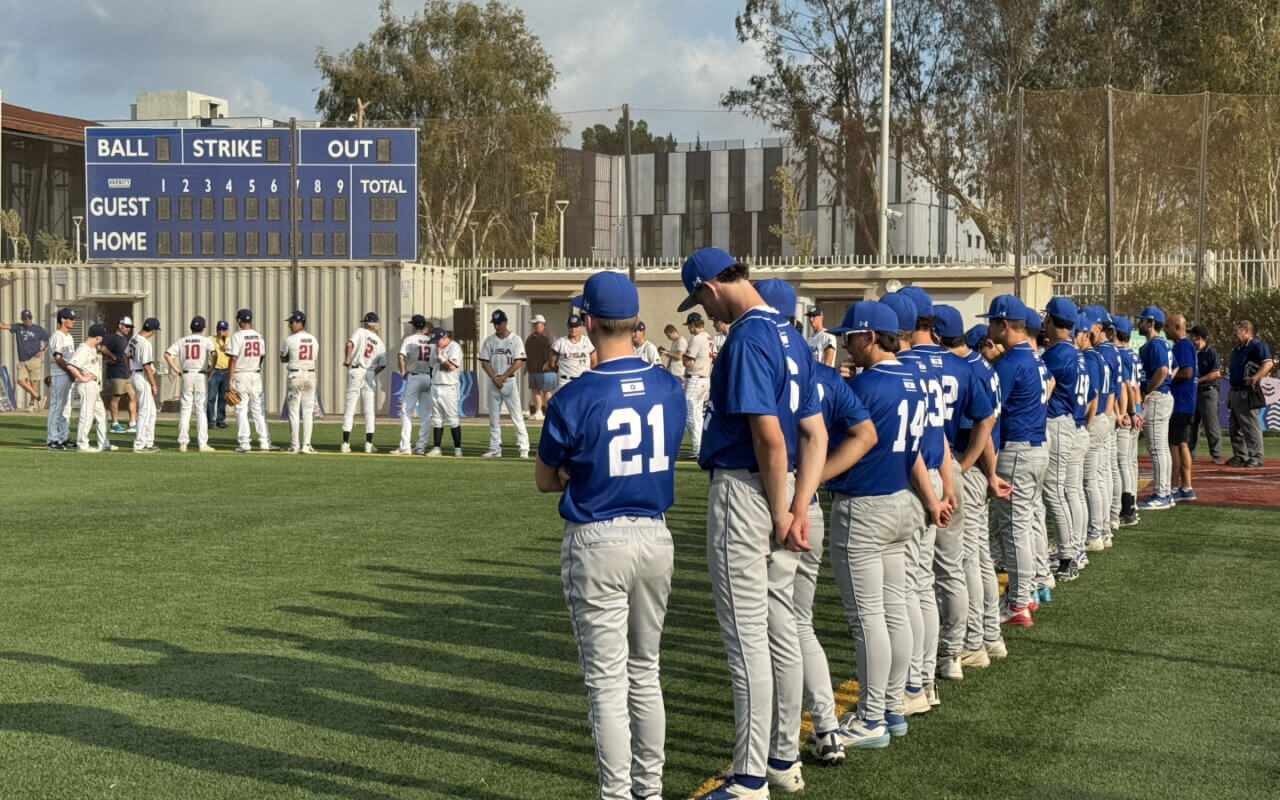
Israel’s U19 baseball team came within one win of doing something it had done only once before in Maccabiah history: beating Team USA. Playing at Ezra Schwartz Memorial Field in Ra’anana, the Blue and White jumped out to a stunning 3-1 lead in the best-of-seven series before the Stars and Stripes clawed back, tying it at 3-3 and then taking the decisive Game 7, 5-1, to capture the gold medal.
It was a heartbreaking finish for the Sabras. But for a program that has historically been overmatched by the Americans, taking the powerhouse USA squad to a seventh and deciding game is itself a landmark — and a sign of just how much Israeli baseball has grown.
The Maccabiah Games — often called the “Jewish Olympics” — is a quadrennial multi-sport competition held in Israel, bringing together Jewish athletes from around the world alongside Israeli athletes of all backgrounds. First held in Tel Aviv in 1932, the Maccabiah has been recognized by the International Olympic Committee as a regional sports event since 1960, and has generally run every four years since 1953, typically the year after the Olympic Games.
This year marked the 22nd Maccabiah, running from July 1 through July 13 at venues across Israel. Originally scheduled for the summer of 2025, it was postponed a full year after the 12-day war between Israel and Iran. Held under the theme “More Than Ever,” the Games were widely described as the largest Jewish gathering in Israel since October 7, 2023, drawing thousands of athletes from dozens of countries to compete in more than 40 sports — making it, by athlete count, the second-largest sporting event in the world, trailing only the Olympics.
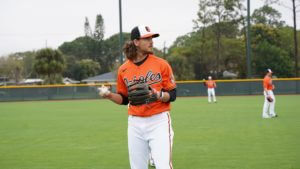
The Maccabiah has also served as a launching pad for the professional careers of several players and coaches, including current Israel Baseball Americas CEO Nate Fish and Baltimore Orioles pitcher Dean Kremer, who have represented Israel as coach and player, respectively, at multiple World Baseball Classics.
“It was my introduction to Israel baseball,” Kremer said. “The Maccabiah provided me a platform, and my career took off from there.”
Fish coached Kremer to a gold medal for Team USA at the 2013 Maccabiah, an accomplishment that proved to be another stepping stone in his pursuit to grow the game of baseball in Israel.
“It introduced me to baseball in Israel, which has really become my life’s work,” Fish said. “You don’t realize it often in life, at the time, that the experience that you’re having is going to lead to another experience and another experience and when you look back at the body of work from 20 years you realize how important it was.”
Team USA has been nearly unbeatable at Maccabiah baseball across the Games’ history, with only a small handful of losses on record. In fact, prior to this year it only fell once to Israel, which came all the way back in 2013, with Team USA still earning the gold medal. That backdrop is what made this year’s 3-1 Israeli lead so significant, and why, even in a losing effort, Israel’s coaches and players left Ra’anana with their heads held high.
Wayne Stofsky, Team USA’s head coach — who played twice in the NCAA College World Series and also coached the team at the 2022 Maccabiah — didn’t take the series win for granted.
“I didn’t expect to win. I knew it would be competitive,” said Stofsky, who pointed to Israel’s deeper pitching staff and stronger infield, noting there are now a handful of Israeli players capable of competing at the Division 3 level in American college baseball.
Arnie Fielkow, Maccabi USA’s baseball co-chair, was similarly impressed.
“I am very proud of Israel Baseball,” said Fielkow, who himself competed in basketball in the 1997 Maccabiah Games. “Their improvement in play is unbelievable.”
Parents and spectators packed the stands at Ezra Schwartz Memorial Field, cheering not only for a winner but also for what the series represented: the continued growth of youth baseball throughout Israel.
Most of the 22 players on Israel’s U19 roster train together in the Israel Baseball Academy, an intensive, year-round development program for elite Jewish and Israeli ballplayers ages six to 23. Run by Israel Baseball, the program provides professional coaching, pro-style workouts, and a talent pipeline into the Israeli national program. Its players and coaches are a tight-knit group who have competed together for the past four years, largely coming from Petah Tikvah, Ashdod, Modi’in, Beit Shemesh, and Ra’anana.
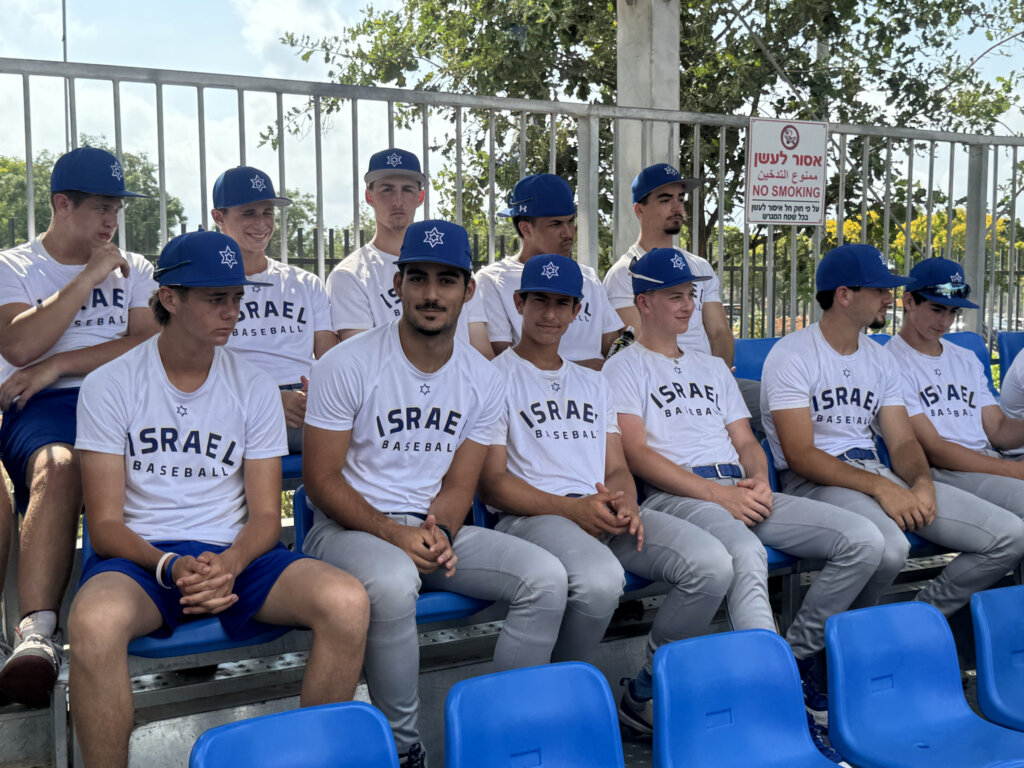
Many participants are children of immigrants from the United States; some were born in Israel, others made Aliyah just a year or two ago. For many families, continuing a sport their children already loved back home eased the transition to a new country.
Daniel Herez of Ashkelon may be the player with the greatest exposure to high-level baseball prior to joining the team — and he faced the steepest language hurdle of anyone on the roster after moving to Israel from Venezuela in 2020.
“I didn’t know a word of Hebrew or English when I came here,” he admitted.
Herez, who has since learned both languages and commutes from Ashkelon to Ra’anana two to three times per week to train — sometimes sleeping over at teammates’ homes — was playing in his first Maccabiah.
“It is an amazing feeling seeing crowds like that at our games and at the Opening Ceremonies,” he said.
Shai Eichler, 17, of Beit Shemesh, started Game 6 of the series. He was born in Israel to parents who made Aliyah from Long Island, New York. He first tried out for the team “for fun” as a sixth grader, and doesn’t sugarcoat how it went.
“I sucked — but I threw really hard! I couldn’t throw a strike but I threw hard” he said.
Eichler — who after his first tryout was initially put on a development track to refine his control — has loved pitching in front of his family, and called the Maccabiah experience “a lot of fun” overall. He hasn’t decided yet whether or not he will serve in the Israel Defense Forces, but hopes to be considered for Division 1 college baseball in the USA.
Yosef Spilman, 17, of Modi’in, made Aliyah with his family two and a half years ago from Silver Spring, Maryland. He has played baseball his “whole life,” including at Melvin J. Berman Hebrew Academy in Rockville, Maryland and at a local Washington, D.C.-area league, so continuing in Israel meant a lot to him.
Spilman says nothing back in the U.S. compares to what he’s experienced both with the Maccabiah Games and with playing internationally for Team Israel.
“It is such a cool experience,” Spilman said. “It is not like a thing you could get in America — flying to other countries, having the Israel name on your chest and playing with other Jews — it is just an amazing experience!”
Spilman’s parents watched from the stands throughout the series. His mother, Shira Spilman, said baseball made their move to Israel easier.
“We connected with Israel Baseball before we moved here — and we chose to move to a city with a baseball team,” she said. “For (Yosef), it has been amazing. This is where he has tons of friends.”
Freddy Bain, Team Israel’s head coach, shares a similar Israel transition. Having played baseball as a child in Los Angeles, baseball gave him what he calls a “soft landing” when he arrived in Israel in 2010.
“I didn’t expect good baseball here — it exceeded my expectations,” said Bain, who went on to represent Israel on the national team six times, including in Italy, the United States, and the 2017 Maccabiah Games.
Now as this year’s Maccabiah Games head coach, Bain is proud of how long his current group has played together. Losing the decisive seventh game after leading the series was a hard way to finish, but Bain refused to call it a disappointment.
“They show up prepared, they are not individuals, and they want to compete for each other. They understand that they are playing for what is on their jersey — Israel,” he said. “The players were disappointed — but the experience was not a disappointment.”
“Within a game, it is hard to see the big picture,” Bain added. “Afterwards, you can see what it is all about — it is a celebration of world Jewry.”
Bain’s words — that the Maccabiah Games are, at their core, “a celebration of world Jewry” — took on added weight during the series itself. Before one of the games, the two teams sat together in the stands to hear from Yoav Schwartz, the Ra’anana-based uncle of Ezra Schwartz, the 18-year-old American killed by terrorists on November 18, 2015 while volunteering during a gap year in Israel. Yoav shared that Ezra, a Sharon, Massachusetts native, had emailed the Israel Association of Baseball (IAB) just a day before he was killed, hoping to find a way to play while he was in the country for the year. Ezra’s family and community later built the field where this year’s series was played in his memory — Yoav spent years fundraising for it, with support from the Jewish National Fund and the IAB, before it opened in 2017.
A day earlier, both teams had gathered in the same stands to hear Debbie Ziering share the story of her son, Aryeh, among the first Israeli soldiers killed in action in southern Israel on October 7th.
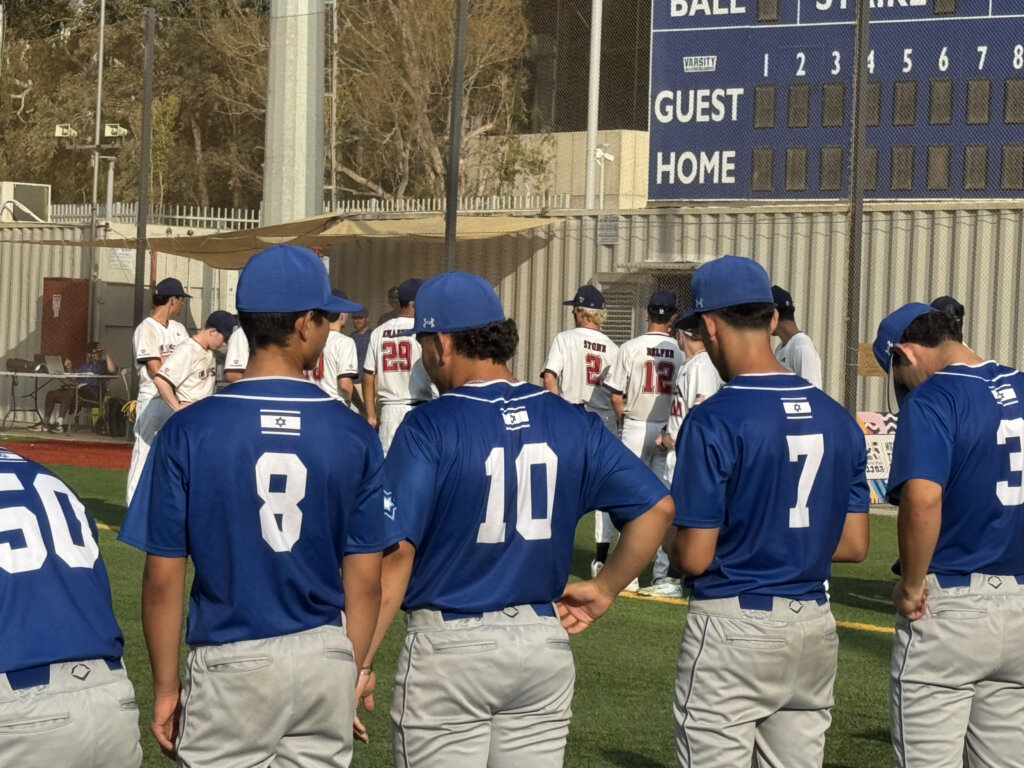
For the players on both sides — and the parents and coaches around them — the Maccabiah was never just about the scoreboard. It was a chance to represent their countries, meet Jewish peers from across the globe, and — hearing both families’ stories back to back at the same field where they’d spent the week competing — to be reminded of something bigger than any final score.
That much was obvious less than a day later. When the Israeli team arrived at Ben-Gurion Airport for their flight to Italy and the U-18 European Championship, many players were trading messages on their phones with their American counterparts.
“The American kids are a great group of kids,” Bain said. “It is nice seeing the kids interact and trading gear — even after seven intense games.”
For Fish, the Maccabiah has become a foundational symbol of Israel Baseball’s growth — reflecting not only how far the program has come, but also how competitive it can be with the best in the world.
“I would love to have a whole new wave of American guys [from the Maccabiah Games] who are joining the national team program and a whole new wave of Israeli kids who are getting good enough to play for the senior national team in the Olympics and World Baseball Classic,” Fish said.