disabilities

Appeared in JNS.org on October 5, 2026

Minister Katz: “In an emergency, no citizen should be left without a response.”
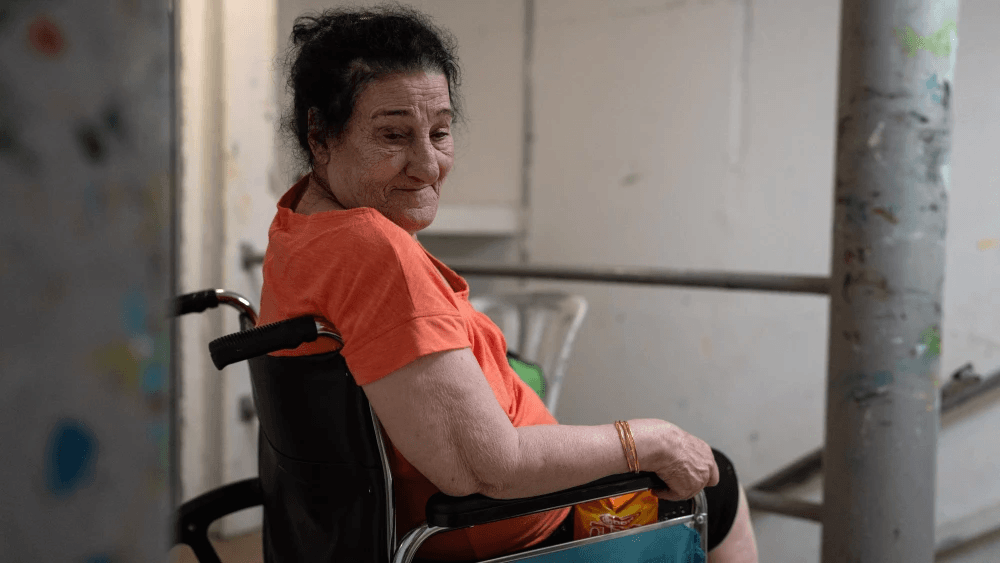
Naomi Hazon, 83, in a bomb shelter in Tel Aviv on June 13, 2025. Photo by Maya Levin/AFP via Getty Images.

(Oct. 5, 2026 / JNS) The Oct. 7, 2023, Hamas-led attacks in Israel and wars on many fronts since have continuously highlighted the many challenges people with disabilities face during time of war. Accessing bomb shelters can be difficult for those with mobility impairments and the inability to enter inaccessible shelters can be life threatening. With regulations signed on Sept. 23 by Defense Minister Israel Katz, this will soon change. The new regulation formalizes emergency response measures for people with disabilities.
The regulations regarding equal rights for people with disabilities concerning essential and life-sustaining needs during emergencies marks the completion and implementation of a comprehensive national initiative.

The initiative was led by the Defense Ministry’s National Emergency Management Authority (NEMA), in collaboration with relevant government ministries and professional bodies. Over the course of the project, five key areas were formulated to ensure the continuity of services and responses during emergencies for people with disabilities: formalizing response measures within facilities for people with disabilities; evacuation of people with disabilities; accessibility of community health services during emergencies; a dedicated information database; and a system for locating, contacting and assisting people with disabilities as well as providing essential and often life-sustaining supplies to people who choose to remain in their homes.

Katz said, “In an emergency, no citizen should be left without a response. The regulations I have signed are designed to ensure that people with disabilities receive the assistance and essential supplies they need, even while remaining in their homes. This is our responsibility as a state and our duty toward them and their families. I commend all the partners on the completion of this important initiative. Our true test lies in implementation on the ground and ensuring the aid reaches everyone who needs it.”

Shira Reifman, CEO of Keren Or: The Jerusalem Center for Children with Visual Impairments and Multiple Disabilities, said, “We welcome and applaud the recognition that people with disabilities have special concerns and needs during national emergencies. We certainly saw this to be the case during the Iran wars when Keren Or had to relocate our school—which remained open while most of the school system shut down—to a facility with sufficient bomb shelter space. This required moving standers, walkers, hoists, mattresses and trucks full of equipment to the new site. It also required us to calm and familiarize our blind students with additional complex disabilities to a new setting and physical layout.

“In addition to critical regulation, we hope that commensurate funding has been allocated for implementation. Agencies need additional staff hours to comply with new regulations, funds to build wheelchair accessible bomb shelters, and government agencies that respond quickly and efficiently to requests for help, building permits, clarifications and permissions.”

Access Israel

Yuval Wagner, chairman of Access Israel, said that his organization has been leading the effort to ensure accessibility for people with disabilities since 1999. “Legislation regarding emergency preparedness and accessibility for people with disabilities has been in the planning stages since 2006.”

Wagner shared that Access Israel has been actively lobbying the Knesset Labor and Welfare Committee, the Commission for Equal Rights of Persons with Disabilities (a statutory body under Israel’s Justice Ministry), and the Defense Ministry. Access Israel even filed a High Court petition against the Welfare Committee and the Defense Ministry to advance this issue. “Fortunately, the regulations have finally been approved and signed by the minister of defense,” Wagner said.

The organization working on the ground—handling evacuations and addressing the needs of people with disabilities living in unfortified homes under missile attacks—was Access Israel, he said. Through its Purple Vest initiative, the organization facilitated thousands of accessible evacuations and met a wide range of unique, life-saving and survival needs for people with disabilities and the elderly during wartime.

Wagner said these regulations should have been passed long ago. “Over the past three years—since the cursed events of October 7—Israel has been at war, resulting in tens of thousands of IDF soldiers and civilians suffering physical and mental injuries. Regrettably, the legislation was passed only after the fact. Israel had not been adequately prepared beforehand,” he said.

Access Israel and its Purple Vest campaign have been working to evacuate and relocate people in Israel with disabilities as well as the elderly during war time and while under missile attacks.

Wagner added, “Congratulations and appreciation go to the Ministry of Defense, the National Emergency Management Authority and all partners for the tremendous effort that led to the finalization and approval of these regulations.

“It is now vital to implement these critically important regulations. This ensures that in the event of a future war, earthquake, fire, flood or other weather-related crisis, emergency systems for assisting people with disabilities will be ready and well-practiced in providing aid and saving lives,” he said.
Read more

View Original Post on the: Times of Israel

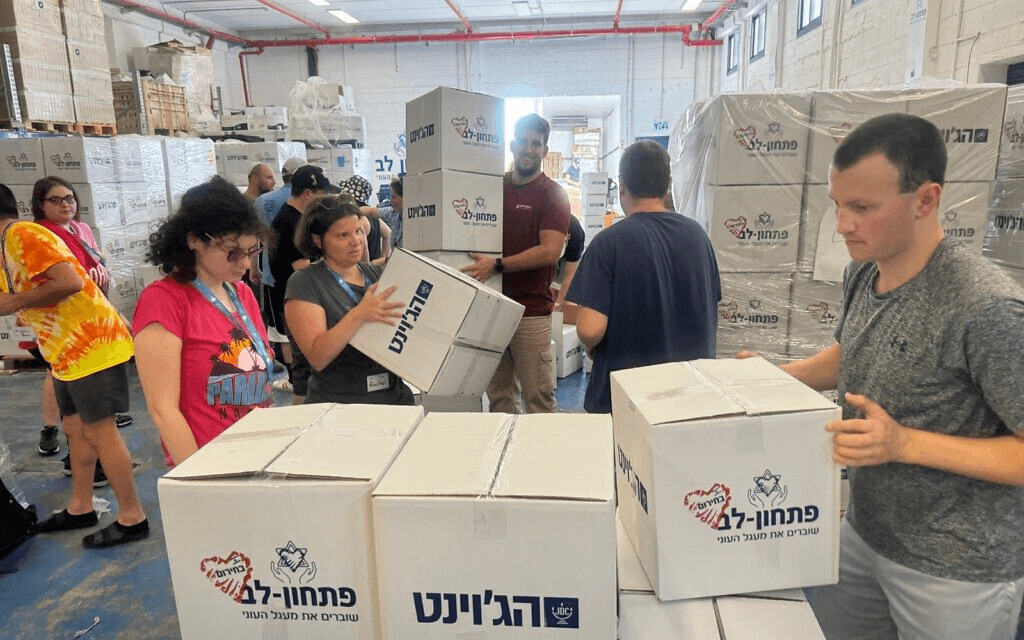
A group of Camp Ramah/Birthright participants help pack food supplies in Israel, September 2024. The trip was for adults with non-physical disabilities who volunteered in various locations around Israel. (courtesy Howard Blas)

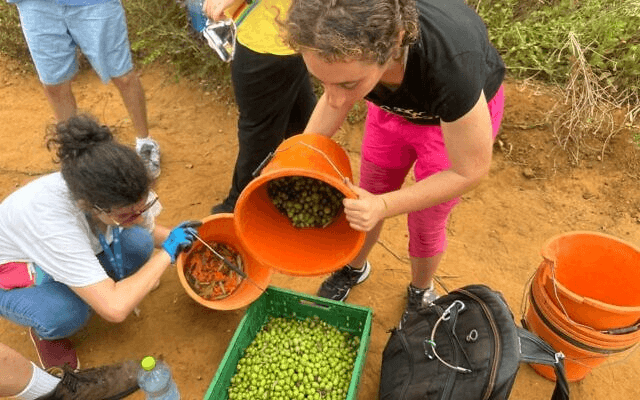
At a farm in central Israel on Monday, a group of American volunteers spread out through the olive groves holding an informal, friendly harvesting competition. Wearing heavy gloves in the late morning heat and carrying thick plastic buckets to collect the spoils, the group moved quickly and soon assembled a sizable haul of hard, green olives.

It was not the usual group of volunteers from abroad: the 12 participants all were on the autistic spectrum or had other non-physical disabilities, in what sponsor Birthright Israel said was the-first-of-its-kind volunteer group to visit Israel during the Israel-Hamas war.

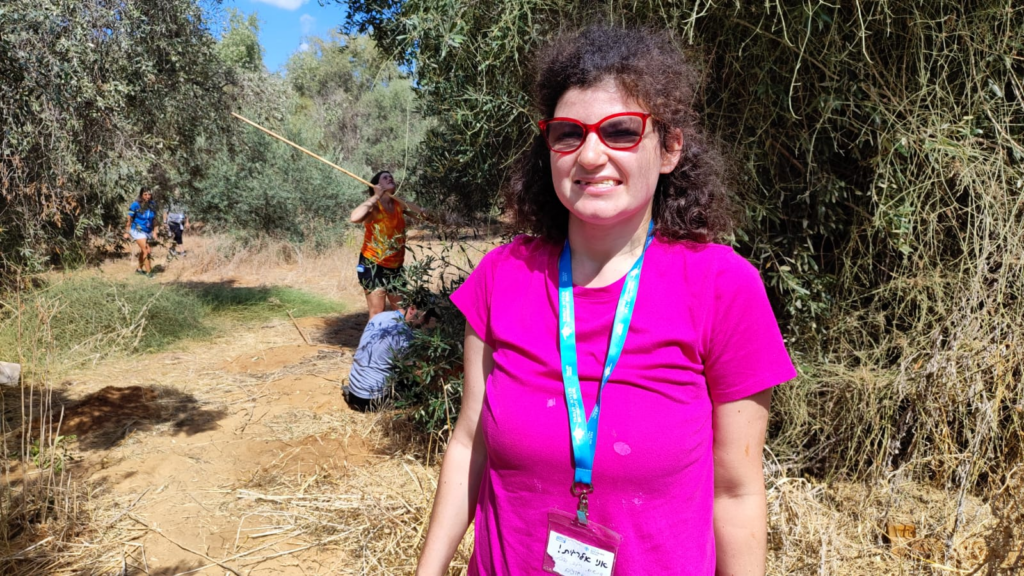
This trip was “different because we’re doing a lot more of my kind of things. I love volunteering,” said participant Maddy Katz, a young woman with glasses who proudly showed the olives she had gathered.

They almost didn’t make it to pick olives at Harvest Helpers, a farm in Rishon Lezion run by food rescue organization Leket Israel, because that morning, due to the escalating situation in Israel’s north, they learned that they would have to relocate from Tel Aviv to Jerusalem for the last few days of their visit.

Having to quickly pack their things and change the itinerary at the last minute didn’t phase Katz, who said the trip had “a lot of moving parts.” She was looking forward to going home to Columbus, Ohio, where her first priorities would be “sleep, shower and laundry,” and then updating her binder, where she keeps records of her 80,000 hours of volunteering over the last 10 years.

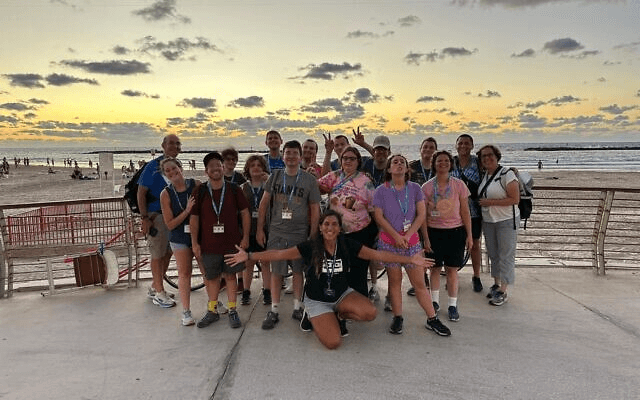
Group of Camp Ramah/Birthright participants and their guides in Tel Aviv, September 2024. The trip was for adults with non-physical disabilities who volunteered in various locations around Israel. (courtesy Howard Blas)

The volunteer group, due to return to the US early Wednesday, was sponsored by Conservative Judaism’s National Ramah Tikvah Network and Birthright Israel’s Onward program. All the volunteers had previously participated in Ramah camps in the US and most had already been in Israel.

According to Birthright Israel, this was the first volunteering trip for disabled adults during the conflict. Since November 2023, Birthright has brought over 7,500 volunteers on similar trips to Israel, they noted, and organized its first “accessible trip” in 2001.

In addition to agricultural work, the group’s 10-day visit included volunteer activities where they helped pack up food and supplies, but they also toured Israel’s Paralympic training facility, spent time in Tel Aviv, visited the Western Wall, and more.

Group of Camp Ramah/Birthright participants harvesting olives in Rishon Lezion, September 2024. The trip was for adults with non-physical disabilities who volunteered in various locations around Israel. (courtesy Howard Blas)

“I think that with the war going on and all that stuff, I wanted to go to give back to the community because everyone, especially up in the north, is really having a hard time dealing with the rockets and the fires,” he said.

Michael ‘GG’ Goodgold, an American volunteer harvesting olives in Rishon Lezion, on September 23, 2024. Goodgold was part of a trip for adults with non-physical disabilities who volunteered in various locations around Israel. (Gavriel Fiske/Times of Israel)


Goodgold, who stays “on top of the news from Israel no matter what time it is,” said that it actually “felt peaceful” being in Israel, despite the war, and he particularly enjoyed visiting the beach in Tel Aviv.

Annie Michaels, also from Chicago, has been to Israel “nine or 10 times,” she said. This trip had been “a very good experience” partly because it was “my really first time being alone, volunteering and doing all these activities on my own independently,” without her immediate family.

(The group was accompanied by several guides at all times and individual members were allowed to independently visit their family in Israel.)

“I’m happy to stay. I’m sad to leave,” Michaels said, but added that back home, she “feels great” to be able to share stories about her visits to Israel or about “what was happening when I’m volunteering and just giving back to the world.”

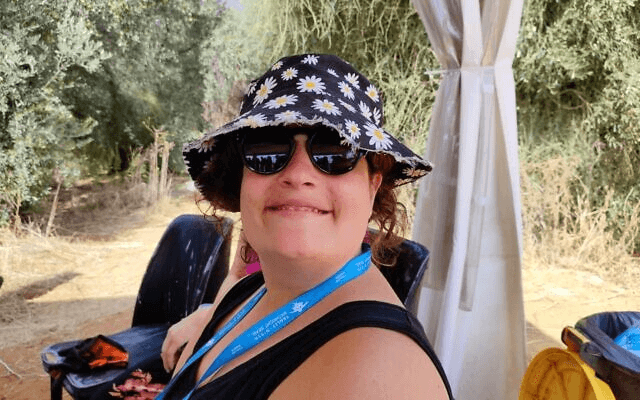
Annie Michaels, an American volunteer harvesting olives in Rishon Lezion, on September 23, 2024. Michaels was part of a trip for adults with non-physical disabilities who volunteered in various locations around Israel. (Gavriel Fiske/Times of Israel)

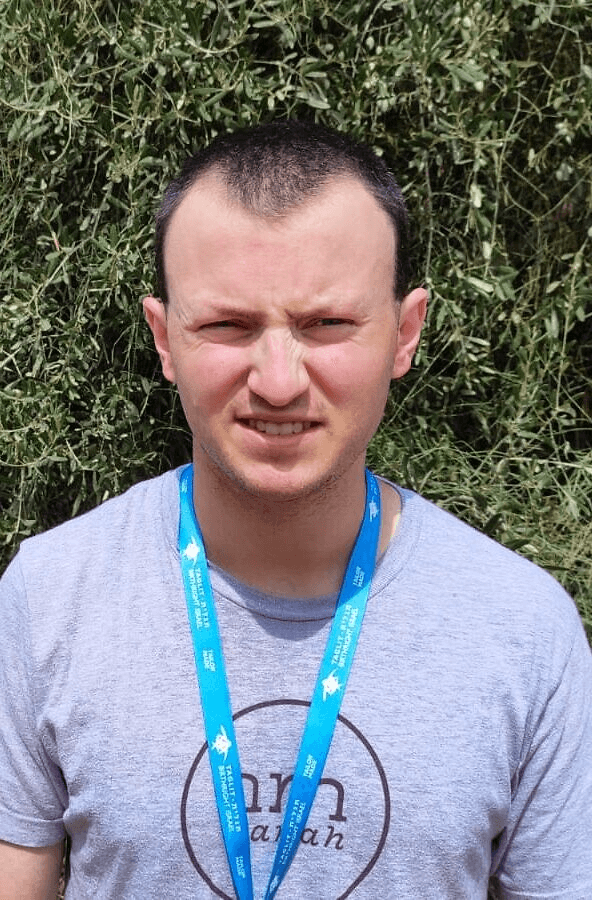
For Hannah Berman from New Jersey, the olive picking was a new experience. “I’ve never picked olives before. It’s a lot of work,” she said, showing her hand, which had red scrapes.

Nonetheless, “I don’t know how excited I am to go back,” she said wistfully, but she admitted that she would be “excited to see my family.”

Back home, Berman said, she was busy working on her autobiography, for which she conducts interviews with people in her life. This Israel trip won’t be included, she said, because she “has already picked the endpoint,” from before the trip.

Hannah Berman, an American volunteer harvesting olives in Rishon Lezion, on September 23, 2024. Berman was part of a trip for adults with non-physical disabilities who volunteered in various locations around Israel. (Gavriel Fiske/Times of Israel)

Read more

The original article is published at JPost.com

Broza performed Monday evening at a benefit at City Winery for Israel ParaSport Center, an organization he has been connected to since age seven.

David Broza has been performing for weeks in Israel and Spain, but he made sure to be back to New York in time to receive an award and play a very special acoustic show for an organization that has been dear to him from the days of his childhood in Tel Aviv.

Broza performed Monday evening at a benefit at City Winery for Israel ParaSport Center, an organization he has been connected to since age seven, when his father, who helped establish the center, regularly brought young David to hang out with Israelis with disabilities.

“I am still in touch with some of them until today,” Broza, 68, tells The Jerusalem Post minutes after landing in the US from Spain, three days ahead of his New York private show.

Thanks to his childhood experiences, the internationally renowned singer-songwriter, who has recorded over 40 albums and is best known for his 1977 song “Yihye Tov,” is as comfortable with people with disabilities as he is writing and performing songs for audiences around the world.

(credit: HADAS PARUSH)

Broza’s biography

BROZA WAS born in Haifa and grew up in Tel Aviv and Madrid, while also spending one year in England. His father, Arthur Broza, had a sister in England with cerebral palsy. This inspired his work with Moshe Rashkes, a close friend who was seriously wounded in the War of Independence. Rashkes went on to found and remain active with the center (known until 2021 as Israel Sport Center for the Disabled) for over 50 years, until his death six years ago at age 90.

David Broza reflects on how his father came to be involved with the Israel ParaSport Center in Ramat Gan, where 3,000 people with physical disabilities annually attend and compete in such competitive parasports as basketball, tennis, swimming and archery.

“He thought, if they [his sister and family members] ever came to Israel to live, they should have a club.”

Rashkes’s son, Arik, who with his wife, Orly, served as cochairmen of the New York event, recalls hearing stories of Arthur bringing his sister to the pool and “falling in love with the center.”

Arthur Broza regularly helped in many areas of the center, including fundraising and assisting with the yearly swim across the Sea of Galilee.

For young David, spending days and summers with people with disabilities “seemed natural and was fun.” He notes that “people with disabilities don’t feel sorry for themselves” and that they “fight to be active.”

He recalls pitching in at the club wherever he could be helpful. “I pushed and carried wheelchairs, picked up balls… there is no end to what a sports club needs people to do.”

Broza is proud of what the center offers people with disabilities and notes that “given the right environment, people can become successful.”

He fondly recalls participating in the yearly swim across the Sea of Galilee with participants from the center. “From the time I was seven or eight, I would swim across with them. My father and the executives were in a speedboat. It was a thrill and great fun to swim across with everyone!”

Broza also enjoyed attending summer camp with his sister, Talia, and with participants from the center. He emphasized that while neighborhood children attended camps with nondisabled children, he and Talia spent their summers with children with disabilities. “It was natural. It was a no-brainer!”

While spending so much time with people with disabilities was comfortable and natural for Broza, he notes that “society doesn’t look at it as natural.

“There is a lot of work to be done. The Israeli government needs to continue to work to bring awareness to what they [people with disabilities] need and to treat them as equals.” He emphasizes the need to “bring in funds” and “speak for them” and stresses that he will continue doing his part until he is no longer able to.

Each year, Broza returns to “Spivak” to perform for participants and their families. Many continue to refer to the Israel ParaSport Center as Spivak, a tribute to an early donor after whom a building is named. Broza notes that while the army has its own system of supporting soldiers who become disabled, there will likely be a 30% increase in people coming to the center for services and programs.

LORI KOMISAR, national president of Israel ParaSport Center, strongly believes that “David Broza is part of the center family.” She notes his father’s role as one of the center’s founders, that David has been coming to the center since age seven, and is pleased that he “has continued coming every year since.”

Komisar captures Broza’s active role during his visits. “David sits with the children on opening day, plays guitar, and sings with them. He is a source of inspiration and hope. He would probably say they are his source of inspiration and hope. David opens his heart and devotes his time and energy, and helps build awareness and support for us. But it goes beyond this and beyond the music. It’s all about the love for the children.”

Arik Rashkes, son of the center’s founder and a current board member, recalls also growing up at the center and receiving David Broza music CDs from his father, Arthur. Arik and David are now friends, and Arik stresses what “an integral part of the heart and soul of the center” Broza continues to be.

At the City Winery event, guests learned of the center’s impact from two elite wheelchair tennis players – Amit Vigoda and Ibrahim Baho. Israeli reservist Shalom Zoor, who recently returned to Tel Aviv after serving four months in Gaza, spoke of the important bond between Diaspora and Israeli Jews, and he thanked the audience for its continued support.

Rashkes then presented Broza with a piece of art as the Moshe Rashkes Heroes of Life Recipient. Broza then shared stories and performed a 10-song acoustic set, which included “Ha’isha She’iti,” “Bedouin Love Song,” and “Yihye Tov,” with an additional verse to reflect hope for the future in Israel.

Broza had planned to spend this past fall touring to mark the 40th anniversary of his album Ha’isha She’iti, but canceled the tour when the war broke out.

He has performed more than 200 shows in Israel since the start of the October 7 war. He similarly mobilized to entertain soldiers and others during previous times of difficulty in Israel, including the First Lebanon War (1982).

Read more