olim

Originally appeared as a cover story in Jerusalem Post’s In Jerusalem Magazine, on June 19, 2026

From apartments to synagogues, Jerusalem’s young adults are reinventing kiddush as a social gathering that fits modern life.

For young Jerusalemites, mainly olim, the Shabbat kiddush experience is evolving from the in-shul “cholent and herring” of their grandfathers into an important social function.

The kiddush serves as an essential weekly “hub” for busy young professionals who are creatively finding post-synagogue, pre-lunch ways to see friends, have a nibble, drink a l’chaim, and maybe even learn a little Torah.

Max Koffler, who has been working in his start-up and serving in milium since completing college five years ago, acknowledged that “the kiddush [itself] is not something new at all.” He shared his observations on how it has changed for him over the years.

“From a young age, after shul, you kibbitz and schmooze at kiddush. In college, it becomes a kiddush at Hillel or people’s apartments or houses before lunch, and then in Israel, especially in Jerusalem, where there isn’t one centralized shul where everybody goes to all the time, it is a fun way to see your friends. And it is a little more distributed and dispersed than places like Tel Aviv. It is a great time to hang out.

“People are so busy during the week. You don’t necessarily have time to schmooze with all of your friends in one place. You get coffee here and there, but for five or 10 friends all at once who don’t necessarily live near each other, kiddush is a good chance to hang.

‘L’chaims’ add good cheer. (credit: Illustrative; Shutterstock)

“It is at different apartments. I host sometimes; friends host sometimes. It is usually an open-house format for people to mingle. We usually have the [standard] kiddush nosh – cholent, deli roll, kugel, desserts and, of course, l’chaims.”

Interviews with young, mostly observant Jerusalemites reveal the important role “the kiddush” plays in their lives as single or young married 20- and 30-somethings.

Avi Levisohn, 28, a rabbinical student, and his wife, Judith, host a kiddush in their home every other Shabbat. “It is kind of an open secret – those who know, know – and you can bring a friend.”

Their kiddush regularly includes a learning component. To date, the Levisohns have taught about the weekly haftarah, and are currently studying the biblical Book of Ruth with friends. 

They love the after-shul time slot for such kiddush get-togethers: “It is the best time to do anything social. People have been sitting in shul, they haven’t done anything yet and have lots of social energy,” he said. He also reported that it is a “very concentrated window.”

“It is 45 minutes, everyone is free, and they can all come at the same time. Otherwise, you can’t corral people to come in such a short window,” he added.

Levisohn noted that they tried hosting what is traditionally known as seuda shlishit or shaleshudes (third Shabbat meal), the late-afternoon time between Mincha and Maariv. 

Jerusalemites are putting down their phones and seizing a new slot on Shabbat to socialize. (credit: Illustrative; Shutterstock)

“People are tired after lunch,” he observed. Getting everyone there at the same time is unpredictable given the different times lunch ends, and some choose to take walks, naps, or see other friends.

Levisohn typically sends a WhatsApp to his friends every other week, reminding them of the Shabbat gathering. He and his wife prepare “cholent, some herring, or cookies,” and guests bring food as well. The couple co-lead the learning. Fifteen males and females attend on a given week.

“It is a really easy way to see a lot of people without a lot of effort and commitment – both as a host and as a guest!” he said.

Chicken poppers are a fun food to find at your kiddush table. (credit: Illustrative; Shutterstock)

Shlomo Eli Schweitzer, 27, a Jerusalem resident who between his job in cybersecurity and his IDF reserve duty, “likes to volunteer with JLIC,” where he organizes the shul kiddush that takes place after prayer services each week.

JLIC, a program of the OU that typically serves students on college campuses in the US and Israel, as well as recent graduates and young professionals, hosts a minyan each week in Jerusalem. It mostly serves 20- and 30-somethings. Schweitzer referred to his JLIC group as “Jewish Life in the City.”

Schweitzer proudly described the range of kiddushes held each week after services, including many that have themes: “We have done cholent and chicken fingers, and other times wine and cheese.”

He playfully described a recent kiddush in the park for nearly 100 people on the Shabbat after Shavuot. “It was the Shlomo Eli is Going to Heaven Kiddush!”

He explained that it was in honor of the third couple he set up for marriage – and the belief that you automatically have a “seat” in heaven after the third successful shidduch.

While post-shul JLIC kiddushes are slightly different in nature from “at home” kiddushes, they serve the same function.

“It gives people the opportunity to spend time and be with friends – and you don’t have to rely on being invited,” Schweitzer said. He also found that people are a more captive audience after shul and would not likely attend in the afternoon if offered then.

Popular kiddush foods

Popular kiddush foods include kugel and schnitzel, but he is particularly proud of a recent kiddush which consisted of poke bowls: “Competitions are also popular – people have made cookies or cakes, or challah and dips, chicken poppers [bite-sized breaded or battered chicken] or cheesecake – and people vote on which ones are the best!”

Miriam Blum is very involved with the Nadiv Minyan, a popular independent minyan for young adults in their 20s and 30s, that meets at the Ohel Nechama Synagogue. She reported that they attract 100-200 young people each week, including Anglos and young Israelis – many of them the children of English-speaking olim.

Blum sets up the shul kiddush every week and reported, “I want it to be a social scene” when people arrive for kiddush.

While her minyan is “one popular hub” for young adults, Blum is pleased there are “different hubs and choices one can go to.” She noted that there are “other hubs” which host people in the “post-shul, pre-12:30, 1 p.m. lunch” slot.

“Some host games and schmoozing. They help expand people’s circles. It is really cool!” she said.

For Jerusalemites, there is an increasing number of fun ways to meet nice people in and out of synagogue, build community, and enjoy tasty food – all before lunch is served – and with plenty of time to get in a nap on those long summer Shabbats.

Chances are, your zaide wouldn’t recognize these kiddushes – but he would be very proud!
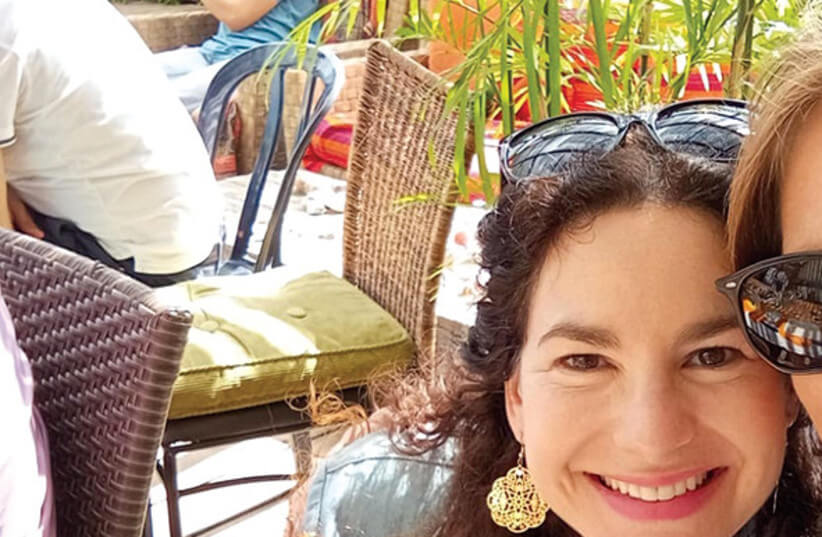
Dena Dworin of Rassco has been known to throw a kiddush or two. (credit: Dena Dworin)

Yes, you can host a kiddush

A simple kiddush really is the perfect way to host without making the rest of your week toast (har har). Being in my 40s – unlike the creative youngsters interviewed – I’m busy enough to appreciate what a great outlet it could be.

Just how do I know this? Because my former neighbor and continued good friend Dena Dworin introduced me to the art, having me over numerous times at her casa for a pre-Shabbat lunch soiree with flair and ease.

Raised in Chicago, she’s lived in Jerusalem for 13 years – first in the super-social neighborhood of Katamon and now in the emerging hotspot of Rassco (on Katamon’s edges). Dena was kind enough to enlighten us on how to throw together a kiddush with a minimum of stress, using what you have in your kitchen, and perhaps a quick jaunt to the makolet.

Dena’s baked goods: chocolate chip cookies. (credit: Dena Dworin)

“The beauty of a kiddush is you’re not as limited,” Dena shares. “You can invite more people and different social circles, and they can circulate freely.”

“If you have a special occasion, like moving into a new apartment, saying goodbye to an old one, welcoming a visiting guest, an aliyahversary or a yahrtzeit, a kiddush strikes the perfect balance,” she points out. And, if you’re cheekily trying to set up a potential couple, you can invite them to meet naturally!

Here are some of her tips for a fun and fancy-free gathering:

• People love bite-sized morsels like cookies and brownies. However, while Dena is an amazing baker (in fact, I am going to ask her for a chocolate chip mug cake after this interview), not everyone is. It’s totally acceptable to buy something sweet at Duvshanit or the supermarket.

• To contrast, it’s nice to have something healthy – vegetables with tehina or seasonal fruit.

• A must-have is coffee (and for those under the King’s banner, tea), so set up that urn and put out the Taster’s Choice. Being lactose intolerant, I ask: Is soy/oat milk a must? Jury is out, she says, so think about who’s coming.

• Round it out with something crunchy like Bamba, pretzels, or Doritos.

• Make sure to have a few drink options – wine/grape juice and soda/cola.

• In the summer, she stresses, A/C is a must.

Dena’s baked goods: Chocolate truffles. (credit: Dena Dworin)

• Keep the food self-contained – chips as opposed to pistachios with shells – for a minimum of mess.

• Get some pretty, disposable plates/napkins/cups, and you’re in business!

Unlike at a meal, when you’re bringing out multiple courses, Dena notes, once you put everything out, you’re all set. So get out there and enjoy your guests!
Read more

Originally appeared in jns.org on March 16, 2026

Across Israel, doctors push aside personal loss and damaged homes to care for their patients during the war with Iran.

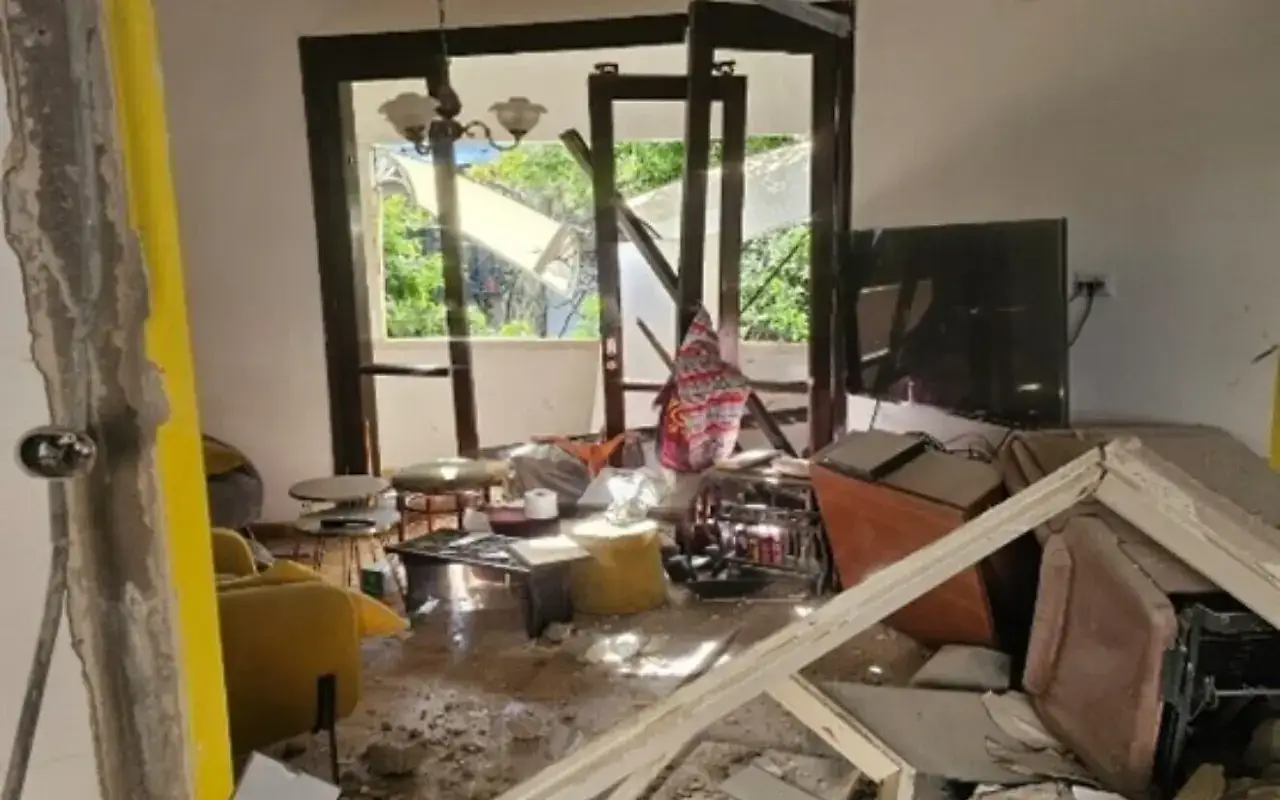
 Fulfilling “The Oath of the Hebrew Physician”—the 10-part medical covenant that serves as Israel’s equivalent of the Hippocratic Oath—is not always easy during wartime, especially when a physician’s own home has recently been destroyed or badly damaged by Iranian missiles.

The oath’s first clause states: “You will fulfill your duty day and night to stand by the sick in their distress at any time and at any hour.”

Across Israel—from Eilat to Beersheva and Tel Aviv—physicians continue caring for patients even as they deal with personal losses, damaged homes and temporary relocations.

Dr. Amir Shahar, 76, a senior physician in the Emergency Medicine Department at Clalit’s Yoseftal Medical Center in Eilat and a self-described pioneer of emergency medicine in Israel, was driving from the hospital in Eilat to his home in Tel Aviv on March 15 when his son called to say their home had been badly damaged by a missile launched from Iran.

Fortunately, his son and granddaughters—who live on the first floor of the five-story building—reached the building’s shelter when the alarm sounded and were unharmed.

Shahar’s apartment, located on the second floor of the building built by his grandfather more than 100 years ago, sustained extensive damage.

“Twelve to 14 small bombs from a cluster bomb rocked the house,” Shahar told JNS. “All that is left is a skeleton of the house—no walls, no furniture.”

Shahar said he was currently staying in an apartment in Ramat Gan while continuing his work at Yoseftal Medical Center in Eilat.

He noted that three people in Eilat were recently injured by shrapnel from a missile. Despite the destruction, Shahar maintains both his sense of humor and perspective.

“Unfortunately, I have faced the angel of death many times—with patients and myself—in the army, recovering from leukemia, etc. So, we are acquaintances,” he said.

As he prepared to return to Eilat, Shahar reflected on the support he had received. “You can’t be in Israel without being optimistic. We have a very warm and sensitive society,” he said.

He described how many of his son’s army friends, who served with him more than 30 years ago, came to the apartment to help repair the damage over two days.

“You don’t have this anywhere else in the world,” he said.

Balancing patients and family in Beersheva

In Beersheva, Dr. Roi Levinzon, 38, a family physician at Clinic T in Clalit’s Southern District who also has extensive emergency experience through his 25 years with Magen David Adom (MDA), found himself balancing patient care with concern for his family.

On March 2, Levinzon was seeing patients when a missile alert sounded. He joined colleagues and elderly patients—many “with fear in their eyes”—in the shelter.

“We heard a huge blast and knew it hit the neighborhood,” Levinzon told JNS. “There was dust coming into the shelter from the ventilation system. We knew it wasn’t going to be a good outcome.”

“There was a huge panic in the shelter. People were shouting and crying.”

Although Israel’s Home Front Command recommends waiting for the official “all clear,” Levinzon knew he needed to respond.

“I waited five minutes. In my mind, I knew I couldn’t stay. In my mind, you always think of worst-case scenarios,” he said.

Outside, he saw extensive damage to cars and six nearby buildings. At the same time, he worried about his wife, who was home alone in their 15th-floor apartment a five-minute walk from the strike site.

He continued treating those with “face bleeding, anxiety and pretty mild casualties” before heading home to check on his wife, a social worker in the hematology department at Clalit’s Soroka Medical Center.

“I saw her panicked. She was afraid to leave the shelter. She was afraid that there was nothing left,” he said.

Ten minutes later, Levinzon received a call from Dr. Tsafnat Test, deputy medical director at Clalit’s Southern District.

“Maybe you can go back down to Ground Zero,” she asked.

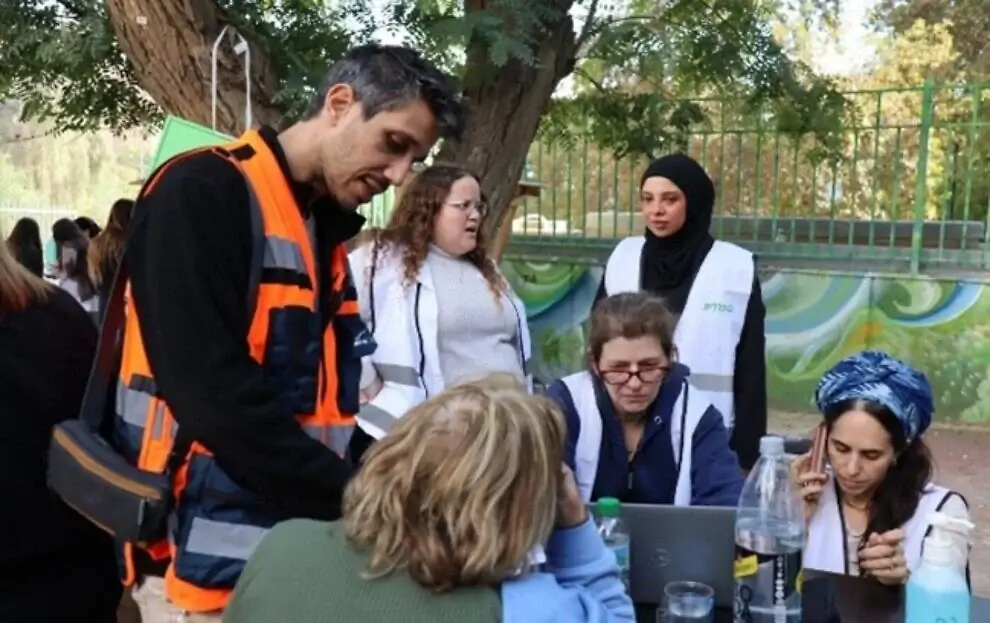
Levinzon returned to help establish stations where evacuees could speak with social workers, receive emergency prescriptions and obtain assistance from municipal services.

He left his wife, who, he noted, is “used to dealing with anxiety” in her professional work. “She tried to relax. She is a yoga teacher and did deep breathing. After an hour, she calmed down,” he said.

Their home suffered damage to the entrance and shattered windows.

“Thank God it is not huge damage. We can still live there—we are waiting for repairs.”

Levinzon said many residents forced to evacuate their homes faced immediate medical challenges.

“In one second, they have nothing available,” he said. “Some of them have chronic medical issues, so we contacted their pharmacies so they could get their medications renewed.”

Many evacuees were relocated to the Leonardo Hotel, where Levinzon and other aid workers continued assisting them.

Back at his clinic, Levinzon is also helping develop new responses to potential mass-casualty events. Through the Team Shachar rapid-response initiative—a joint emergency medical team created by Clalit’s Southern District together with Magen David Adom—he is helping train physicians and clinics to treat trauma victims if hospitals such as Soroka become overwhelmed.

Sirens in Tel Aviv

Dr. Michal Gur Dick, 44, director of the Plotkin Clinic in Clalit’s Tel Aviv–Jaffa District, worried about the safety of her three children—ages 13, 9 and 5—when she heard the first sirens on Saturday morning, Feb. 28.

She quickly packed clothes, computers and medicine and drove them from their apartment in central Tel Aviv to her parents’ home on Moshav Orat. “I feel lucky and privileged that my children are safe,” she said.

She soon learned that a missile had struck near her home, but that did not deter her. The family medicine specialist returned to work the next day to continue caring for patients.

“I needed to both tell the children their house got damaged and open our clinic in a new place,” she told JNS. “It was very important for me to continue the routine of the clinic—both for my patients and for me.”

Her clinic did not have a bomb shelter. Dick and her team relocated temporarily to the nearby Yad Eliyahu Clinic.

She soon learned that a missile had struck near her home, but that did not deter her. The family medicine specialist returned to work the next day to continue caring for patients.

“I needed to both tell the children their house got damaged and open our clinic in a new place,” she told JNS. “It was very important for me to continue the routine of the clinic—both for my patients and for me.”

Her clinic did not have a bomb shelter. Dick and her team relocated temporarily to the nearby Yad Eliyahu Clinic.

She says the experience deepened her understanding of the role physicians play during crises.

“My broken windows and walls will be fixed,” she said. “It is a privilege to be with people in their broken moments—it gives me strength. That is when we are most needed.”

Each morning, Dick now makes the 40-minute drive from her parents’ moshav to the relocated clinic in Tel Aviv.

She says the experience reinforced something essential.

“When my home was damaged, I realized that routine is not just a work tool—it is part of the healing for all of us,” she said.

“My work gives me a deep sense of purpose and stability. When my home was damaged, I understood that even more clearly. Our patients are looking for an anchor in the storm. When they walk into the clinic and see that the team is there, that care continues and that one thing has not changed, it restores their sense of security. My private home may need rebuilding, but I will not give up on the professional home of my patients.”

Dick hopes the repairs will be completed soon. “The kids really miss their friends—and their routine,” she said.

Read more

This article was featured in the Spring 2026 issue of Jewish Action, jewishaction.com, March, 2026.

The hidden economic cost of miluim—and the resilience that carried Israeli families through 

Last May, Miriam, originally from Cleveland, Ohio, walked away from her role as vice president of marketing at a start-up with offices across Israel. With her husband, Natan, thirty-seven, serving more than 450 days in Gaza since October 7, the demands of work became impossible to balance with raising their three children under seven on her own. “I made the decision very quickly,” she says. “I was spread too thin.” 

The choice came during months of sleepless nights, when sirens sent her racing down four flights of stairs to the building’s miklat (safe room), neighbors grabbing her half-asleep children as they ran. The shelter was stifling, airless, crowded. “We were dripping with sweat, completely exhausted,” she recalls. “It was an incredibly intense time.”  

In recent months, Natan, who has been away from home for up to six months at a time, was assigned a better army schedule, and so Miriam recently found a new job. For now, she is focused on keeping daily life manageable.  

Miriam is not alone. 

While a ceasefire has been in effect since the fall of 2025, thousands of miluimnikim (Israeli reservists) and their families spent two long years under sustained financial strain as the conflict upended daily life and household income. An underreported aspect of the war is how Israelis, from recent olim to veteran immigrants to Sabras, navigated these pressures while also dealing with the emotional and logistical toll of a conflict that seemed to stretch endlessly forward.  

Yet, in a pattern familiar to anyone who has lived in Israel long enough, many responded with creativity, faith and resolve. They drew on fortitude to keep their families afloat—paying bills, caring for children and elderly parents, and serving their country all at once. 

Remarkably, and in ways that defy easy explanation, despite the war and a surge of global anti-Israel sentiment, Israel’s economy has demonstrated striking resilience. As of this writing in mid-2025, the Israeli stock market has posted strong gains, reflecting investor confidence. 

But national indicators, however encouraging, obscure the human cost beneath them. 

These numbers do not fully capture how individual families actually lived through the war—how income was lost, careers stalled and routines dismantled. 

Natan, an attorney by training, made aliyah from Toronto in 2006. Miriam proudly refers to her husband as a “front-line soldier,” though she is quick to acknowledge the reality behind the phrase. For much of the war, he was, as she puts it, “very absent”—from his job and from his family. 

Before the war, Natan worked at a large Israeli law firm before moving to an in-house counsel position, a shift he hoped would bring greater predictability. “The new job had the promise of better, family-friendly hours,” Miriam notes wryly. Instead, since October 7, he was rarely at work. Fortunately, his employer continued to pay his salary while he served in miluim

What no employer could compensate for, however, was his absence from home. 

“For the majority of his time in miluim, he had no cell phone, and we had no real conversations,” Miriam says. Only in recent months has some measure of routine returned. “He has a set schedule: ten days in, five days home, ten days in, five days home. And it is the first time he has had his phone.” 

Atzmaim: When Miluim Meant Losing a Paycheck 

For salaried employees in larger firms, the economic safety net—though stretched—largely held. 

In the case of miluimnikim working in high tech, finance, law and other large organizations, employees generally continued to receive their regular salaries during long periods of reserve duty, even when absent from work for months at a time. 

For the self-employed, however, there was no such buffer. 

Self-employed workers (known as atzmaim, or freelancers) entered the war without the institutional protections of payroll continuity. They faced the financial consequences of reserve duty directly.  

Shlomo Wiesen grew up in New Rochelle, New York, watching siblings and fellow congregants from the Young Israel of New Rochelle serve in the IDF. He joined the army at age twenty-five and has been serving in miluim for the past twelve years. A self-employed digital marketing professional, Wiesen did not have the benefit of an employer continuing his paycheck. “As a freelancer, it was very difficult; there was no paycheck waiting for me when I came home,” he says. While he does not have children to support, the Tel Aviv resident served extended stints in southern Hebron. “It was impossible to get any work done in the first month of the war. There was just too much going on.” 

A self-employed digital marketing professional, Shlomo Wiesen did not have the benefit of an employer continuing his paycheck while he served in miluim. Courtesy of Shlomo Wiesen

And yet professional obligations did not simply disappear. Both Wiesen’s Jewish and non-Jewish clients in the United States were understanding and supportive, though expectations remained. “I told the non-Jewish clients I was on pause, out of commission,” he says. While Wiesen managed to make ends meet, and is grateful for that, he recounts stories of fellow soldiers in his unit who did not fare as well, including a psychologist in private practice who was forced to close his office and work instead in a public clinic. 

Wiesen describes the amount of responsibility he and fellow soldiers faced early in the war, as well as the “very spotty internet on the base,” which made it nearly impossible to get any work done. As he began getting short leaves, he was “checking in” and “looking at my sites,” though he wasn’t doing any “real work.” 

Gradually, amid the instability, a routine emerged. Wiesen’s schedule became more regular. “Work picked up,” he says, “and I could more aggressively pursue new clients.”  

Wiesen was pleased that the army began giving freelancers priority in choosing days off so that they could “go home and do work.” This flexibility made it possible for some to remain professionally afloat. He reports that he and other religious soldiers would request to go home during the week so that they could do their computer work and other tasks. “As painful as it was to not go home for Shabbat, we needed to be home on a day when we could use the computer.” 

Wiesen is grateful to his clients for their understanding and notes that one Jewish client insisted on paying him even while he was in miluim and not working. “I definitely appreciated that.” 

While the war disrupted Wiesen’s professional life, it deepened his spiritual one. 

Serving in miluim strengthened his faith. “The religious guys in the army would go out of their way to make a minyan—three times a day. You’d even see non-religious soldiers helping to make minyan, especially during Chanukah with candle lighting.” He describes singing “Shalom Aleichem” together on Friday night, eating Shabbat meals huddled indoors, and praying in makeshift spaces. “There was a strong sense of spiritual community,” he says. 

Looking back on his months of service, Wiesen speaks with quiet pride. “I am grateful that I had the opportunity to do something so important.” 

Professor Manuel Trajtenberg, professor emeritus of economics at Tel Aviv University and senior faculty at the Mandel Leadership Institute, describes Israelis as “incredibly resilient,” recounting stories of reservists in Gaza “with laptops who keep running their start-ups.” 

Professor Trajtenberg, who has held diverse positions in the Israeli government, including chairman of the National Economic Council at the Prime Minister’s Office and chairman of the Planning and Budgeting Committee of the Council for Higher Education, is also careful to note the limits of that resilience. Israel, he says, cannot sustain a prolonged war, in large part because more than two-thirds of its army is made up of miluimnikim. “They are not a marginal addition to a standing army.” 

He emphasizes that miluimnikim like Natan and Wiesen “are the best of the workforce—twenty-five- to forty-five-year-olds who are in their prime working years.” Those in combat units, intelligence units and the air force, he adds, “are the very highest-quality people in the workforce.” Mobilizing them for extended periods, he says plainly, “is a serious blow to the economy.” 

The Entrepreneurial Spirit: Keeping a Business Running during the War 

Chaim Jacobson describes his life in high tech as “good.” Still, he was uneasy about long-term stability. 

Jacobson, forty-one, of Tel Aviv, began his career as a computer engineer in Israel’s famed high-tech industry. When he later encountered an opportunity to open retail stores, he took a calculated risk. Aware of highly profitable makolets in Jerusalem, he thought the approach could be replicated in Tel Aviv. “I realized that if owning a store worked, I could make a comfortable salary,” he says. “I thought, why not? I could open a bunch, maybe even a reshet (chain), and then exit. I took a chance.” 

Five years later, Jacobson owns two makolets and a café in Tel Aviv. He attributes his success partly to the affluence of the surrounding community, but just as much to relationships. “You need a real connection with the community,” he says. Known for his friendliness, he emphasizes service and quality—and recounts going out of his way to secure basic products like milk during shortages, even when it meant no profit. “Sometimes I don’t make a penny,” he says, “but people need what they need.” 

Jacobson himself has not been called up for reserve duty. “I guess I’m not relevant anymore,” he jokes. His business, however, has not been spared the effects of the war. Several of his employees were called to miluim, forcing him to scramble. For small business owners, this created immediate staffing challenges. 

“You have to find replacements,” he explains. “When they were gone for months, we hired new employees.”  

The logistical burden was compounded by bureaucracy. At the start of the war, employers were required to continue paying the salaries of employees serving in miluim, with reimbursement from the government coming later. “We didn’t know how much or when,” Jacobson says. “For months, we were paying double salaries.” Eventually, Bituach Leumi (the National Insurance Institute) reimbursed him and later shifted to paying reservists directly. “It worked out,” he says simply. “But it wasn’t easy.” 

Professor Trajtenberg notes that the government has generally been “very generous in supporting miluimnikim.” At the same time, he corroborates Jacobson’s experience, noting that “owners of small businesses were affected” in a range of ways. Some, like those who own businesses in the north of Israel and had been evacuated, suffered. Others, like Jacobson, are doing well but dealing with all the red tape. 

Some sectors, Professor Trajtenberg explains, actually performed well during the war. With fewer Israelis traveling abroad and more consuming locally, supermarkets flourished, as did banks. Defense-related industries prospered too.  

Tourism: A Livelihood on Hold 

Not all sectors, however, were able to adapt. Tourism was hit especially hard during the war. Tour guides, hostel owners and zimmer (private guesthouse) operators found themselves with little or no work for months at a time. Having barely recovered from the economic toll of the Covid-19 pandemic, Israel’s tour guides were once again among the first to feel the ground shift beneath them.  

“Tourism has always been a volatile profession,” says Shulie Mishkin of Alon Shvut, a thirty-year resident of Israel and a tour guide for two decades. “Over the past five years, we’ve been knocked down over and over again.” While Mishkin found “guiding-adjacent” teaching work during both the pandemic and the war, others temporarily switched fields. 

Patrick Amar, a tour guide who made aliyah from Montreal to Modi’in twenty years ago, was forced to reinvent himself. Before October 7, his calendar was full. “I plan my schedule a year in advance,” he says. When flights stopped and tours were canceled, the work vanished overnight. 

After spending several months in the United States visiting family and speaking to communities, Amar returned to Israel and confronted reality. With guiding opportunities scarce, he enrolled in cooking school, then spent four months running a local burger restaurant with a friend. 

Patrick Amar, a tour guide who lives in Modi’in, was forced to reinvent himself, as Israel’s tour guides were among the first to feel the economic shock of wartime. Courtesy of Patrick Amar.

Still, Amar, a father of five children ages twelve to eighteen, insists that guiding remains his calling. What sustained him—beyond adaptability—was faith. “I lost 90 percent of my income. I am a man of faith. I have emunah, especially when it comes to making a living. I grew up in a Sephardic business community where people have faith. If you’re a businessman without emunah, you won’t survive!”  

By late December, Amar reported that guiding work had resumed. “Thank G-d, I’ve been busy since the end of the holidays. It’s quiet now, but 2026 is already filling up.” 

High-Tech Growth 

The Taub Center for Social Policy Studies in Israel reports that the largest employment gains during the war were in the health, welfare and social services sector, as well as in education, while the steepest declines occurred in hospitality and food services and in information and communication services. The high-tech sector continued to grow, albeit at a slower pace; according to the Taub Center, fewer than 2,000 high-tech jobs were added during the war, compared with roughly 14,000 during equivalent periods in previous years. 

Much of Israel’s economic strength is anchored in its high-tech industry. The sector accounts for roughly 14 percent of the economy, making it not only a central driver of growth but also a critical contributor to government revenues. 

Professor Trajtenberg offers a playful perspective on the role of high tech in Israel’s economy. “Israel’s economy is very easy to describe—we sell brains and we buy everything else! Fifty percent of the economy is high tech.”  

Even agriculture, he notes, is deeply intertwined with technology. While regions such as the north suffered greatly, Israel’s “brain economy” proved more resilient than industrial economies dependent on physical infrastructure. 

Unquestionably, however, the war impacted reservists’ career trajectories. In fact, Professor Trajtenberg’s main concern is the war’s negative effect on “human infrastructure.”  

Ahuva Ross Cohen understands this firsthand. Her husband, Meir, who works in venture capital, served extensive periods in miluim. “After seven months,” she says, “from the company’s perspective, you’re not here.” While they managed financially, she worries about missed opportunities and long-term career impact. 

Ahuva Ross Cohen compares the situation of miluimnikim like her husband, Meir, returning to work to new mothers returning to work from maternity leave. Courtesy of Ahuva Ross Cohen.

Cohen compares the situation of miluimnikim returning to work to new mothers returning to work from maternity leave. “It can feel challenging to return and quickly get up to speed. There’s an inherent pressure to be fully reintegrated and productive within the next few months. Even though you may physically be back, the mental switch from war zone to high tech is a hard context switch.” 

Cohen works for the global high-tech firm, monday.com. Given her husband’s extensive miluim service and the need to care for her children, ages four and one, she has been affected at work. She praises monday.com. “They were amazing,” she says, citing grants, gifts and sustained attention to families of reservists. 

By this past winter, her husband had served over 200 days. “We’re managing,” she says, “but the war isn’t really over,” as many of the men are still serving in reserves. Their faith, she explains, was central. “It carried us emotionally.” So much so that they named their daughter, born in September 2024, Lielle Emunah. “Our faith has given us both comfort and confidence in knowing our role throughout this war, that our fight is a moral one and that Hashem will perform miracles if we do our hishtadlut.” 

While the war strained Israelis across every sector, those interviewed for this article share a common determination: to continue building lives in Israel, despite uncertainty and cost. 

Miriam and Natan insist they “are grateful to live in Israel and to raise our children here.” Miriam currently works in real estate, and Natan has returned to his role as in-house counsel—though another miluim date looms ahead. They feel a deep sense of gratitude that they have been able to continue making ends meet during these difficult times.  

“We really believe in this,” Miriam says. “It comes with a price. But we want to live in Israel, and we’re doing it for the Jewish people.” 

Her husband puts it more plainly. “Every generation pays a price,” he says. “This one has to be paid. It’s the only real option for the survival of the Jewish people.” 

Howard Blas is a social worker, special education teacher and inclusion specialist. He frequently leads Birthright Israel trips for people with disabilities and is the author of a recent book on b’nai mitzvah and disabilities. He recently made aliyah and lives in Tel Aviv. 

Read more