Published Articles

After the experience, participants asked a single question: “When can we come back and do this again?”

View the original post on the Jewish News Syndicate

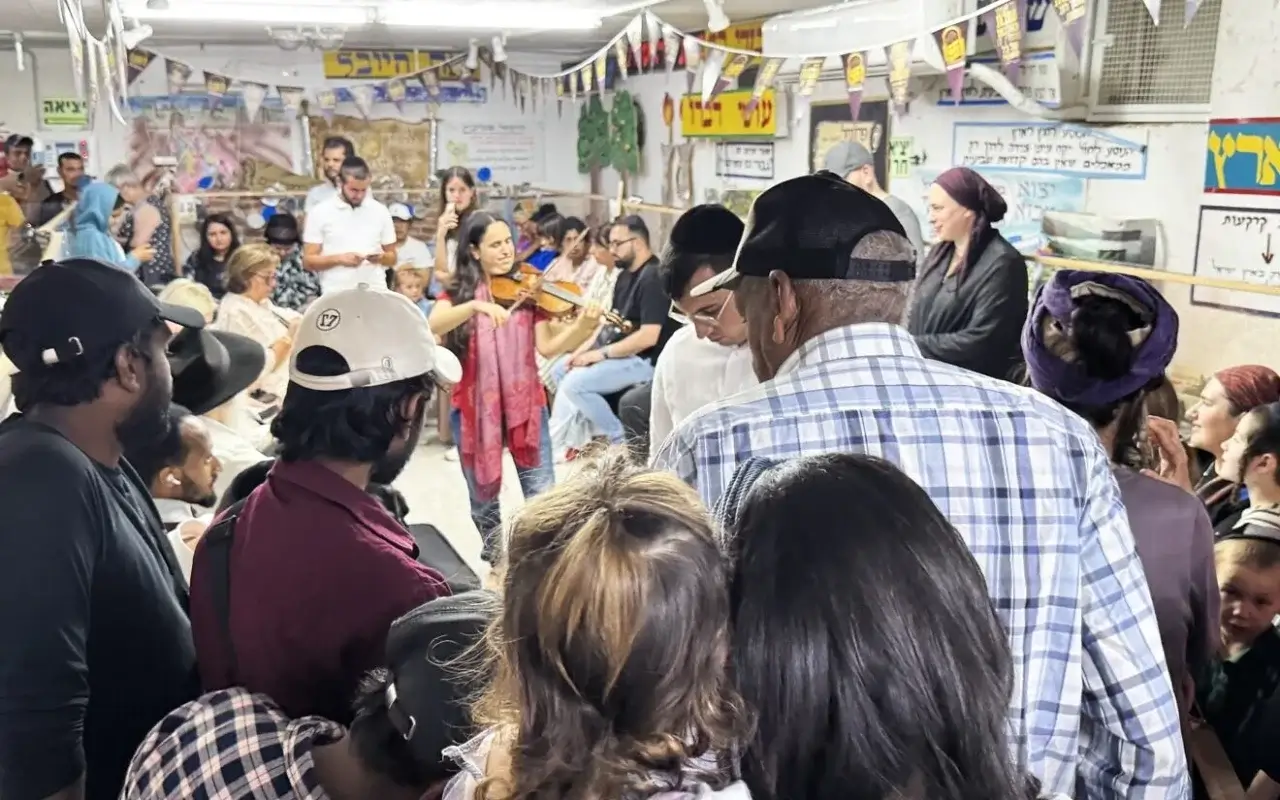
Volunteers on a disability inclusion trip sponsored by Birthright Israel, September 2024. Photo by Howard Blas.

(Oct. 8, 2024 / JNS) Eight days in Israel leading the first-ever Ramah Tikvah Birthright Israel Onward disabilities service trip provided insight into how a group of adults ages 21 to 41—all with intellectual and developmental disabilities (most on the autism spectrum)—are capable of connecting deeply with the Jewish homeland and its people, and of making important contributions through their volunteer efforts.

The delegation, all current participants or alumni of Ramah Tikvah disability inclusion programs, have spent many summers at Ramah camps, where they have forged ties with Israelis from their mishlachot (Israeli delegations), learned Israeli songs and dances, and grown to appreciate the importance of the Jewish state in their lives.

When the war with Hamas in Gaza broke last October following the Hamas terrorist attacks in southern Israel, participants in Ramah Tikvah programs began seeing community and family members—and friends from their respective camp communities—travel to Israel on service trips. They began to wonder if they might have a similar opportunity to contribute during Israel’s time of extreme need.

Perhaps Birthright Israel Onward would offer a solution?

Taglit Birthright Israel offers a dozen “classic” trips with necessary supports and accommodations for participants with mobility challenges, inflammatory bowel disorders and other medical issues, as well as an American Sign Language program, a trip for those in 12-step recovery programs and more. In addition, the Birthright Israel Onward program facilitates internships, fellowships, academic study and volunteer opportunities in Israel.

When I pitched the idea of a volunteer trip for people with disabilities, Onward Israel CEO Ilan Wagner immediately gave the green light. This group would need accommodations not usually provided to typical Birthright Israel Onward participants, including staff accompanying the group on the flight and 24/7 throughout the trip; three meals daily; hotel rather than group apartment accommodations; and additional structured activities once their morning of volunteering was over.

Last month, even as the war in the Gaza Strip and the hostage situation continued and with an escalation of war looming between Hezbollah in the north, 12 participants and four staff members boarded flights or took cars or trains from St. Louis, Detroit, Columbus, Minneapolis, Phoenix, Berkeley, Calgary, New Jersey and New Haven for flights to Israel. We arrived at a hotel in Tel Aviv ate dinner, got some rest and hit the ground running the next day.

Birthright Disability Inclusion Trip
Volunteers pack boxes on a disability inclusion trip sponsored by Birthright Israel, September 2024. Photo by Howard Blas.

We recited the Shehecheyanu prayer in honor of this pioneering trip and had morning services at the Nahum Gutman Mosaic Fountain in Tel Aviv. We then headed out—Bingo cards in hand—in search of various famous Tel Aviv landmarks on the Independence Trail. After lunch, we visited the Israel ParaSport Center in Ramat Gan. Our guide, Caroline, who was born paralyzed, is the No. 6 wheelchair table-tennis player in the world and shared what sports means to her. We also had a chance to watch Israel’s national wheelchair basketball team engage in a tough practice, and after speaking with team members, got to try out the specially designed chairs.

Then, it was off to a small Chabad shul in Tel Aviv to do our part for the Tzitzit for Tzahal project—an initiative to prepare 200,000 pairs of ritual army-green fringes for soldiers.

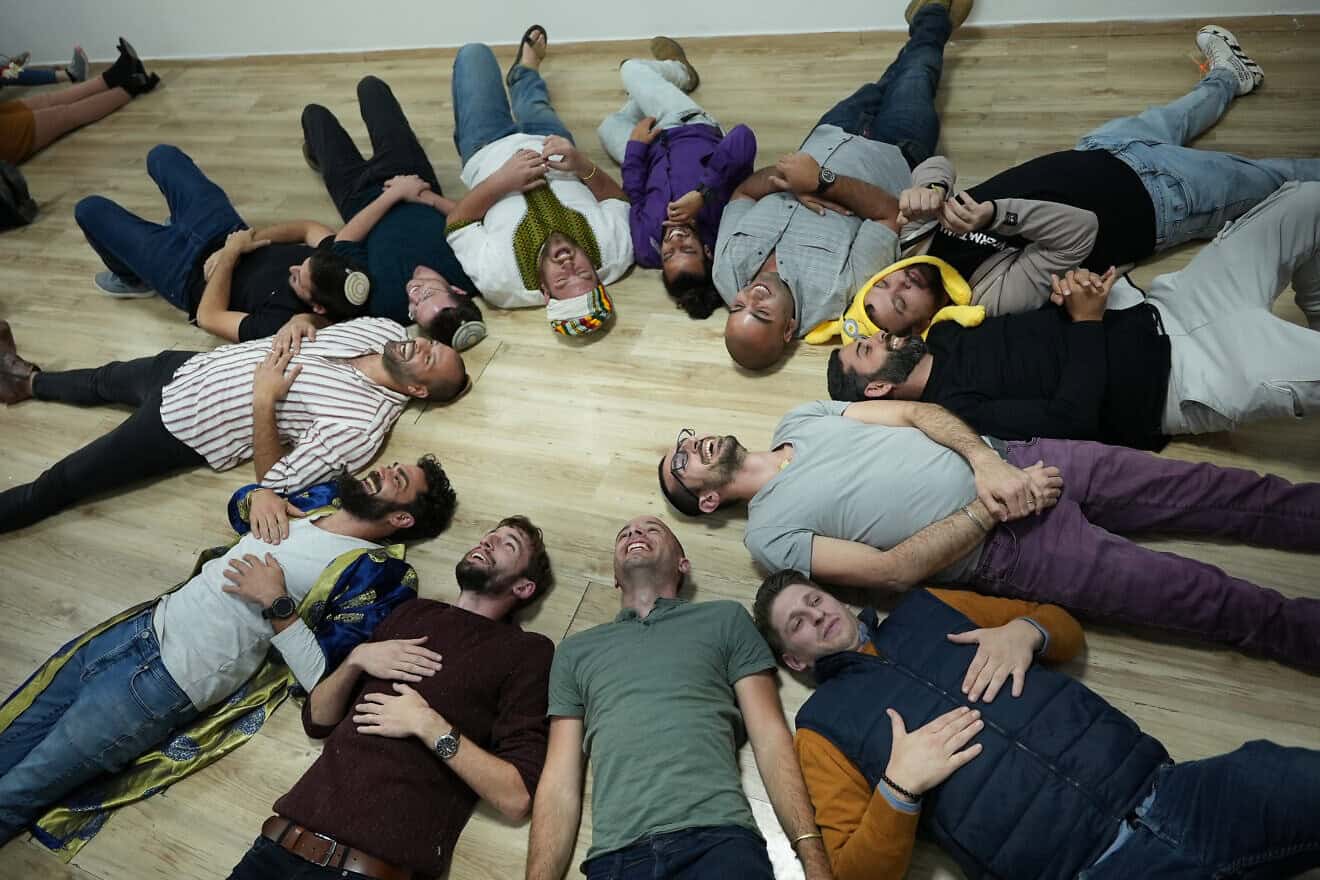
The next day saw us at Pitchon Lev: Breaking the Cycle of Poverty in Rishon Letzion, where we assembled 180 large boxes and filled each with diapers and four packs of wipes. Following our busy and satisfying morning of volunteering, we had lunch—pizza and grill were both exciting options for the hungry volunteers—before setting off for a special tour of the ANU Museum of the Jewish People on the campus of Tel Aviv University. After dinner, we ended our day with a rhythmic movement activity.

On Friday, we made a trip to Jerusalem so the few first-time visitors to Israel could visit the city. Everyone enjoyed shopping on Ben-Yehuda Street, riding EZRaider electric motorized vehicles, and touring the Old City and the Western Wall before heading back to Tel Aviv in time for prayers, Shabbat dinner and an Oneg Shabbat, complete with an UNO card-game marathon.

Shabbat started with morning prayers at the beach, followed by swimming in the Mediterranean, a walk, lunch and visits by Israeli friends and family members. We ended with a beautiful Havdalah service that reminded participants of the many similar ones at their respective camps.

On Sunday, we set off for the first of two days of olive picking at Harvest Helpers Leket Israel in Rishon Letzion. We learned that our olives would be made into olive oil for Israelis in need. Our participants once again felt a connection between their volunteer work and people receiving direct benefits.

Our afternoon visit to Hostage Square in Tel Aviv was quite emotional. We walked through a makeshift tunnel, looked at the empty Shabbat table and chairs (now under a sukkah) in tribute to the hostages, viewed art installations and purchased “Bring Them Home Now” shirts, dog tags and ribbons.

On Monday, in the middle of our breakfast, the staff learned that out of an abundance of caution as the situation in the north was heating up, we were being instructed by the Situation Monitoring Room to leave the hotel in under an hour and relocate to Jerusalem after our morning of olive-picking. Participants remained calm, adjusting to an abrupt change of plans (not usually easy for people with autism) and quickly packing up. Our scheduled culinary tour in Tel Aviv turned into a similar tour in Jerusalem’s Machane Yehuda open-air market, a walk through the adjoining Nachlaot neighborhood and a stop for some ice-cream.

Our last full day in Israel began at Pantry Packers, where we worked in four-person teams to pack peas and other dried goods for Israel’s needy. After putting on aprons and hairnets, two team members placed separate labels on bags, one operated the machine that dispensed the grains into bags, and one used the sealing machine. Our day—and rewarding week in Israel—began winding down with pizza and a swim party at a brand-new pool at a country club in Har Homa.

Birthright Disability Inclusion Trip
Volunteers outside a warehouse on a disability inclusion trip sponsored by Birthright Israel, September 2024. Photo by Howard Blas.

Back at the hotel, participants shared highlights of the trip. Annie thanked her “lovely roommate.” She added that “the trip was a good experience for me. I’m going to start crying.” Maddy, who noted that she volunteers thousands of hours per year, felt that the Israel ParaSport visit “got me thinking of physical disabilities in ways I never have.” Jesse felt a true sense of belonging he said he never felt at home. On Birthright, he said, “I feel like you guys were all my family.”

Our tour guide, Rotem, encouraged the group to go home and serve as ambassadors, sharing their experiences. The participants were unified in asking one question: “When can we come back and do this again?”

My hope is that the Jewish community will continue to create meaningful opportunities—in the United States, Canada and Israel—for adults who have both disabilities and amazing strengths, so as to be fully included and feel a sense of belonging.

Howard Blas

Howard Blas

Howard Blas is a social worker and special-education teacher by training. He teaches Jewish studies and bar/bat mitzvah to students with a range of disabilities, leads disability trips to Israel and writes regularly for many Jewish publications, including JNS.org.

Read more

The original article is published in Relix Jan/Feb, 2023. Page 17

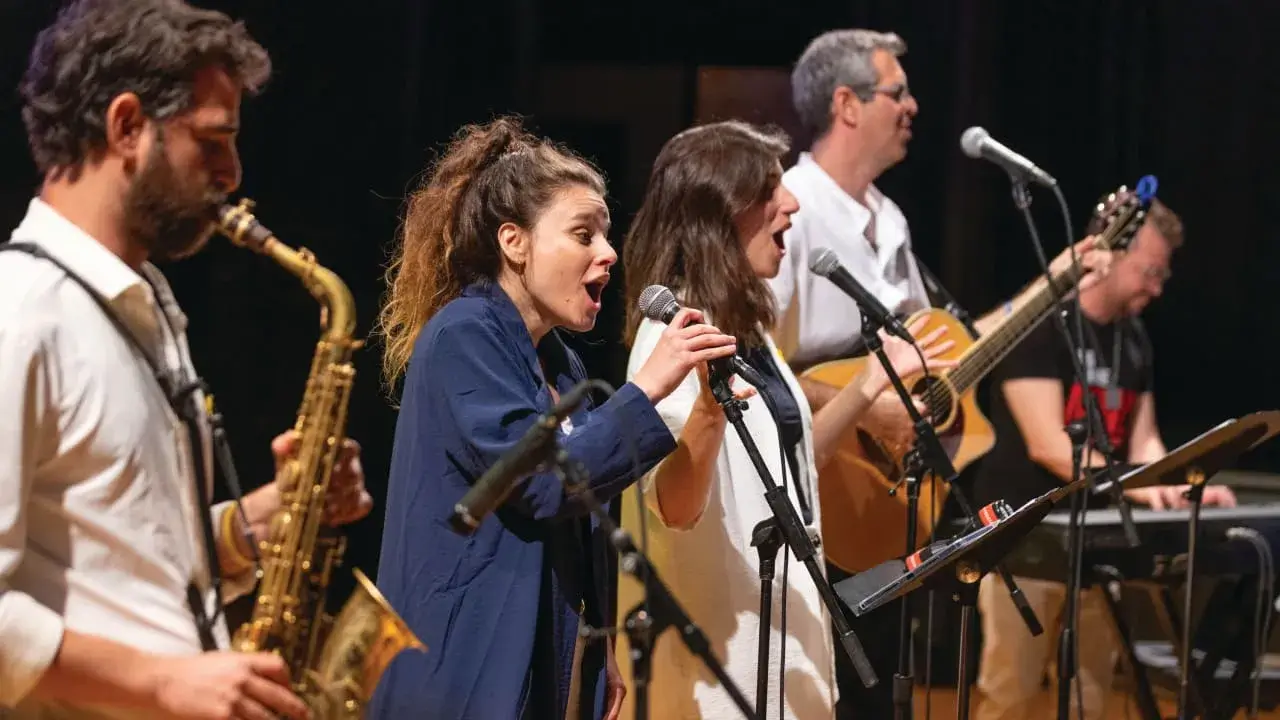
“Steely Dead started as a big ‘what if’ question,” explains founder and lead guitarist Dave Abear. “We’ve all been playing Dead songs forever,” adds drummer Chris Sheldon. “At the same time,” Abear jumps back in, “we were always big Steely Dan fans.” Sheldon, Dave, Dave’s brother Matt Abear (bass) and Dylan Teifer (keys) first came together five years ago. After drawing a few hundred fans to their initial shows in Colorado, the musicians had a break-through moment when they sold out Phil Lesh’s Terrapin Crossroads shortly before COVID hit.

Though Steely Dan’s tightly scripted songs and the Grateful Dead’s long-winding improvisational jams may seem like an unnatural match, those bands actually shared an intertwined history long before Abear started his project. The Steely Dan hit “Kid Charlemagne” even references Owsley “Bear” Stanley, the Dead’s legendary sound engineer and LSD chemist. “We like to say we Dead down the Dan and Dan up the Dead,” Dave says. “We stretch out the Dan stuff and tighten up the Dead.” The band pairs songs based on their feel. Classic combos like “Dealin’ in the Years,” a swirl of “Deal” and “Reelin’ in the Years,” “just work so well together,” says Dave, noting their perfect match of “grooves and keys.” The tune-which often serves as a set closer-starts and ends with “Deal,” sandwiching the Steely Dan melody in the middle. Other prearranged combos include “Fezeree” (“Fez” and “Sugaree”) and “Truck Friday” (“Truckin’ and “Black Friday”).

Similar to many jambands, their sets are determined on the fly, with band members using hand signals or audibles to indicate the next song. Some mashups are determined live onstage, so “you might not hear the same combo every time,” says Chris. And the fans are kept guessing about the second half of each number. Chris, though, is used to the challenge, as the longtime drummer in mashup band DeadPhish Orchestra. Does the band ever get stuck trying to find a perfect match for a given song? Absolutely, admits Dave, who
says there’s only one solution. “We just ask ourselves, ‘What would Jerry do?””

steelydead.com

Howard Blas

Read more

Despite a tough quarterfinal exit, Kaylan Bigun’s tennis journey is marked by family support, connections to Israel, and excitement for his upcoming college career at UCLA.

View the original article on The Jerusalem Post

CALIFORNIA NATIVE Kaylan Bigun was a strong contender to win the US Open Junior Tournament, coming in as the second seed, but he fell in the quarterfinals.(photo credit: HOWARD BLAS)

For 18-year-old tennis player Kaylan Bigun, the US Open was one to remember. Even before the French Open juniors champion and former world No. 1 junior kicked off a quarterfinal run in the US Open junior boys’ tournament – where he was the second seed – he had already spent nearly three weeks on the grounds of the USTA Billie Jean King National Tennis Center.

Bigun had seen action in both the US Open men’s qualifying tournament and the mixed doubles tournament. The Los Angeles native was one of nine men to receive a wild card in the men’s qualifying tournament, where he lost in the first round to Valentin Vacherot of Monaco 7-6, 6-4. He also received a wild card into the mixed doubles main draw with fellow teen standout, 16-year-old Iva Jovic. They won their first-round match against Dayana Yastremska and Max Purcell, 6-4, 6-4, but lost in the second round 6-2, 6-3 to fourth seeds Barbora Krejcikova and Matthew Ebden.

Bigun began his bid to win the boys’ juniors championship with a 6-4, 6-2 win in just over an hour against Andreas Timini of Cyprus. He advanced with a similarly straightforward second-round hour-and-seven-minute straight-sets win against Karim Bennani of Morocco, 6-2, 6-2. In the round of 16, Kaylan beat fellow American Matthew Forbes 6-2, 6-4. However, the quarterfinals presented a super-tough opponent in Spain’s Rafael Jodar – a far cry from another Spanish Rafael, but still a stiff challenge.

Jodar took the first set 6-4, but Bigun rallied for a 7-6 second-set win to equalize. However, the Spaniard prevailed 7-5 in the decider to spell the end for Bigun’s title hopes after a valiant effort.

In the days between the men’s qualifiers and the start of the juniors’ tournament, Bigun practiced with his Princeton-bound tennis-playing twin brother, Meecah, and his father, Dmitry. Bigun would undoubtedly have some great stories to share with his college classmates when he began his studies and college tennis career at UCLA in January. Kaylan and Meecah spoke with The Jerusalem Post in the junior player’s dining room after a practice session; their father spoke with the Post separately outside of Stadium Court 17 at the US Open. The brothers spoke openly about their incredible tennis journeys, which included a healthy dose of Jewish and Israeli experiences.

 Daniil Medvedev of Russia celebrates after his match against Novak Djokovic of Serbia (not pictured) in the men's singles final on day fourteen of the 2021 US Open tennis tournament at USTA Billie Jean King National Tennis Center, in Flushing, New York, on September 12, 2021. (credit: DANIELLE PARHIZKARAN-USA TODAY SPORTS)
Daniil Medvedev of Russia celebrates after his match against Novak Djokovic of Serbia (not pictured) in the men’s singles final on day fourteen of the 2021 US Open tennis tournament at USTA Billie Jean King National Tennis Center, in Flushing, New York, on September 12, 2021. (credit: DANIELLE PARHIZKARAN-USA TODAY SPORTS)

Bigun enjoyed his first experience playing at the US Open in the men’s qualifying tournament.

“Playing your first pro US Open, I guess I was a little nervous, and those emotions can be stressful before matches, but I tried to stay focused on what I could control and how I wanted to play.”

Waiting for many hours for his match to start was also a challenge; it was the fifth match of five.

“Obviously it wasn’t easy waiting all day for the match, but when I came out there it was cool. Some of my cousins and other family members came, so it was really nice to play in front of them and see how proud they were. Also, the crowd was pretty good, so that was fun.”

Given Bigun’s success in the juniors over the past year, where he rose to the No. 1 ranking after winning at Roland Garros – in addition to appearing at each of the junior Grand Slam events and making it to the semifinals of the prestigious Orange Bowl International Championship – he had grown accustomed to winning. However, playing against professional players was a new and different experience.

“Obviously, losing was not the fun part. I felt I could have played better in some parts, but overall it definitely was a good experience. I was where I wanted to be and was kind of taking every point and trying to keep going forward and really just enjoying the moment, smiling out there.”

After exiting the qualifying tournament, Kaylan and Meecah spent a lot of time practicing on court together. Both brothers have aspirations of becoming professional tennis players. Meecah felt it may take him a bit longer, given the academic rigor he anticipated at Princeton. Meecah didn’t participate in the US Open tournament, though he stayed with his brother “trying to help out in any way possible” until he left for college orientation the day after the interview.

The brothers, who bantered and finished each other’s sentences during the interview, appeared to enjoy each other’s company a great deal. The twins grew up together, both at home and on the road, at tournaments and tennis academies, while fishing together, homeschooling with their teacher mother, and with the Seton Home Study School.

While their university classes would essentially be their first formal group-learning experience since third grade, they were quick to point out that their social skills did not suffer as a result of homeschooling and online learning, noting that playing tennis in an academy and competing in tournaments meant constantly being around other children.

Kaylan felt their years on the road balancing sports and academics would serve them well in college and in life.

“Players are used to the hustle and bustle of traveling.”

On court, the brothers helped each other improve.

“We compete against each other, but we also help each other out on the court,” noted Meecah.

Kaylan appreciated Meecah’s contributions.

“He is obviously a very vital part of my tennis… mentally and just in general. I love having him around. It’s like your best friend with you wherever you are.”

Their father, Dmitry, a pharmacist by training who immigrated to Los Angeles from Ukraine 35 years ago, brought them to the courts—in a stroller—from the age of one. He also introduced them to a range of sports, including swimming, basketball, and soccer. They also spent a lot of time on the playground.

A tennis player himself, Dmitry enlisted friends to hit balls with his boys, and Dmitry hit balls with their children in return.

“Our dad played tennis, and he introduced us at a really young age,” Kaylan recounted. “I have been playing and holding a racket for as long as I can remember; it has been a part of my life for as long as I have lived.

“At first, it started off with just the three of us having fun on the court, then we played a few tournaments. Next thing you know, we got a little more serious. And a little more serious. I think what’s important is that when the three of us are on the court, we still have the same fun that started it all.”

Dmitry recalled the boys starting to get serious about tennis at age 10. “We met a coach from JTCC (Junior Tennis Champions Center in College Park, Maryland). The coach said, ‘I like your kids’ and invited them to train there.” Dmitry reported that he became a “full-time tennis parent,” and the family relocated to College Park, Maryland, from Los Angeles, California, where the boys trained for four years until the COVID-19 pandemic.

“We really hit it off with Asaf Yamin [the Israeli former director of high performance and current director of international operations at JTCC]. He has a good knowledge of tennis, he is a good person to go to with questions, the guys loved him, and he is a good family guy.”

Kaylan added: “My brother, my parents, and I would go to Asaf’s house for some Jewish holidays and Shabbat. It would always be fun. And we would stay at his house when he ran the tournament at College Park – so it was always a lot of fun. It felt nice that we were connected to the Jewish and Israeli community outside of LA in DC, so that was a good feeling. It was awesome.”

Yamin was pleased with the growth and progress he had seen with the Bigun boys and knew how excited they both were about the possibility of eventually playing on the pro tour.

Yamin described Kaylan as “very aggressive but also creative” and as someone who liked to be “a big stage player” who “shined at big events. He is very easy, fun, curious, serious, and a really good boy with a good heart.”

While the boys had played doubles together before, they both aspired to “make it” as professional singles players. They playfully dismissed the suggestion that they might one day follow in the footsteps of the very accomplished tennis-playing Bryan Brothers twins.

“We like playing doubles. I feel like both of us are pretty good, but we haven’t really gotten into playing doubles with each other too much yet, but maybe that’s something in the future we will do.”

The twins had several opportunities to travel to Israel in the past and proudly recounted what they described as a “full-circle moment” on one of their family trips to Israel.

At the Israel Tennis Education Centers in Ramat Hasharon, they had the chance to meet and train with Dmitri Romanovitch, the coach who taught their dad the game decades earlier in Kiev.

“It was fun,” exclaimed Kaylan. “We got to play with some of the kids our age and some of the older guys. The guy who coached my dad would run these fun sessions. He was so energetic. We would have a bunch of games and drills back to back. It was intense, but we had a lot of fun at the same time.”

They also traveled throughout the country.

“We really got to see a good amount of the country, which was awesome,” said Meecah. “We went to the Dead Sea and Jerusalem, and we have family in Haifa and in Tel Aviv as well.”

“The food is obviously unbelievable,” added Kaylan. “The people are hospitable. Honestly, it is like one big family over there. Everywhere we went, we felt welcomed. It was definitely a good family feeling. My favorite was pomegranate juice you get on the street. Obviously, the hummus there is next level. The beaches are nice. There is so much to do there. I loved every part of it.”

While the boys hoped to get back to Israel, they had to turn their full attention to their tennis and university studies.

“I am super stoked about heading to UCLA,” said Kaylan. “It is pretty close to where we live. And I have a lot of friends who go there. I am really excited. The coaches are great and the people, so I can’t wait.”

Read more