Published Articles

Originally appeared at JNS.org on July 6, 2026

Maccabiah Israel Chairman Asaf Goren tells JNS that memorial swims, commemorative pins and even favorite foods are helping athletes remember 18 fallen members of the Maccabi family.

For Asaf Goren, the theme of the 22nd Maccabiah—“More Than Ever”—is more than a slogan highlighting the power of Jewish unity and the bond between Israel and Jewish communities worldwide.

It has become the driving force behind a Maccabiah-wide initiative honoring 18 athletes with ties to the Maccabi movement who lost their lives in Israel’s wars. Through sporting events and educational programming across the country, organizers hope participants will return home as ambassadors carrying the stories of these fallen athletes to Jewish communities around the world.
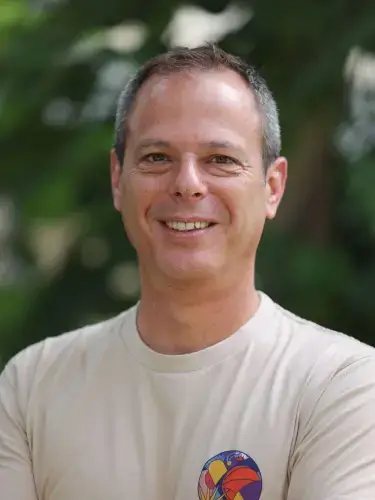
Maccabiah Israel Chairman Asaf Goren. Credit: Ronen Topelberg.

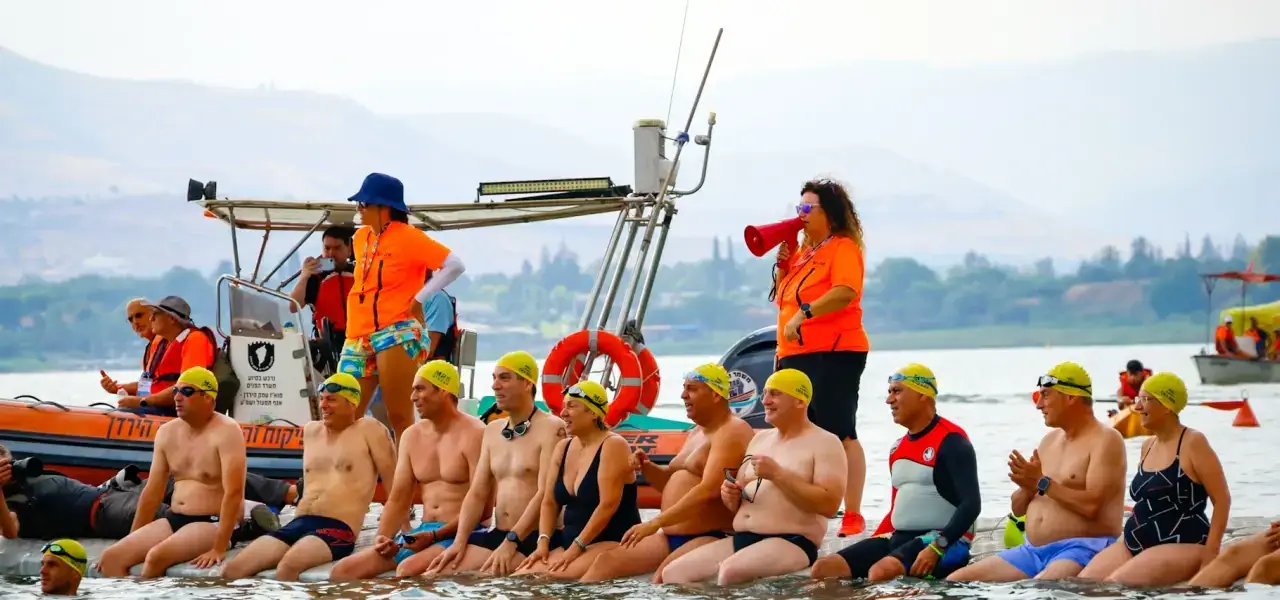
Goren, 49, who has held senior positions in Israel’s tourism industry, has spent much of his career working in various capacities for the Maccabiah, rising to his current position as chairman of Maccabiah Israel in September 2022. While he concedes that he is not an Olympic or Maccabiah-level athlete, he proudly noted that he hurried back to his office for an exclusive interview with JNS after taking part in an open-water swim in the Kinneret (Sea of Galilee) held in memory of fallen IDF Capt. Eden Nimri.

Nimri, 22, a team leader in the Artillery Corps’ “Sky Rider” drone unit and a competitive open-water swimmer, was killed on Oct. 7, 2023, at the IDF’s Nahal Oz outpost. By standing guard at the entrance to a shelter, she saved the lives of 17 unarmed soldiers. Before her military service, she represented Israel at the 2014 Mediterranean Cup, the International School Sport Federation’s 2017 World Championships and the 2018 European Junior Open Water Swimming Championships, where she finished 30th.

Sunday’s open-water competition featured 1.5- and 3-kilometer races, but also included a symbolic 170-meter swim—10 meters for each of the 17 soldiers Nimri saved. Her parents, Sharon Yael and Michael, attended the event.

Nimri is one of 18 athletes with ties to the Maccabi movement who lost their lives during Israel’s wars.

“After the 2022 Maccabiah, we decided the Maccabiah couldn’t be just a once-every-four-years event,” Goren said, noting that the Oct. 7 Hamas massacre occurred between the 2022 Games and the scheduled 2025 Maccabiah, which was postponed because of the war with Iran.

Goren, who spent seven months serving in the reserves during the war, said he was proud of the response by Kfar Maccabiah, the Maccabiah organization and the Maccabi World Union in helping those affected by the war.

Kfar Maccabiah, the hotel and conference center in Ramat Gan established by the Maccabi World Union in 1957, opened its doors to approximately 1,000 evacuees from Sderot and Ashkelon.

“We had schools, a nursery school, dogs, birds, and we even built glamping facilities for Nova festival survivors,” he said.

“We realized very quickly that we couldn’t celebrate sports as originally planned—we went back to the drawing board,” Goren said. “We needed to be together, tell the story, and emphasize Israel, Judaism and sport more than ever. We need the Maccabiah more than ever with antisemitism rising in the Diaspora.”

Those discussions took place while Israeli hostages were still being held in Gaza.

“We needed to find a way to make the stories of these athletes part of the Maccabiah without turning it into Memorial Day,” Goren said. “We wanted what happened here to have a lasting impact.”

Maccabiah Games organizers met repeatedly with the families of the fallen athletes, interviewed their friends and teammates, and sought to understand how each person should be remembered.

“We wanted athletes from around the world to connect with the experience and memory of each person who lost their life,” Goren said. “We want every athlete to leave knowing at least three of these stories in a meaningful and lasting way.”
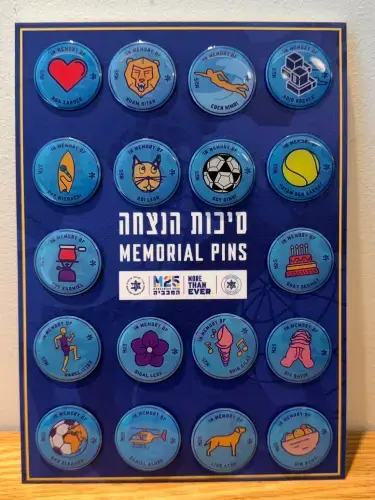
Commemorative pins honoring 18 athletes with ties to the Maccabi movement who were killed in Israel’s wars continue the long-standing Maccabiah tradition of athletes exchanging pins, July 2026. Credit: Maccabiah.

They created a series of round blue commemorative pins, each honoring one of the 18 athletes, continuing the long-standing Maccabiah tradition of athletes exchanging pins. Among them are a soccer ball for Guy Simhi, a surfboard with a microphone for Raz Mizrachi, a heart for Noa Zander and an orange swimmer for Eden Nimri.

Families also identified a favorite food or drink of their loved one—from Milki chocolate pudding to Danone yogurt—which organizers highlighted during the commemorative events.

“We had a story, a pin and a taste to make sure the impact goes on forever—that a light will glow forever,” Goren said.

Following Nimri’s memorial swim, participants toasted her memory with Limoncello and Danone Pro 25 vanilla, two of her favorite drinks.

Among those commemorated was Adi Leon, a Givati Brigade soldier who was killed on Oct. 31, 2023, when an anti-tank missile struck his Namer armored personnel carrier. A longtime member of the Maccabi Tzair youth movement, Leon was also an aspiring electronic music producer who left behind a notebook titled To Be Read After My Death, describing the values that guided his life and military service.

At the Maccabiah, participants listened to Leon’s original music, watched videos of his performances and gathered in a room decorated in the purple colors of the Givati Brigade.

Goren said he is especially proud that each tribute celebrates the athletes’ lives rather than focusing only on their deaths.

“No one can take part in one of these events and walk away unchanged,” he said. “Years from now they’ll still remember these stories. ‘More Than Ever’ won’t just be a slogan—it will stay with them.”
Read more

Originally appeared at JNS.org on July 2, 2026

Thousands of Jewish athletes from a record 43 countries gathered at Teddy Stadium to launch the “Jewish Olympics,” with moving tributes to hostages, wounded soldiers and Israel’s fallen.

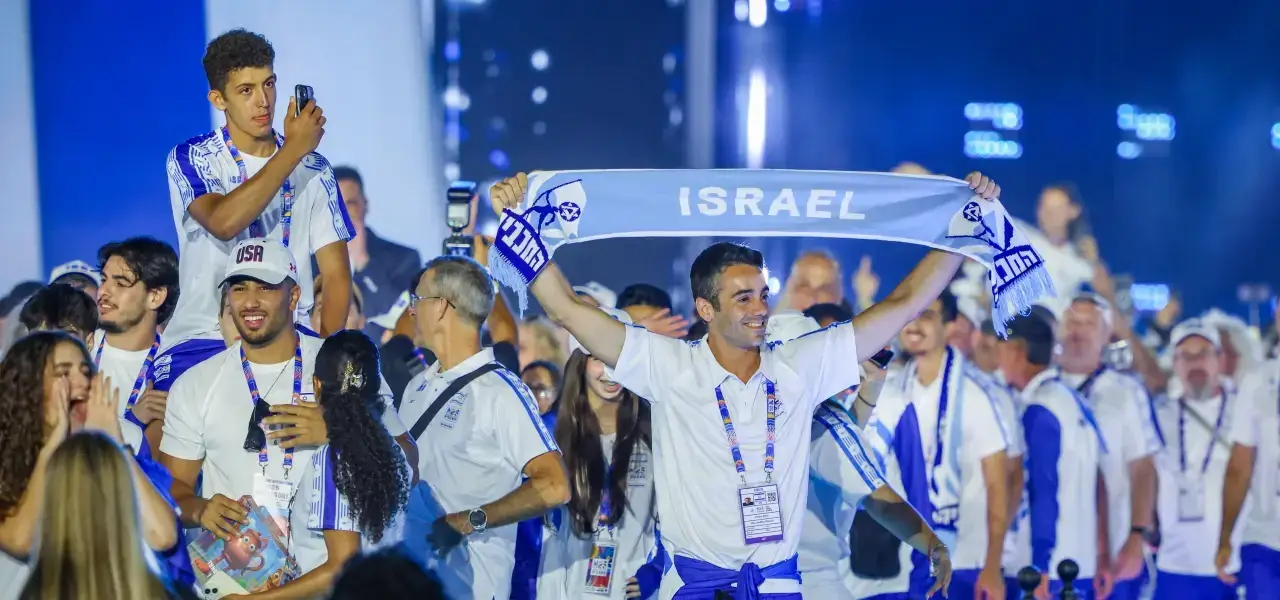
Delegations of Jewish athletes from a record 43 countries entered a packed Teddy Stadium on Wednesday night to cheers from family members, fellow countrymen, Israelis from across society, government officials and a lineup of Israeli performers, officially opening the 22nd Maccabiah Games.

Some 3,000 athletes—from children to seniors and Paralympians—from five continents traveled to Israel for “Maccabiah 2026: More Than Ever!”—which was postponed from 2025 because of the war. They are joined by about 2,000 Israeli athletes competing in events across the country through July 13.

While Israel’s political leaders and dignitaries delivered brief remarks, the evening belonged to the athletes. The dominant theme—felt throughout the stadium and by millions watching on television—was Jewish unity and Israel as the homeland of the Jewish people.

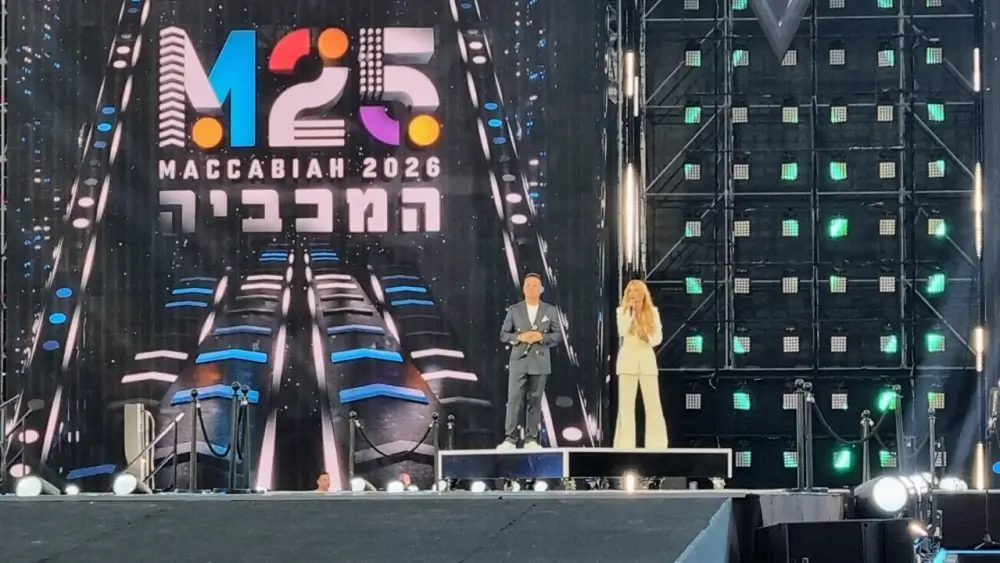
That message came through in musical performances, dance numbers, inspiring videos and commentary by hosts Michael HarPaz and Montana Tucker, who introduced each delegation with anecdotes highlighting the athletes’ journeys to Jerusalem.

Hosts Michael HarPaz and Montana Tucker welcome athletes from around the world as they entered Jerusalem’s Teddy Stadium at the opening ceremony of the 22nd Maccabiah Games, July 1, 2026. Photo by Sharon Altshul.

Determination to be here

The delegations entered alphabetically, from Argentina—with 272 athletes ages 13 to 85 following a journey of more than 24 hours—to Zimbabwe. Host nation Israel, with approximately 2,000 athletes, entered last to a thunderous ovation.

HarPaz and Tucker highlighted stories from many delegations. Australia’s participation remained uncertain until just 15 days before the Games. Austria has participated in every Maccabiah since 1936. Cuba brought 51 athletes, many of whom have made aliyah in recent years. Hungary’s delegation included an 87-year-old Holocaust survivor. India, home to some 4,000 Jews among a population of 1.4 billion, sent a delegation, while Mexico arrived with 353 athletes, including three generations of one family. A father-and-son team from the Philippines switched from squash to table tennis simply to compete. Taiwan participated for the first time.

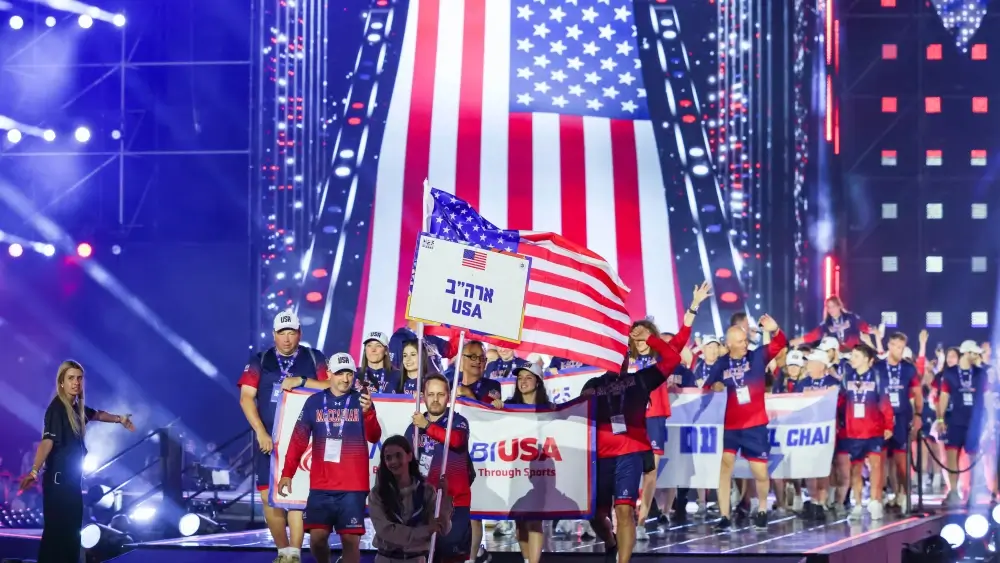
The United States, with about 900 athletes—the second-largest delegation after Israel—entered to Bruce Springsteen’s “Born in the U.S.A.”

The United States team at the opening ceremony of the 22nd Maccabiah Games at Teddy Stadium in Jerusalem, July 1, 2026. Photo by Danny Maron/Flash90.

Celebration and remembrance

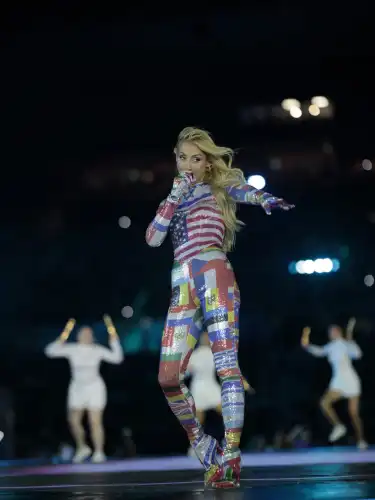
American singer Montana Tucker wearing an outfit adorned with flags from around the world at the opening of Maccabiah 2026, July 1, 2026. Credit: Maccabiah 2026.

The ceremony blended celebration with remembrance.

Athletes on the field and spectators in the stands witnessed the raising of the Israeli, Jerusalem and Maccabiah flags, the singing of “Hatikvah,” fireworks, musical performances, dance routines and tributes to Israel’s heroes. Audience members were encouraged to sing, dance and illuminate the stadium with their cellphones.

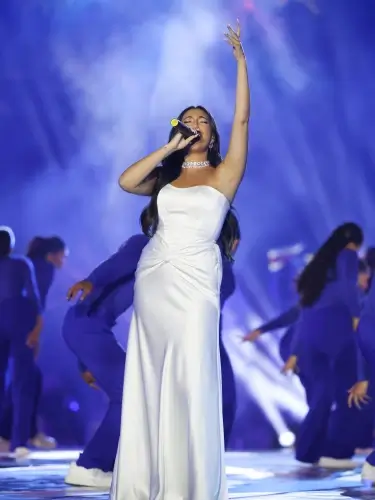
Among the evening’s performances, American singer, actress and influencer Montana Tucker debuted her new song, “We’re Not Strangers,” while wearing an outfit adorned with flags from around the world. 2018 Eurovision Song Contest winner Netta Barzilai and Israeli pop star Anna Zak performed a duet, while Eurovision 2026 runner-up Yuval Raphael also took the stage.

Israeli musician Idan Raichel performed with former hostage Daniella Gilboa, and Itay Levy appeared alongside dozens of dancers. Television host Assi Azar and dancer Anna Aronov co-hosted portions of the ceremony.

Eurovision runner-up Yuval Raphael takes the stage at the opening ceremony of the 22nd Maccabiah Games at Teddy Stadium in Jerusalem, July 1, 2026. Photo by Danny Maron/Flash90

Some of the evening’s most emotional moments included a video message from former hostage Edan Alexander, who returned to IDF service after spending 584 days in Hamas captivity; the entrance of the Maccabiah flag carried by family members of the 12 Druze children killed in the 2024 Hezbollah rocket attack on Majdal Shams; the traditional Yizkor memorial service; and the traditional torch procession led by Evyatar Zeituni, an IDF Paratroopers Brigade officer seriously wounded while defending Kibbutz Kissufim on Oct. 7, 2023.

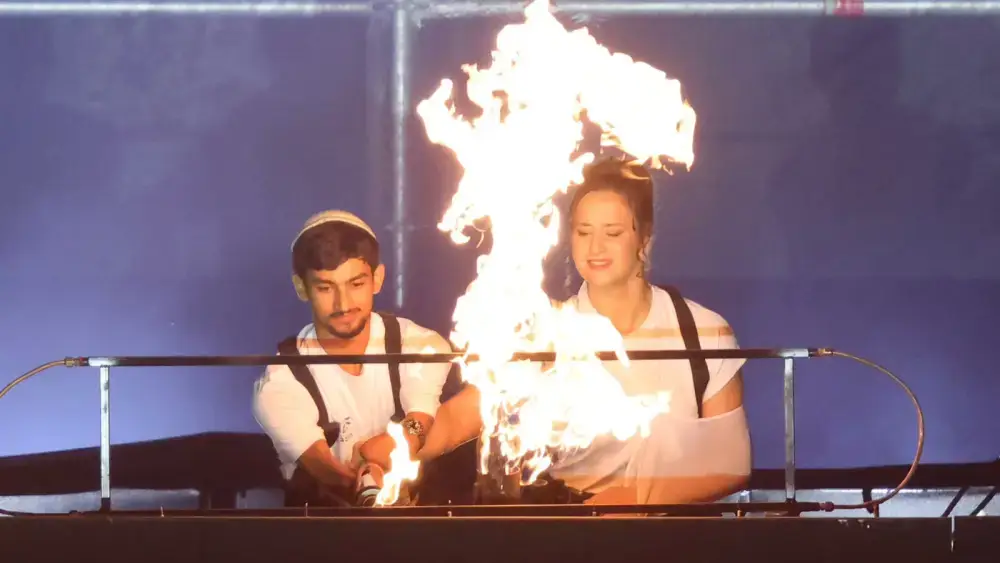
Israeli Paralympic taekwondo champion Asaf Yasur passed the torch to Olympic silver medalist Inbar Lanir, and together they lit the Maccabiah flame.

Athletes also recited the traditional Maccabiah oath—“Ani Nishbah” (“I swear”)—pledging to compete fairly and uphold the spirit of the Games.

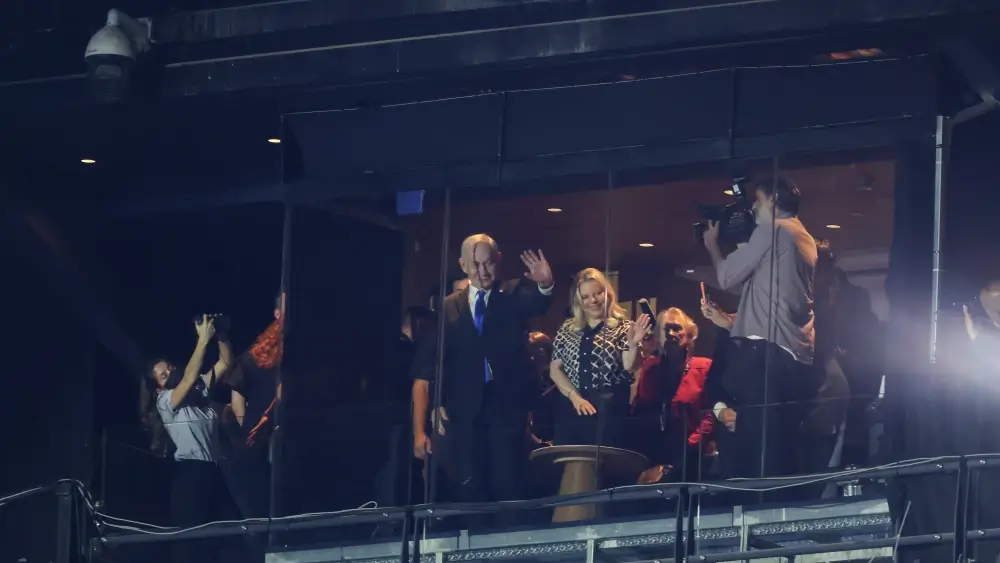
Prime Minister Benjamin Netanyahu and his wife Sara attend the opening ceremony of the 22nd Maccabiah Games at Teddy Stadium in Jerusalem, July 1, 2026. Photo by Danny Maron/Flash90.
Danny Maron/Flash90

Leaders emphasize Jewish unity

IsraeliPresident Isaac Herzog, Prime Minister Benjamin Netanyahu, Jerusalem Mayor Moshe Lion and Maccabiah leaders delivered brief remarks focused on Jewish unity. Culture and Sports Minister Miki Zohar also attended.

“The energy at Teddy Stadium is electrifying,” Herzog said. “There is no doubt that Am Yisrael Chai (The Nation of Israel Lives).” He welcomed participants to their “home away from home” and spoke of partnership, determination and the need to confront rising antisemitism.

Netanyahu began his remarks in Hebrew before switching to English. “If you don’t know Hebrew, study it,” he told participants. “It is your country. We welcome you with open arms.”

Calling Jerusalem Israel’s “eternal and undivided capital” and asserting that the Jewish people are “one nation, one family with one destiny,” he urged Jews worldwide to stand proudly in the face of rising antisemitism.

“People respect only those who respect themselves,” he said. “In the face of antisemitism, stand tall! Say, ‘Yes, I am a Jew. I am proud to be a Jew.’ We will win. Am Yisrael Chai!”

Lion emphasized the bond between Israel and the Diaspora.

“I hope the Maccabiah will serve as a true bridge connecting brothers and sisters in the Diaspora to Israel,” he said. “The most important victory is that we are gathered together in Jerusalem.”

Maccabi World Union Chairman Amir Peled addressed participants by video, while Maccabiah World Union President Michael Siegal welcomed athletes and spectators to the Games.

“We are thrilled that the Games are taking place,” Siegal told JNS. “The fact that thousands of people have chosen to come to Israel at this moment is tremendously important for the connectivity of the Jewish people. To bring Israel what is considered a normal event is historic. And to celebrate sports, mindfulness and strength—we are ecstatic.”

Siegal and Herzog then jointly declared, “Light the torch,” initiating the ceremony’s official torch-lighting procession.

Olympic judoka Inbar Lanir and Paralympic taekwondo champion Asaf Yasur lit the Maccabiah torch, symbolizing the opening of the 2026 Games, July 1, 2026. Credit: Maccabiah 2026.

Families reunite

Many spectators came to support relatives competing in the Games.

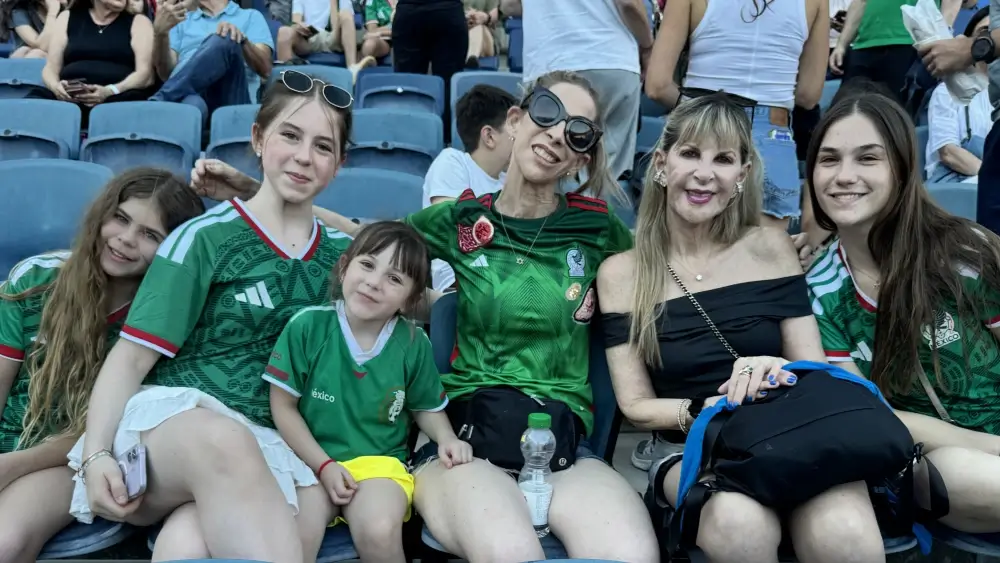
The Berman/Schwartzman family of Mexico City attends the opening ceremony of the 2026 Maccabiah in Jerusalem to support three generations of family members participating in tennis and soccer competitions, July 1, 2026. Photo by Howard Blas.

Sophia Cohen, 20, of Miami, attended with fellow students from Reichman University. Having attended five previous Maccabiahs with her family, she hoped to cheer on relatives competing for Venezuela.

“It is such a fun event,” she said. “You see Jews from all over the world. It’s our version of the Jewish Olympics.”

One cousin was unable to compete for Venezuela because of the war and the recent earthquake but instead played soccer for Spain.

Karla Berman of Mexico City came to cheer several family members. Her father, Jorge Berman, competed in the men’s 70-and-over tennis division, her husband Carlos Schwartzman played soccer and her 16-year-old daughter competed in her first Maccabiah.

“Our family is very sports-oriented and very Zionistic,” she said. “I think the Maccabiah, the State of Israel and Chabad are the three greatest movements of the Jewish people in modern times.”

The opening ceremony marked the official start of the Games, although some competitions began earlier in the day. The Maccabiah continues through July 13 with competitions in more than 40 sports across junior, open, masters and Paralympic divisions, along with community events including fun runs and Expo Maccabiah City in Tel Aviv.

The opening ceremony and sports competitions can be viewed on the Maccabiah 2026 website.

Read more

Originally appeared at jns.org on June 30, 2026

Founder Joseph Gitler told JNS that Israel’s largest food rescue organization has overcome shortages, security threats and disrupted supply chains while preparing for future emergencies.

For 23 years, Leket Israel has rescued surplus food and delivered it to Israelis in need. During nearly three years of war, however, the country’s leading food rescue organization has had to overcome unprecedented challenges to keep nutritious food flowing to hundreds of thousands of people.

Foreign agricultural workers left the country, farms came under missile fire, restaurants and event halls closed, and deliveries into conflict zones became increasingly difficult. Yet Leket Israel continued to expand its operations, adapting to rapidly changing conditions.

In an interview with JNS at the end of June, Joseph Gitler, the organization’s founder and chairman, reflected on Leket’s evolution, the challenges of operating during wartime and the lessons learned as Israel prepares for future emergencies.

From hotel breakfasts to a national organization

When Gitler made aliyah from New York in 2000, he was struck by the amount of untouched food left over at Israeli hotel breakfasts while many Israelis struggled with food insecurity.

He set out to rescue that surplus food and distribute it to those in need.

“Hotels, catering halls, restaurants and army bases were so open” to donating surplus food, Gitler recalled. “They weren’t concerned about legal liability or tax deductions—they saw people suffering and thought, ‘We have this asset—what the heck!’”

In 2003, Gitler founded Table to Table, the precursor to Leket Israel, to rescue nutritious surplus food, reduce food waste and combat food insecurity.

The name “Leket” comes from the biblical commandments in Leviticus 19:9 and 23:22 instructing farmers to leave the corners of their fields and the gleanings of their harvest for the poor and the stranger.

Gitler initially transported rescued meals from catering halls and corporate cafeterias in his Subaru, storing them in refrigerators lining his driveway before local nonprofits distributed them to families in need.

Over the next two decades, the organization expanded steadily, opening warehouses, logistics centers and regional operations while recruiting thousands of volunteers from Israel and abroad.

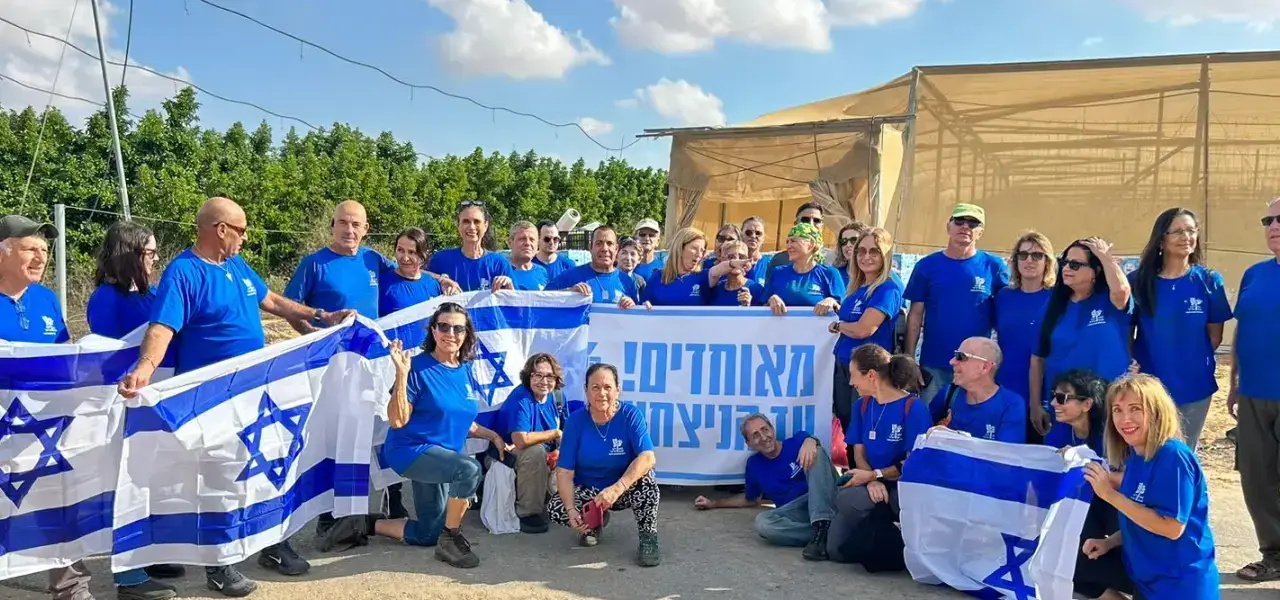
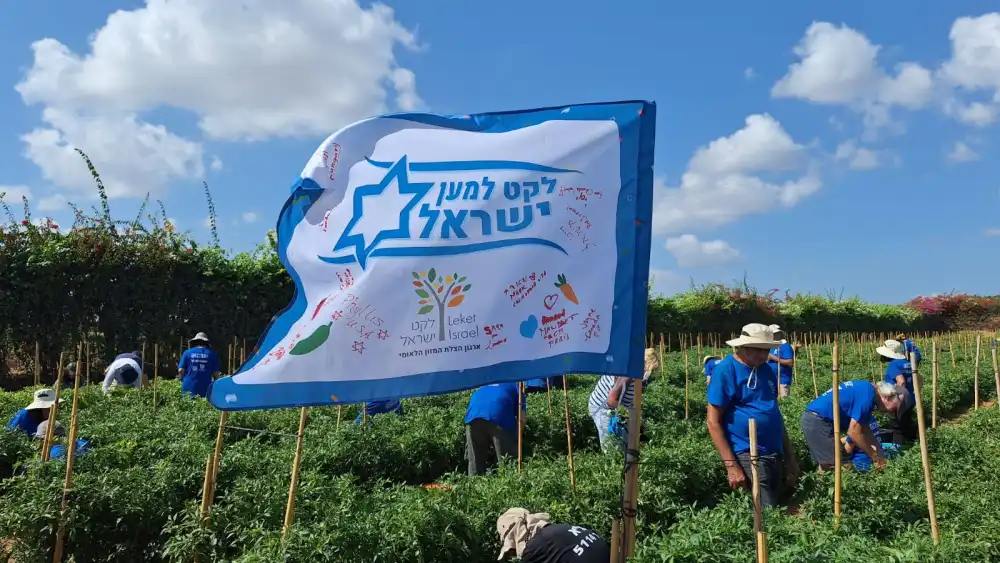
Leket Israel volunteers on a farm in Israel, 2026. Credit: Leket Israel.

Adapting to wartime

Gitler emphasized that Leket is not an emergency relief organization.

“We are a well-established nonprofit that works day in and day out so healthy, nutritious food doesn’t go to waste and gets into the hands and mouths of those who need it,” he said.

“But in Israel, emergency situations arise where all charitable agencies need to change and adapt.”

Following the Hamas massacre on Oct. 7, 2023, many of Leket’s traditional food sources suddenly disappeared.

“We had fewer sources of food—from farms, army bases and event halls,” Gitler said. “Most of our sources dried up because it was too dangerous, there was damage, there were no clients, and the army was preparing to fight.”

Rather than reducing services, Leket expanded them.

“We had to do what we had to do,” Gitler said.

That included purchasing vegetables and prepared meals to replace food that was no longer available through donations.

“We don’t like to buy food—but we did,” he said. “If there is no food, you hope your donor base comes through. It is much more expensive than getting it for free.”

Leket launched additional emergency programs as many partner organizations were unable to operate and vulnerable populations, including elderly Israelis, could no longer access meal programs.

At the same time, the organization shifted some of its focus to supporting Israeli farmers, particularly those in communities bordering Gaza and in the north.

“We are not the government, but we have relationships with thousands of farmers who couldn’t sell their crops,” Gitler said. “We raised money for grants to replace equipment and for loans. We are trying to do our part to show goodwill to the farmers.”

Leket also arranged and funded buses to transport volunteers to farms needing help with harvesting, planting and weeding.

“Since November 2023, we have been sending buses with groups of volunteers to any farmer who says they need help,” Gitler said.

Earlier in the war, Leket was sending about 50 buses each week. Today, that number has stabilized at 20 to 25 weekly as approximately 80% of foreign agricultural workers have returned, although Palestinian laborers have not.

Gitler said one encouraging development has been the growing number of older Israelis volunteering on farms.

“It has been really positive seeing how everyone has found a place to volunteer since Oct. 7,” he said.

Preparing for the next emergency

Even as operations return closer to normal, Leket is planning for future crises.

“We are now working to have 100,000 frozen and dried meals in a stockpile,” Gitler said.

The organization is also purchasing digital debit cards, recognizing that distributing food during wartime is not always practical.

Leket’s 2025 operations included 170 employees, 63 food rescue vehicles and some 120,000 volunteers. Through 346 nonprofit partner agencies, the organization delivers food to approximately 470,000 Israelis in need every week while rescuing nearly 34,000 tons of food annually.

More information on Leket is available on its website.

Read more

Originally appeared at JNS.org on on June 28, 2026

From apartments to synagogues, Jerusalem’s young adults are reinventing kiddush as a social gathering that fits modern life.

Sixty delegates attending the three-day JNS International Policy Summit on June 21-23 toured Sheba Medical Center in Tel Aviv, where they witnessed firsthand how Israeli medical innovation is helping wounded soldiers and civilians recover physically and emotionally while driving the development of cutting-edge healthcare technologies.

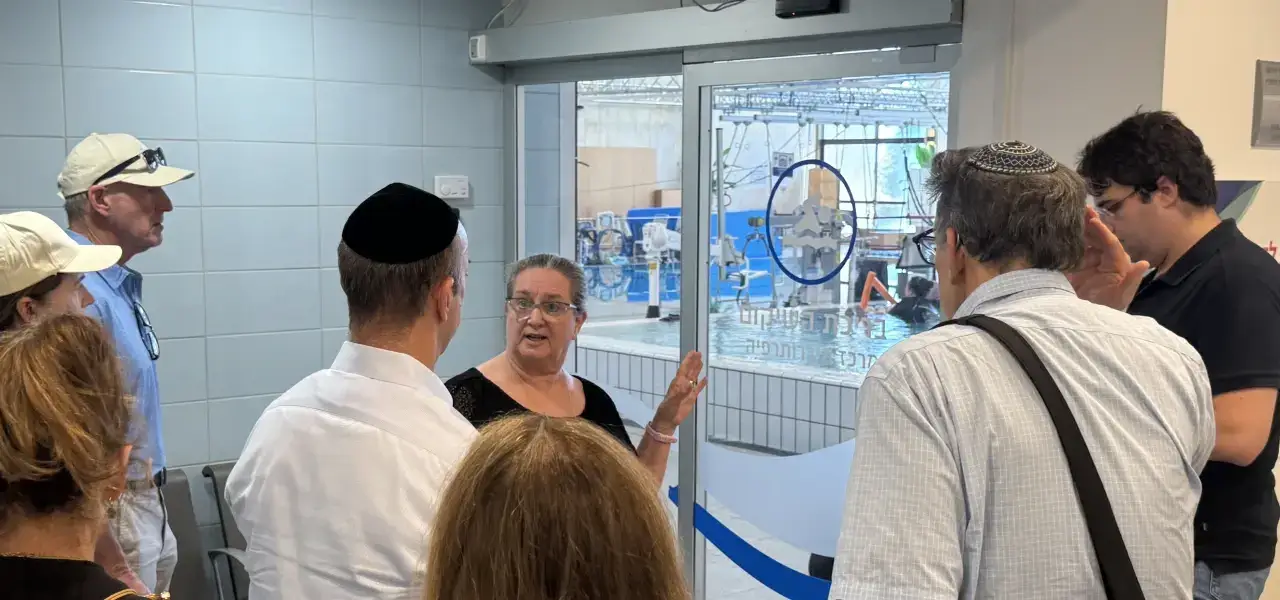
The delegation visited Sheba’s hydrotherapy department, the Immersive Rehabilitation Room and the ARC (Accelerate, Redesign, Collaborate) Center for Digital Innovation, where doctors and researchers showcased advances developed at what Newsweek ranks as the world’s seventh-best hospital.

Water as medicine

“For me, water is medicine,” said Dr. Caroline Barmatz, who has spent 30 years at Sheba and heads its Hydrotherapy Department.

Barmatz introduced the group to Sheba’s three hydrotherapy pools and an ice bath, which together treat more than 30,000 patients annually. The aquatic therapies are used for wounded soldiers, trauma survivors, premature babies and elderly patients. Since Oct. 7, 2023, the department has cared for more than 300 wounded soldiers and civilians.

Visitors watched patients undergoing treatment while one patient’s therapy dog waited attentively beside the pool.

“Therapy dogs are trained to look after their masters,” Barmatz said with a smile. “One time, a dog saw his master very relaxed and thought he drowned and he jumped in to the pool. The therapist needed to save both!”

She described how the department has adapted to the influx of wounded soldiers, including developing more physically demanding rehabilitation programs for highly fit patients.

“What happens to a person with a gunshot and glass wounds? How soon can we get him into the pool?” she asked, noting that one soldier had begun hydrotherapy just 18 days after surgery.

Barmatz demonstrated adjustable therapy pools equipped with treadmills that reduce the amount of body weight patients must bear during rehabilitation, as well as virtual reality systems that incorporate activities such as catching a ball or driving a car into therapy sessions.

She also pointed to an overhead obstacle course designed specifically for recovering soldiers.

“We built Ninja equipment because what we had wasn’t enough for these guys with such strong arms and legs!” she said.

The department’s ice baths, which expose patients to temperatures ranging from 12 to 3 degrees Celsius, have also become increasingly popular.

“Since Oct. 7, more soldiers want it—there is not enough research—we need more,” Barmatz said. Some soldiers, she added, seek out the ice baths “to feel they can defeat their fears. They want to spend five minutes at 3 degrees!”

Barmatz admitted she is not an avid swimmer herself. “I like to look at the water as medicine, not sport!”

Among those visibly impressed was Dr. Daryl Temkin, a psychologist who made aliyah from Los Angeles just over a year ago.

Having previously worked with stroke patients at Cedars-Sinai Medical Center in Los Angeles, Temkin said rehabilitation is “the story of hope and reinstilling hope.”

“They don’t have anything there like this,” he said.

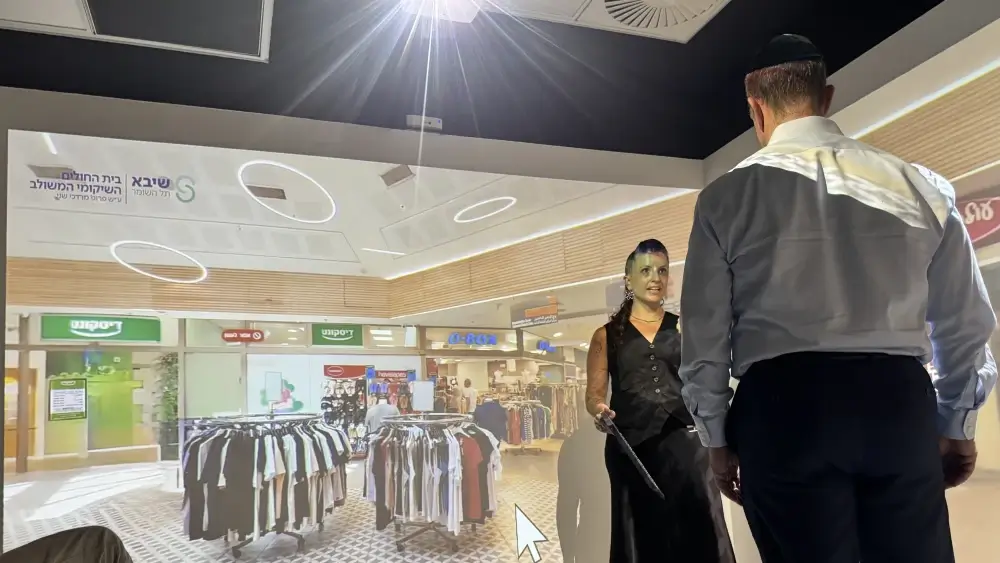
Maya Erhlich demonstrates the various uses of the immersion room at Sheba Medical Center, June 24, 2026. Photo by Howard Blas.

Delegates also toured Sheba’s Immersive Rehabilitation Room, where rehabilitation psychologist Maya Ehrlich, the innovation coordinator at Sheba’s Integrated Rehabilitation Hospital, demonstrated how interactive projection technology helps patients regain cognitive and physical abilities.

The room transforms into environments such as grocery stores and banks, allowing patients to practice real-world tasks while improving memory, balance and coordination.

“We saw the potential for use in rehabilitation—it is interactive and fun and the software allows us to create our own scenarios,” Ehrlich said.

She noted that while the project was already under development before Oct. 7, the war accelerated its implementation.

“The effects of Oct. 7 and the subsequent war did help us push this project forward much faster,” she said. “We have lots of young soldiers injured in the war that benefit from this room as it is now starting to be part of their rehab.”

Angie Segal, media liaison for the South African Zionist Federation, said the immersive rehabilitation room left the greatest impression.

“More than any technology or medical breakthrough, it was the Immersive Rehabilitation room that I couldn’t stop thinking about,” she said. “After watching my own father struggle through desperately needed physical and cognitive rehabilitation a year ago, I found myself wondering how different his journey—and perhaps even his outcome—might have been if he had been treated in a place like this.”

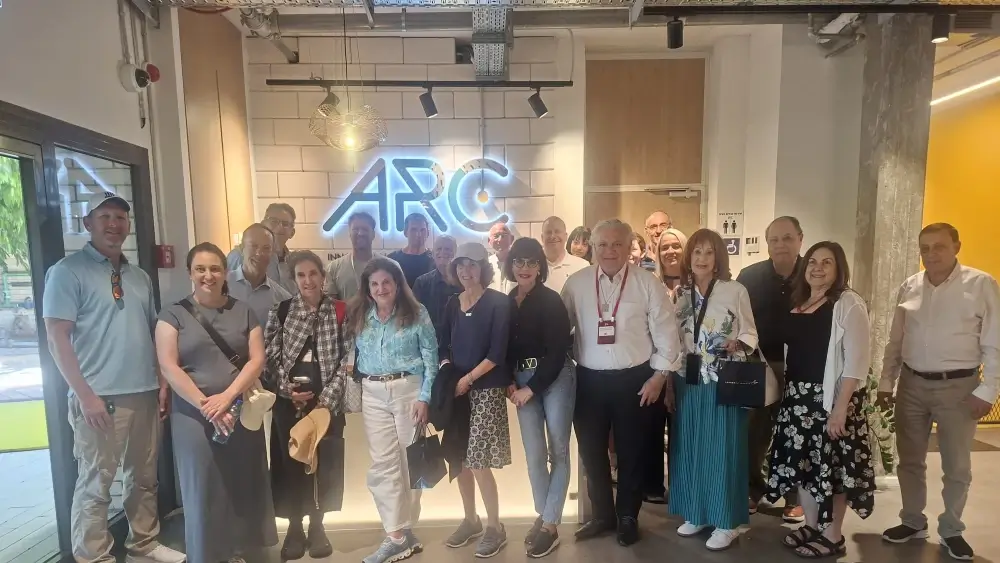
A delegation of guests attending the JNS International Policy Summit visits Sheba Medical Center, June 24, 2026. Credit: Sheba Medical Center.

Rehabilitation through innovation

The tour concluded at Sheba’s ARC Center for Digital Innovation, where delegates learned how clinicians are transforming frontline medical challenges into new technologies.

Dr. Karny Ilan, a surgical resident and CEO and co-founder of health-tech startup Feminai, demonstrated a wearable breast cancer screening patch that is expected to enter clinical trials soon. The device uses wearable sensors and artificial intelligence to detect physiological changes associated with breast tissue density and blood flow.ARV

Delegates praised the innovations they had seen throughout the day and left with a deeper appreciation of Israel’s medical ingenuity and resilience as the country continues recovering from nearly three years of war.

; ;; ; ; ; ; ;

Read more