Maccabiah

Originally appeared in JNS.org on July 10, 2026.

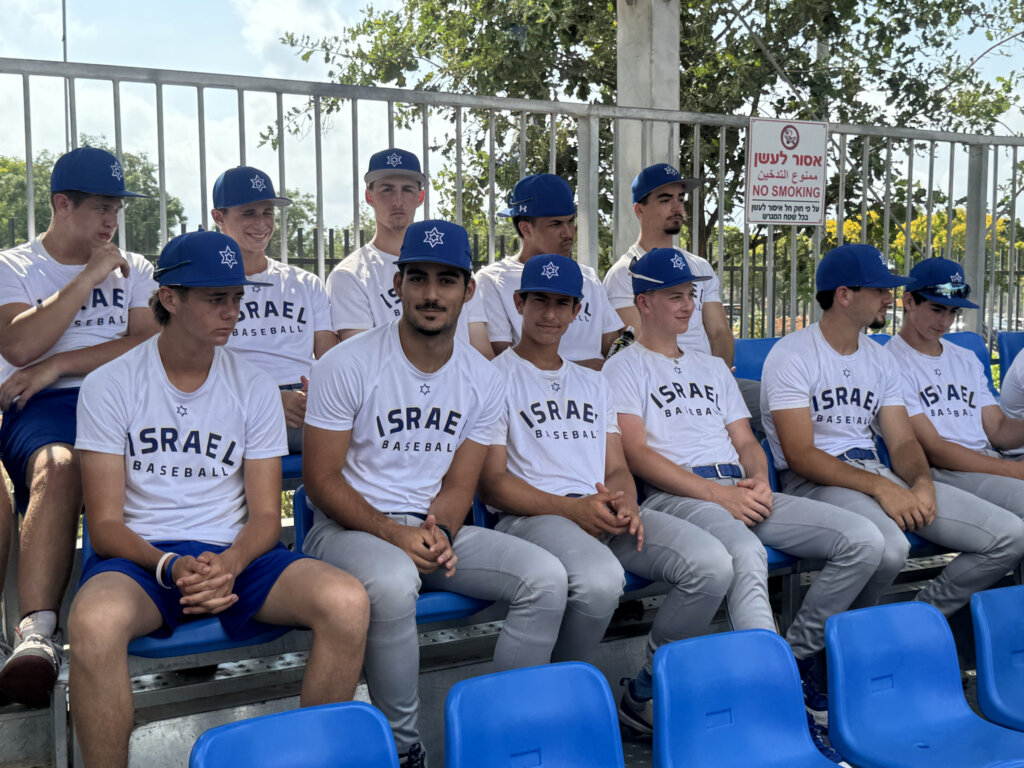
Despite falling short in the series, Team Israel celebrated a historic performance, new friendships and valuable preparation for the European Championship.

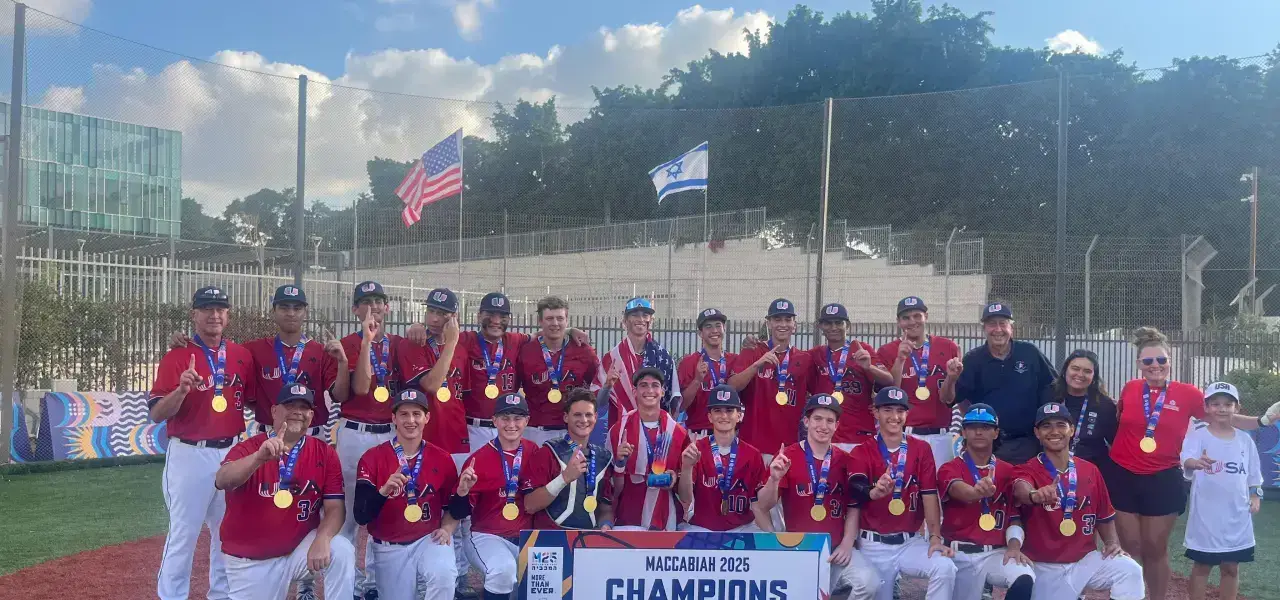
Israel’s Under-19 National Baseball Team came close to accomplishing the improbable against Team USA at the 2026 Maccabiah Games at Ezra Schwartz Memorial Field in Ra’anana. Before this year’s series, Israel had defeated the Americans only once. This year, Team Israel raced to a surprising 3-1 series lead before dropping the final four games.

Despite the heartbreaking finish, Team Israel had plenty to celebrate. Both teams acknowledged just how far the Israeli program has progressed since the last Maccabiah they faced each other in 2022.

Freddy Bain, Team Israel’s manager, who represented Israel as a player at the 2017 Maccabiah, was understandably disappointed that his team could not close out the series. He said the players shared that feeling.

“The players were disappointed—but the experience was not a disappointment,” Bain told JNS.

“You show up to win—even though the odds are against you,” he added, noting that Israel had beaten Team USA only once before this year. “We played really well.”

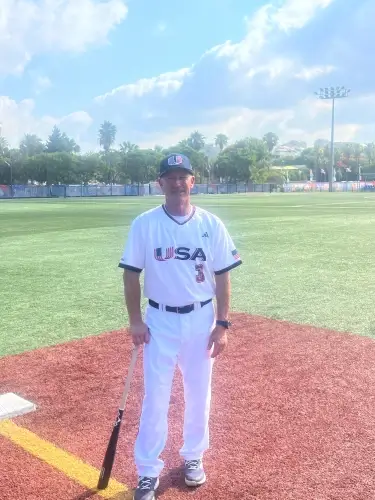
Wayne Stofsky, head coach of Team USA’s Under-19 baseball team, July 8, 2026. Credit: Courtesy of Wayne Stofsky.

Building a stronger program

Wayne Stofsky, head coach of Team USA, admitted he was far from certain his team would prevail.

Stofsky, who played twice in the College World Series, coached Team USA at the 2022 Maccabiah, serves as director of athletics at the David Posnack School in Davie, Fla., and has helped numerous players reach the professional ranks through Cannons Baseball University, said, “I didn’t expect to win. I knew it would be competitive.”

He said his players were “ecstatic,” especially since an estimated 80% of them will not continue playing baseball in college.

“If this is their last baseball experience, it was a pretty good one,” he said.

Stofsky described the winding path that brought his team to Israel.

“We picked two teams in June 2024—a top team and a second team—with 18 players each,” he said.

When the 2025 Maccabiah was postponed because of the war in Gaza, Team USA lost 12 players from its top squad, two from the second team and two assistant coaches. Rather than hold new tryouts for 2026, Stofsky rebuilt the roster from players he had already evaluated during tryouts in four U.S. cities.

Then came the war with Iran.

“We lost 19 more players,” he said. “At that point we decided not to bring a second team.”

The tournament had originally been scheduled to include four teams—one from Israel, two from the United States and one from Canada. In the end, only Team Israel and a single American team competed.

“Instead of having two teams of 18, we had one team of 17,” Stofsky said. “But it felt good. Everyone wanted to be here and be part of the journey.”

For Stofsky, baseball is only part of the Maccabiah experience.

“I tell them baseball is just the avenue that gets you here,” he said. “The experience is much more than baseball.”

The two teams spent hours together both on and off the field, including a postgame pizza party and a visit to a shawarma restaurant.

Arnie Fielkow, Maccabi USA’s baseball chair, a former Maccabiah basketball player and sports attorney, agreed that assembling the team had been particularly difficult because of the postponement and the changing roster.

Now that the delegation is in Israel, he said, the experience has exceeded expectations.

“The opening ceremony was so special, and we got to see the Nova site,” he said. The team also visited Sderot and continued “connecting with Israel” through educational tours.

Both Fielkow and Stofsky praised the remarkable improvement of Israel’s baseball program.

“I am very proud of Israel Baseball,” Fielkow said. “Their improvement in play is unbelievable.”

Stofsky pointed to Israel’s deeper pitching staff, stronger infield and several players capable of competing in NCAA Division III baseball.

“They are advancing the sport,” he said.

He also believes the two-team format ultimately made for a better competition.

“Each game was competitive,” he said, noting that several contests were decided by one or two runs. “It was good for us and for the Israeli kids. It gave them a sense of how to compete and what to do.”

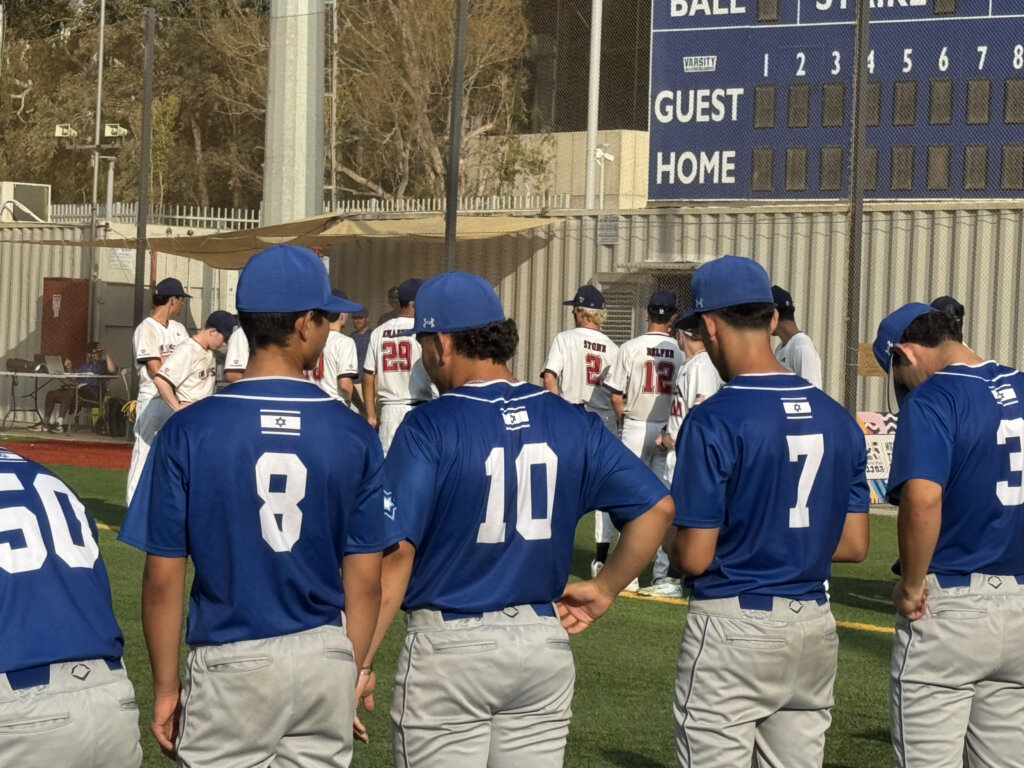
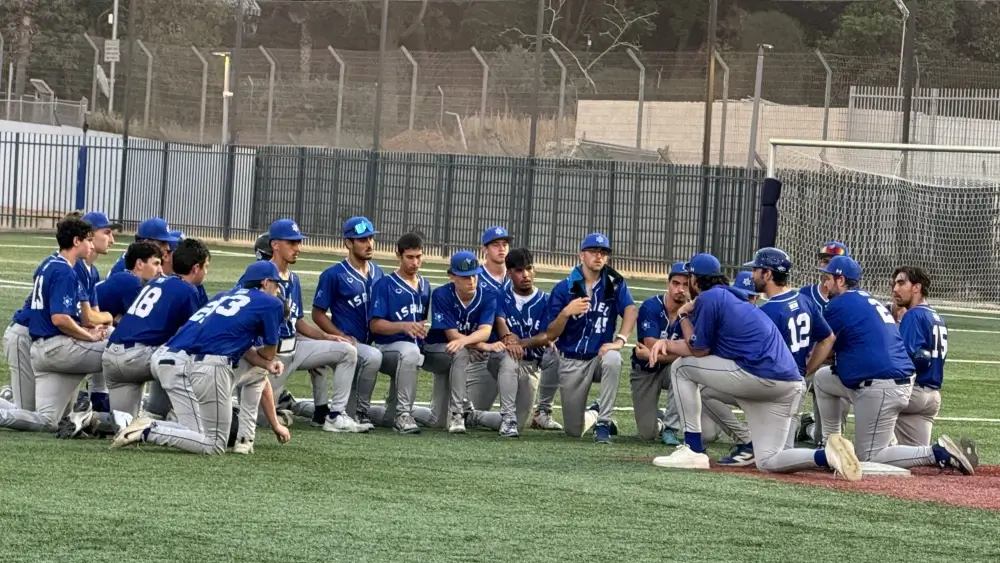
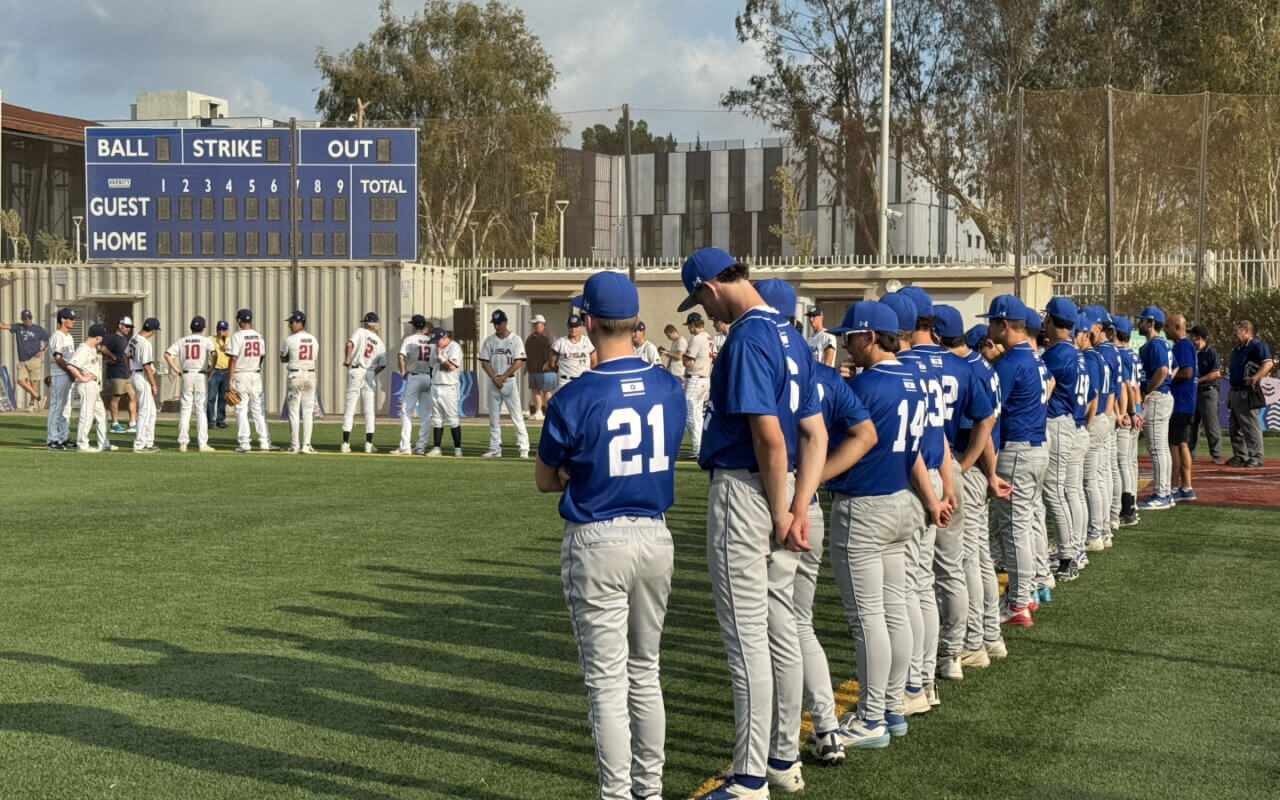
Team Israel’s Under-19 baseball players gather for a post-game meeting following their Game 6 loss to Team USA at the 2026 Maccabiah Games in Ra’anana on July 8, 2026. Photo by Howard Blas.

More than baseball

The seven-game series also served as ideal preparation for Team Israel’s next challenge.

Bain spoke with JNS as the team prepared to board a flight from Ben-Gurion Airport for the Under-18 European Baseball Championship, to be held in Trieste and Ronchi dei Legionari, Italy, from July 13-19.

“It is a quick turnaround and not a lot of time to be sad,” he said.

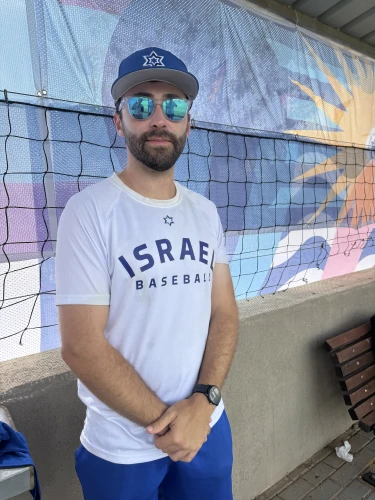
Team Israel manager Freddy Bain in the dugout before game versus Team USA in Ra'anana, July 7, 2026. Photo by Howard Blas.
Team Israel manager Freddy Bain in the dugout before game versus Team USA in Ra’anana, July 7, 2026. Photo by Howard Blas.

Looking back on the Maccabiah, Bain believes the experience extended well beyond the results.

“Within a game, it is hard to see the big picture,” he said. “Afterwards, you can see what it is all about—it is a celebration of world Jewry.”

He said many Israeli players were already chatting with their American counterparts on FaceTime from the airport.

“The American kids are a great group of kids,” Bain said. “It is nice seeing the kids interact and trading gear—even after seven intense games.”

Stofsky, who also spoke with JNS from Ben-Gurion Airport after a two-hour wait in the security line, was delighted to hear that his players were already keeping in touch with the Israelis.

“That is pretty cool. I didn’t know that,” he said. “The players got along really well. They got to the stadium two hours early, so they had time to hang out. They had pizza and shawarma together, and they were trading uniforms and hats. Maybe they were making friends for life.”

While grateful for the friendships and the opportunity to strengthen Jewish connections, Stofsky admitted there was still room for a little competitive satisfaction.

“It is not just about baseball,” he said with a smile, “but winning makes the trip a lot more fun and exciting!”

Read more

Originally appeared at JNS.org on July 6, 2026

Maccabiah Israel Chairman Asaf Goren tells JNS that memorial swims, commemorative pins and even favorite foods are helping athletes remember 18 fallen members of the Maccabi family.

For Asaf Goren, the theme of the 22nd Maccabiah—“More Than Ever”—is more than a slogan highlighting the power of Jewish unity and the bond between Israel and Jewish communities worldwide.

It has become the driving force behind a Maccabiah-wide initiative honoring 18 athletes with ties to the Maccabi movement who lost their lives in Israel’s wars. Through sporting events and educational programming across the country, organizers hope participants will return home as ambassadors carrying the stories of these fallen athletes to Jewish communities around the world.

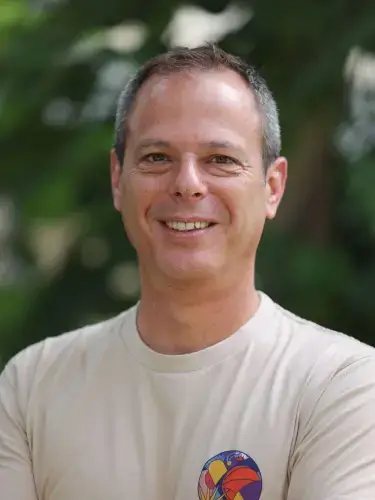
Maccabiah Israel Chairman Asaf Goren. Credit: Ronen Topelberg.

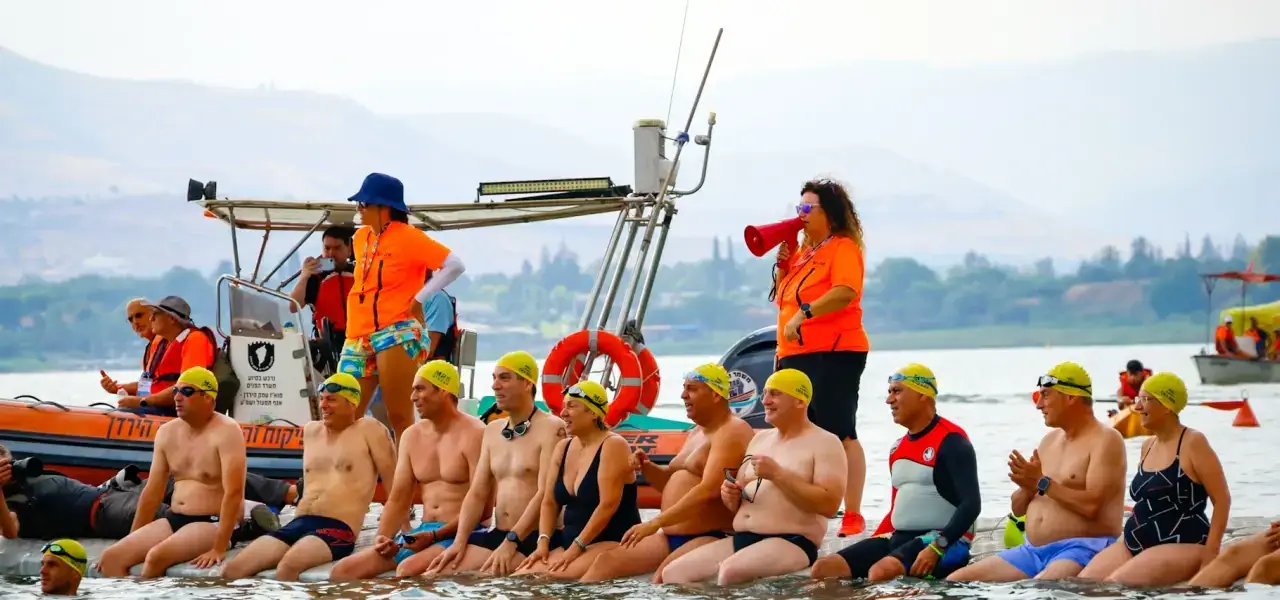
Goren, 49, who has held senior positions in Israel’s tourism industry, has spent much of his career working in various capacities for the Maccabiah, rising to his current position as chairman of Maccabiah Israel in September 2022. While he concedes that he is not an Olympic or Maccabiah-level athlete, he proudly noted that he hurried back to his office for an exclusive interview with JNS after taking part in an open-water swim in the Kinneret (Sea of Galilee) held in memory of fallen IDF Capt. Eden Nimri.

Nimri, 22, a team leader in the Artillery Corps’ “Sky Rider” drone unit and a competitive open-water swimmer, was killed on Oct. 7, 2023, at the IDF’s Nahal Oz outpost. By standing guard at the entrance to a shelter, she saved the lives of 17 unarmed soldiers. Before her military service, she represented Israel at the 2014 Mediterranean Cup, the International School Sport Federation’s 2017 World Championships and the 2018 European Junior Open Water Swimming Championships, where she finished 30th.

Sunday’s open-water competition featured 1.5- and 3-kilometer races, but also included a symbolic 170-meter swim—10 meters for each of the 17 soldiers Nimri saved. Her parents, Sharon Yael and Michael, attended the event.

Nimri is one of 18 athletes with ties to the Maccabi movement who lost their lives during Israel’s wars.

“After the 2022 Maccabiah, we decided the Maccabiah couldn’t be just a once-every-four-years event,” Goren said, noting that the Oct. 7 Hamas massacre occurred between the 2022 Games and the scheduled 2025 Maccabiah, which was postponed because of the war with Iran.

Goren, who spent seven months serving in the reserves during the war, said he was proud of the response by Kfar Maccabiah, the Maccabiah organization and the Maccabi World Union in helping those affected by the war.

Kfar Maccabiah, the hotel and conference center in Ramat Gan established by the Maccabi World Union in 1957, opened its doors to approximately 1,000 evacuees from Sderot and Ashkelon.

“We had schools, a nursery school, dogs, birds, and we even built glamping facilities for Nova festival survivors,” he said.

“We realized very quickly that we couldn’t celebrate sports as originally planned—we went back to the drawing board,” Goren said. “We needed to be together, tell the story, and emphasize Israel, Judaism and sport more than ever. We need the Maccabiah more than ever with antisemitism rising in the Diaspora.”

Those discussions took place while Israeli hostages were still being held in Gaza.

“We needed to find a way to make the stories of these athletes part of the Maccabiah without turning it into Memorial Day,” Goren said. “We wanted what happened here to have a lasting impact.”

Maccabiah Games organizers met repeatedly with the families of the fallen athletes, interviewed their friends and teammates, and sought to understand how each person should be remembered.

“We wanted athletes from around the world to connect with the experience and memory of each person who lost their life,” Goren said. “We want every athlete to leave knowing at least three of these stories in a meaningful and lasting way.”

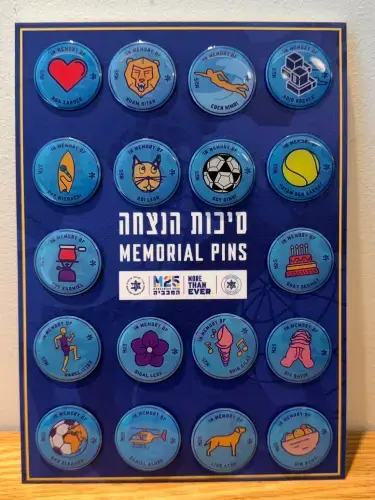
Commemorative pins honoring 18 athletes with ties to the Maccabi movement who were killed in Israel’s wars continue the long-standing Maccabiah tradition of athletes exchanging pins, July 2026. Credit: Maccabiah.

They created a series of round blue commemorative pins, each honoring one of the 18 athletes, continuing the long-standing Maccabiah tradition of athletes exchanging pins. Among them are a soccer ball for Guy Simhi, a surfboard with a microphone for Raz Mizrachi, a heart for Noa Zander and an orange swimmer for Eden Nimri.

Families also identified a favorite food or drink of their loved one—from Milki chocolate pudding to Danone yogurt—which organizers highlighted during the commemorative events.

“We had a story, a pin and a taste to make sure the impact goes on forever—that a light will glow forever,” Goren said.

Following Nimri’s memorial swim, participants toasted her memory with Limoncello and Danone Pro 25 vanilla, two of her favorite drinks.

Among those commemorated was Adi Leon, a Givati Brigade soldier who was killed on Oct. 31, 2023, when an anti-tank missile struck his Namer armored personnel carrier. A longtime member of the Maccabi Tzair youth movement, Leon was also an aspiring electronic music producer who left behind a notebook titled To Be Read After My Death, describing the values that guided his life and military service.

At the Maccabiah, participants listened to Leon’s original music, watched videos of his performances and gathered in a room decorated in the purple colors of the Givati Brigade.

Goren said he is especially proud that each tribute celebrates the athletes’ lives rather than focusing only on their deaths.

“No one can take part in one of these events and walk away unchanged,” he said. “Years from now they’ll still remember these stories. ‘More Than Ever’ won’t just be a slogan—it will stay with them.”

Read more

Originally appeared at JNS.org on July 2, 2026

Thousands of Jewish athletes from a record 43 countries gathered at Teddy Stadium to launch the “Jewish Olympics,” with moving tributes to hostages, wounded soldiers and Israel’s fallen.

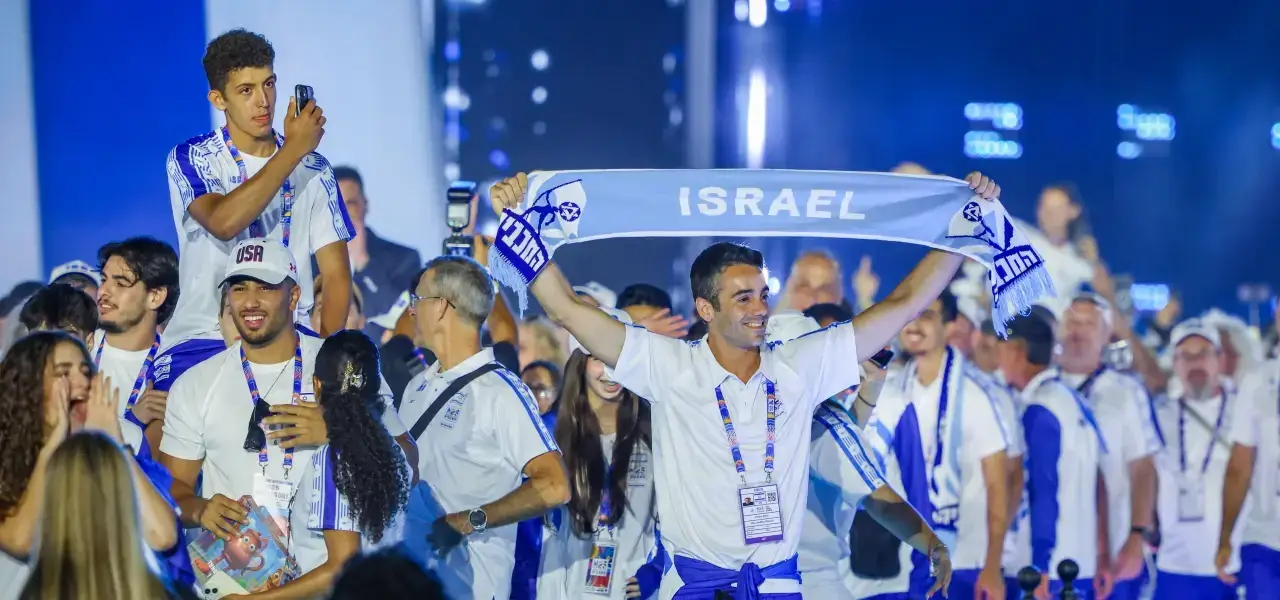
Delegations of Jewish athletes from a record 43 countries entered a packed Teddy Stadium on Wednesday night to cheers from family members, fellow countrymen, Israelis from across society, government officials and a lineup of Israeli performers, officially opening the 22nd Maccabiah Games.

Some 3,000 athletes—from children to seniors and Paralympians—from five continents traveled to Israel for “Maccabiah 2026: More Than Ever!”—which was postponed from 2025 because of the war. They are joined by about 2,000 Israeli athletes competing in events across the country through July 13.

While Israel’s political leaders and dignitaries delivered brief remarks, the evening belonged to the athletes. The dominant theme—felt throughout the stadium and by millions watching on television—was Jewish unity and Israel as the homeland of the Jewish people.

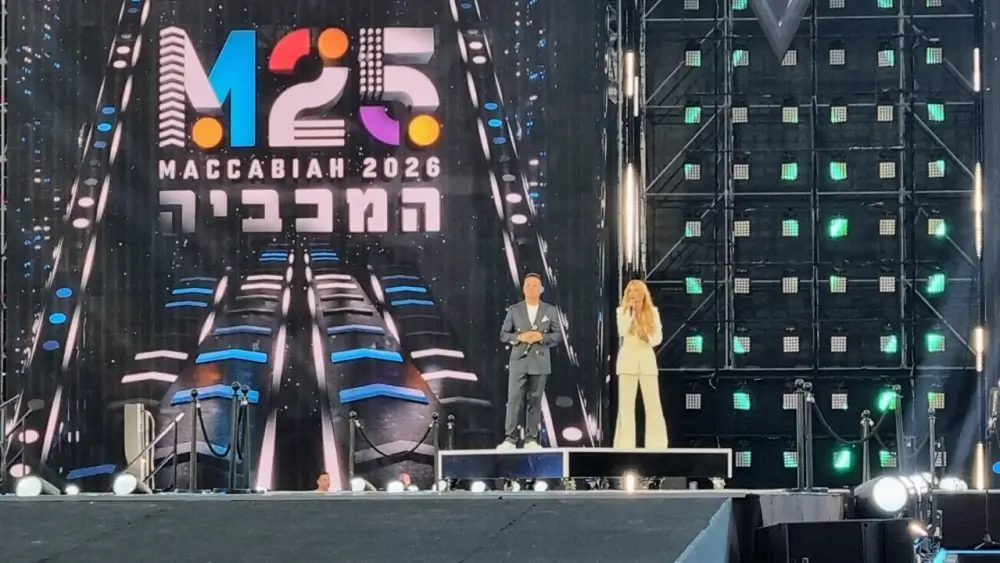
That message came through in musical performances, dance numbers, inspiring videos and commentary by hosts Michael HarPaz and Montana Tucker, who introduced each delegation with anecdotes highlighting the athletes’ journeys to Jerusalem.

Hosts Michael HarPaz and Montana Tucker welcome athletes from around the world as they entered Jerusalem’s Teddy Stadium at the opening ceremony of the 22nd Maccabiah Games, July 1, 2026. Photo by Sharon Altshul.

Determination to be here

The delegations entered alphabetically, from Argentina—with 272 athletes ages 13 to 85 following a journey of more than 24 hours—to Zimbabwe. Host nation Israel, with approximately 2,000 athletes, entered last to a thunderous ovation.

HarPaz and Tucker highlighted stories from many delegations. Australia’s participation remained uncertain until just 15 days before the Games. Austria has participated in every Maccabiah since 1936. Cuba brought 51 athletes, many of whom have made aliyah in recent years. Hungary’s delegation included an 87-year-old Holocaust survivor. India, home to some 4,000 Jews among a population of 1.4 billion, sent a delegation, while Mexico arrived with 353 athletes, including three generations of one family. A father-and-son team from the Philippines switched from squash to table tennis simply to compete. Taiwan participated for the first time.

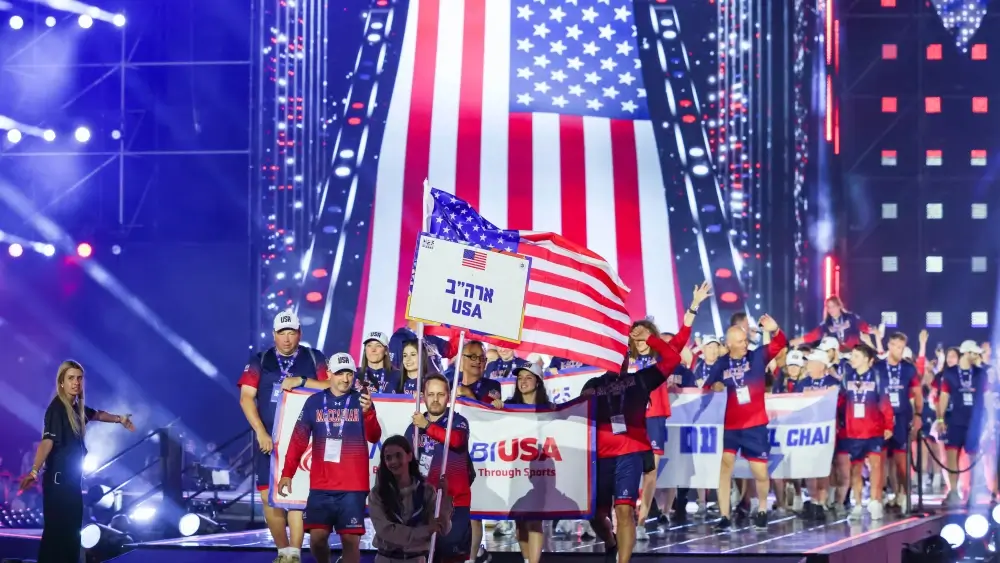
The United States, with about 900 athletes—the second-largest delegation after Israel—entered to Bruce Springsteen’s “Born in the U.S.A.”

The United States team at the opening ceremony of the 22nd Maccabiah Games at Teddy Stadium in Jerusalem, July 1, 2026. Photo by Danny Maron/Flash90.

Celebration and remembrance

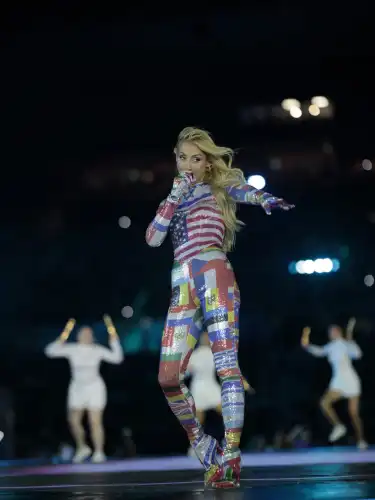
American singer Montana Tucker wearing an outfit adorned with flags from around the world at the opening of Maccabiah 2026, July 1, 2026. Credit: Maccabiah 2026.

The ceremony blended celebration with remembrance.

Athletes on the field and spectators in the stands witnessed the raising of the Israeli, Jerusalem and Maccabiah flags, the singing of “Hatikvah,” fireworks, musical performances, dance routines and tributes to Israel’s heroes. Audience members were encouraged to sing, dance and illuminate the stadium with their cellphones.

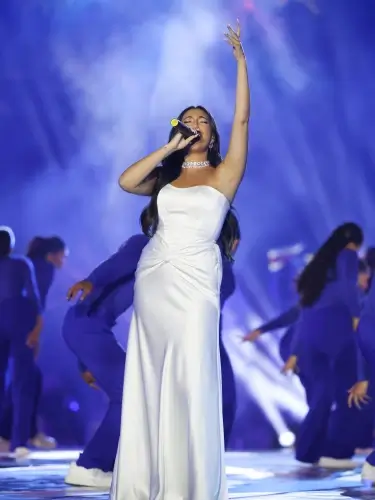
Among the evening’s performances, American singer, actress and influencer Montana Tucker debuted her new song, “We’re Not Strangers,” while wearing an outfit adorned with flags from around the world. 2018 Eurovision Song Contest winner Netta Barzilai and Israeli pop star Anna Zak performed a duet, while Eurovision 2026 runner-up Yuval Raphael also took the stage.

Israeli musician Idan Raichel performed with former hostage Daniella Gilboa, and Itay Levy appeared alongside dozens of dancers. Television host Assi Azar and dancer Anna Aronov co-hosted portions of the ceremony.

Eurovision runner-up Yuval Raphael takes the stage at the opening ceremony of the 22nd Maccabiah Games at Teddy Stadium in Jerusalem, July 1, 2026. Photo by Danny Maron/Flash90

Some of the evening’s most emotional moments included a video message from former hostage Edan Alexander, who returned to IDF service after spending 584 days in Hamas captivity; the entrance of the Maccabiah flag carried by family members of the 12 Druze children killed in the 2024 Hezbollah rocket attack on Majdal Shams; the traditional Yizkor memorial service; and the traditional torch procession led by Evyatar Zeituni, an IDF Paratroopers Brigade officer seriously wounded while defending Kibbutz Kissufim on Oct. 7, 2023.

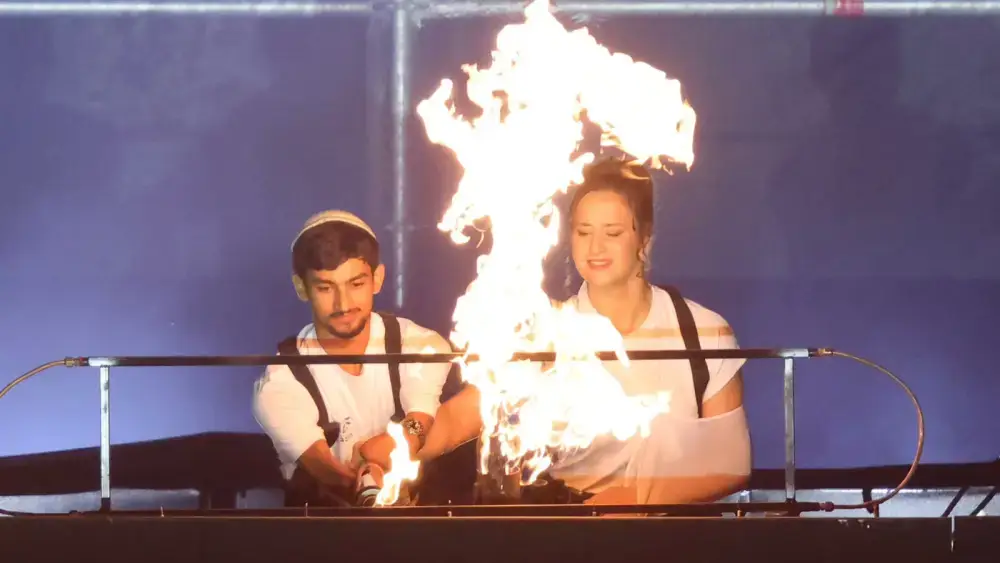
Israeli Paralympic taekwondo champion Asaf Yasur passed the torch to Olympic silver medalist Inbar Lanir, and together they lit the Maccabiah flame.

Athletes also recited the traditional Maccabiah oath—“Ani Nishbah” (“I swear”)—pledging to compete fairly and uphold the spirit of the Games.

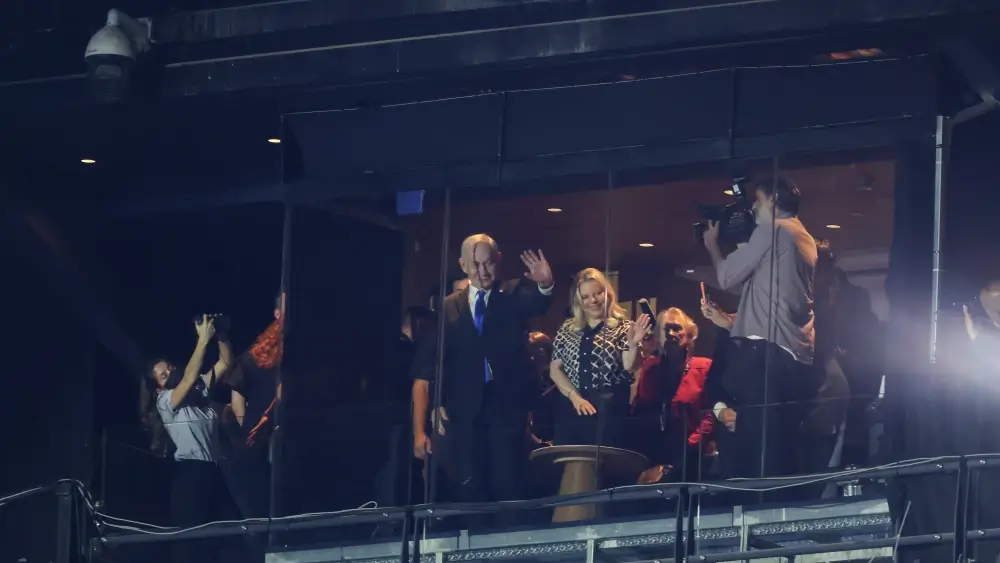
Prime Minister Benjamin Netanyahu and his wife Sara attend the opening ceremony of the 22nd Maccabiah Games at Teddy Stadium in Jerusalem, July 1, 2026. Photo by Danny Maron/Flash90.
Danny Maron/Flash90

Leaders emphasize Jewish unity

IsraeliPresident Isaac Herzog, Prime Minister Benjamin Netanyahu, Jerusalem Mayor Moshe Lion and Maccabiah leaders delivered brief remarks focused on Jewish unity. Culture and Sports Minister Miki Zohar also attended.

“The energy at Teddy Stadium is electrifying,” Herzog said. “There is no doubt that Am Yisrael Chai (The Nation of Israel Lives).” He welcomed participants to their “home away from home” and spoke of partnership, determination and the need to confront rising antisemitism.

Netanyahu began his remarks in Hebrew before switching to English. “If you don’t know Hebrew, study it,” he told participants. “It is your country. We welcome you with open arms.”

Calling Jerusalem Israel’s “eternal and undivided capital” and asserting that the Jewish people are “one nation, one family with one destiny,” he urged Jews worldwide to stand proudly in the face of rising antisemitism.

“People respect only those who respect themselves,” he said. “In the face of antisemitism, stand tall! Say, ‘Yes, I am a Jew. I am proud to be a Jew.’ We will win. Am Yisrael Chai!”

Lion emphasized the bond between Israel and the Diaspora.

“I hope the Maccabiah will serve as a true bridge connecting brothers and sisters in the Diaspora to Israel,” he said. “The most important victory is that we are gathered together in Jerusalem.”

Maccabi World Union Chairman Amir Peled addressed participants by video, while Maccabiah World Union President Michael Siegal welcomed athletes and spectators to the Games.

“We are thrilled that the Games are taking place,” Siegal told JNS. “The fact that thousands of people have chosen to come to Israel at this moment is tremendously important for the connectivity of the Jewish people. To bring Israel what is considered a normal event is historic. And to celebrate sports, mindfulness and strength—we are ecstatic.”

Siegal and Herzog then jointly declared, “Light the torch,” initiating the ceremony’s official torch-lighting procession.

Olympic judoka Inbar Lanir and Paralympic taekwondo champion Asaf Yasur lit the Maccabiah torch, symbolizing the opening of the 2026 Games, July 1, 2026. Credit: Maccabiah 2026.

Families reunite

Many spectators came to support relatives competing in the Games.

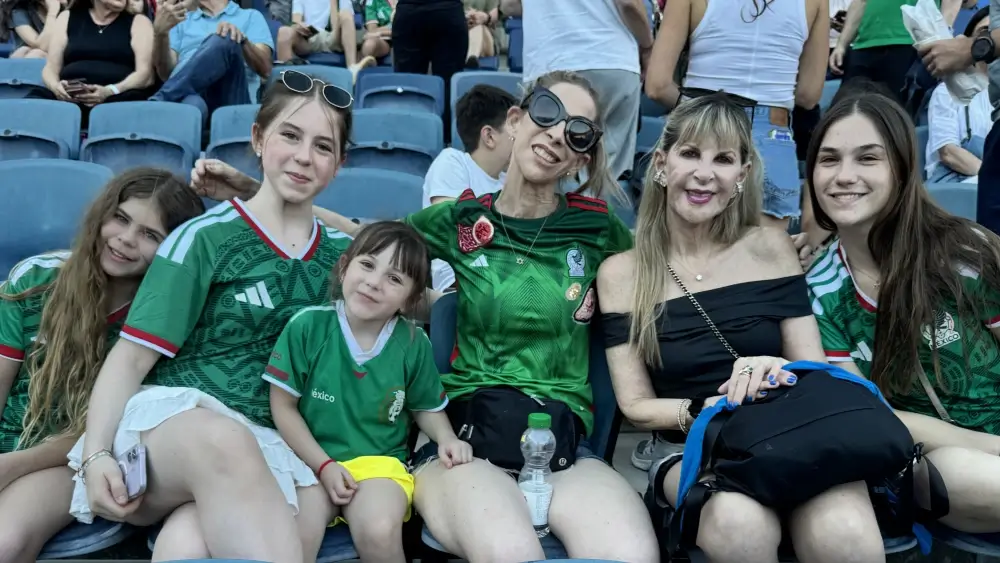
The Berman/Schwartzman family of Mexico City attends the opening ceremony of the 2026 Maccabiah in Jerusalem to support three generations of family members participating in tennis and soccer competitions, July 1, 2026. Photo by Howard Blas.

Sophia Cohen, 20, of Miami, attended with fellow students from Reichman University. Having attended five previous Maccabiahs with her family, she hoped to cheer on relatives competing for Venezuela.

“It is such a fun event,” she said. “You see Jews from all over the world. It’s our version of the Jewish Olympics.”

One cousin was unable to compete for Venezuela because of the war and the recent earthquake but instead played soccer for Spain.

Karla Berman of Mexico City came to cheer several family members. Her father, Jorge Berman, competed in the men’s 70-and-over tennis division, her husband Carlos Schwartzman played soccer and her 16-year-old daughter competed in her first Maccabiah.

“Our family is very sports-oriented and very Zionistic,” she said. “I think the Maccabiah, the State of Israel and Chabad are the three greatest movements of the Jewish people in modern times.”

The opening ceremony marked the official start of the Games, although some competitions began earlier in the day. The Maccabiah continues through July 13 with competitions in more than 40 sports across junior, open, masters and Paralympic divisions, along with community events including fun runs and Expo Maccabiah City in Tel Aviv.

The opening ceremony and sports competitions can be viewed on the Maccabiah 2026 website.

Read more

Originally appeared at JNS.org on June 17, 2026

CEO Roy Hessing says “the Games must go on,” describing the event as an opportunity for young Jews from the Diaspora to experience the “real” Israel.

With just over two weeks until the opening ceremony of the 2026 Maccabiah, Roy Hessing, CEO of Maccabi World Union, is projecting confidence despite ongoing regional tensions and travel challenges facing some international delegations.

“It is 16 days until the opening ceremonies of the Maccabiah,” Hessing told JNS in an exclusive interview on Sunday. “We are very excited and happy that people want to come, and we are sure we will have a very meaningful Maccabiah.”

The Games, often referred to as the “Jewish Olympics,” are expected to bring approximately 3,100 athletes from abroad and 2,000 from Israel to compete in 45 sports from July 1 to 14 at venues across the country.

Hessing acknowledged that government travel advisories in countries including Australia, Austria, Britain and South Africa have complicated group participation.

“They are still coming as individuals and will have a great time,” he said. “Our message is very clear—we will give the opportunity to anyone who wants to come and celebrate. No one will be left out.”

For those still waiting to see developments involving Iran before committing to travel, organizers have extended the registration deadline.

“The only time the Maccabiah was ever cancelled was during the Holocaust,” Hessing said. “This is an important message for Israel, the Jewish community and our neighbors that it must go on.”

Founded in 1932 in Tel Aviv, the Maccabiah is held every four years and brings together Jewish athletes from around the world in Open, Junior, Masters and Paralympic competitions. Past participants have included Mark Spitz, Lenny Krayzelburg, Angela Buxton, Brad Gilbert, Dick Savitt and Mitch Gaylord.

This year’s sports include basketball, swimming, surfing, rugby, baseball, squash, table tennis, judo, football, pickleball, handball and padel.

Hessing said one of the most encouraging developments has been the age of this year’s participants.

“We were very surprised and happy that the majority of the athletes are under 19 years old,” he said. “We know what is happening in this generation. We will give them a great time and they will go back to their colleges and their lives and will have a better opinion of Israel.”

Beyond competition, participants will take part in educational and cultural programming designed to deepen their connection to Israel and Jewish identity.

“They are here for at least two weeks—even if they compete in six games of football or in two days of judo,” Hessing said. “They will visit the Nova festival site in the Gaza Envelope, participate in a festival with residents of the south, experience Kabbalat Shabbat and have a chance to celebrate bar and bat mitzvah. They will have a full program, which is very attractive.”

He described the Games as an opportunity to expose young Jews to the reality of Israel beyond the headlines and to strengthen their connection through sport and personal experience.

The Maccabiah is the flagship event of Maccabi World Union, whose roots date back to 1895, when Jewish gymnasts in Constantinople established their own sports club after being barred from joining a local organization because of antisemitism. The movement grew into a worldwide network that today encompasses hundreds of clubs and hundreds of thousands of members.

Its global headquarters at Kfar Maccabiah in Ramat Gan also houses a museum chronicling the organization’s history since its founding.

“It is a must-visit for people who love sports and Zionism,” Hessing said.

A former member of Israel’s national water polo team, Hessing has spent nearly three decades in Israeli sports administration. He previously served as CEO of the Israel Water Polo Association, sports director of the Maccabiah Games and CEO of the Games before being appointed CEO of Maccabi World Union in 2025.

The 2025 Maccabiah was postponed to 2026 because of the war. Despite continuing regional uncertainty, Hessing stressed that organizers are working closely with Israeli security authorities.

“Israel is a safe place to be,” he said. “Security is our first priority.”

He added that Maccabiah maintains close coordination with the army, police and other security bodies and expressed confidence that the event will send an important message to the international community.

“It is our biggest international event in Israel since Oct. 7,” Hessing said. “It sends an important message that Israel is a safe place and that we are happy to host all teams and performers—and that we are waiting for you to come to Israel.”

Read more