Originally appeared in jns.org, March 19, 2026
Home Front Command and “purple” initiatives help vulnerable populations access shelters, information and essential services.
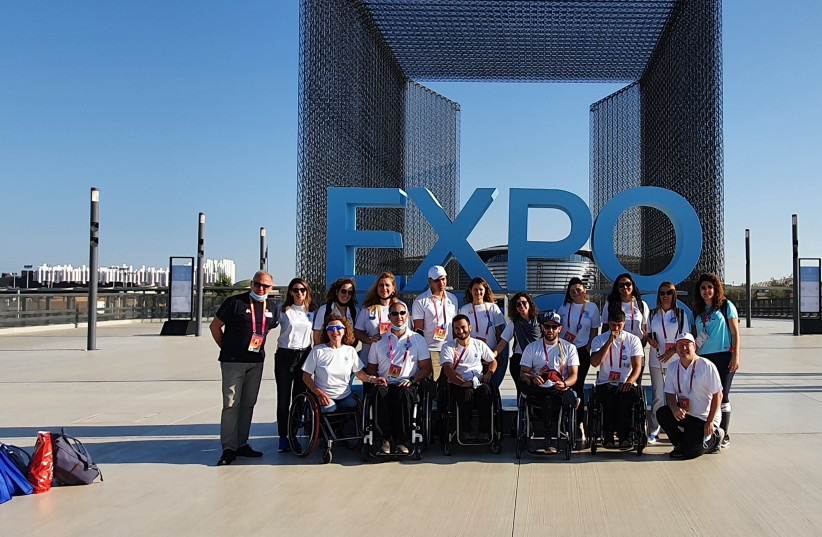
As Iranian and Hezbollah missile attacks continue across Israel, people with disabilities and the elderly face unique and often overlooked challenges—from reaching shelters in time to coping with overstimulating environments once inside.
In response, the Home Front Command and a range of civil society initiatives are working to ensure that vulnerable populations remain safe, informed and supported.
For many, the obstacles are immediate and practical. Individuals who are deaf or hard of hearing may not hear warning sirens. Those with mobility impairments may struggle to access shelters. People with autism can find crowded, noisy spaces overwhelming.
“The most important thing is planning ahead and knowing the safest place,” said Tami Durst, the Home Front Command’s professional academic officer and desk commander for people with disabilities. “It is proven that following the guidelines and getting to a shelter on time saves lives.”
The Home Front Command has adapted its emergency guidance to reach diverse populations, offering materials in multiple languages, including English, Russian and Amharic, and tailoring content for different disabilities.
Services include sign-language training videos with subtitles, phone alerts using repeated vibrations or flashing lights for those who are deaf, and simplified, illustrated materials for people with intellectual disabilities.
“Booklets have illustrations and simply explain things such as what a missile is,” Durst said.
The agency conducts daily Zoom sessions for people with disabilities, partnering with organizations such as ALUT (autism), Elwyn (multiple disabilities) and Migdal Or (visual impairments).
In Israel, families can call 104 for assistance or request group briefings.
Nonprofits play key role
Beyond government efforts, nonprofit organizations are playing a critical role.
Access Israel estimates that roughly 25% of Israel’s population—about 2.6 million people—are individuals with disabilities or older adults who may need assistance during emergencies.
Shavvim, an advocacy and media platform focused on disability issues, estimates that more than 1.6 million Israelis live with disabilities, a number that has risen sharply since Oct. 7, 2023, due to injuries and trauma.
Both groups operate initiatives known as “purple” campaigns, a reference to the color associated with International Day of Persons with Disabilities.
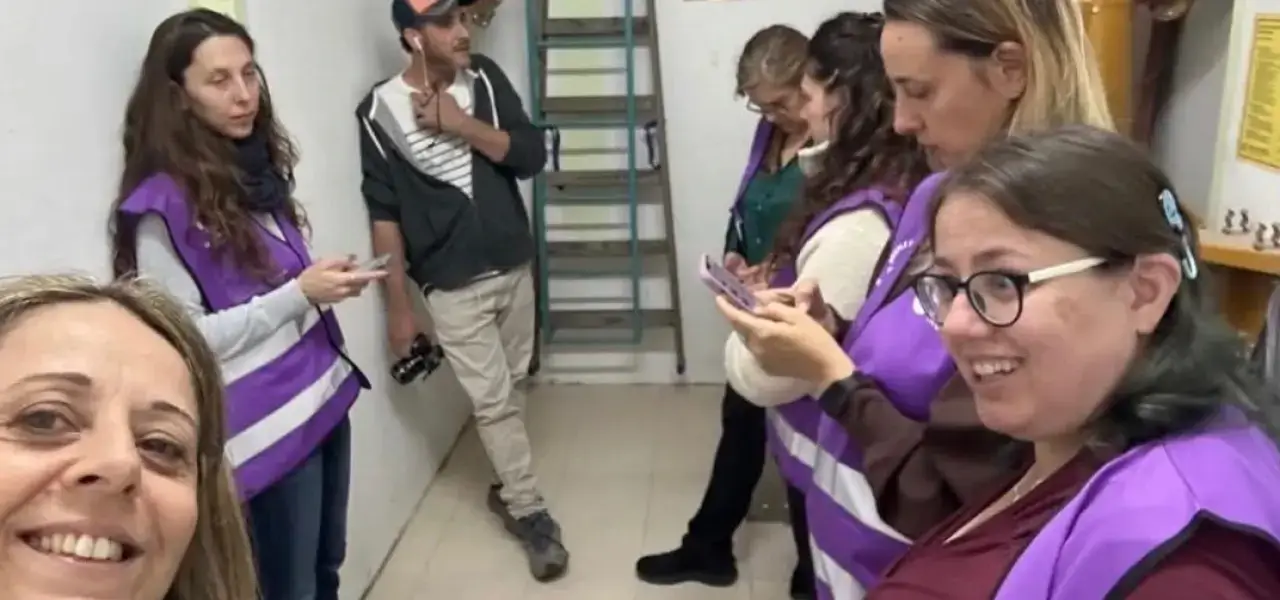
Access Israel’s Purple Vest Mission mobilizes trained volunteers to assist individuals in reaching accessible shelters, relocating to protected housing when necessary and obtaining essential supplies during prolonged emergencies.
“Emergencies do not affect everyone equally,” said Michal Rimon, founder of the Purple Vest Mission and CEO of Access Israel. “For people with disabilities and older adults, it takes more time to reach safety; even a few seconds can mean the difference between safety and tragedy.”
Jamie Lassner, executive director of Accessibility Accelerator and a volunteer with the initiative, said the program’s impact lies in preparation.
“They understand accessibility, they understand disability, and they act with urgency, compassion and dignity,” she said. “That preparation is no longer theoretical. It is saving lives.”
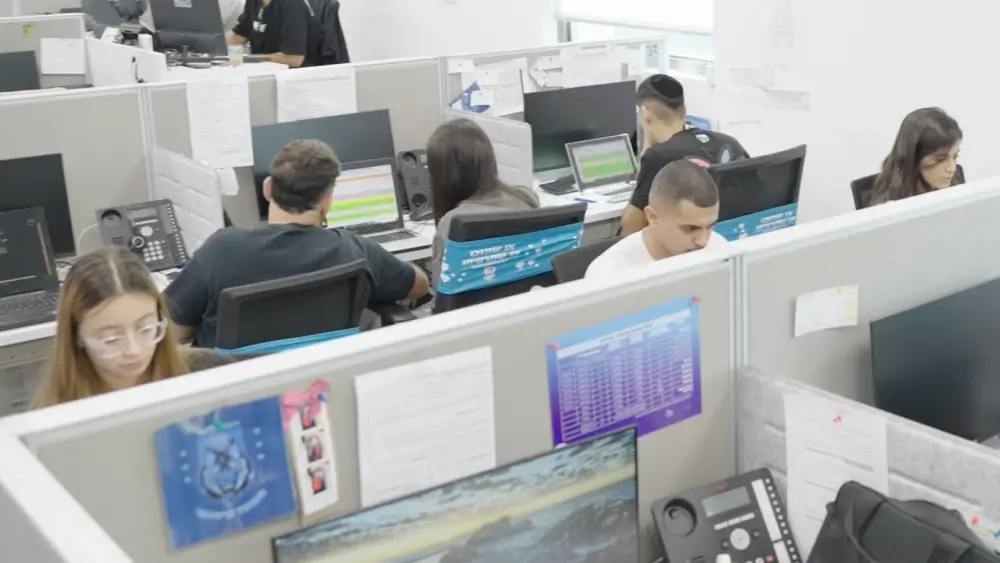
Shavvim operates a “Purple Hotline,” offering emergency assistance and rights-based support for people with disabilities and their families.
The hotline grew out of an operations center established after the Oct. 7, 2023, attacks, fielding calls from individuals unable to reach shelters, access medication or evacuate safely. It also assisted newly injured reservists in navigating rehabilitation systems and the families of children with complex needs.
“We received calls from wheelchair users who couldn’t get to a safe room, from people needing food or medicine, and from parents struggling to care for children with special needs during constant alerts,” said Idan Motola, founder and CEO of Shavvim.
The hotline, relaunched on March 1 after a previous pause, has assisted more than 4,500 people to date. Among its efforts, volunteers distributed hundreds of tablets to children with autism spending extended periods in shelters.
Motola said hotline operators were called, inter alia, by families without protected spaces and from those unable to obtain medication or food, calls from parents of children with complex needs who could not evacuate safely, and from newly injured reservists encountering Israel’s rehabilitation and welfare systems for the first time.
“We received calls from wheelchair users who couldn’t get to a safe room or shelter, and from people with food requests, those with husbands on reserve duty, those needing to buy medicine and people needing help babysitting kids while they ran an errand. We also got requests for tablets for families of children with autism spending a lot of time in the shelter. We gave out 250!”
Shirly Pinto Kadosh, Israel’s first deaf member of Knesset and a longtime advocate for accessibility, said the initiative addresses critical gaps.
“People with disabilities in Israel still face dangerous barriers during war and daily life alike,” she said. “The Purple Hotline is meant to ensure that no one is left alone when systems become impossible to navigate.”
As the war continues, organizers said the goal is not only to respond to immediate needs but to build lasting systems of support that extend beyond times of crisis.