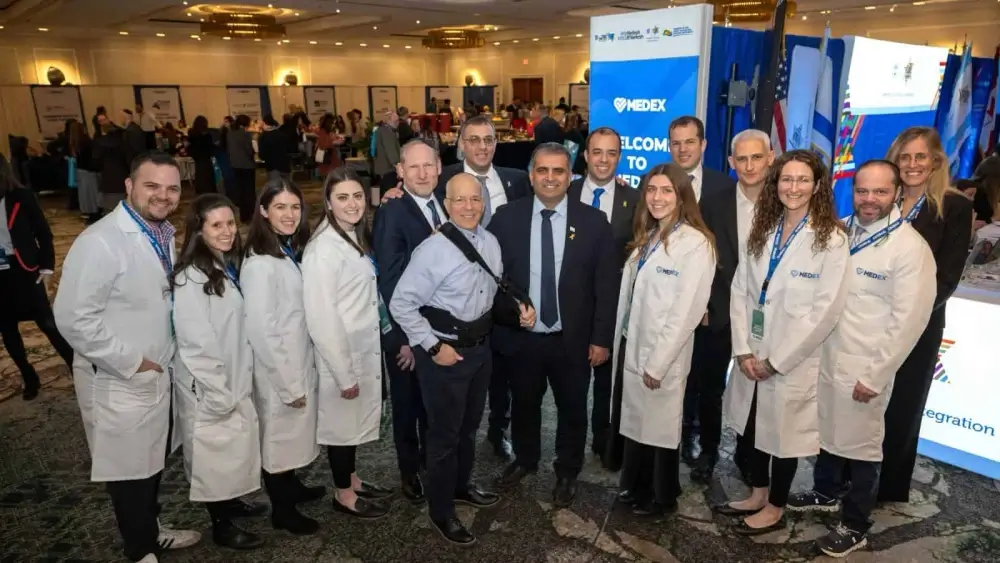
Prospective immigrants receive assistance at an Aliyah-in-One event. Photo by Nir Arieli.
‘Aliyah in One’ makes aliyah easier for aspiring North American immigrants

Prospective immigrants receive assistance at an Aliyah-in-One event. Photo by Nir Arieli.
Originally appeared at JNS.org on April 28, 2026
The five-year exemption plan targets new immigrants and returning residents amid a global outreach effort.
Israel is rolling out a major financial incentive aimed at encouraging Jews worldwide to make aliyah, offering a new income-tax exemption for immigrants arriving in 2026, Israeli officials confirmed to JNS this week.
Minister of Aliyah and Integration Ofir Sofer and Finance Minister Bezalel Smotrich recently announced the government’s intention to grant a five-year income-tax exemption to new olim (immigrants) and returning residents who relocate to Israel during the 2026 calendar year.
According to guidelines published by the Ministry of Aliyah and Integration, the reform would apply to earned income in Israel, including salaries and self-employed business income, from 2026 through 2030. The exemption would be capped at one million shekels (approx. $335,000 in 2026 and 2027, 600,000 shekels (approx. $200,000) in 2028, 350,000 (approx. $117,000) in 2029 and 150,000 (approx. $50,000) in 2030.
For those employed by a relative, the exemption would be limited to 140,000 shekels (approx. $47,000) annually. The measure is expected to take several months to pass into law, with benefits applied retroactively once enacted.
Eligibility extends to new olim and returning residents who have lived abroad for more than 10 years and who immigrate between Nov. 5, 2025, and the end of 2026. The reform would not affect existing benefits, including the 10-year exemption on foreign-source income and tax-credit points. Passive income, such as dividends, interest and rental income, would not qualify under the new plan.
The proposal also includes safeguards intended to prevent abuse, stipulating that individuals who spend fewer than 75 days in Israel in 2028 or 2029 would forfeit eligibility.

Officials say the initiative is designed to ease the financial burden of relocation and accelerate integration into Israel’s workforce.
Matan Ben Harush, spokesperson for the minister of aliyah and integration, said, “This is a groundbreaking and important proposal that demonstrates how committed the State of Israel and Minister Ofir Sofer, together with Minister Bezalel Smotrich, are to encouraging Jewish immigration to Israel.”
He added, “We are working to promote the program and hope it will be as effective as possible in encouraging aliyah, alongside a range of additional measures, such as reforms in licensed professions, tax benefits on home purchases, Hebrew-language studies, student programs and more.”
Yael Katzman, vice president of communications for Nefesh B’Nefesh,a Jerusalem-based organization that promotes aliyah from North America and other countries, said, “By easing the financial burden of the critical first years of aliyah, this new law has the potential to turn the dream of aliyah into a realistic and achievable step for many more people. For years, financial concerns have been a significant barrier. This law helps change that equation, giving prospective olim greater ability to build both a meaningful life and a sustainable future in Israel.”
Yehuda Amrani, spokesperson for the Finance Ministry, said, “We believe this will have an impact, but it is very difficult to provide specific figures at this stage.”
The Ministry of Aliyah and Integration framed the reform as an immediate opportunity for prospective immigrants, stating in its official statement: “On the contrary, the purpose of announcing this reform is to help you make the decision and choose now, more than ever, to make aliyah. Everyone who makes aliyah from now until the end of 2026 will benefit from this significant tax advantage. Come, we’re waiting for you in Israel!”
Originally appeared in Jewish News Syndicate, November 2, 2025
“We should rise and cheer people who come on aliyah,” the museum’s CEO, Oded Revivi, tells JNS
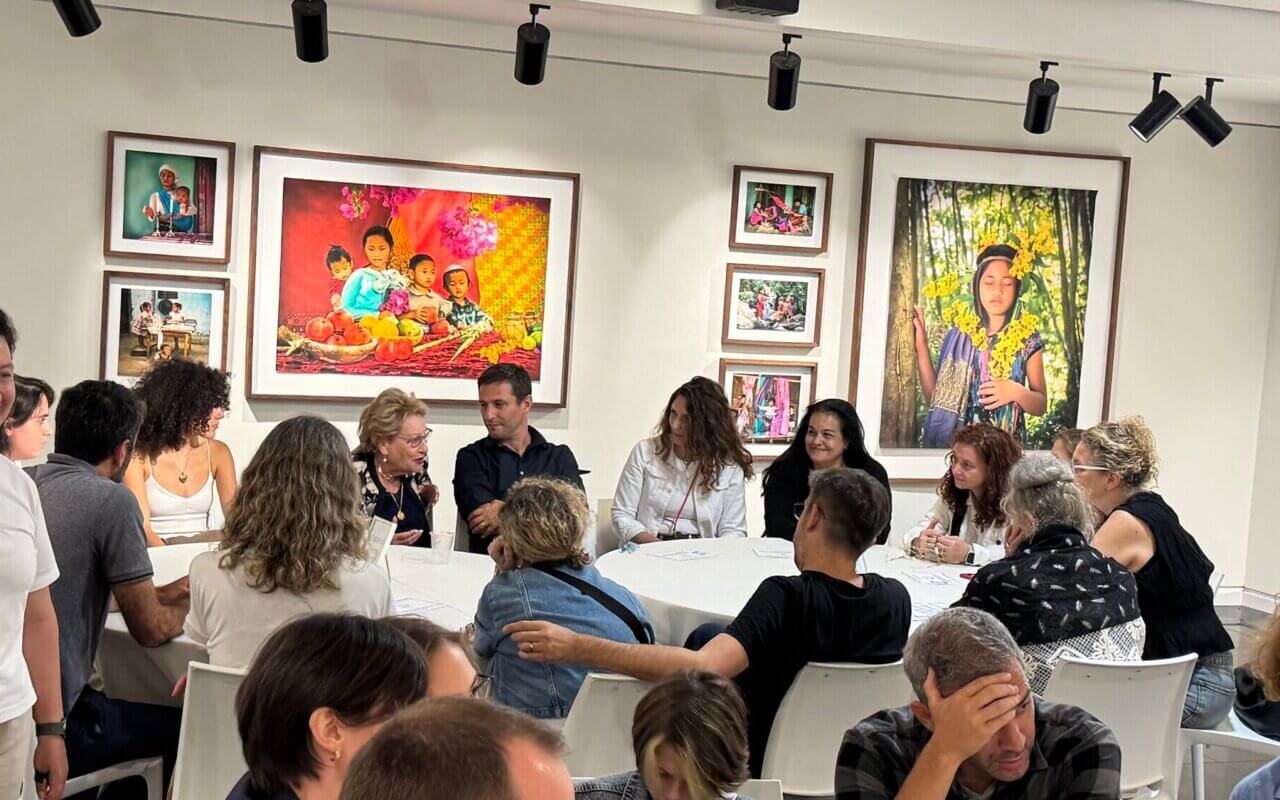
Some 150 olim (immigrants to Israel), sat around tables marked by their native languages—Russian, French, Spanish and English—at ANU- Museum of the Jewish People on the campus of Tel Aviv University on Oct. 29.
As participants sipped lemonade, they drew a prompt from a deck of cards and answered questions about their aliyah experience: What’s one thing about Israel that most surprised you? If your aliyah experience was a movie, what would it be called? What was one experience that made you say, “This is why I made aliyah.”
Sharon Weiss-Greenberg, an immigrant herself and ANU’s manager of resource development, said, “Life as an olah means that you see and appreciate scenes that I never would have experienced. What can be frustrating in the moment becomes tomorrow’s only-in-Israel funny stories for years to come.”
The activity quickly turned from introspective to playful (with lots of laughter) as participants shared language gaffes and stories of dealing with Israeli bureaucracy.
The second annual Yom Aliyah event, part of the “Oleh” project, is a joint initiative of ANU, Nefesh B’Nefesh, the Nadav Foundation, the Tel Aviv Municipality and the Ezra youth movement. It strives to provide support and recognition for olim, regardless of when they made aliyah.

In an interview with JNS, Oded Revivi, ANU’s CEO and the former mayor of Efrat, said the name of the event, Oleh Oleh, had a dual meaning.
“There is a popular Israeli song, ‘Oleh Oleh’, which means, “to rise higher and higher,” he noted. “It is also the name we give to a group of immigrants. Therefore, we should rise and cheer people who come on aliyah.”
Revivi shared the museum’s unique mission and readiness to support olim.
“ANU bears a unique legal title,” he said, noting that the National Library of Israel, Yad Vashem and ANU, formerly known as Beit Hatfutsot, were set up “to be the center for all Jewish communities.”
He explained that olim meet the definition of a community and constitute one. “They all did this extraordinary act—they left their birthplaces and families to move to Israel,” he said. “If ANU can be helpful with absorption and building homes here, it is part of our mission.”
Revivi said that his wife, now a mother of six grown children, many of whom have been regularly serving in Gaza, made aliyah at the age of 23 from England. His wife’s experience has helped Revivi better understand the immigrant experience. “The challenges she went through are unique for new olim,” he said.
Lindsay Shapiro, ANU’s senior coordinator of English Education, said that each department in the museum—from marketing to fiancé to education—has olim on staff.
“It is part of our mission. ANU wants to celebrate that,” she said. “Our goal is to make sure ANU is a museum but also a community center and a cultural hub.”
Shapiro pointed out that the contributions of olim to Israeli society and the world are featured in exhibits throughout the museum.
After signing in, guests arriving at ANU had the opportunity to visit a marketplace in the museum’s lobby, featuring food, alcoholic beverages, art and clothing on display and for sale by new and veteran immigrants.
Ari Weiss of Karnei Shomron offered free samples of his Popular Kettle Corn. Weiss, who also works as an aliyah adviser for Nefesh b’Nefesh, explained how he and wife, Deena, got into the kettle corn business. “We were invited within the yishuv (settlement) for meals and we weren’t sure what to bring. My wife started to make kettle corn, everyone loved it, and encouraged us to sell it!”
Chanie Koenig came to the event from her kibbutz in the north to sell a wide range of chocolate products from her Cacao HaGalil company. Originally from Long Island, Koenig studied chocolate making in culinary school. She began by using only goat milk and has expanded her product lines. “We try to incorporate what we see in the north, and use no preservatives.”

Ari Weiss of Karnei Shomron offered free samples of his Popular Kettle Corn. Weiss, who also works as an aliyah adviser for Nefesh b’Nefesh, explained how he and wife, Deena, got into the kettle corn business. “We were invited within the yishuv (settlement) for meals and we weren’t sure what to bring. My wife started to make kettle corn, everyone loved it, and encouraged us to sell it!”
Chanie Koenig came to the event from her kibbutz in the north to sell a wide range of chocolate products from her Cacao HaGalil company. Originally from Long Island, Koenig studied chocolate making in culinary school. She began by using only goat milk and has expanded her product lines. “We try to incorporate what we see in the north, and use no preservatives.”
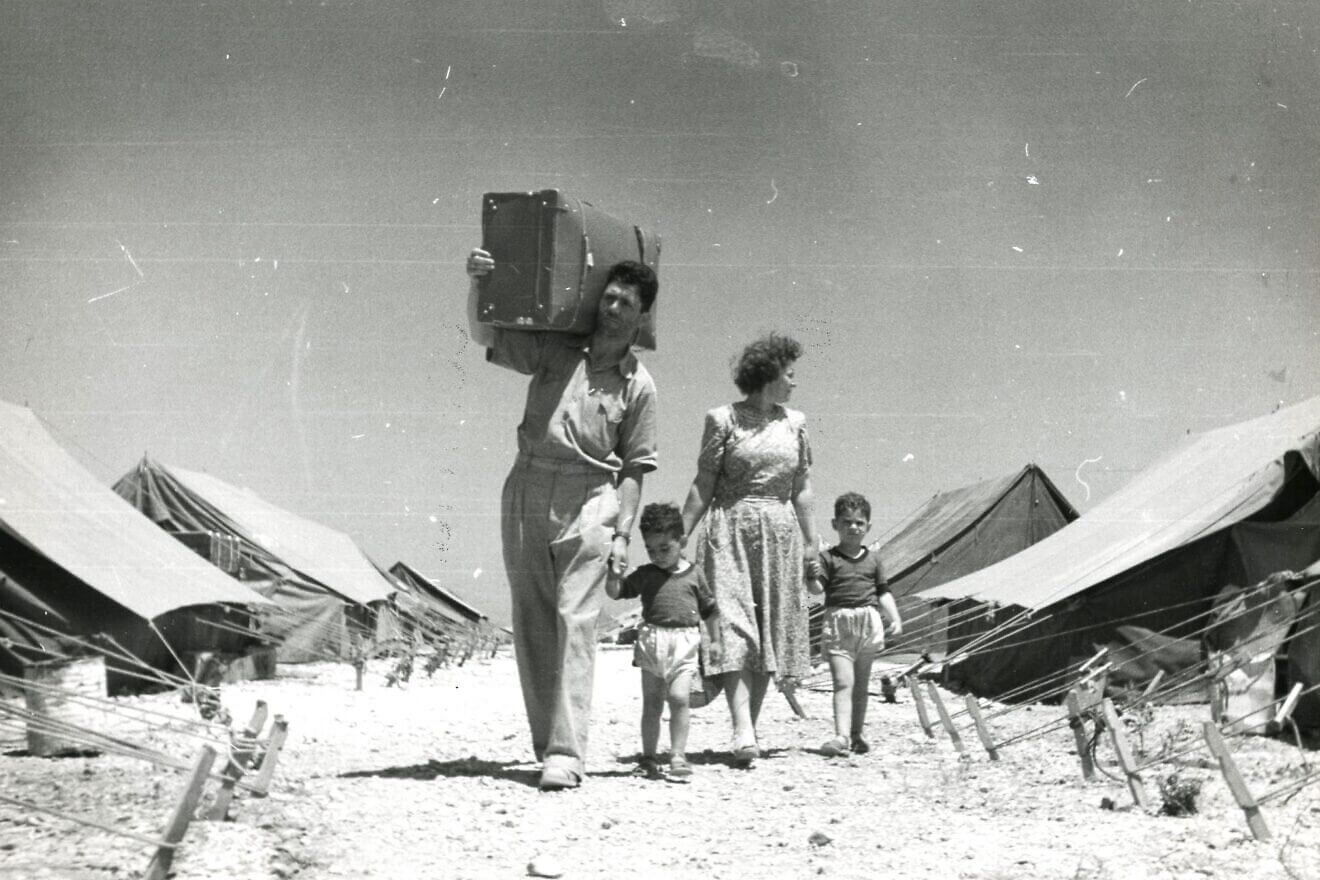
As guests awaited guided tours of the museum’s galleries offered in four languages, many stopped by the screening room on the ground floor to view archival footage from the museum’s Oster Visual Documentation Center collection.
Rivka Aderet, the adult education senior coordinator and director of the Film Screening Department, shared several clips that showcased Zionism and the aliyah experience, starting in the early 1900s.
The first color film, Aviv b’Galil (Spring in the Galilee), showed pioneers dancing, playing the accordion, and dancing at the site of the Huleh Lake before it was drained to eradicate mosquitoes. A black-and-white 1913 film, Little Tel Aviv, showcased the charming Neve Tzedek neighborhood and was screened at the 1913 World Zionist Congress in Vilna. Another film graphically showed the takeover of a ship of refugees by the British in November 1947.
In the galleries—especially opened after hours for the olim—some joined language-specific tours while others explored on their own. A large group of Russian-speakers were guided by a docent in a room displaying synagogues from around the world.
Three Spanish-speaking immigrants from South America who arrived in Israel approximately five years ago—Carolina Meilich, Maia Dobry and Laura Cohen—explored the “20&20: A Lens of Her Own” exhibition, which features the work of forty female photographers.
The final event of the evening was a concert featuring a sing-along (with words projected on a screen) and optional dancing. Rachel Dratch, director of ANU Global Education, thanked everyone for attending this year’s Yom Aliyah celebration, which is likely to continue next year.
Revivi said he was proud of ANU’s partnership with other organizations and the government that enabled the event to be held. “We want to see how we can continue to offer enjoyment for olim at different periods and timespans-and to see how we can help them integrate,” he said.