Originally appeared in Jewish News Syndicate, www.jns.org, February 18, 2026
Hundreds of mental-health professionals gathered for the 2026 ICAR Summit to align treatment strategies and coordinate a national response.
Even though clinical social worker and therapist Lisa Sturm had made aliyah from New Jersey only three weeks earlier, she felt compelled to travel from her new home in Jerusalem to attend the 2026 ICAR Summit in Tel Aviv this week.
She came, she told JNS at the opening of the two-day summit on Sunday, “to learn as much as possible about trauma and to become more connected.”
Dvora Kravitz, a social worker who immigrated to Israel from Los Angeles 14 months ago, similarly attended the two-day conference “to find out more about services here and to see how I can contribute to the healing process.”
According to a January 2026 Israeli Health Ministry study, one in five Israelis experiences emotional distress frequently or continuously; roughly 19–25% likely suffer from PTSD, depression or anxiety. The public sector recorded 3.5 million patient-therapist sessions—a 42% increase since 2022.
The 2026 ICAR Summit at the Tel Aviv Expo, titled “Accelerating Trauma Healing Through Collaboration,” brought together several hundred participants from government agencies, academia, mental-health professions, high-tech, nonprofits and philanthropy to examine Israel’s trauma-healing ecosystem and treatment methods.
ICAR, the Israel Collective Action for Resilience—is a national coordinating initiative that maps, connects and aligns organizations across government, nonprofit, academic and private sectors to strengthen Israel’s trauma recovery and mental-health resilience.
Building bridges
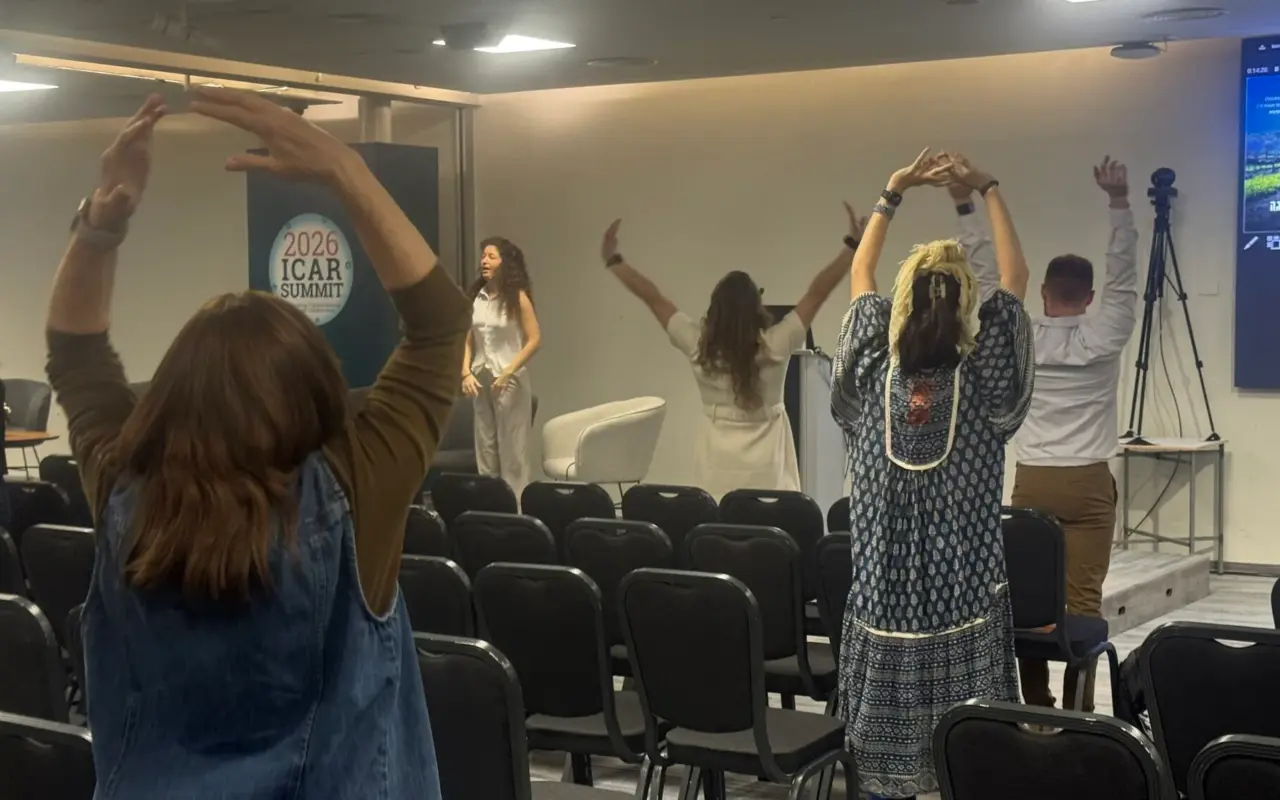
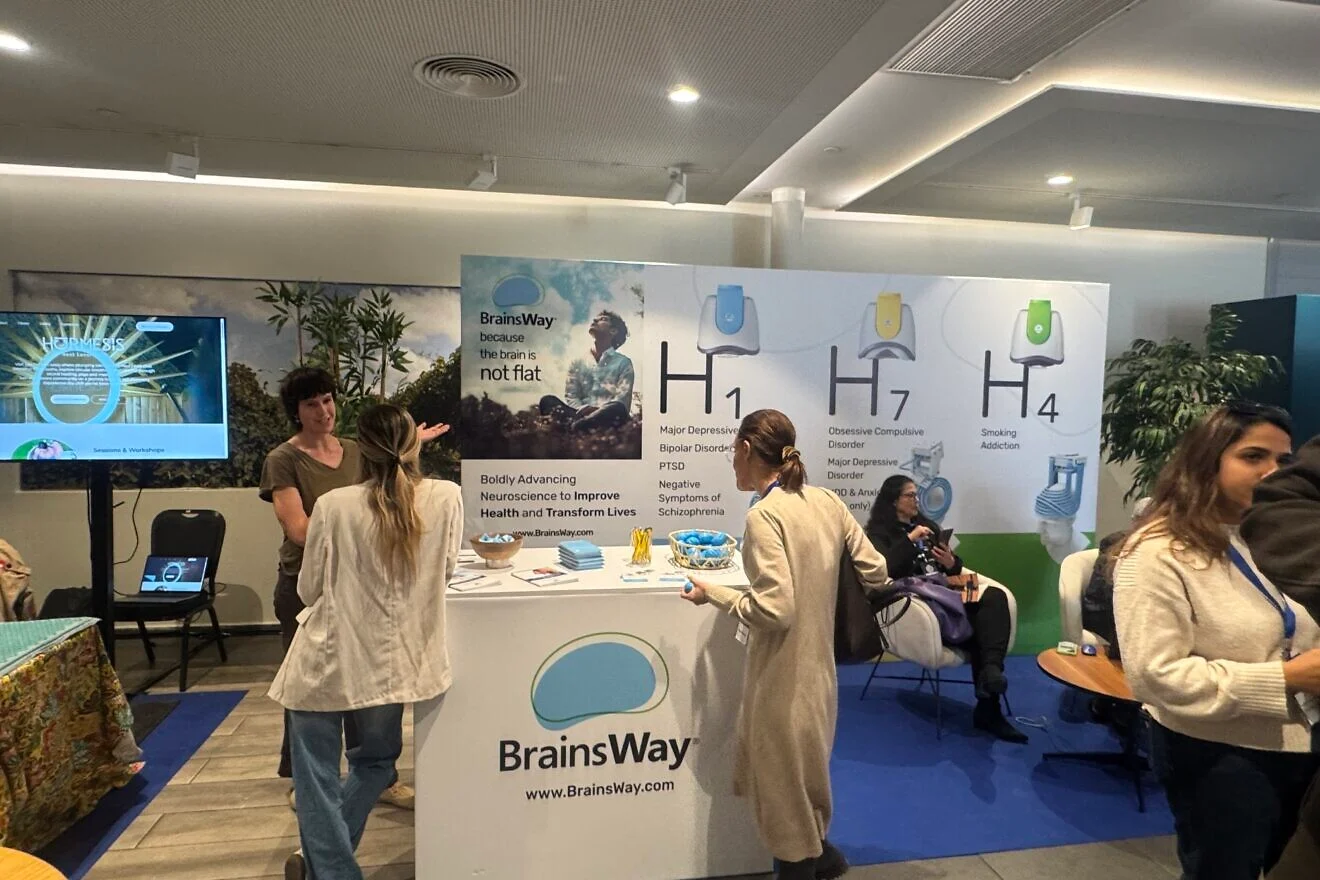
Before the opening session, participants eased into the day with chair yoga led by Neta Margalit of Brothers in Yoga. They also explored treatment options presented by organizations working with survivors and caregivers.
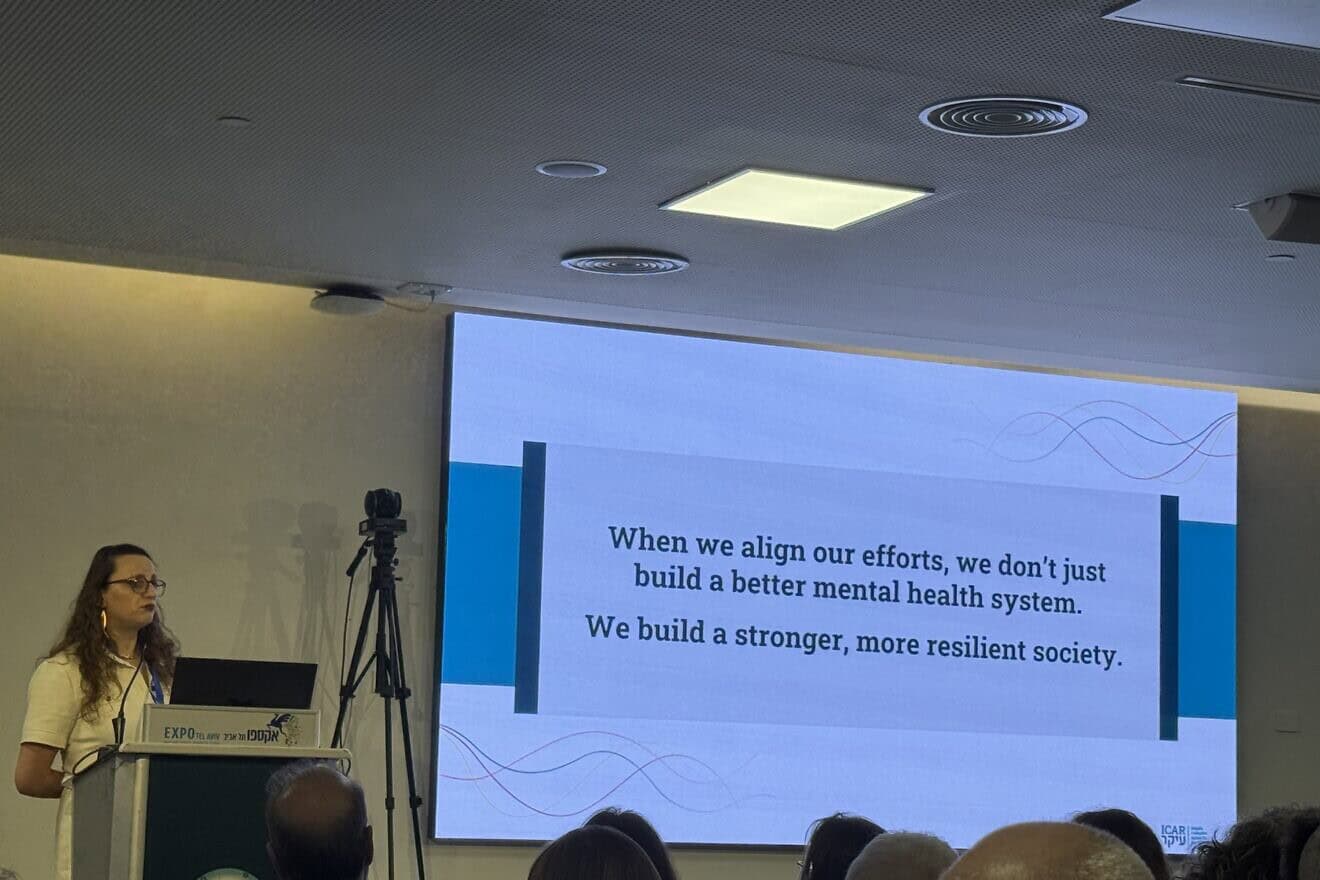
In opening remarks, ICAR co-founder and CEO Gila Tolub emphasized that the conference aimed “to build bridges.” The central challenge, she said, is not a lack of effort but a lack of coordination among the hundreds of organizations operating in the field.
At the Beit Mazen’s “Home for Hope” booth, Yael Eden Baruch and Gitit Harlev described three community-based homes offering ongoing mental-health care. “It is not a hospital. It is a very beautiful home-like place where people get the professional help they need in the community,” Eden Baruch said.
Nearby, Mashiv Haruach social worker Tzrurya Schweiger said the group’s two-day Dead Sea workshops were designed to “help the helpers,” including doctors, psychologists, social workers and ZAKA volunteers coping with secondary trauma.
Mapping the trauma ecosystem
The first day focused on reflection and alignment. Sessions reviewed the past year, assessed the national recovery and examined trauma across key populations—children, soldiers and veterans, workplaces and women affected by the war.
A keynote by Professor Michael Grinstein-Weiss of the Myers-JDC-Brookdale Institute addressed long-term monitoring of the war’s societal effects.
The second day shifted toward implementation. Panels explored integrating research, innovation and technology into nationwide care systems, including AI-assisted treatment, nature-based therapies and pharmacological developments. The conference concluded with an “Impact Showcase” presenting new clinical and digital treatment models.
From fragmentation to coordination
Tolub, formerly a management-consulting partner at McKinsey & Company, had been working on women’s health and organizational resilience even before Oct. 7, 2023. After the Hamas attack, she volunteered at Chavat Ronit, assisting Nova music festival survivors and quickly recognized a systemic problem.
“They had no one place to go,” she said. “Things were extremely fragmented.”
Her team began mapping the sector. “Last year, there were 344 organizations. Now we have 418,” she noted.
ICAR’s goal is to connect public health bodies, NGOs, academia and research institutions into a coordinated national framework for trauma recovery. The initiative aims to create a long-term roadmap built on data, transparency and evidence-based interventions.
Rather than replacing existing services, participants said, the summit marked a shift toward cooperation—turning a patchwork of well-intentioned efforts into a structured national resilience strategy for the years ahead.