Address: 2733 W 8th Ave, Denver, CO 80204
Phone: (303) 295-0163
Danny Combs, President & Founder
danny@buildwithtact.org
https://www.buildwithtact.org/

“TACT is the first and only program of its kind in the country. Its immersive, hands-on vocational training effectively prepares young people with ASD — who now represent one in 59 children between the ages of three through 17, for skilled trade careers that are the fastest growing and most difficult-to-fill professions in the country. Over its short history, TACT has made a tremendous difference in the Denver autism community, more than doubling its program offerings, supporting and training 400 participants in skilled trades, and connecting 80% of its working-age students to their first employment opportunities. Currently, TACT provides career training in: AUTO MECHANICS, CARPENTRY, WELDING, COMPUTER SCIENCE AND ELECTRICAL. These trainings take place over a minimum of one semester (17-18 weeks long).”

From the Website:

TACT was founded in 2016 by parents very much like many of you reading this – parents inspired by both the strengths and challenges unique to their child.

In 2009, Claire and Danny were blessed with a beautiful son. The first few years his progress was “on track,” however around the age of three they began noticing his speech was behind, he was toe walking and few other “differences.” They visited a few doctors and he started speech and occupational therapy to work on his sensory developments. Fast forward to 2015: Their son is in the first grade and growing into a remarkable young man. He’s becoming an extremely creative and innovative thinker, however, there are clearly some continued difficulties. After years of working with doctors and teachers he is placed on the Autism Spectrum. He’s not alone. In 2014 the CDC reported that 1 in 68 children (1 in 42 boys and 1 in 168 girls) are diagnosed on the Autism Spectrum.
As parents, Danny and Claire started looking into programs to build upon their son’s strengths to help him build confidence and social and emotional awareness. They couldn’t find anything outside of the doctor’s office. So, they founded T.A.C.T.

TACT offers a variety of year round programs and workshops for children, teens and young adults. Executive functioning, gross motor/fine motor skills, and social skills are increased through organic, hands-on learning in these project-based learning workshops. Workshops/classes include Makerspace, Fiber Arts, Instrument Building, Carpentry, Photography, Electronics, Auto Mechanics, Welding/Metal Arts. TACT also offers camps during multiple school breaks.

The Visit:

TACT is located in Denver, a five-minute walk from another very impressive program serving people with disabilities—Blue Star Recyclers employs many people with disabilities in the computer recycling industry.
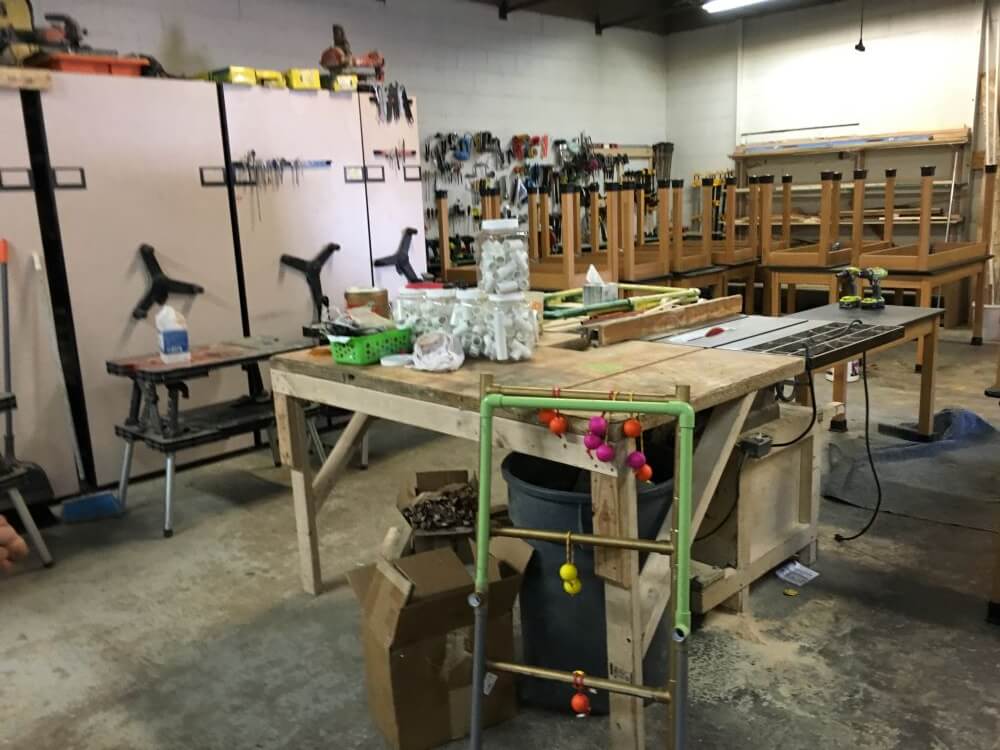
I visited TACT on a summer afternoon when there were no classes in session. Danny Combs was kind enough to give me a tour of the building and the automotive shop and to explain the mission and goals of TACT. Participants ages 5-21 are “exposed to working with their hands to see if they like it.” As above, there are many options including computer science, auto mechanics, carpentry, welding, etc. We toured the computer room (which included audio engineering and electronics), the weaving, knitting and sewing area, and woodworking, carpentry and instrument making. Danny shared that his participants has worked with such businesses as Dirt Coffee (a Littleton, CO coffee shop training and employing people with disabilities), and the Jefferson County School district; they have restored 168 tables as of the date of my visit.

A highlight of the visit was meeting and observing Jake at work as he restored a 1967 Ford LTD car. Danny offered in interesting insight. “You think you need to make accommodations for people on the spectrum—you think they won’t like grease, or loud music It has never been an issue!”

Lessons Learned/Challenges/Advice:

  • It is important to expose people with disabilities at a young age to a range of hands-on activities. They and the adults in their lives can begin to get a sense of what they like and are good at.
  • People on the autism spectrum—both verbal and non-verbal—often have talents and skills which may not seem obvious at first.
  • Don’t make assumptions. For example, we often think loud music and grease would provide sensory challenges; in our experience, this has not been an issue.
Read more

5767 S. Rapp St.
Littleton, CO 80120
303-635-6674
https://www.dirtcoffee.org/

“Located in Downtown Littleton, Dirt is on a mission to bring you quality crafted coffee, food & drink while employing & empowering individuals with autism.”

From the Website:

Did you know that 90% of individuals with autism are either unemployed or underemployed? Founded with the idea that people with differences deserve better, Dirt’s mobile coffee truck hit the ground in 2013 on a mission to change minds and change lives one cup at a time. Since its inception, Dirt has trained and employed over 100 individuals with neurodiversities while providing over $40,000 in scholarships to families in need and their caregivers.

From the ground up, our shop goes further to cultivate a culture of acceptance, inclusion, and opportunity while empowering others to do the same. Are you in love yet? Dirt breaks the expectation that a good cause comes with a lack of quality. Our baristas are socially conscious and craft a damn good cup of coffee. What’s in the cup is great, but what’s beyond the cup is life changing.

The Visit:

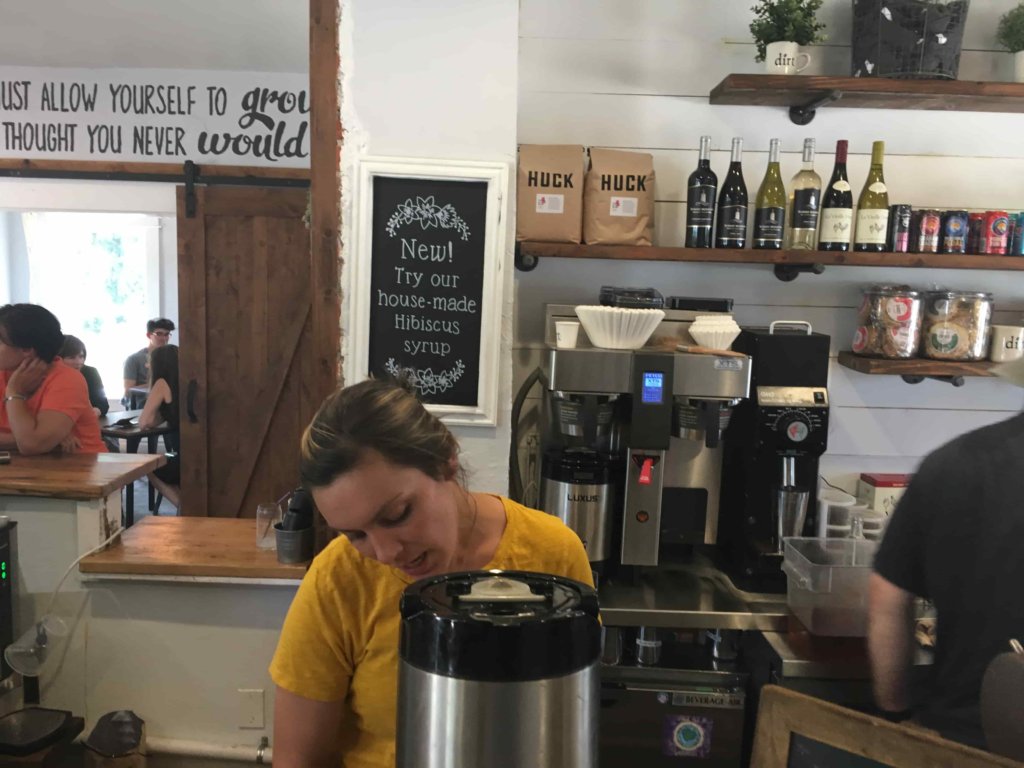
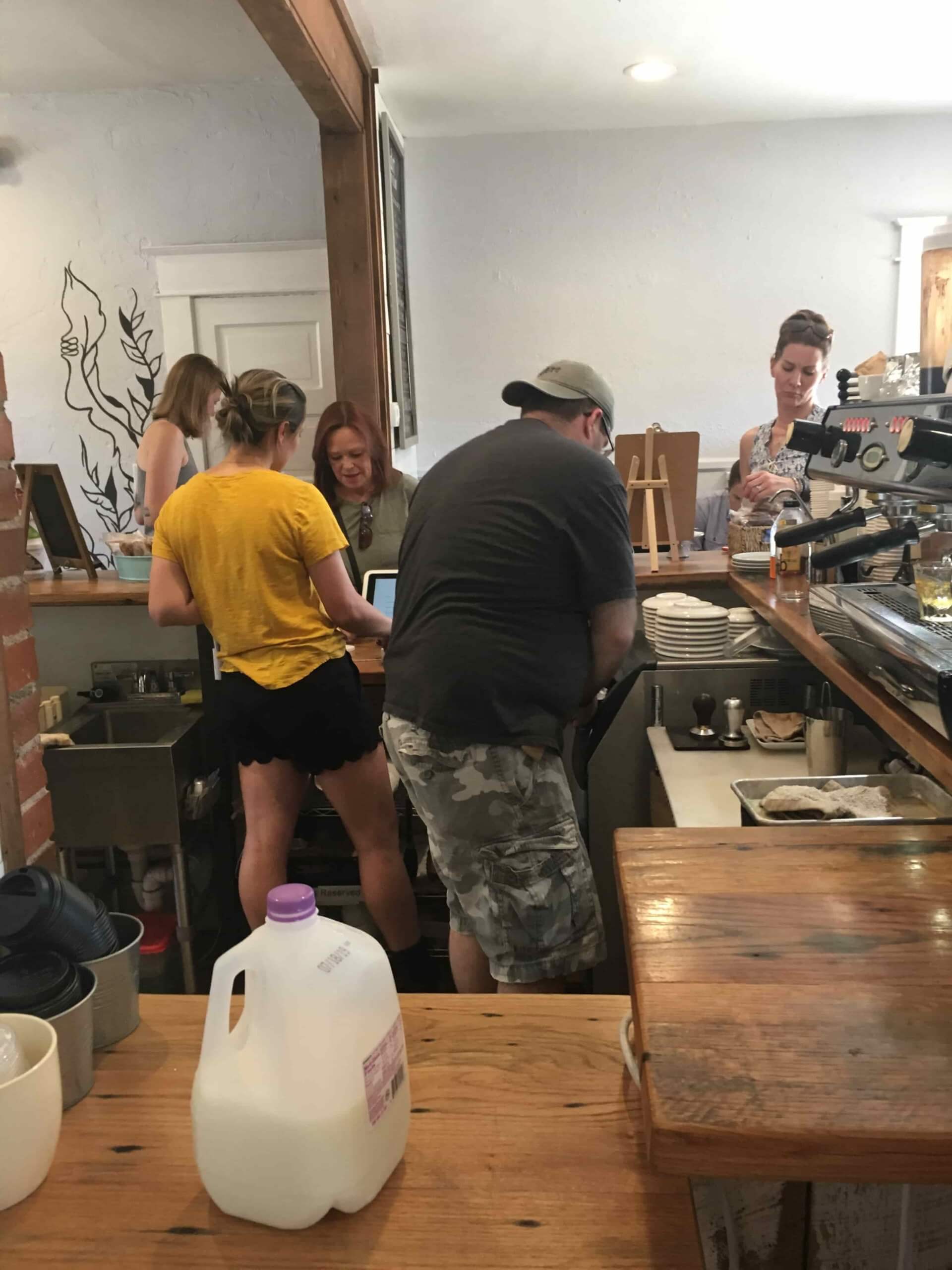
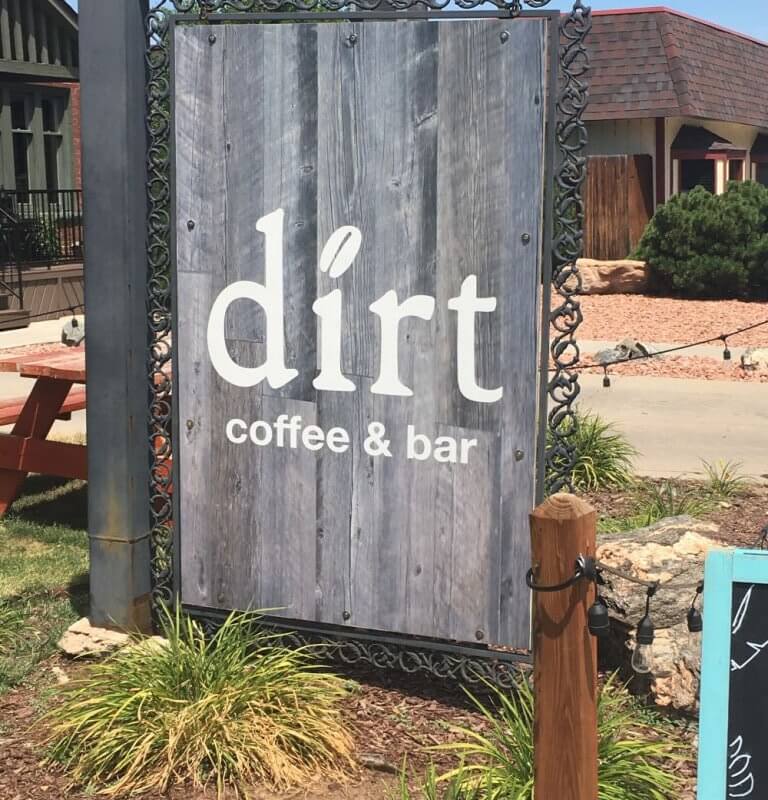
I drove the 20 minutes south from Denver to Littleton and arrived at Dirt Coffee Bar, located in a quaint old house on a main street with the South Platte River out back. There is a lawn out front as well as a porch with very inviting chairs and some games– for customers to have a cup of coffee and a snack, to read or socialize, or to play a game. Inside, customers find good air-conditioning, an inclusive bathroom, souvenirs (hats, shirts, coffee cups, etc) for purchase, and friendly staff greeting customers. “Welcome to Dirt Coffee—I hope you enjoy whatever you order,” says an employee. “Can you set a timer—you may need to drain the hibiscus,” a job coach instructs an intern. “Iced latté—enjoy!” an employee tells a customer.

Dirt was founded six years ago by Lauren Burgess, the current Chair. Emily Wallace was kind enough to sit with me and share the history, mission and operation of Dirt. She explained that, six years ago, she and Lauren had identified a “huge need for employment for people with autism.” She noted that 90% of people with autism are either unemployed or underemployed. They had worked together at Garden, a Colorado based program “on a mission to cultivate inclusive opportunities for those with autism and neurodiversities to share, learn, grow and shine in this world just as they are.” According the website [https://gardenautism.org], “Garden provides exceptional services & programs for individuals of all ages and abilities. We offer a wide variety of one-to-one & group based programming for children, adolescents & adults year around. All of our programs are guided by the foundations of Applied Behavior Analysis (ABA) & are cultivated to meet the unique needs of each individual we serve.”

Wallace adds, “We needed a bigger space—and it was hard to convince people—we showed them!” In 2013, Dirt began as a coffee truck. “The community was so accepting and supportive!” In 2018, they took the “next step.” “Lauren found this place 2 or 3 blocks from the Light Rail Station,” which made it accessible for the employees. Dirt opened in May, 2018 and “has had neurodiverse employees from the start.”

Neurodiverse participants sample positions over a three-month paid internship period. They may learn to work the register, serve as barista, stock and unpack merchandise, or work as a bar back (bussing dishes, cleaning tables). During the internship period, the 10 interns have a fairly well-defined schedule broken down by month: in month one, their job coach is with them as they are set up for success. In month two, the interns pick an area of focus (of the four above) and choose goals. In month three, the coach steps back and observes from a more distant position, and the worker receives natural supports. Interns also learn such soft skills as hygiene and the importance of arriving on time for work. For most, Dirt is their first internship/training, and they go on to paid employment elsewhere. Thirty interns had completed the training program as of my July, 2019 visit. Currently, 100% of interns are neurodiverse and 30% of employees are neurodiverse.

The program is supported by sales, grants and fundraising. In addition, interns are funded through Voc rehab and Medicaid waivers. There is also a private pay option.

One very nice success story is Robby. His parents report, “We thought he’d live in our basement forever. He then started working full time at Goodwill and got his own apartment. He wasn’t happy with that job. He is now at Dirt and was recently Employee of the Year!

Lessons Learned/Challenges/Advice:

  • Start small and expand (coffee truck was the first step; 5 years later, expansion to coffee shop).
  • location, location, location!-by being close to the light rail, employees can get to work more easily, there is steady foot traffic along the main street location, and there is easy on street parking in front of the shop.
  • Community support is essential
  • Job skills and soft skills of the job are very important (arriving on time, being courteous to customers, etc).
  • It is important to expose people to different jobs as “people often get stuck in a particular job”.
Read more

Pizzability reopening within Brewability Fall 2020

3445 S Broadway

Englewood, CO 80113

(303) 598-0809

https://www.brew-ability.com/

BrewabilityLab@gmail.com

Founder: Tiffany Fixter

“Brewability is a brewery that  employs adults with intellectual and developmental disabilities to brew and serve craft beer.”

From the Website:

Welcome to Brewability where we hire people with developmental disabilities and are accessible for both our employees and our customers.  At Brewability you will experience quality and flavor in all of our beers. Hand brewed in small batches and tasted throughout the entire process to ensure a quality product for our customers.  Brewability is kid-friendly as well as dog-friendly! (may not be dog friendly once the pizzeria opens)   Tiffany Fixter, a special education teacher, developed the idea for Brewability after working with  a home brewer in a day program.

The bar is designed to be accessible for both employees and customers:

-The menu is color-coded to match the handles on the taps (coordinating a specific style)  so customers can order by size and then by color.  

-The tap handles also have braille for employees with visual impairments.

-Employees use pictures and checklists for dishwashing, cleaning and other tasks.

-Customers can utilize a braille menu and use sign language with their bartenders.

-Brewability has a section of  sensory items for customers and employees who may need something tactile.

Brewability originally opened in 2016 and was located in North East Denver. We are pleased to announce the opening of our NEW and improved location of  Brewability Lab in October, 2019 at 3445 South Broadway, Englewood.   In December 2018, Pizzability opened in Cherry Creek but due to the limited number of tables and poor reception from the Cherry Creek neighborhood, the decision was made to move to the new Brewability location in Englewood. We are currently working on building out our new kitchen and are planning to reopen Fall of 2020.

Be sure and visit our website brew-ability.com to learn about all of our upcoming special events, you won’t want to miss the live entertainment and all of the fun scheduled weekly.

The Visit:

I visited Pizzability in their original North Cherry Creek (Denver) location on July 17, 2019.  While the store is no longer in operation at that location, this entry is written in the present tense, at the time of my visit.

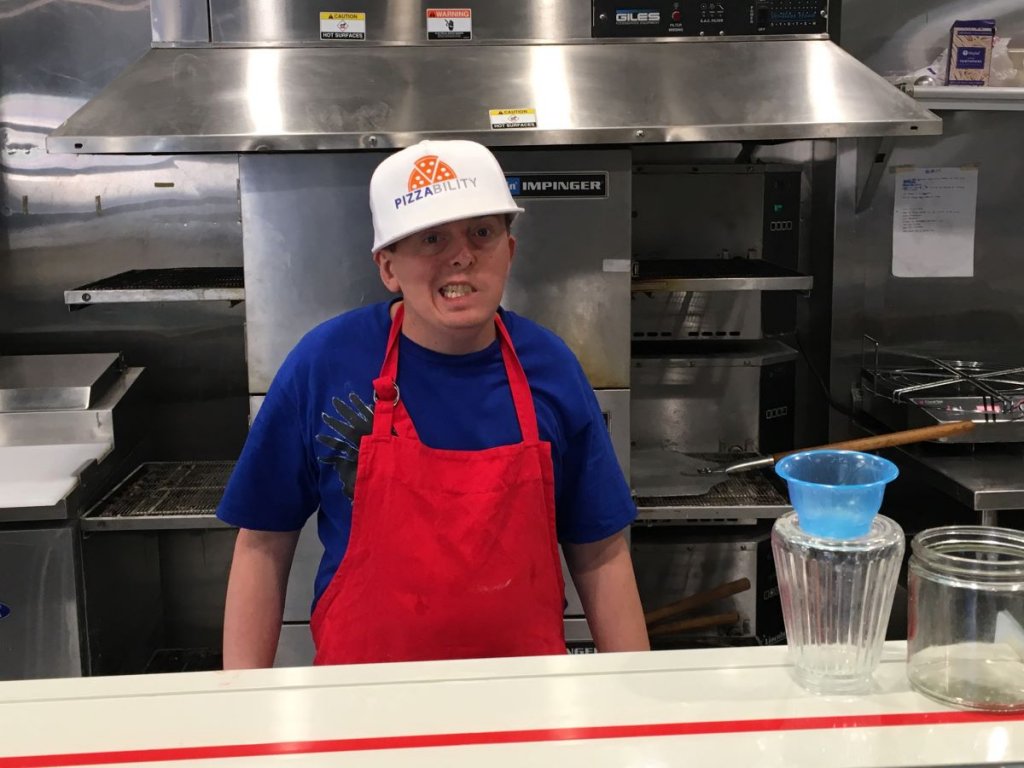
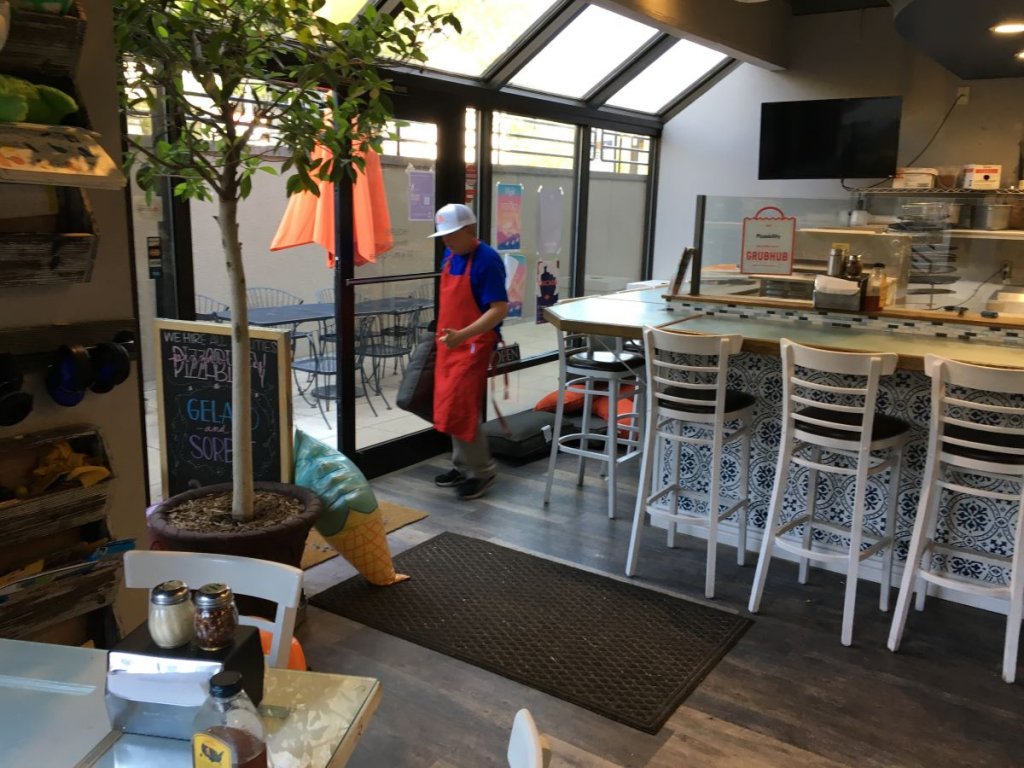
The pizza store, located on the lower level and accessible via an elevator from the parking lot in the rear of the building, trains and employs people with disabilities.  The pizza store has gone to great lengths to make the ordering and dining experience very pleasant for diners with a wide range of disabilities.   The restaurant is filled with games, fidgets, a sensory room, wiggle seats, noise cancelling headphones, and features Braille throughout, an easy-to-read menu and the option of cutting up pizza into very small, chewable pieces or the option of  blending the pizza for people with G-Tubes.  In addition, the bathroom is both stylish and accessible, and the restaurant has a “door theme.”  Founder and owner, Tiffany Fixter explains, “it represents opening doors for people without opportunities.” 

Fixter, a special education teacher by training, moved to Denver to run a day program for people with disabilities.  After encountering some challenges in that job, she opened a brewery.   A customer told her about a pizzeria for sale and she bought it with the plan to sell beer from the brewery at the pizzeria.

During the visit, Fixter, shared the history of her businesses, some successes and the many challenges she was facing.  She has sadly found that some in the neighborhood have not been welcoming to people with disabilities, going as far as asking her to “hide the (wheel) chairs.”   (Negative attitudes of some neighbors is reported here:  https://denver.cbslocal.com/2019/07/27/pizzability-special-needs-employees/

Lessons Learned/Challenges/Advice:

-If you truly believe in something, give it your all!  There will be challenges but it is worth it.

-There are so many costs associated with running a business (and some are unanticipated)

-Be sure to find out what permits are necessary to operate your business

-Location, location, location—and attitude (location is important—being downstairs didn’t help access or visibility; the negative attitude of some of the neighbors was unexpected and disappointing. The new neighborhood is near two major hospitals and a school for the blind, which is very promising for business!)

-In moving locations, transitions take time for employees to get used to

-Consider carrying products of other businesses which are made by people with disabilities (i.e. art gallery items, Peaceful Fruit)

Read more

Address: 140 Ethel Rd W suite m, Piscataway, NJ 08854
Phone: (732) 287-0158
https://www.popcornforthepeople.com/
Co-Founder: Steven Bier

“Popcorn for the People is a nonprofit established to create meaningful employment for those with Autism and other disabilities. We aim to combat the current 80% unemployment rate in the autism community with the training and hiring of adults with Autism to create, cook, package, and sell uniquely flavored gourmet popcorn.”

From the Website:

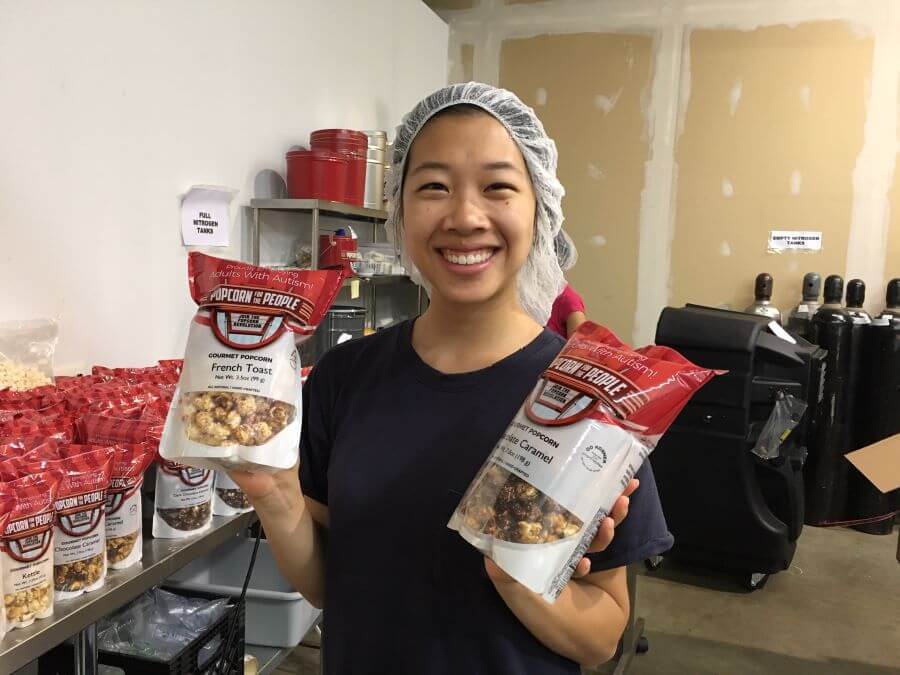
It all started with Samuel Bier. Samuel is a high functioning 24-year-old with autism. He wants to travel, have fun, and work just like everybody else—we ask ourselves: where can a bright, energetic young man that simply views the world slightly different find work, fulfillment, and happiness? Just when we thought the options were limiting, we spotted a popcorn store in East Brunswick available for sale and this ignited the spark that started it all. We decided to combine America’s favorite snack with Samuel’s passion and unique worldview to create a popcorn with a purpose. We invited other individuals, like Agnes, a star chef and mother of a child with autism, to join our team. While Agnes experimented with new flavors, Sam cooked the popcorn. Before we knew it, we gained an overwhelmingly positive response and began a movement, inviting more individuals to feel empowered, take bigger risks, and embrace accountability.

When fulfilled and empowered, individuals become more responsible, thrive creatively, take on bigger risks, and are able to embrace accountability. Popcorn for the People employs those who wish to challenge themselves, overcome obstacles, and strive to be their very best.

We ensure that our gourmet popcorn is popped to perfection using only the finest NON-GMO Kernels, NON-GMO Sunflower Oil, and ALL-NATURAL ingredients to deliver and maintain only the highest quality. Certified by GoKosher, listed in Kashrus Magazine, our popcorn is 100% KOSHER and HAND-CRAFTED by our gourmet popcorn experts on the Autism Spectrum. All flavors (excluding Cookies n’ Cream) are GLUTEN-FREE. Our product is NSF certified and manufactured in a NUT-FREE facility (we do use coconut) in Piscataway, New Jersey.

The Visit:

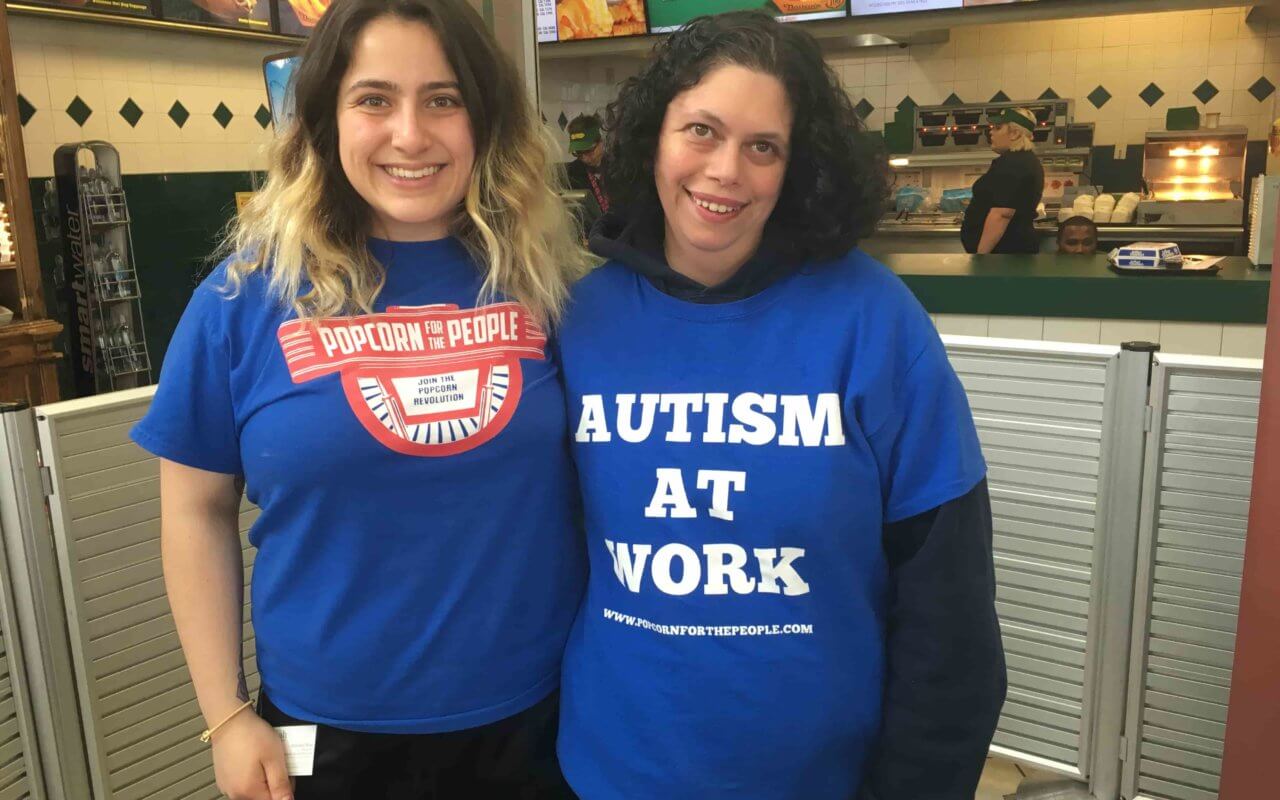
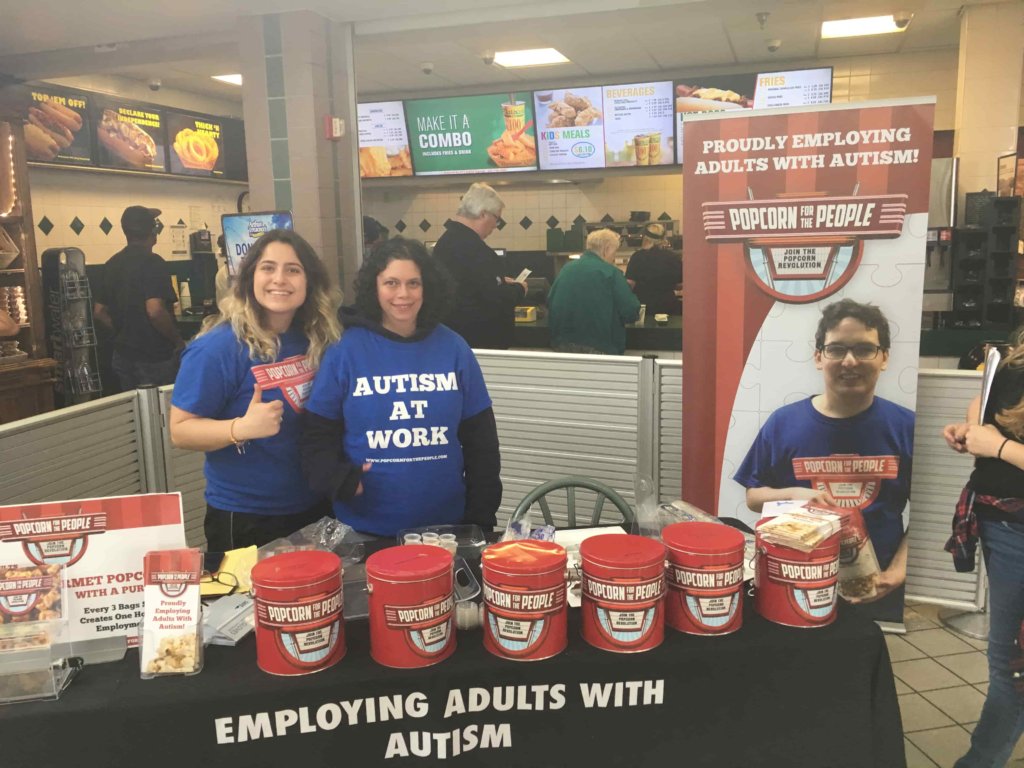
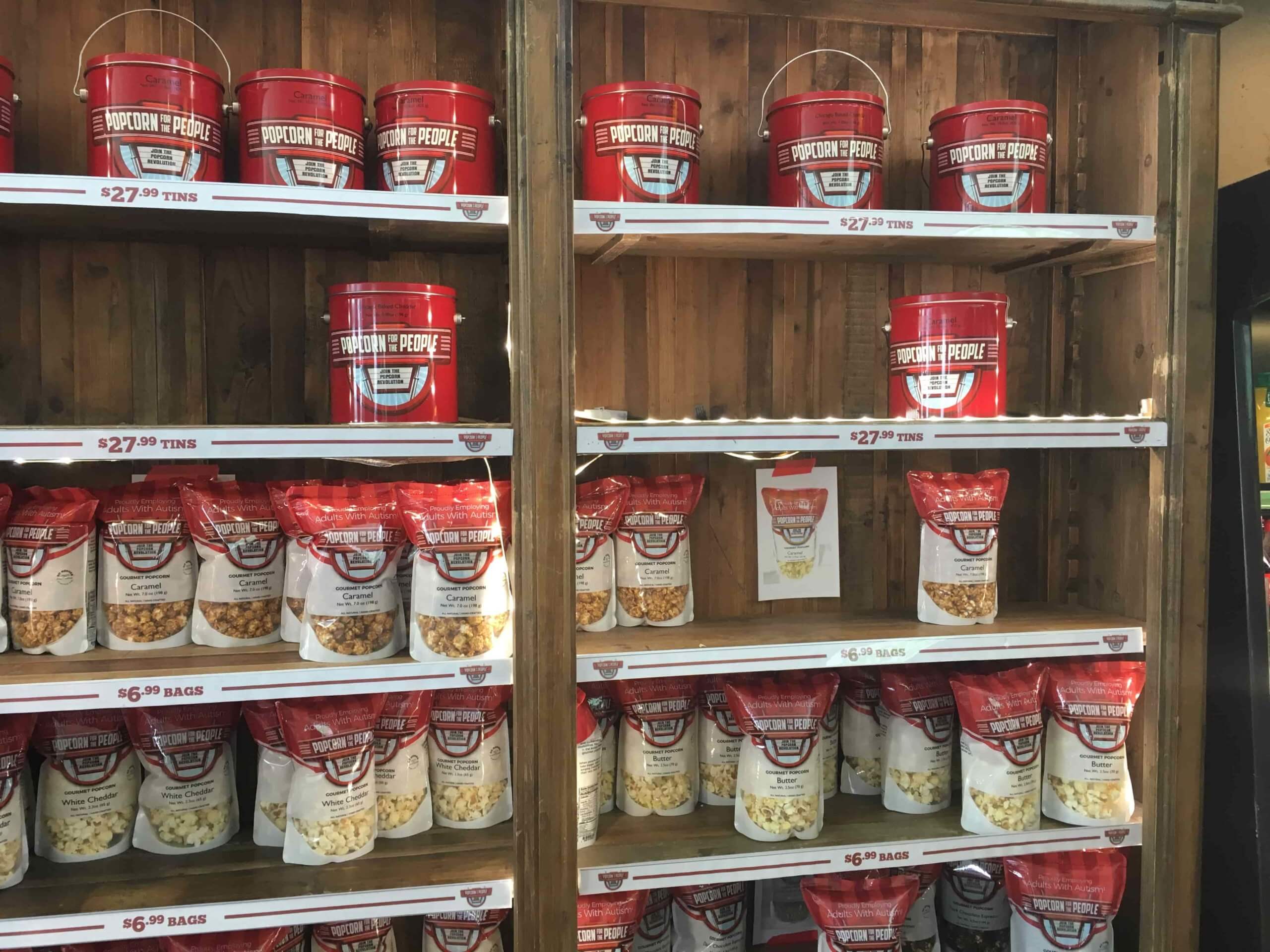
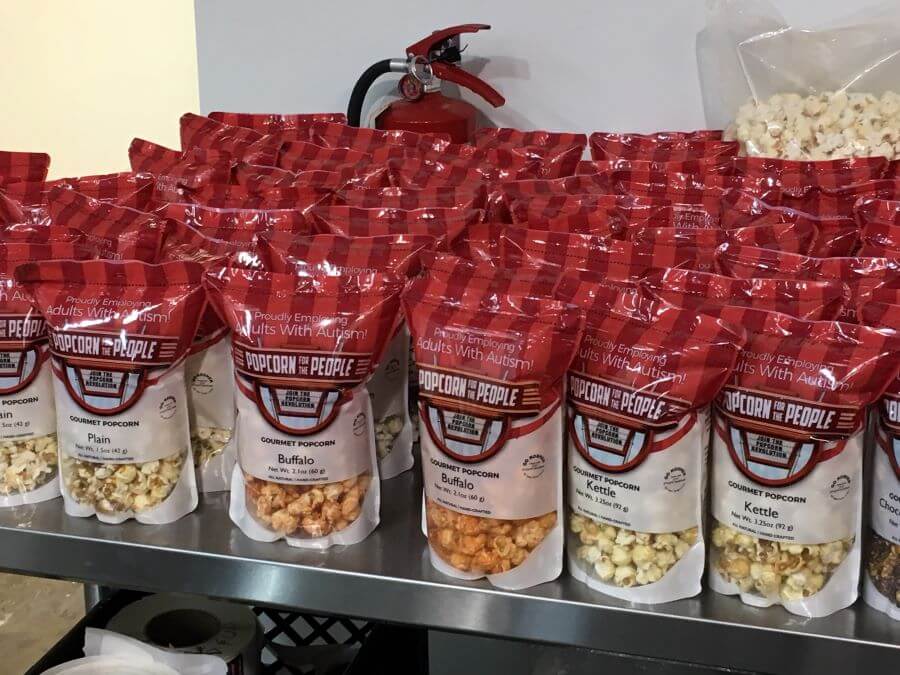
I discovered Popcorn for the People in the most unique and wonderful way: I stopped at a rest stop on the New Jersey Turnpike while traveling with my family from New York to Philadelphia. My family had gone in to the rest stop while I watched the packed the car. When they returned, they urged me to “grab your camera and pad and go in!” When I entered, I was immediately greeted by people sitting or standing at a table, all wearing shirts which either said “Popcorn for the People” or “Autism at Work.” Friendly workers were offering small cup samples of several flavors of caramelized popcorn. The rest stop store featured a display of bags of several flavors of caramelized popcorn for sale. This was my first “taste” of the product, the company and the wonderful workers. I made a note to reach out to “Popcorn for the People” and arrange a visit later in the Summer of 2019.

On July 31, I drove to the company’s headquarters in an industrial area of Piscataway, New Jersey, not far from Rutgers University. There are several companies in the same complex, all sharing a parking area. I entered the building and sat in a small waiting area, admiring displays of various products, photos of happy workers, and articles about the company. I then met with co-founder, Steven Bier, who shared the background to the company.

Bier explained that his son, Samuel (now 28), who is on the autism spectrum, had consistently been assigned to jobs which were not appropriate for him. In considering more appropriate employment options for Samuel, the family purchased a popcorn vendor booth in the Freehold Mall and then relocated to a different location as a store in East Brunswick, New Jersey. Bier then met Rachel Cheng, at the time a Rutgers student studying non-profit consulting. Rachel, who currently serves as COO, helped develop Popcorn for the People.

The company, which is a nonprofit which Bier reports is “run like a real business,” started with a 4,000 square foot space and were producing 200 bags of flavored popcorn per week. Last year, the company produced 350 bags/week and currently producing 3,500 bags/week. They proudly train and employ people with a range of disabilities including people with cerebral palsy, people who are blind, and people on the autism spectrum.

Bier and Cheng have found that it is useful to offer a wide range of shifts, noting that “a 40-hour work week doesn’t work” for most participants. The “employment” link on the company website (https://www.popcornforthepeople.com/pages/employment) indicates that there are five 3-hour shifts. In addition, the site indicates: “We have different jobs including sales person at events, popcorn cooker, bagging popcorn and labeling bags.” It further notes: “In order to decide which job would best suits you, please answer the following: ability to make change, put labels on bags, comfort level selling products at a booth at events.” The company proudly goes out of its way to create a job, even when it might be done more quickly by technology or automation (labeling/placing a sticker on a bag of popcorn is one example).

On the tour, we viewed the kitchen were the popcorn is popped and caramelized, and where various flavorings are added. There are currently 48 people with disabilities and 16 without disabilities working for the company. Customers can purchase products online, at several rest stops along the New Jersey Turnpike, and at various sporting and theater events (soon, it will be possible to purchase popcorn at Newark International Airport).

Lessons Learned/Challenges/Advice:

  • In producing food, there are many regulations and health codes which require careful compliance.
  • It is important to offer a range of jobs since each employee has different interests and skill sets.
  • Minimum wage is double edged sort—while it sounds wonderful and beneficial for employees, it can also make it nearly impossible for employers to cover costs—it is possible to cover production and other costs while paying employees $10/hour, but not $15/hour.
  • The most cost effective way of doing business may lead to eliminating certain jobs. Where possible, company had opted to create more jobs by not always moving toward automation. It would be cheaper in the long run to purchase a labeler, but having a person manually applying labels means a person has a job.
Read more