As classes, internships and jobs halt during the war, thousands of young adults on Masa Israel Journey programs are volunteering across Israel while also taking respites in safer areas such as Eilat and the Dead Sea.
For Josh Nevins and Simone Basharel, both of whom are in Israel on Masa gap-year programs, classes, internships and jobs largely ground to a halt when “Operation Roaring Lion” began on Feb. 28.
To fill their time meaningfully and maximize safety, nearly 5,000 Masa participants have been spending more time volunteering—and enjoying brief respites at hotels in places such as the Dead Sea and Eilat—courtesy of Masa Israel Journey.
Nevins, 23, of Greenwich, Conn., tells JNS the past 10 months working as a Masa Israel Teaching Fellow—teaching English to Sephardic teenage boys in Bat Yam—have been both invigorating and challenging. He estimates that he is one of about 140 fellows teaching English in Bat Yam and Rishon LeZion.
When the war began, in-person classes—and his teaching position—essentially stopped pending further guidance from the Home Front Command. Nevins joined his head teacher for a Zoom meeting with students last week.
“I wanted to be there for my students. A lot of them were scared and I wanted to say a few words to them. I told them that they should all be very proud of their country and of President Trump and that this war was to ensure the future and the safety of the world.”
He added, “I feel blessed to be here.”
While such meetings were useful for offering encouragement, Nevins observed that Zoom has not been very effective as a teaching tool and that regular online lessons have not taken place.
Nevins, a self-described historian with an expertise in the Mediterranean, Middle East and North Africa and a deep interest in Israel, had been considering spending a year in the country for some time.
“I was eager to go to Israel when I was in college—even before Oct. 7.”
He connected with Masa and opted for a 10-month program after graduating from the University of California, Santa Cruz, one year ago.
In addition to teaching English to students ages 14 to 18, Nevins—who lives in Bat Yam—has also been volunteering “mostly on kibbutzim and moshavim in the area of Gaza,” helping with agricultural work on a watermelon farm, assisting with building projects and volunteering in Sderot.
“We came from that bubble where we look down at our iPhone. Here, we can give back to Israel,” he said. “I am doing what I can to help.”
Nevins, who also “makes videos in front of historical places and disproves lies” on YouTube and Instagram and is known on social media as “Bat Yam Boy,” spoke with JNS from his hotel in Ein Bokek at the Dead Sea, where he and hundreds of other Masa participants were spending a week recharging.
“Our boss, David, randomly said, ‘We are taking you to the Dead Sea to recharge and to escape during the war.’”
Nevins said he expected to return to Bat Yam when the respite ends later this week.
“We will see what happens. I am optimistic,” he said, adding that he is considering returning to Israel once his program ends. “I want to come back ASAP! My hope is to stay!”
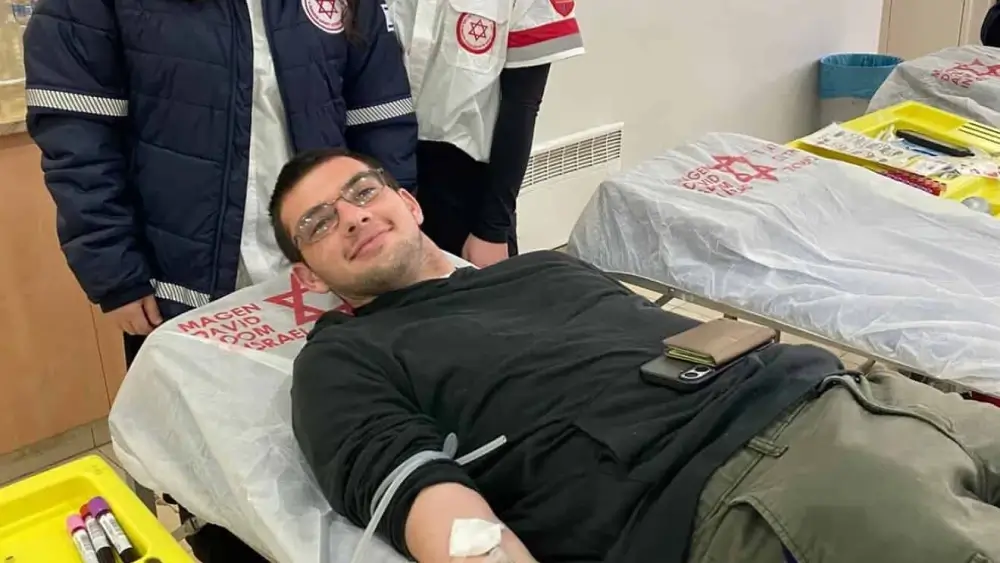
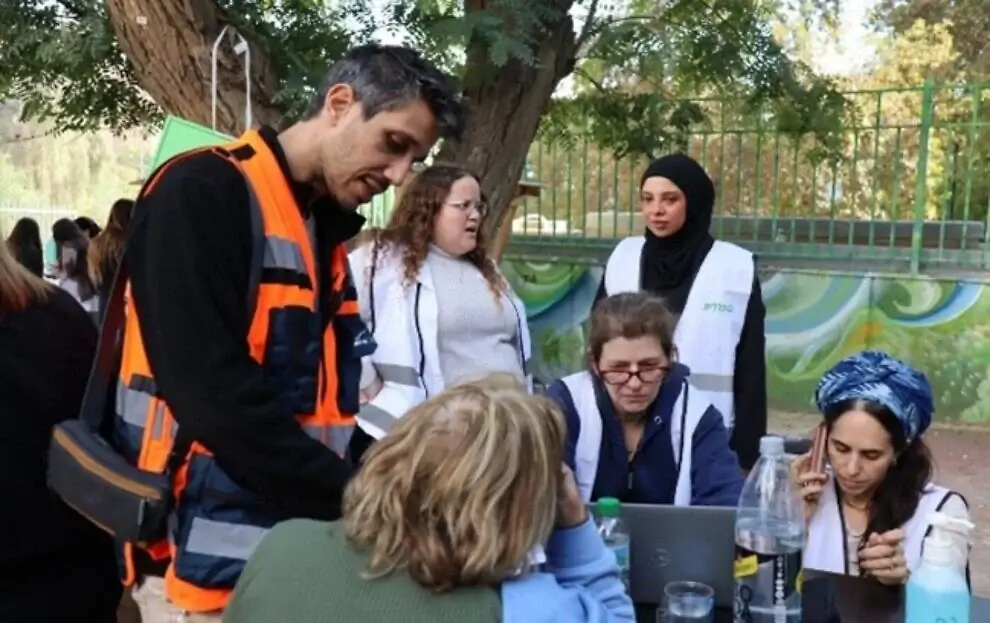
Masa fellows donating blood in Jerusalem, March 5, 2026. Credit: Masa.
Donating blood and volunteering
Simone Basharel, 19, of Los Angeles, has been working as an intern at a photo and social media company since arriving in Israel in January to participate in the Aardvark Israel–Classic gap-year program.
When the war began, she and fellow participants were relocated to Eilat. Unlike many others, Basharel has been able to continue her internship remotely.
She normally photographs events and “makes reels of pub crawls” and compiles promotional videos of Tel Aviv, but she has shifted to working from her hotel room in Eilat, continuing to write and edit content.
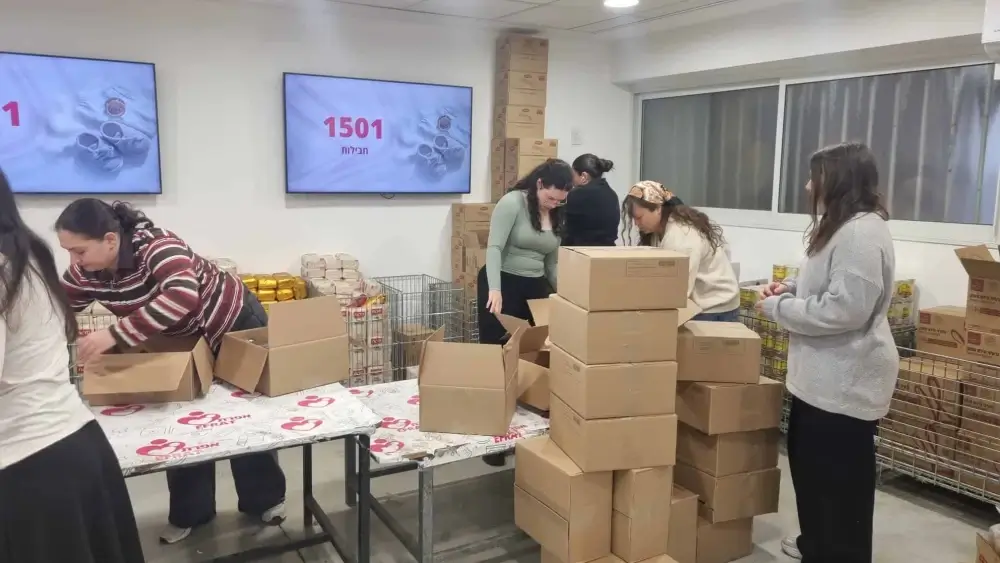
Basharel said she has been busy with her internship and has not had time to volunteer, though many friends have. They have been donating blood, volunteering at Hadassah Medical Center in Jerusalem and assembling care packages for those in need.
Basharel said she appreciated that Masa relocated participants “out of Tel Aviv, which has been a target,” to Eilat.
At the hotel, participants can choose from a range of activities, including drama workshops, sessions with a rabbi on Talmudic teachings, and discussions on creativity and innovation.
She is also pleased that her sister, who is participating in another Masa program, is staying at a nearby hotel in Eilat.
So far, about 1,500 Masa participants have taken part in similar respite trips, with another 3,000 signing up. The goal is to give fellows a chance to reset in calm, security-approved areas of the country. Masa is funding transportation as well as full-board hotel accommodations.
“At Masa, the safety and security of our fellows has always been our highest priority, and that commitment becomes even more critical in times like these,” said Meir Holtz, CEO of Masa Israel Journey.
“Over more than two decades, we have gained extensive experience operating in complex and emergency situations, and we are prepared to respond responsibly to any scenario,” he said. “At the same time, we know how to transition into what we call a ‘wartime routine’—ensuring that our fellows remain safe while continuing to experience meaningful programming, volunteering opportunities, and educational engagement during their time in Israel.”
He added, “I am incredibly proud of our fellows for the resilience and positive spirit they continue to show, and for the deep commitment to Israel they demonstrate even during challenging moments.”
Masa fellows volunteer in Jerusalem to prepare packages for families in need, March 8, 2026. Credit: Masa.
Since its founding in 2004 by the Jewish Agency for Israel and the Government of Israel, Masa has offered immersive, long-term educational experiences in Israel for young adults. More than 200,000 participants from 60 countries have taken part in programs lasting from one to 10 months, including teaching fellowships, volunteer opportunities and career internships.
The Masa Israel Teaching Fellows program, established in partnership with Israel’s Education Ministry, was created in response to the country’s shortage of English teachers.
Each year, fellows—native English speakers who have graduated from university—arrive from the United States, the United Kingdom, Australia, South Africa and Canada to teach spoken English in schools in Bat Yam, Rishon LeZion, Tel Aviv, Beit She’an and elsewhere.
Across Israel, doctors push aside personal loss and damaged homes to care for their patients during the war with Iran.
Fulfilling “The Oath of the Hebrew Physician”—the 10-part medical covenant that serves as Israel’s equivalent of the Hippocratic Oath—is not always easy during wartime, especially when a physician’s own home has recently been destroyed or badly damaged by Iranian missiles.
The oath’s first clause states: “You will fulfill your duty day and night to stand by the sick in their distress at any time and at any hour.”
Across Israel—from Eilat to Beersheva and Tel Aviv—physicians continue caring for patients even as they deal with personal losses, damaged homes and temporary relocations.
Dr. Amir Shahar, 76, a senior physician in the Emergency Medicine Department at Clalit’s Yoseftal Medical Center in Eilat and a self-described pioneer of emergency medicine in Israel, was driving from the hospital in Eilat to his home in Tel Aviv on March 15 when his son called to say their home had been badly damaged by a missile launched from Iran.
Fortunately, his son and granddaughters—who live on the first floor of the five-story building—reached the building’s shelter when the alarm sounded and were unharmed.
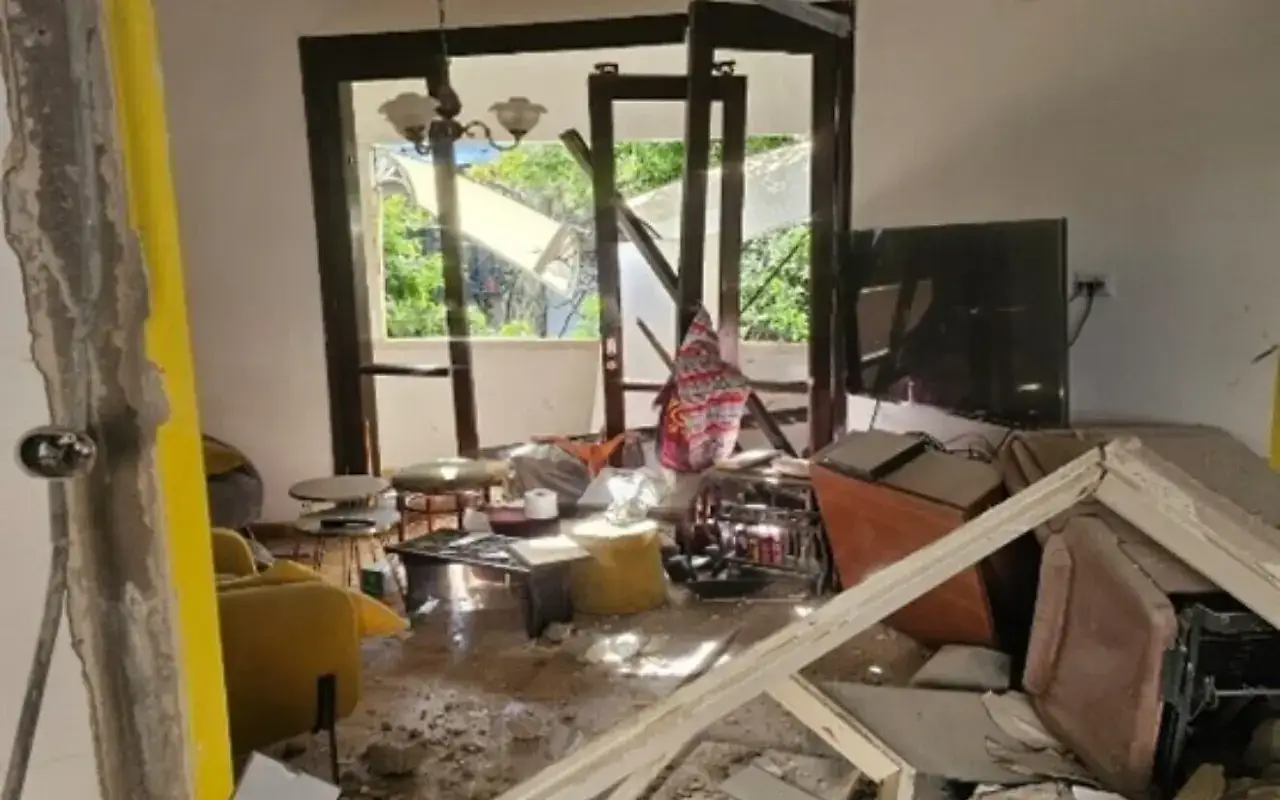
Shahar’s apartment, located on the second floor of the building built by his grandfather more than 100 years ago, sustained extensive damage.
“Twelve to 14 small bombs from a cluster bomb rocked the house,” Shahar told JNS. “All that is left is a skeleton of the house—no walls, no furniture.”
Shahar said he was currently staying in an apartment in Ramat Gan while continuing his work at Yoseftal Medical Center in Eilat.
He noted that three people in Eilat were recently injured by shrapnel from a missile. Despite the destruction, Shahar maintains both his sense of humor and perspective.
“Unfortunately, I have faced the angel of death many times—with patients and myself—in the army, recovering from leukemia, etc. So, we are acquaintances,” he said.
As he prepared to return to Eilat, Shahar reflected on the support he had received. “You can’t be in Israel without being optimistic. We have a very warm and sensitive society,” he said.
He described how many of his son’s army friends, who served with him more than 30 years ago, came to the apartment to help repair the damage over two days.
“You don’t have this anywhere else in the world,” he said.
Balancing patients and family in Beersheva
In Beersheva, Dr. Roi Levinzon, 38, a family physician at Clinic T in Clalit’s Southern District who also has extensive emergency experience through his 25 years with Magen David Adom (MDA), found himself balancing patient care with concern for his family.
On March 2, Levinzon was seeing patients when a missile alert sounded. He joined colleagues and elderly patients—many “with fear in their eyes”—in the shelter.
“We heard a huge blast and knew it hit the neighborhood,” Levinzon told JNS. “There was dust coming into the shelter from the ventilation system. We knew it wasn’t going to be a good outcome.”
“There was a huge panic in the shelter. People were shouting and crying.”
Although Israel’s Home Front Command recommends waiting for the official “all clear,” Levinzon knew he needed to respond.
“I waited five minutes. In my mind, I knew I couldn’t stay. In my mind, you always think of worst-case scenarios,” he said.
Outside, he saw extensive damage to cars and six nearby buildings. At the same time, he worried about his wife, who was home alone in their 15th-floor apartment a five-minute walk from the strike site.
He continued treating those with “face bleeding, anxiety and pretty mild casualties” before heading home to check on his wife, a social worker in the hematology department at Clalit’s Soroka Medical Center.
“I saw her panicked. She was afraid to leave the shelter. She was afraid that there was nothing left,” he said.
Ten minutes later, Levinzon received a call from Dr. Tsafnat Test, deputy medical director at Clalit’s Southern District.
“Maybe you can go back down to Ground Zero,” she asked.
Levinzon returned to help establish stations where evacuees could speak with social workers, receive emergency prescriptions and obtain assistance from municipal services.
He left his wife, who, he noted, is “used to dealing with anxiety” in her professional work. “She tried to relax. She is a yoga teacher and did deep breathing. After an hour, she calmed down,” he said.
Their home suffered damage to the entrance and shattered windows.
“Thank God it is not huge damage. We can still live there—we are waiting for repairs.”
Levinzon said many residents forced to evacuate their homes faced immediate medical challenges.
“In one second, they have nothing available,” he said. “Some of them have chronic medical issues, so we contacted their pharmacies so they could get their medications renewed.”
Many evacuees were relocated to the Leonardo Hotel, where Levinzon and other aid workers continued assisting them.
Back at his clinic, Levinzon is also helping develop new responses to potential mass-casualty events. Through the Team Shachar rapid-response initiative—a joint emergency medical team created by Clalit’s Southern District together with Magen David Adom—he is helping train physicians and clinics to treat trauma victims if hospitals such as Soroka become overwhelmed.
Sirens in Tel Aviv
Dr. Michal Gur Dick, 44, director of the Plotkin Clinic in Clalit’s Tel Aviv–Jaffa District, worried about the safety of her three children—ages 13, 9 and 5—when she heard the first sirens on Saturday morning, Feb. 28.
She quickly packed clothes, computers and medicine and drove them from their apartment in central Tel Aviv to her parents’ home on Moshav Orat. “I feel lucky and privileged that my children are safe,” she said.
She soon learned that a missile had struck near her home, but that did not deter her. The family medicine specialist returned to work the next day to continue caring for patients.
“I needed to both tell the children their house got damaged and open our clinic in a new place,” she told JNS. “It was very important for me to continue the routine of the clinic—both for my patients and for me.”
Her clinic did not have a bomb shelter. Dick and her team relocated temporarily to the nearby Yad Eliyahu Clinic.
She soon learned that a missile had struck near her home, but that did not deter her. The family medicine specialist returned to work the next day to continue caring for patients.
“I needed to both tell the children their house got damaged and open our clinic in a new place,” she told JNS. “It was very important for me to continue the routine of the clinic—both for my patients and for me.”
Her clinic did not have a bomb shelter. Dick and her team relocated temporarily to the nearby Yad Eliyahu Clinic.
She says the experience deepened her understanding of the role physicians play during crises.
“My broken windows and walls will be fixed,” she said. “It is a privilege to be with people in their broken moments—it gives me strength. That is when we are most needed.”
Each morning, Dick now makes the 40-minute drive from her parents’ moshav to the relocated clinic in Tel Aviv.
She says the experience reinforced something essential.
“When my home was damaged, I realized that routine is not just a work tool—it is part of the healing for all of us,” she said.
“My work gives me a deep sense of purpose and stability. When my home was damaged, I understood that even more clearly. Our patients are looking for an anchor in the storm. When they walk into the clinic and see that the team is there, that care continues and that one thing has not changed, it restores their sense of security. My private home may need rebuilding, but I will not give up on the professional home of my patients.”
Dick hopes the repairs will be completed soon. “The kids really miss their friends—and their routine,” she said.
This article was featured in the Spring 2026 issue of Jewish Action, jewishaction.com, March, 2026.
The hidden economic cost of miluim—and the resilience that carried Israeli families through
Last May, Miriam, originally from Cleveland, Ohio, walked away from her role as vice president of marketing at a start-up with offices across Israel. With her husband, Natan, thirty-seven, serving more than 450 days in Gaza since October 7, the demands of work became impossible to balance with raising their three children under seven on her own. “I made the decision very quickly,” she says. “I was spread too thin.”
The choice came during months of sleepless nights, when sirens sent her racing down four flights of stairs to the building’s miklat (safe room), neighbors grabbing her half-asleep children as they ran. The shelter was stifling, airless, crowded. “We were dripping with sweat, completely exhausted,” she recalls. “It was an incredibly intense time.”
In recent months, Natan, who has been away from home for up to six months at a time, was assigned a better army schedule, and so Miriamrecently found a new job. For now, she is focused on keeping daily life manageable.
Miriam is not alone.
While a ceasefire has been in effect since the fall of 2025, thousands of miluimnikim (Israeli reservists) and their families spent two long years under sustained financial strain as the conflict upended daily life and household income. An underreported aspect of the war is how Israelis, from recent olim to veteran immigrants to Sabras, navigated these pressures while also dealing with the emotional and logistical toll of a conflict that seemed to stretch endlessly forward.
Yet, in a pattern familiar to anyone who has lived in Israel long enough, many responded with creativity, faith and resolve. They drew on fortitude to keep their families afloat—paying bills, caring for children and elderly parents, and serving their country all at once.
Remarkably, and in ways that defy easy explanation, despite the war and a surge of global anti-Israel sentiment, Israel’s economy has demonstrated striking resilience. As of this writing in mid-2025, the Israeli stock market has posted strong gains, reflecting investor confidence.
But national indicators, however encouraging, obscure the human cost beneath them.
These numbers do not fully capture how individual families actually lived through the war—how income was lost, careers stalled and routines dismantled.
Natan, an attorney by training, made aliyah from Toronto in 2006. Miriam proudly refers to her husband as a “front-line soldier,” though she is quick to acknowledge the reality behind the phrase. For much of the war, he was, as she puts it, “very absent”—from his job and from his family.
Before the war, Natan worked at a large Israeli law firm before moving to an in-house counsel position, a shift he hoped would bring greater predictability. “The new job had the promise of better, family-friendly hours,” Miriam notes wryly. Instead, since October 7, he was rarely at work. Fortunately, his employer continued to pay his salary while he served in miluim.
What no employer could compensate for, however, was his absence from home.
“For the majority of his time in miluim, he had no cell phone, and we had no real conversations,” Miriam says. Only in recent months has some measure of routine returned. “He has a set schedule: ten days in, five days home, ten days in, five days home. And it is the first time he has had his phone.”
Atzmaim: When Miluim Meant Losing a Paycheck
For salaried employees in larger firms, the economic safety net—though stretched—largely held.
In the case of miluimnikim working in high tech, finance, law and other large organizations, employees generally continued to receive their regular salaries during long periods of reserve duty, even when absent from work for months at a time.
For the self-employed, however, there was no such buffer.
Self-employed workers (known as atzmaim, or freelancers) entered the war without the institutional protections of payroll continuity. They faced the financial consequences of reserve duty directly.
Shlomo Wiesen grew up in New Rochelle, New York, watching siblings and fellow congregants from the Young Israel of New Rochelle serve in the IDF. He joined the army at age twenty-five and has been serving in miluim for the past twelve years. A self-employed digital marketing professional, Wiesen did not have the benefit of an employer continuing his paycheck. “As a freelancer, it was very difficult; there was no paycheck waiting for me when I came home,” he says. While he does not have children to support, the Tel Aviv resident served extended stints in southern Hebron. “It was impossible to get any work done in the first month of the war. There was just too much going on.”
A self-employed digital marketing professional, Shlomo Wiesen did not have the benefit of an employer continuing his paycheck while he served in miluim. Courtesy of Shlomo Wiesen
And yet professional obligations did not simply disappear. Both Wiesen’s Jewish and non-Jewish clients in the United States were understanding and supportive, though expectations remained. “I told the non-Jewish clients I was on pause, out of commission,” he says. While Wiesen managed to make ends meet, and is grateful for that, he recounts stories of fellow soldiers in his unit who did not fare as well, including a psychologist in private practice who was forced to close his office and work instead in a public clinic.
Wiesen describes the amount of responsibility he and fellow soldiers faced early in the war, as well as the “very spotty internet on the base,” which made it nearly impossible to get any work done. As he began getting short leaves, he was “checking in” and “looking at my sites,” though he wasn’t doing any “real work.”
Gradually, amid the instability, a routine emerged. Wiesen’s schedule became more regular. “Work picked up,” he says, “and I could more aggressively pursue new clients.”
Wiesen was pleased that the army began giving freelancers priority in choosing days off so that they could “go home and do work.” This flexibility made it possible for some to remain professionally afloat. He reports that he and other religious soldiers would request to go home during the week so that they could do their computer work and other tasks. “As painful as it was to not go home for Shabbat, we needed to be home on a day when we could use the computer.”
Wiesen is grateful to his clients for their understanding and notes that one Jewish client insisted on paying him even while he was in miluim and not working. “I definitely appreciated that.”
While the war disrupted Wiesen’s professional life, it deepened his spiritual one.
Serving in miluim strengthened his faith. “The religious guys in the army would go out of their way to make a minyan—three times a day. You’d even see non-religious soldiers helping to make minyan, especially during Chanukah with candle lighting.” He describes singing “Shalom Aleichem” together on Friday night, eating Shabbat meals huddled indoors, and praying in makeshift spaces. “There was a strong sense of spiritual community,” he says.
Looking back on his months of service, Wiesen speaks with quiet pride. “I am grateful that I had the opportunity to do something so important.”
Professor Manuel Trajtenberg, professor emeritus of economics at Tel Aviv University and senior faculty at the Mandel Leadership Institute, describes Israelis as “incredibly resilient,” recounting stories of reservists in Gaza “with laptops who keep running their start-ups.”
Professor Trajtenberg, who has held diverse positions in the Israeli government, including chairman of the National Economic Council at the Prime Minister’s Office and chairman of the Planning and Budgeting Committee of the Council for Higher Education, is also careful to note the limits of that resilience. Israel, he says, cannot sustain a prolonged war, in large part because more than two-thirds of its army is made up of miluimnikim. “They are not a marginal addition to a standing army.”
He emphasizes that miluimnikim like Natan and Wiesen “are the best of the workforce—twenty-five- to forty-five-year-olds who are in their prime working years.” Those in combat units, intelligence units and the air force, he adds, “are the very highest-quality people in the workforce.” Mobilizing them for extended periods, he says plainly, “is a serious blow to the economy.”
The Entrepreneurial Spirit: Keeping a Business Running during the War
Chaim Jacobson describes his life in high tech as “good.” Still, he was uneasy about long-term stability.
Jacobson, forty-one, of Tel Aviv, began his career as a computer engineer in Israel’s famed high-tech industry. When he later encountered an opportunity to open retail stores, he took a calculated risk. Aware of highly profitable makolets in Jerusalem, he thought the approach could be replicated in Tel Aviv. “I realized that if owning a store worked, I could make a comfortable salary,” he says. “I thought, why not? I could open a bunch, maybe even a reshet (chain), and then exit. I took a chance.”
Five years later, Jacobson owns two makolets and a café in Tel Aviv. He attributes his success partly to the affluence of the surrounding community, but just as much to relationships. “You need a real connection with the community,” he says. Known for his friendliness, he emphasizes service and quality—and recounts going out of his way to secure basic products like milk during shortages, even when it meant no profit. “Sometimes I don’t make a penny,” he says, “but people need what they need.”
Jacobson himself has not been called up for reserve duty. “I guess I’m not relevant anymore,” he jokes. His business, however, has not been spared the effects of the war. Several of his employees were called to miluim, forcing him to scramble. For small business owners, this created immediate staffing challenges.
“You have to find replacements,” he explains. “When they were gone for months, we hired new employees.”
The logistical burden was compounded by bureaucracy. At the start of the war, employers were required to continue paying the salaries of employees serving in miluim, with reimbursement from the government coming later. “We didn’t know how much or when,” Jacobson says. “For months, we were paying double salaries.” Eventually, Bituach Leumi (the National Insurance Institute) reimbursed him and later shifted to paying reservists directly. “It worked out,” he says simply. “But it wasn’t easy.”
Professor Trajtenberg notes that the government has generally been “very generous in supporting miluimnikim.” At the same time, he corroborates Jacobson’s experience, noting that “owners of small businesses were affected” in a range of ways. Some, like those who own businesses in the north of Israel and had been evacuated, suffered. Others, like Jacobson, are doing well but dealing with all the red tape.
Some sectors, Professor Trajtenberg explains, actually performed well during the war. With fewer Israelis traveling abroad and more consuming locally, supermarkets flourished, as did banks. Defense-related industries prospered too.
Tourism: A Livelihood on Hold
Not all sectors, however, were able to adapt. Tourism was hit especially hard during the war. Tour guides, hostel owners and zimmer (private guesthouse) operators found themselves with little or no work for months at a time. Having barely recovered from the economic toll of the Covid-19 pandemic, Israel’s tour guides were once again among the first to feel the ground shift beneath them.
“Tourism has always been a volatile profession,” says Shulie Mishkin of Alon Shvut, a thirty-year resident of Israel and a tour guide for two decades. “Over the past five years, we’ve been knocked down over and over again.” While Mishkin found “guiding-adjacent” teaching work during both the pandemic and the war, others temporarily switched fields.
Patrick Amar, a tour guide who made aliyah from Montreal to Modi’in twenty years ago, was forced to reinvent himself. Before October 7, his calendar was full. “I plan my schedule a year in advance,” he says. When flights stopped and tours were canceled, the work vanished overnight.
After spending several months in the United States visiting family and speaking to communities, Amar returned to Israel and confronted reality. With guiding opportunities scarce, he enrolled in cooking school, then spent four months running a local burger restaurant with a friend.
Patrick Amar, a tour guide who lives in Modi’in, was forced to reinvent himself, as Israel’s tour guides were among the first to feel the economic shock of wartime. Courtesy of Patrick Amar.
Still, Amar, a father of five children ages twelve to eighteen, insists that guiding remains his calling. What sustained him—beyond adaptability—was faith. “I lost 90 percent of my income. I am a man of faith. I have emunah, especially when it comes to making a living. I grew up in a Sephardic business community where people have faith. If you’re a businessman without emunah, you won’t survive!”
By late December, Amar reported that guiding work had resumed. “Thank G-d, I’ve been busy since the end of the holidays. It’s quiet now, but 2026 is already filling up.”
High-Tech Growth
The Taub Center for Social Policy Studies in Israel reports that the largest employment gains during the war were in the health, welfare and social services sector, as well as in education, while the steepest declines occurred in hospitality and food services and in information and communication services. The high-tech sector continued to grow, albeit at a slower pace; according to the Taub Center, fewer than 2,000 high-tech jobs were added during the war, compared with roughly 14,000 during equivalent periods in previous years.
Much of Israel’s economic strength is anchored in its high-tech industry. The sector accounts for roughly 14 percent of the economy, making it not only a central driver of growth but also a critical contributor to government revenues.
Professor Trajtenberg offers a playful perspective on the role of high tech in Israel’s economy. “Israel’s economy is very easy to describe—we sell brains and we buy everything else! Fifty percent of the economy is high tech.”
Even agriculture, he notes, is deeply intertwined with technology. While regions such as the north suffered greatly, Israel’s “brain economy” proved more resilient than industrial economies dependent on physical infrastructure.
Unquestionably, however, the war impacted reservists’ career trajectories. In fact, Professor Trajtenberg’s main concern is the war’s negative effect on “human infrastructure.”
Ahuva Ross Cohen understands this firsthand. Her husband, Meir, who works in venture capital, served extensive periods in miluim. “After seven months,” she says, “from the company’s perspective, you’re not here.” While they managed financially, she worries about missed opportunities and long-term career impact.
Ahuva Ross Cohen compares the situation of miluimnikim like her husband, Meir, returning to work to new mothers returning to work from maternity leave. Courtesy of Ahuva Ross Cohen.
Cohen compares the situation of miluimnikim returning to work to new mothers returning to work from maternity leave. “It can feel challenging to return and quickly get up to speed. There’s an inherent pressure to be fully reintegrated and productive within the next few months. Even though you may physically be back, the mental switch from war zone to high tech is a hard context switch.”
Cohen works for the global high-tech firm, monday.com. Given her husband’s extensive miluim service and the need to care for her children, ages four and one, she has been affected at work. She praises monday.com. “They were amazing,” she says, citing grants, gifts and sustained attention to families of reservists.
By this past winter, her husband had served over 200 days. “We’re managing,” she says, “but the war isn’t really over,” as many of the men are still serving in reserves. Their faith, she explains, was central. “It carried us emotionally.” So much so that they named their daughter, born in September 2024, Lielle Emunah. “Our faith has given us both comfort and confidence in knowing our role throughout this war, that our fight is a moral one and that Hashem will perform miracles if we do our hishtadlut.”
While the war strained Israelis across every sector, those interviewed for this article share a common determination: to continue building lives in Israel, despite uncertainty and cost.
Miriam and Natan insist they “are grateful to live in Israel and to raise our children here.” Miriam currently works in real estate, and Natan has returned to his role as in-house counsel—though another miluim date looms ahead. They feel a deep sense of gratitude that they have been able to continue making ends meet during these difficult times.
“We really believe in this,” Miriam says. “It comes with a price. But we want to live in Israel, and we’re doing it for the Jewish people.”
Her husband puts it more plainly. “Every generation pays a price,” he says. “This one has to be paid. It’s the only real option for the survival of the Jewish people.”
Howard Blas is a social worker, special education teacher and inclusion specialist. He frequently leads Birthright Israel trips for people with disabilities and is the author of a recent book on b’nai mitzvah and disabilities. He recently made aliyah and lives in Tel Aviv.
Originally appeared in JNS, www.jns.org, Mar 06, 2026.
From roadside missile strikes to reinforced wards, two physicians tell JNS how their hospitals adapt under fire—and why they remain committed to their work.
Before March 1, all of Dr. George Asfour’s medical interventions took place in hospital operating rooms. They did not involve running from his car on a highway after a missile attack, assessing the wounded, extracting a patient with a head injury and treating him on the spot.
But that changed one night in Jerusalem, a day after the United States and Israel launched a joint military operation against Iran.
Dr. George Asfour, a surgeon at Kaplan Medical Center, March 1, 2026. Credit: Kaplan Spokesperson/Clalit Health Services.
Asfour, 36, thought his day of caring for patients—which began at 7 a.m. that Sunday—had ended after completing his rounds, performing three scheduled surgeries and checking on his patients one last time.
The Jerusalem resident, a senior surgeon at Kaplan Medical Center in Rehovot, was driving home around 10 p.m. when he heard sirens on a main road near the Ramat Shlomo neighborhood.
“I heard a siren, then saw and heard a missile explode on the opposite side of the road,” Asfour tells JNS in a video interview.
“I stopped the car, checked to make sure there were no injuries, saw three damaged cars and heard people shouting. Without thinking, I ran and removed a man from the car and helped evacuate them.”
“When I saw these cars, I only thought if they needed help—and jumped from the car. In that moment, I didn’t think of anything else,” he adds.
One man had head and eye injuries, while two others sustained milder wounds, he recalls. After ambulances and police arrived and transported the injured to the hospital, Asfour drove home.
Back home, he turned on the television and reflected on what had just happened. His wife questioned his decision to run toward the blast scene. He did not tell his daughter, 7, or his son, 3, about the incident, though he acknowledges they may eventually see footage of it online.
Even his boss, Dr. Barak Bar-Zakay, director of the Hepatopancreatic and Biliary Tract Surgery Unit at Kaplan Medical Center, was surprised to see him back at work early the next morning.
“He was in shock,” Asfour says. “He asked, ‘What are you doing here?’ and said what I did was fabulous.”
For Asfour, his response was part of the job—especially during wartime.
The Jerusalem native studied medicine for six years in Egypt before completing internships and residencies at Hadassah Medical Center in Jerusalem and Kaplan Medical Center in Rehovot.
He had originally been scheduled to be off on Saturday, Feb. 28. Instead, a call from Bar-Zakay changed his plans.
By 10 a.m., he and his team had moved patients, equipment, supplies and medications from the fourth floor to the safer first floor.
“It was a hard day,” Asfour recalls. He left the hospital around 9 p.m. and returned by 7 a.m. the next morning.
After 8 a.m. rounds, the team discovered that three patients—including one suffering from sepsis, a potentially life-threatening condition that can lead to shock and organ failure—required surgery.
“We prepare for surgery at 9 a.m., but there are only a limited number of operating rooms because not all of them are protected,” he says.
War transformed the hospital environment dramatically, he explains. “Everything changes,” Asfour says. “It is a stressful place.”
Patients were moved to the first floor, where departments shared crowded spaces.
“It is not your department with patients in their own rooms,” he says. “It feels like the emergency room with all the beds together. No one feels comfortable because there is another patient right next to you.”
Asfour and his colleagues divided their time among the emergency room, intensive-care unit and operating rooms.
Despite the pressure, he says the hospital staff functions like a family. “All of the doctors respect each other and treat each other like family,” he tells JNS.
He adds that he has never been treated differently because he is an Arab physician. “I feel like I am home,” he says “Everyone in the hospital loves each other.”
For that reason alone, he says, he is willing to drive 40 minutes each way to the hospital every day.
The patient he treated at the roadside, he reported, is now recovering at Shaare Zedek Medical Center in Jerusalem.
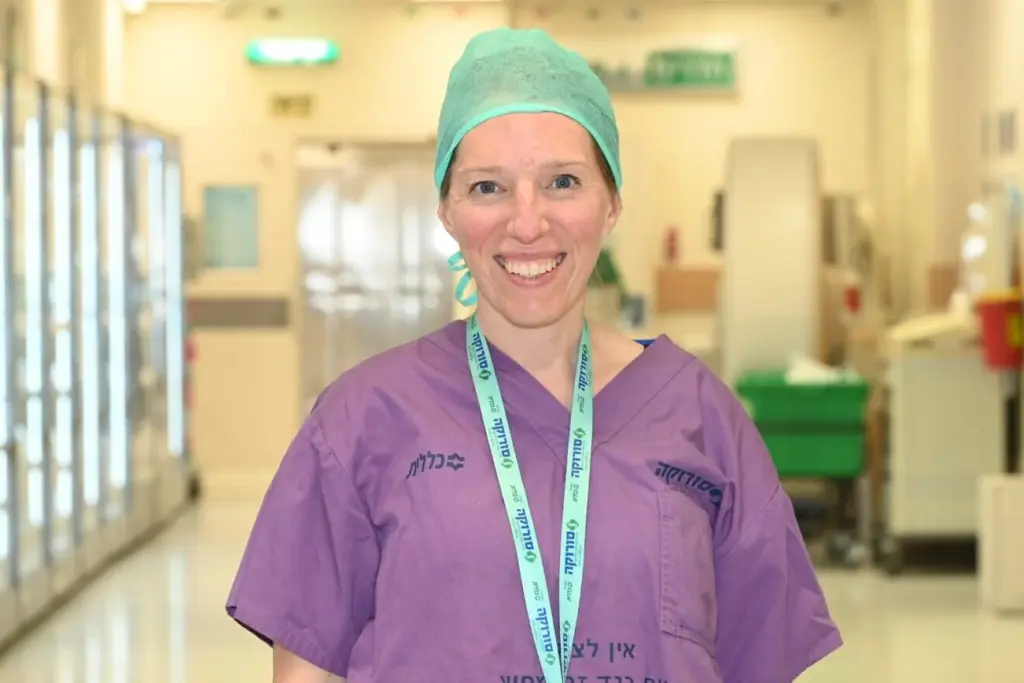
Dr. Tiffany Schatz, a surgeon at Soroka Medical Center in Beersheva, March 1, 2026. Credit: Soroka Spokesperson/Clalit Health Services.
From Philadelphia to Beersheva
At Soroka Medical Center in Beersheva, cardiothoracic surgeon Dr. Tiffany Schatz says her patient care has remained inside the hospital.
The Philadelphia native, a mother of three children aged 7 to 15, completed medical school at Ben-Gurion University of the Negev in Beersheva and surgical training in the United States. After years of practice in the U.S., she and her family made aliyah in April 2025, and she began working as a surgeon at Soroka.
Schatz, 43, says her medical expertise is frequently sought outside the hospital as well. “Last week we were having dinner with friends who mentioned a respiratory problem going on for two months,” she tells JNS. “I helped him get admitted to Soroka.”
Since the start of the current war, dubbed “Operation Roaring Lion,” Schatz says the hospital has maintained a sense of normalcy while adapting to wartime conditions.
Patients who could be discharged were sent home and elective surgeries were canceled. But cancer operations—her specialty—continued. “There is still lots of cancer surgery,” she says, as the hospital continues handling routine emergencies. “We treat someone who falls from a ladder and are ready for anything to happen.”
On Purim, nurses tried to maintain a festive spirit. “They wore silly wigs and took normal care of patients,” she says, smiling. “But the news was playing at the corner of the desk—a reminder that things are not normal.”
Another reminder came when a nurse arrived for work, reporting that a rocket strike in her neighborhood had blown out the windows of her home.
“There is no ability to stop and lament,” Schatz says. “Israelis just show that life goes on.”
Although her duties had not changed significantly so far, Schatz says staff members remained ready to be reassigned wherever needed. One colleague, she notes, was recently relocated to Yoseftal Medical Center in Eilat.
Balancing hospital responsibilities while her children remained home from school during wartime was challenging. Some acquaintances in the United States asked whether she planned to return.
But Schatz says she has no regrets about making aliyah. “Some people think we are nuts,” she says. “But this is where we are supposed to be. The war is not a reason to reconsider. This is part of the deal. This is our chance to help keep Israel going and be part of its future.”