Original Article Published On The JNS

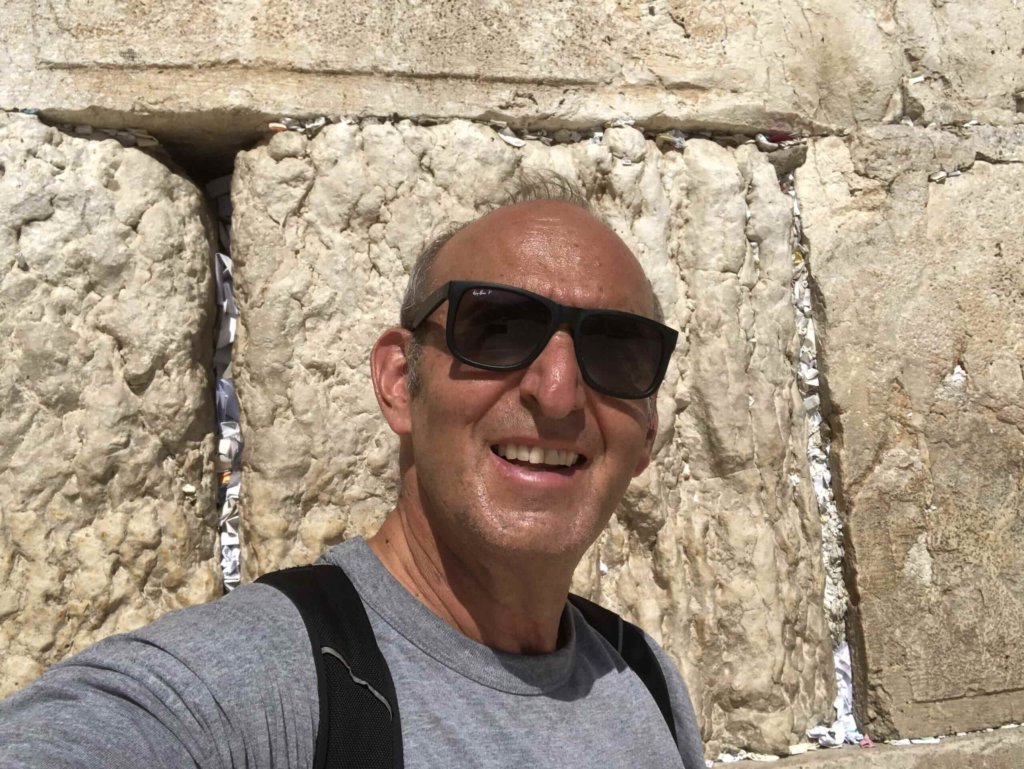
Dr. John Frank plans to attend Ramah Sports Academy in Connecticut—helping in the medical field and maybe telling some stories that other field with the NFL.

Some nice Jewish boys become doctors. One nice Jewish boy became a doctor while also playing in the National Football League.

When campers at Ramah Sports Academy in Cheshire, Conn., visit the infirmary this summer, they will get more than Band-Aids, throat lozenges and TLC from Dr. John Frank. They may also hear stories from the nice Jewish boy who began his medical studies while playing tight end with Joe Montana on two NFL Super Bowl San Francisco 49ers teams from 1984 to 1989. Campers may also learn that Dr. Frank was a founder of the Israel bobsled team.

Adam Benson and Graham Parker of New York City were thrilled when they learned their football-loving son, who is attending Ramah Sports Academy for the first time, would cross paths with Frank. Adam reports, “Max lives for football, and we think it is awesome that Max will be cared for by a camp doctor who is also a former NFL player.”

Camp director Rabbi Dave Levy could not be happier with Frank joining his staff this summer. “I was speaking with a pediatrician from Columbus, Ohio, whose two sons go to camp, and he said, by the way, I have a friend who might be up for coming to camp.” Frank, who splits his time between his practice in New York and his home in Columbus, is a board-certified otolaryngologist (ear, nose and throat doctor), as well as a diplomate of the American Board of Hair Restoration Surgery. He has treated more than 10,000 patients for hair loss and performed more than 2,500 hair transplants.

This summer, Frank, 59, will be attending camp along with his 12-year-old son, spending a week taking care of cuts and sprains, as well as oversee COVID-19 protocols. He will also coach flag football and share his wealth of stories about being a member of the NFL, sharing the importance of teamwork and his life as an observant Jew.

“I am excited to have him as a camp doctor and to use his football experience to create a positive experience for campers,” says Levy. “He will lead a multi-day flag-football experience and talk with the camp divisions about his NFL experiences, including what it was like being on a historic team in the 1980s and being Jewish in the NFL, and about whether it is worth the risk of playing football in its current form. I am excited to have the whole package; he is the embodiment of what our camp is about—Jewish life, sports and bringing those two things together!”

‘A strong legacy to uphold’

Frank grew up in Pittsburgh, attended Hebrew school and celebrated his bar mitzvah at Beth El Congregation of the South Hills. He reports, “I was into and not into Hebrew school, but was very much into learning for the bar mitzvah.”

He refers to his father, Alan, as “a celebrated athlete and Pittsburgh Jewish sports legend,” saying he “was a fantastic basketball player in college at Carnegie Tech,” which later became Carnegie Mellon University, and “a strong legacy to uphold.”

When it came time for John to become involved with sports, his mother was lukewarm at best with his desire to play football. His parents and grandparents insisted on examining his peewee football equipment to ensure they provided adequate protection. “I think my mother was terrified by the whole experience,” he recalls.

At every stage of Frank’s sports career, he was aware of just how good an athlete his father was. He feels his father “had it” innately, while he was “only an average football player until my senior year of high school. It just seemed to click.”

Frank attended Ohio State University, majored in chemistry and published academic papers while still an undergraduate. He always planned on attending medical school, even while playing football for the prestigious Ohio State football team.

The starting tight end at Ohio State from 1981 to 83, as well as a two-time Academic All-American, he caught more passes than any other tight end in the school’s history; became the team’s most valuable player; and was selected as a member of the All-Century Ohio State Football Team and Ohio State’s Varsity Hall of Fame.

Then Frank was invited to attend “the Combine,” the NFL’s major recruiting event and tryout in 1984, but he declined so he could study for final exams. Much to his surprise, he was drafted in June 1984 in the second round of the NFL draft by the San Francisco 49ers.

‘You know you are different’

In “NFL Films Presents,” Frank recounts the funny, somewhat embarrassing story of the telephone call from the 49ers coach. “Bill Walsh drafted me in the second round. I never anticipated playing in the NFL, so I didn’t know who he was. When I was in college, I wasn’t following the NFL—I was a chemistry major on the way to medical school. When the phone rang, he said it was the head coach to say congratulations. The only Coach Welsch I knew was the coach of Army at the time [George Welch]. I said, ‘Hi, Coach Welsh. He said, ‘No John, Coach Walsh. See you when you get out here.’

When Frank arrived at training camp, he was unfamiliar with the 49ers organization and didn’t know much about players on the team, though said he “had heard [quarterback] Joe Montana’s name since he was from Western Pennsylvania where I was from.”

He caught on to the organization and the team’s playbook quickly. His first catch in the NFL was for a touchdown at the Meadowlands in New Jersey during a Monday Night Football game.

Frank wasn’t the only Jewish player on the legendary 49ers team, which consisted of players from various religious backgrounds. “Harris Barton, the all-pro tackle, was the other Jew. We bonded. We had something special. We had fun on the team.”

While Frank says that he never experienced any difficulties being Jewish and notes that at the professional level, “it is a business,” and everyone is focused on the job, he observes: “When you are a Jewish athlete in the NFL, you know you are different.”

In fact, he recounts a touching story of Coach Walsh’s sensitivity. When Walsh read a story about anti-Semitic graffiti on a local San Francisco synagogue, he reached out to his player. “He pulled me aside, said he heard about the graffiti and said if you need to talk about the impact it is having, we are here. He was very sensitive,” remembers Frank.

During Frank’s first NFL season, he mostly worked as a reserve tight as the team went 18-1 and defeated the Miami Dolphins in Super Bowl XIX. He saw limited action due to an elbow injury. By his fourth season, he became the starting tight end. In his fifth and final season, he played in Super Bowl XXIII. He caught two passes, including one thrown by Montana during the winning touchdown drive. Following the game and to the surprise of many, Frank announced his retirement to devote himself full-time to medical school. During his five-year pro career, he caught 65 passes for a total of 662 yards.

Frank earned his M.D. from Ohio State in 1992 and completed his training in Chicago. He then established a plastic surgery clinic in San Francisco, specializing in cosmetic facial plastic surgery and hair transplantation. The NFL film, “Why John Frank, M.D., Choose Medicine Over a Career in the NFL” featured on Frank’s professional website shows his gentle touch and playful banter with a patient who consults with him for an ear problem. He notes that on occasion, patients learn his “back story” and ask about his NFL career.

As for his involvement with the Israel bobsled team, Frank recounts that years ago, he and a friend “were on a ski chairlift and were talking about the Jamaican bobsled team. We got the idea for an Israel bobsled team. It developed organically. It was really special.”

Frank, who also holds Israeli citizenship, notes that the bobsled team made it to the world championships in the early 2000s.

For now, he is getting prepared for and even excited about Ramah, just as campers look forward to returning after a year of too much time inside. “I am looking forward to being outdoors in the summertime, to be with my son, and to be around Jews and sports.”

Read more

Phone: 855-AUTISM-2

I was introduced to Andrew through a very trusted colleague who said I “must” meet Andrew.  She was right, and I have chosen to be the first person I will profile in my new website feature, “Disability Difference Makers.”  I will be writing about people, programs and organizations I have been privileged to meet.

Andrew lives in Connecticut and is a Certified Financial Planner™ (CFP™) Certified Neurodiversity Professional (CNP®). Something very special sets Andrew apart from other financial planners—he reports that he received his Autism Spectrum Disorder diagnosis as an adult and immediately knew that he wanted to do something to work with the special needs community to provide answers and security in the financial world.  Andrew is the Founder of Planning Across the Spectrum and specializes in helping any self-advocating client or family with autism and intellectual disabilities.   He proudly reports that he “provides a unique planning perspective for those with special needs, their caregivers, and their families” because he has “walked in their shoes.”

I admire Andrew’s technical know-how, his ability to come up with creative solutions to complex problems, and his generosity with his time and expertise.  He is also a mensch.  Andrews has hired a number of neurodiverse individuals for his team, and they continue to do amazing work creating what I consider to be the definitive calendar of daily disability events across the country (https://planningacrossthespectrum.com/autism-special-needs-events-calendar/), and doing a lot of his firms videos and graphics work. Andre shares useful free resources including healthcare planning, money skills, ABLE accounts, transportation and driving and more.  One of my favorites is: 

https://planningacrossthespectrum.com/blog/disability-benefits-employment/ where Andrew makes the case for why it is almost always better to work than to not—he knows that SO many families worry they will be jeopardizing benefits by working. 

Check out the amazing work of Andrew and his team!


Read more

 Gardening and Farm Work at Kibbutz Shluchot

Kibbutz Shluchot
Emek HaMaayanot, 1091000 Israel
https://www.facebook.com/shai.asher.miltons.gift
http://shai-asher.com (Coming Soon!)
Program Director: Menachem Stolpner
Stolpner247@gmail.com
972 54 674 6223

“we have begun to grow in earnest both a variety of herbs in the green house and vegetables in our raised bed garden. We have successfully raised tomatoes, cucumbers, peppers, zucchini, yellow squash, eggplant, broccoli & cauliflower amongst others- all for our own use. In the greenhouse, we have grown mother plants used for propagation, from seeds, cuttings and plantings and created a stock of herbs which include: mint, oregano, basil, thyme, lemon verbena & sage which we dry and package. Perhaps our most exciting growth items has been our long-term project of supplying organically grown ginger, turmeric and moringa for sale in the open market. These products were chosen for their important health qualities and limited availability locally. It is our hope that these “Cash Crops” will assist us on our path toward greater financial self-sufficiency. In addition, program participants do woodworking, repurposing discarded materials and creating them into tables, shelving and other furniture. Apprentices have previously secured work on the Kibbutz in the communal dining room, kitchen, mini-market, Kibbutz Zoo, Dairy and the turkey coops both on the kibbutz and on the outside. Future plans include expansion into areas of general maintenance, bicycle repair and services to the elderly.”

In the News:

https://www.jpost.com/opinion/the-israeli-hiring-the-disabled-to-grow-healing-turmeric-and-moringa-646807

https://www.israel21c.org/special-needs-adults-find-meaningful-work-on-kibbutz-farm/

Jewish Life Magazine (South Africa) Issue 131 August 2019

From the Program’s Materials:

Shai Asher (Milton’s Gift), is an apprenticeship program for adults with special needs where they learn trades and develop life skills within the supportive and inclusive environment of the greater kibbutz community. Menachem Stolpner, a former New York social worker, immigrated to the kibbutz in 1997, worked in the kibbutz dairy for 13 years, and founded the program in 2013.  Stolpner strongly believes that individuals with special needs deserve as much purpose, dignity and meaningful opportunities as anyone else.  The number of people served by the program has risen to more than 60 over the course of the past 8 years. Future plans include growing individualized herb plants for home use and selling them at local food markets; planting moringa plants outdoors to grow as trees to increase stock material; increasing turmeric production (to either process or sell fresh to the local Israeli organic market) and transporting workers on educational outings to nearby greenhouses and agricultural projects.

The Coronavirus pandemic posed many challenges to the program mainly through general governmental restrictions on movement and proximity. Shai Asher overcame many of these restrictions due to dispensations given to people classified as “special needs” and as workers in agriculture. This included: relaxing limitations on how far one could travel from one’s home (1km. for general public), limit on group congregation (10), restrictions on indoor activities (all our work takes place outdoors) and dispensations given to agricultural work (unfettered). Closure of the program lasted just 2 weeks during a time of more than a year. Results of our “freedom to work” were a stream of requests for placement in our program, resulting in a significant increase of the workforce. Improvement projects slowed significantly due to permit approval delays and the restrictions on travel.  Instead, we did the work by ourselves including construction cold frame, compost storage bins, compost sifter and a deck.

Additional Information about Shai Asher: Transitional Employment Solutions

Mission:

To provide meaningful vocational/apprenticeship training, employment and career development for adults with intellectual, developmental, social or physical disabilities. The program focuses both on preparing individuals to enter/reenter the job market as well as providing enriching and meaningful work opportunities for those better suited to a sheltered environment.

Purpose:

The program bridges the gap between school (which ends at age 21) and employment in the open market by providing participants with the essential knowledge, skills and “hands on” experiences needed to succeed. Our goal is to increase career options, encourage greater independence and help reduce individual’s dependence on governmental financial support. The program seeks to address the greater than 70% unemployment rate in Israel for people living with a disability.

Challenges/Lessons Learned/Advice:

-financial:

Experience has shown me that most issues surrounding independent innovative projects in Israel face financial challenges. Interest both from families with a special needs individual and established programs serving the population hold our work in high regard but this rarely translates into financial support as funds are mostly through established channels.

Our funding comes from private individuals or foundations who are open to funding new and innovative approaches. During the Covid period, I have found that people and foundations with resources were even more generous than usual. However, with the pandemic effecting every human being the level of priority for funding “special needs” dropped significantly in general.    

-lack of support of host institution

Here too, priorities and resources shifted toward areas other than special needs. In terms of my Kibbutz community, we were left to our own devices to “sink or swim”. I am happy to report that we ended the year thriving: tripling our work force, both professional and special, increased our budget significantly and completed a portion of planned renovations.

-transportation to program (especially during Covid)

(see paragraph 2  “from the program materials)

Read more

Original Article Published On The JNS

The 21-minute work was shot in one take over the course of a single night. “Everyone said it was crazy,” recounts writer and director Tomer Shushan.

When Tomer Shushan had his bicycle stolen, the Israeli-born son of Moroccan Israeli immigrants went through a range of complicated emotions. Once he started the process of getting the bike back, he began to feel sorry for the alleged thief, called off the police, paid the immigrant who took it 250 shekels and still witnessed the man continuing to cry, afraid the police come for him.

“That I almost cost someone to lose [livelihood and possibly] his life, that’s what they experienced. I felt so bad that I didn’t want to have the bike anymore,” recalls Shushan. The 33-year-old graduate of Tel Aviv’s Minshar School of Art, Shushan turned his feelings into “White Eye,” a poignant 21-minute film he says he wrote in less than an hour, and later directed, about an Eritrean worker getting by in Israel and wrongly accused of stealing a bicycle from an Israeli man.

“Released in October 2019, the short film has appeared in and received awards at such festivals as the Warsaw Jewish Film Festival (Best Narrative Short), the Haifa International Film Festival (Best Short Film) and the 2020 SXSW (South by Southwest) Film Festival, where it was awarded Best Narrative Short. It is one of 15 films nominated in the Best Live Action Short category for the 93rd Academy Awards, which take place on April 25 at 8 p.m. EST at the Dolby Theatre in Los Angeles.

Shushan, lead actor Daniel Gad (who plays Omer, based on and closely resembling the name of writer “Tomer”) and cinematographer Saar Mizrahi recently discussed the film at an exclusive screening hosted by Daniel Glass, founder and CEO of Glassnote Records, and his son, Sean Glass, a filmmaker who has also had careers in music, tech and clothing (@sdotglass). Daniel Glass, who has seen the film many times, opened by noting, “I am sobbing and crying at this point,” in reaction to the thought-provoking film, which premiered April 20 on HBO Max.

The film was shot in one take over the course of a single night between 4 p.m. and 4 a.m. This means the movie was shot in its entirety multiple times. “Everyone said it was crazy,” recounts Shushan. “We believed it was the heart of the movie to do it in one take; it is just what we believed!” Despite his determination, Shushan playfully acknowledges that “until midnight, we had nothing, then magic. We got into the rhythm. We had six full takes and had to choose one before the sun came up.”

Much like Shushan’s painful personal stolen-bike story, lead actor Gad (Omer) spots his recently stolen bicycle in a run-down Tel Aviv neighborhood. He recognizes it due to a dent and a sticker his girlfriend had put on it and seeks ways to cut off the lock and reclaim it. Yunes, a black Eritrean immigrant on a break from his job in a nearby meat-packing plant, sees Omer and reports that he is the true owner of the bike, indicating that he paid 250 shekels for it. Two police officers respond and discover issues with Yunes’ visa, which could lead to possible deportation to his native country for him, his wife and their young child. Omer decides to withdraw money from a nearby ATM to pay for the bike. He returns to witness a painful surprise ending.

Gad, 31, is a well-known Israeli TV, film and theater actor. He served in the Israel Defense Forces Theater, studied acting at the Nissan Nativ acting studio in Tel Aviv, and has starred in the popular Israeli television sitcoms “Shababnikim” and “Galis.” He is currently starring in “Motel Bool BeEmtza,” has appeared in such movies as “The Damned,” and has performed in such plays as “Oliver” and “Shakespeare in Love.”

‘A story between two people’

As for his work on “White Eye,” Gad says “this was a very good challenge. It is the first time I did something like this. I really enjoyed the experience.”

Part of the experience involved not meeting Yunes until filming began. Shushan intentionally kept the actors apart until filming started.

Shushan also employed Eritreans who were not trained actors. “I met Dawit [Tekelaeb, who played Yunes] in the street when I saw him through the window of a hamburger restaurant washing dishes. I could see in his eyes he was so sad and not connected, so I approached him. He told me something—and I thought that the voice of immigrants should be non-actors and immigrants. Not everyone knows what it is like to wake in the morning and be illegal. So we used non-actors; they are the only ones who understand.”

Shushan also selected the title of the movie. “ ‘White Eye’ symbolizes blindness, which is what I feel the main character is in this moment; he is blind, and his vision comes back when he sees that his action causes harm to someone. This also happens from a white person’s eyes. The main issue is blindness, and how the Western world behaves toward refugees and immigrants.”

There are reportedly 40,000 to 80,000 migrants, illegal immigrants and asylum-seekers from Eritrea, Sudan and Somalia living in Israel with more than half living in the Tel Aviv area, mainly South Tel Aviv. The situation is politically and socially controversial, fraught for years with some locals complaining of a related increase in crime and rallying to move migrants out.

“I wrote [this film] because of the reality in Israel,” he says.

But he adds, “After it was in festivals, we understood it is a story about humans, about the international reality everywhere. It may have political aspects, but it is a story between two people—if one is more privileged, one can lose his life. There is no equality.”

The film raises important and timely issues about prejudice, racial bias, and the treatment of migrants and people of color.

The reality that Shushan has been nominated for an Oscar Award is slowly settling it.

“During this crazy year, it has been an amazing journey,” he says. “I am starting to believe. It is an amazing feeling you can’t put into words!”

Read more