Howard’s 2023 Ramah Visits

Original Article Published On Facebook

Noam Zinger’s road to working in the Tikvah Program at Ramah Day Camp Philly was anything but straightforward. The Israeli emissary, who has a great deal of experience working in Israel with people with disabilities, dreamed of working as a madricha (counselor) in a Tikvah Program at a Ramah overnight camp. When she learned that the job may involve walking long distances on hilly terrain and assisting in such self-care activities as showering campers, she know she would have to consider other options. Zinger was up for the challenge, but she knew that having Cerebral Palsy might prove to be difficult for the job.

Zinger eventually accepted a position at Ramah Day Camp Philly, and started working in Sha’ar (Hebrew immersion program). She was reassigned to the omanut (art) department, and eventually found her way to her true calling—the Tikvah program, for campers with a range of disabilities and support needs.
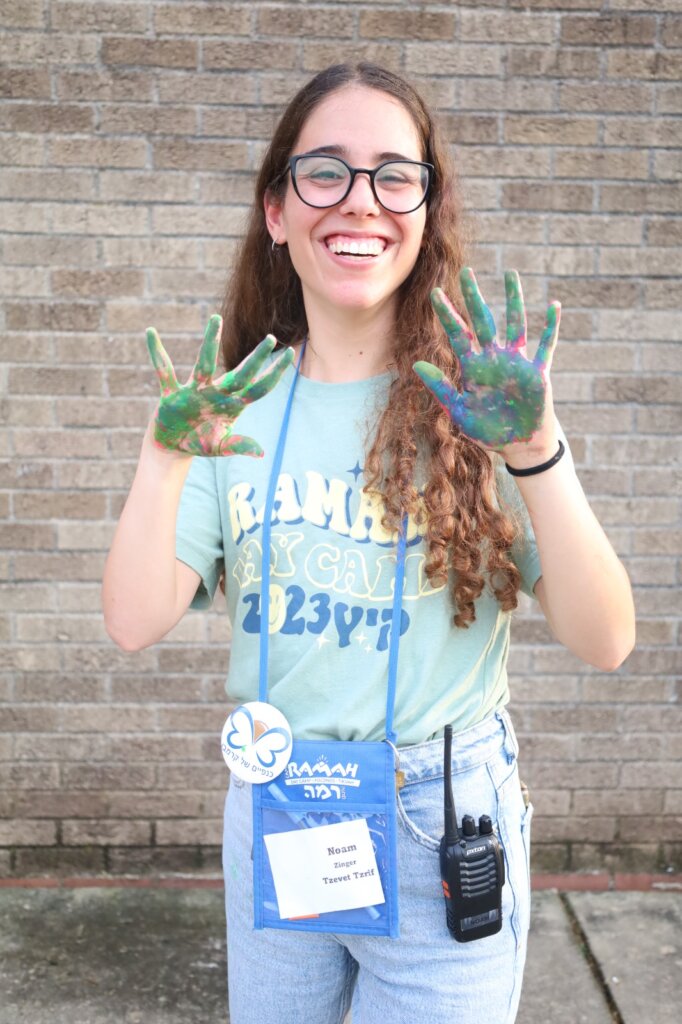
Zinger spent her days at camp walking RDC’s grounds, checking on and supporting campers in the various edot (divisions), and consulting to fellow staff members. Her travels take her up and down the stairs of the Perelman building—to the sensory room and to indoor cooking—and to the athletic fields, gan (garden), and kikar (field). While the walk sometimes felt tiring, Zinger remained upbeat and always smiling.

Zinger, who worked for five years with the Krembo Wings disability organization in Israel and hopes to study special education, is very satisfied with her summer. The work at camp was satisfying, and her host family was kind and accommodating.

Zinger had discussed her personal challenges, support needs and her sincere desire to work at Camp Ramah with the sochnut/Jewish Agency. By working at RDC, she could return “home” to her wonderful host family, the Cherry Family, each afternoon–after a long, hot, tiring day on the job. “She was very above board about what she needed,” reports Rabbi Shai Cherry, rabbi of Congregation Adath Jeshurun in Elkins Park, a short walk from camp, housed on the campus of Perelman Jewish Day School. “She asked us if we had a bannister and if we had a lip she would need to step over to get in to the shower. Those were the only logistical concerns. We jerry rigged a step up—there were no other physical accommodations.” The Cherry’s enjoyed hosting Zinger—they just wished their own children were around to get to know her more and speak Hebrew with her. One of the Cherry children, Rina, was a counselor this summer in the Tikvah Program at Camp Ramah in California (Ojai). Zinger enjoyed her time with the Cherrys, where she learned about Judaism in the United States. “There are lots of ways to see Judaism. You can practice Judaism in so many ways!”

While Zinger would love to return to Philly, she is hopeful that she may be able to return to work in one of Ramah’s overnight Tikvah Programs. She is up for the challenge!

Read more

Original Article Published On Facebook

In three days at Camp Ramah in the Berkshires, I witnessed both a continuation and a wonderful evolution of a long Tikvah tradition. Tikvah’s founders, Herb and Barbara Greenberg, persevered as so many objected to a program providing inclusive overnight camping to children and young adults with disabilities. As the Greenbergs recount, people worried that “normal” campers would leave Ramah, the level of Hebrew—and the camps finances—would decline, and the overall structure of camp would suffer. Luckily, one director realized that including people with disabilities was very much in line with Ramah and Judaism’s values. Tikvah was born in 1970 at Camp Ramah in Glen Spey, NY and soon moved to Camp Ramah in New England in Palmer, MA.

I was lucky enough to begin my tenure with Tikvah and the Greenbergs in 1984. I have essentially never left. After decades working as a counselor, rosh edah and Tikvah director at Ramah New England, I have been privileged to direct our National Ramah Tikvah Network. In that capacity, I convene our Tikvah directors to share best practices and support each other. I also visit many camps each summer to see inclusion in action.

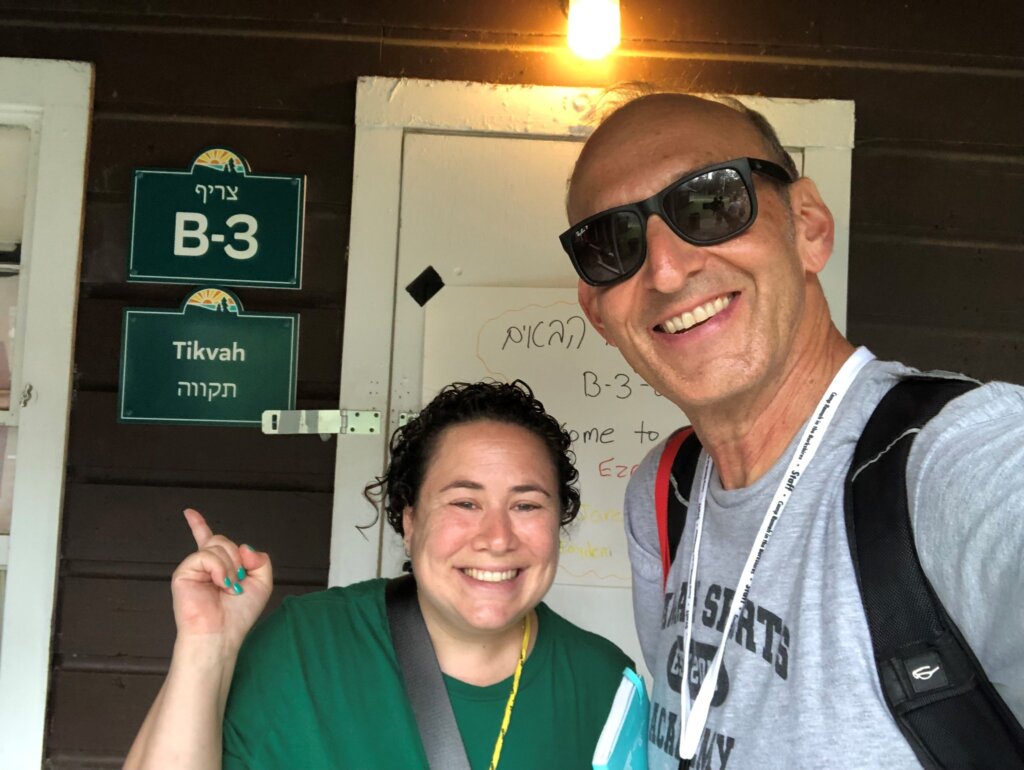
Coming to Ramah Berkshires this week was extra special. Our newest Tikvah program is now underway at Ramah Berkshires. Five boys with disabilities lived in bunk B3—next to neurotypical peers—where they participated in swimming, boating, zip lining, Jewish studies classes, cooking, rock wall climbing, sports and tons of socializing with peers.

As I watched staff members and campers of all ages interact with our campers— including with one who uses an augmented communication device–in the dining room, at tefillot and on the kikar—so many thoughts went through my mind. Interacting with and including people with disabilities seemed so natural. I felt hopeful for the future expansion of Tikvah and for the inclusion of campers and staff with a range of support needs and differences.Of course it helps that our Tikvah director, Elisheva Layman Salant, is also the Director of Community Care and Inclusion. Elisheva heads a large team charged with helping campers and staff receive the supports and accommodations they need to succeed. On a personal level, I felt like a proud parent watching Elisheva and her assistant, Elizabeth Chipkin, former head of the Breira inclusion program at work. The three of us have deep roots in Tikvah gong back decades.

When I arrived in Tikvah in the mid-1980s, I worked with Elisheva’s mother, a respected Jewish special educator in the Washington, DC area. Many years later, Elisheva was a counselor in my Tikvah Program. She then became a rosh edah, where my son worked for her in Tikvah. Elisheva has also had siblings work for me in Tikvah at Ramah New England.

Elizabeth Chipkin was our long time inclusion specialist at Ramah New England—arriving there in 2005. It is a great feeling of naches to watch them in action at Ramah Berkshires!

Elisheva has been working closely with Ramah Berkshires leadership to start our newest Tikvah Program. This year’s 12-day program will likely grow in to a one-month program for returning campers and will offer another short-term program for new campers. In the near future, a Tikvah building will support even more campers as they build friendships with peers from throughout the Ramah community.

The word is already getting out! In two days, we welcomed Jewish educators and funders who were excited to see Tikvah in action and spread the word. Another Tikvah counselor of mine from the late 1980s, Rebecca Wanatick, director of Disability Inclusion and Belonging for the Jewish Federation of Greater MetroWest NJ came to visit—she attributes her decades long professional involvement in the Jewish disabilities inclusion world to her years working with Tikvah.

As we helped the Tikvah campers pack to go home, make memory books and share beautiful good byes with new friends—within Tikvah and throughout camp—I am envisioning a day in the not too distant future where Berkshires campers return to camp to work on Tikvah staff. It won’t be long before they launch careers as rabbis, therapists, business owners and funders—all dedicated to a more inclusive world!

Read more

Original Article Published On Camp Ramah Wisconsin

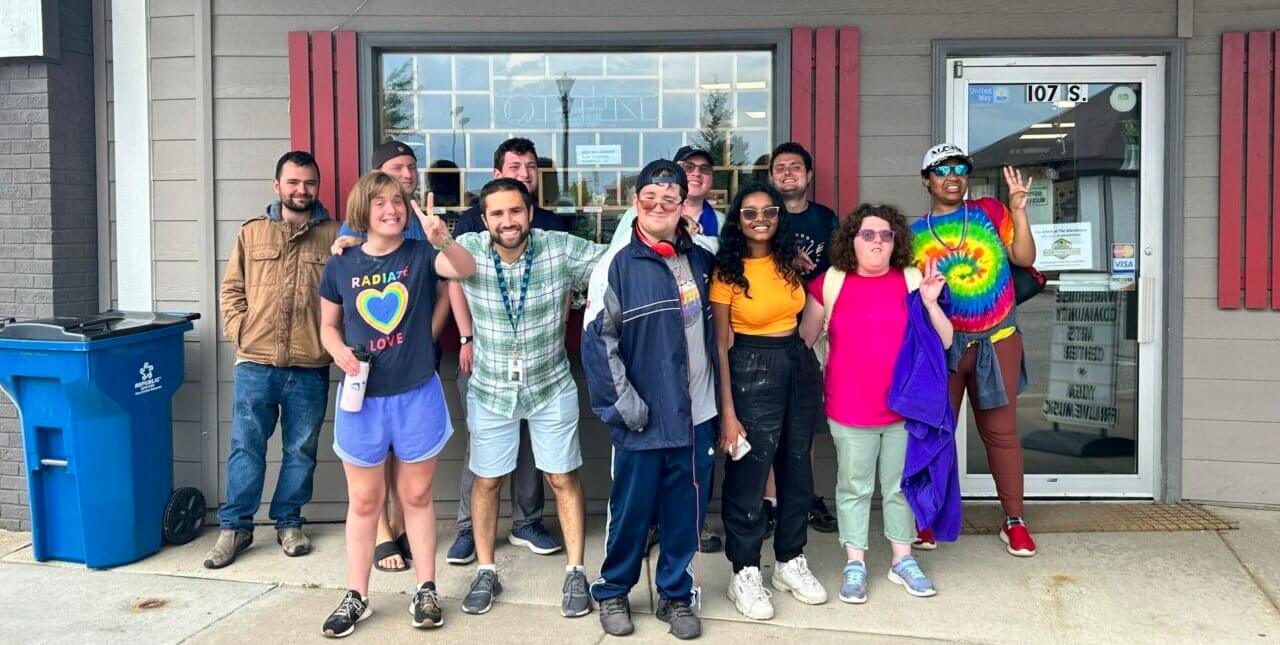
Thanks to a special partnership with Camp Ramah in Wisconsin, several Eagle River businesses are helping provide meaningful job training and work experiences for members of Atzmayim. Participants in this vocational program, serving young adults ages 18-22, come to breakfast each day dressed for work. They then head out to their jobs in our local community at Eagle River Roasters, Trigs grocery store and Walgreens pharmacy.

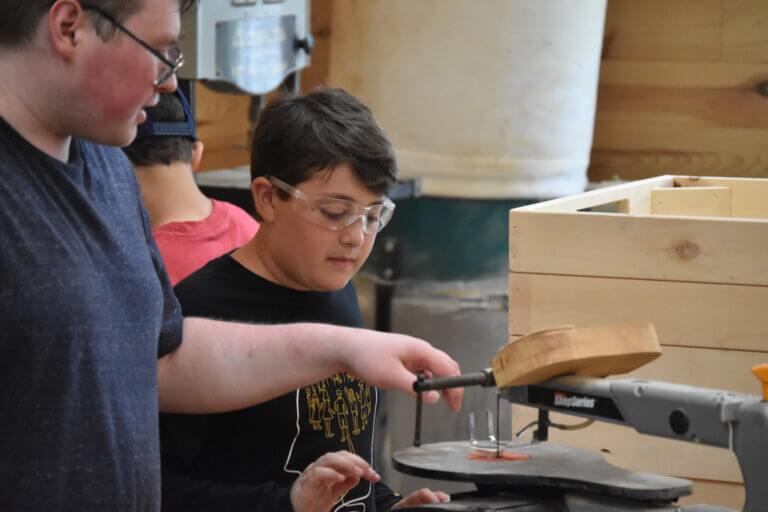
In past years, Atzmayim participants have also worked at a local children’s museum, toy store and resort. Some members of the program work at Camp Ramah. Charlie currently works in the kitchen and does dining room set up between breakfast and lunch. Andre, a graduate of Atzmayim, is a full summer salaried employee in the woodworking and arts departments. He proudly points out Adirondack chairs he has helped build, various things he has sewn, and hand washing signs he has made.

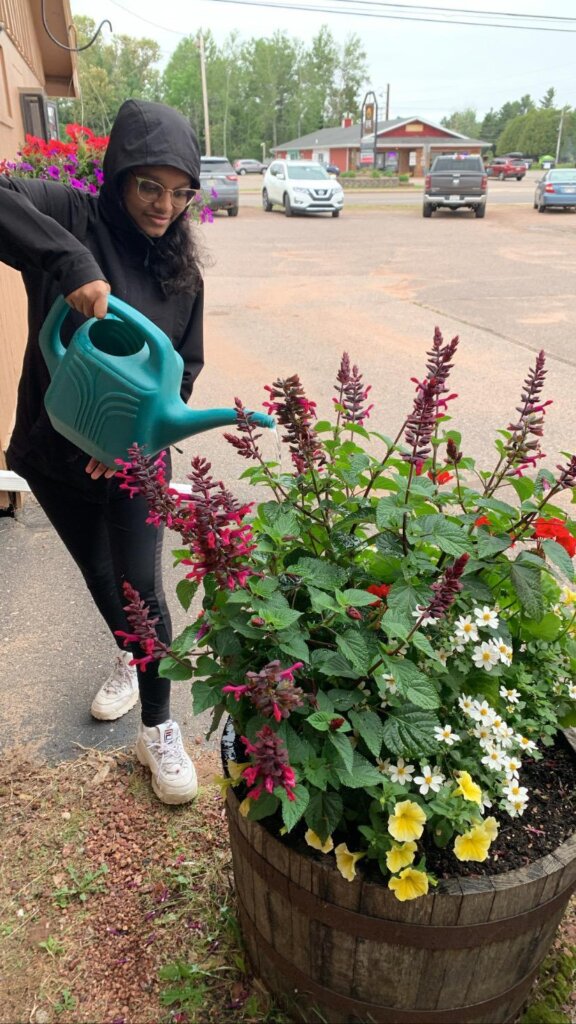
At Eagle River Roasters, Praveena works independent of a job coach.  She starts her day by tidying up the outdoor garden dining area. She then sweeps the floor of the roasting room, places labels on coffee bags and organizes shelves in the café gift shop.  Owner Daniel Beihoff, who has a nephew with autism, is pleased with Praveena’s work and with the long-standing relationship with Camp Ramah.  “We and our customers get a lot out of it.”  He and members of his team have come out to camp for meals and to see plays, his coffee is served in the dining hall and a special Ramah coffee blend is available for purchase at camp. “It takes a village. We are one big circle. We are all in this together and we all have something to offer!”

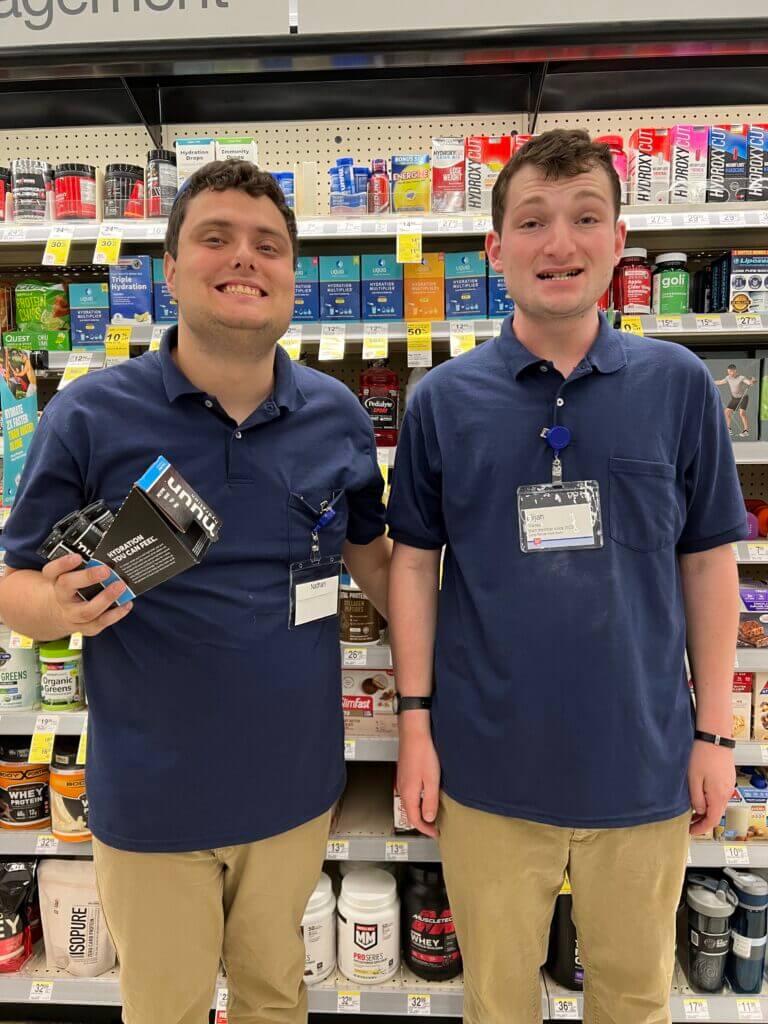
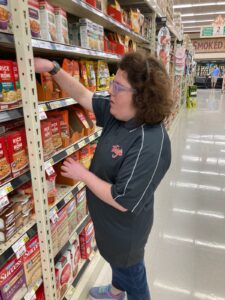
At Walgreen’s, Elijah and Nathan work with their Ramah job coaches as they sweep, stock, and perform the crucial job of “outdating.” They carefully check the expiration date of such products as candy, batteries and medicine and pull from shelves if they are too close to the date.

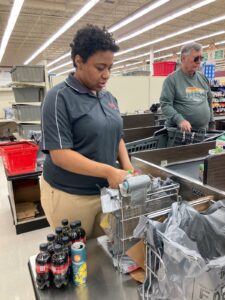
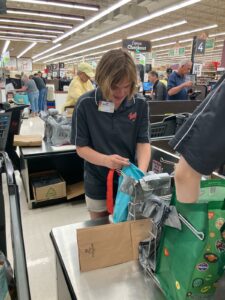
Four participants—Sasha, Nathaniel, Lily and Molly—work at Trig’s grocery store where they keep the freezer section clean, make sure “facing” of products on shelves is done properly and keep the dining area clean. Several participants assist cashiers with bagging groceries. Several proud participants were excited when they received tips from satisfied customers!

While learning a job skill is important, the “soft skills” of a job are equally important.  At the various job sites, employees learn to interact appropriately and professionally with customers. They learn to greet customers and answer questions, how to stay on task, sign in, use the break room, ask for assistance and dress professionally.   

It is our hope that the experience from these various work settings will help Atzmayim participants be “employment-ready” when they return home!

Read more

Original Article Published On Ramah Boston

As the director of the National Ramah Tikvah Network, I have the privilege of visiting our Ramah camps and helping directors and Tikvah directors support children and young adults with disabilities as they are included in the camp community. I have visited every overnight camp at least once and am visiting three of our day camps this summer. What a treat to see Ramah Day Camp Greater Boston in action last week — during Yom Sport! 

While the quality of programming, variety of activities, great structure and responsible, enthusiastic staff are all worthy of blog posts, I would like to focus on the seamless and intentional inclusion of campers with support needs that was apparent as I walked the grounds and met with Rabbi Silverman and Tzviyah Kusnitz, the Tikvah (inclusion) director. Most camps are committed to including people with disabilities. New camps often make the understandable decision to get established for a year or two before introducing people with disabilities into the community. At the Boston Day Camp, campers and staff with visible and invisible disabilities have been included and supported from the start; they are contributing a great deal to camp.

Rabbi Silverman received a call from the parents of Binny, a young man in the community in search of a vocational training program. She and her staff developed a plan for Binny: he joins campers on the bus to and from camp each day, sets the Chadar Ochel (dining room) for lunch, distributes snacks, and participates in Jewish learning, chugim (electives) and more. 

When I contacted Rabbi Silverman about a 54-year-old former camper of mine from the Tikvah Program at Camp Ramah New England who was hoping to work for a week or two at camp while on vacation from his job at a Boston supermarket (yes – we have been in touch all these years!), she reminded me that she did not formally offer a job training or supported employment program, but she would be happy to interview him and see if he might be a good fit for an open position. Matthew had expressed interest in so many areas of camp. He will soon arrive to work as an assistant on the sports staff. 

While the program that supports people with disabilities at the Boston Day Camp is in its infancy, Tzviyah has provided training and tools to enable staff to support their campers with various disabilities and support needs. For example, Tzviyah recognized that some campers need a quieter space for lunch and a quieter space was found. A sensory space has been established for campers who might need a break from their regular routine. In addition to working with the staff, Tzviyah communicates with parents and professionals as well.

The campers with disabilities clearly benefit from the support that camp provides. One thing I have learned in my nearly 40 years connected to the Tikvah Program at Ramah is that everyone benefits by having this at camp. Ramah Boston is on the road to changing attitudes through its inclusion of campers and staff with different abilities. I can’t wait to see how these efforts at Ramah Boston will continue to grow!

Read more