Published Articles

Original Article Published at The Jerusalem Post

With the location of the USTA Billie Jean King National Tennis Center in Flushing Meadows, Queens, it is only natural that there are also many Jewish stories at the tournament.

The final Grand Slam of 2016 is filled with all kinds of big and small stories – from Serena Williams’s quest for her 23rd title, and Djokovic’s for his 13th, to John Isner’s long, heartfelt embrace of 18-year-old Frances Tiafoe following their tough five setter on opening day. A personal favorite moment was watching Gael Monfils chase down a lob – and crashing into and breaking the on court scoreboard on court 17.

With the location of the USTA Billie Jean King National Tennis Center in Flushing Meadows, Queens, it is only natural that there are also many Jewish stories at the tournament, from players to food to minyan requests.

Israeli Players

Admittedly, there were not many Israelis in the main draw of the US Open singles tournament. One to be exact. And No. 80 in the world, Dudi Sela lost a tough five setter in the first round. But Julia Glushko and Amir Weintraub battled hard through the qualifiers, each winning first-round matches.

Sela, who doesn’t play doubles very often, won a doubles tournament earlier this year and is entered in the doubles draw with Frenchman Stephane Robert. And, as expected, beloved Yoni Erlich is playing doubles – this time teaming up with Santiago Gonzalez of Mexico. Yshai Oliel, a top Israeli junior, will enter the qualifying tournament as he battles for a spot in the main draw of the junior event.

Jewish Players

We have come to expect a large number of Jewish Nobel Prize winners, far out of proportion to our numbers. But what about in the tennis world? There are a surprising number of Jewish players in the draw.

Many – like Americans Noah Rubin and Jamie Loeb (who happened to be mixed doubles partners) and Diego Schwartzman – are vocally proud of their Judaism. A few days ago, Rubin tweeted, “Later in the week, a spectacle will take place as the fighting Maccabees @jloeb308 and I play mixed double @usopen.

Who’s ready?” Schwartzman lost his first round match to fellow countryman and Rio Olympics sensation, Juan Martin del Potro.

There have been unconfirmed reports that a number of other players have Jewish roots, including Camila Giorgi, Elina Svitolina and Timea Bacsinszky. Even it has been reported on several occasions that Rafael Nadal of Mallorca descends from Conversos.

Israeli Matches

A US Open match featuring an Israeli player can best be described as an El Al flight-like experience.

People wander, talk loud, socialize, look for friend, make connections and use Protexia (connections).

During the Sela first-round match, I learned that the woman next to me was a party planner in the US and Israel. And by the start of the second set, I knew which Jewish day school her kids attend.

Half the fans seemed to sport credentials indicating they are a “player guest” of one of the Israeli players.

And people felt comfortable shouting unsolicited advice to Sela, referred to as “Dudi, Melech Yisrael!” (Dudi, King of Israel!).

When my seatmate spotted a man covered with an Israeli flag, she commented that her flag had been confiscated last year. And she asked the guard, “if the player was from Italy, would you have taken his flag?!” There is a wonderful sense of camaraderie and I suspect pro-Israel fans outnumbered pro-Uruguay fans (for player Pablo Cuevas) 10-to-1!

Kosher – and Kosher Style, Too

What is any sporting event without food – and without extraordinarily long lines? New York Brat Factory (certified Glatt Kosher) serves up wraps (tuna, turkey and chicken Caesar) as well as two types of Italian sausages with peppers and onions, overstuffed pastrami sandwiches, knishes, hot pretzels and of course, hot dogs (and pastrami dogs). The stand is closed on Shabbat, and the lines can be long.

This year, SoomSoom, a kosher store in various parts of New York City, has a kosher style booth at the US Open. The booth, outside of Court 17 (and next to Ben and Jerry’s Ice Cream) serves up humus, falafel and more. The sign notes “Kosher Style” and workers explain that some food comes from their kosher stores and others are made on site, and that the stand is open on Shabbat.

Ballboys With Yarmulkes

At least one ballboy was spotted on the grandstand court of an important first-round match wearing a yarmulkes.

And the mother of an Orthodox Jewish day school student reports that her son, also a ballboy at the tournament, wears the Polo Ralph Lauren-issued hat to cover his head.

Minyan Requests and More

Friends, colleagues and others who know I am covering the tournament turned to me on Twitter and Facebook and more with their Jewish questions. “What are the chances of “chapping” (catching) a minyan at the US Open; I am a mourner and need one?” I directed him to the Sela match and the kosher food line.

VERY likely!

The New Retractable Dome

Spoiler alert, this is not really a Jewish story at the US Open, but long days and nights at Arthur Ashe Stadium, under the bright sun and inevitable rain, got me thinking – if the US Open can find a way to keep players in action and fans dry during the rain, why can’t our rabbis help us find a way to better enjoy the often rainy Sukkot holiday.

In much of the US, cold, rainy weather often makes for a somewhat unpleasant sukkot. Get to work, rabbis – and speak with the brains behind the amazing retractable dome.

And while you are at it, see if you can find Rosh Hashana and Yom Kippur cantors with voices as great as the ones we heard on opening night at the US Open – Phil Collins and Leslie Odom of Hamilton fame.



Read more

Original Post Published at The Jerusalem Post

Israeli beaten in five sets by Cuevas; Djokovic, Nadal overcome wrist injuries to advance.

Dudi Sela was knocked out in the first round of a Grand Slam event for the fifth time in the past six tournaments on Monday, losing a five-set thriller to No. 18 seed Pablo Cuevas in the US Open in New York.

The 31-year-old Israeli, ranked No. 80 in the world, battled back from two sets down to force a decider, but required treatment on his right hand at the start of the fifth set and was beaten 6-3, 6-2, 0-6, 5-7, 6-3 after three hours and two minutes.

“I started off playing really bad, I was tight. Then in the third set, I broke him and held and I played a little better and more aggressive and took charge of the match from that point,” Sela told The Jerusalem Post. “I then had cramping in my fingers and had a hard time holding the racket when serving. I also had cramping in my shoulder and then I made too many mistakes.”

Sela, who will remain in Flushing Meadows to take part in the men’s doubles tournament with Frenchman Stephane Robert, was playing in his first event since the Rio Olympics.

“It was a great experience. It was very different from any other tournaments I have played in,” he said. “It was my first time in the Olympics. The Israel delegation was really professional and really good.”

Meanwhile, Novak Djokovic opened the defense of his US Open title with a 6-3, 5-7, 6-2, 6-1 win over Poland’s Jerzy Janowicz on Monday, but the labored performance gave rise to fresh concerns about the world number one’s fitness.

After a sizzling start to the season that brought grand slam wins No. 11 and 12 at the Australian and French Opens, Djokovic’s form has plummeted, with a third-round loss to Sam Querrey at Wimbledon followed by a first-round exit at the Rio Olympics.

The Serb might have been in trouble on another day at Flushing Meadows but Janowicz, ranked 246 places below Djokovic, has advanced from the first round just once in four previous US Open visits and looked unlikely to do it again on Monday.

Djokovic, a US Open finalist five of the last six years, next faces Czech Jiri Vesely.

Djokovic arrived in New York having been hampered by a left wrist injury and distracted by undisclosed “private matters” and on Monday trainers were called out early in the opening set to work on his right forearm.

Several times during the two hour, 37 minute match, Djokovic could be seen grimacing when hitting his powerful forehand, while his serve rarely looked threatening, stuck at around 100 mph.

“It was just prevention, it’s all good,” Djokovic told reporters.

“Look, each day presents us some kind of challenges that we need to accept and overcome.

“After all I’ve been through in the last couple of weeks it’s pleasing to finish the match and win it.”

The year’s final grand slam got off to a glitzy Hollywood-style start, with a performance from Phil Collins to mark the arrival of the $150 million retractable roof at the stadium.

Rafa Nadal was worn out from his Rio Olympics exertions after emerging from an injury absence to win doubles gold, but the Spaniard perked back up with his trip to New York for the US Open.

Nadal, who said his injured wrist is improving daily, beat Denis Istomin of Uzbekistan 6-1, 6-4, 6-2, in his firstround match on Monday.

“The most important thing is I’m here in New York and that makes me happy,” said Spain’s 14-times grand slam winner, who could not continue through the French Open and also missed Wimbledon and the Toronto event due to his wrist injury.


Read more

Original Article Publish On The Ramah in The Rockies

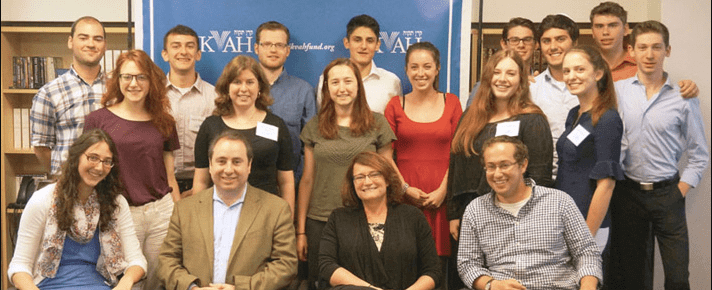
Max Newman was a beloved participant in the Tikvah Program for four summers.  When Max approached age 18 and it was time to graduate Tikvah, director Rabbi Eliav Bock and Tikvah Program founder and Director, Elyssa Hammerman, decided to think creatively.  They created a vocational training program for one this summer!  The program consists of job training, serving as edah (divisional) support staff, and training in leadership skills.

“The program has gone beyond our expectations!” reports Hammerman. “Max is a total part of the community his independence has impressed us all.”  Including Max as a staff member happens naturally.  “All 140 staff members are his buddies and took him in,” notes Hammerman.

Co-workers have reached out to Max to help wrap tefillin, and to help him calculate proper tip at a restaurant on his day off.  “The staff is totally accepting and welcoming, because that’s the type of staff we have here at Ramah in the Rockies.  Max genuinely cares about fellow staff members, regularly asking how they slept and how their day is going.  They view Max as part of the team, a valuable member of our Kehillah Kedosha (holy community).”

Hammerman notes that there have been some challenges but reminds us, “We all have challenges, and Max is like all of us—when he has difficulties, fellow staff members help him through it!”

Director Rabbi Eliav Bock has long been a supporting of the Tikvah Program and of creating opportunities at camp.  “We believe in creating a warm and welcoming community at Ramah in the Rockies.  Over the past few summers we have developed our Amitzim program for campers with special needs.  As some of our campers have now grown up at camp, we want to ensure that they continue to feel at home at Ramah even as they grow too old to be a camper.  We also see our camp as a terrific training site for young adults with special needs to develop basic life skills.  Max was willing to be in our pilot program, and we are honored to have him as part of our community.”

Howard Blas, director of the National Ramah Tikvah Network, sat down with Max—outside of place of his employment at the greenhouse at Camp Ramah in the Rockies—for an interview.

How old are you?  18

Where are you from?  Chevy Chase, Maryland

What do you do during the year?  I attend Ivymount School in Potomac, Maryland.  I plan to graduate in December, 2017.

What do you plan to do after you graduate from high school?  Hopefully attend Montgomery College

What do you hope to study?  Ornithology

Tell me about your interest in birds?  I like to take hikes to see birds, I have feeders and birdbaths on the deck of our home in Chevy Chase, Maryland (I live with my parents and two younger sisters).

How long have you been coming to camp?  four years as a camper.  This is my first year on staff.

How did you find out about camp?  My dad heard about it.  I love nature and this camp focuses on outdoor adventure.

What are some of your other interests?  Folk music (Kingston Trio), geography (locations and nicknames of the 50 US States), food (my favorite is fois gras)

How is being on staff different than being a camper?  Being a camper is harder than being on staff.  You get less freedom and couldn’t make your own decisions like now.

How did you decide to come back to camp in a vocational training program?  Rabbi Eliav said we should have someone from Tikvah on staff—not just anyone.  They admired my qualities—being responsible and my love for nature.

What do you do each day?

I help with the goats, chickens and the duck.  I work in the garden. I pull weeds, and I pick herbs and other crops.  I meet with Elyssa four days a week, Monday through Thursday. I am with the Ilanot edah perek dalet each day, and I help the campers—I show them around and remind them to put on sunscreen.  One time when a camper called me and another counselor “fat,” I told him that’ s not a nice thing to say.  The kids really like me.

What do you do at night?  I usually go to sleep.  I am not a night owl; I am a morning lark!

What do you do on days off?  I have gone to Woodland Park and gotten pizza in a restaurant.  I watched the “Finding Dory” movie.  I ate donuts, ice cream and Japanese food.  The other options for days off are Colorado Springs (which I am planning to do this Sunday on my next day off), Denver, Boulder, Wellington Lake, and staying at camp.  

Read more

Original Article Published at The Jerusalem Post

Dudi Sela, the only Israeli player in the main draw, was practicing at the US Open on Friday with hitting partner, American Sam Querrey, ranked No. 32 in the world.

When the US Open draw ceremony took place Friday morning at the USTA Billie Jean King National Tennis Center in Flushing Meadows, New York, several coveted spots for the Grand Slam tennis event, which gets under way on Monday, were marked with the word “qualifier.”

The names of the men and women filling these 16 spots would not be known until the end of the day Friday. These 16 men and women are the lucky 32 players out of 256 who won three matches in last week’s US Open Qualifying Tournament to advance to the first round of the main draw.

The US Open Qualifying Tournament typically includes players ranked between 105 and 250 in the world.

Israeli tennis players Julia Glushko and Amir Weintraub won first-round matches last Tuesday.

Weintraub, ranked 209, defeated American Daniel Nguyen, but lost in the second round to ninth-seeded Radek Stepanek of the Czech Republic. Stepanek has competed in 14 previous US Open tournaments and reached the fourth round in 2009.

Glushko, ranked No. 148, needed just under two hours to defeat 500th ranked Miharu Imanishi of Japan, 6-4, 7-5 in her first-round match. She lost to American Jennifer Brady, the 18th seed in the qualifying tournament, 6-4, 6-0. Weintraub and Glushko’s matches took place late Thursday evening and were interrupted by rain.

Despite Weintraub and Glushko’s status as top-ranked Israeli players, they must often compete in qualifying events for entry in major tennis tournaments.

In an effort to obtain ranking points, Weintraub often elects to enter lower level Futures and Challenger Tour events.

Weintraub has been outspoken about the pleasures, stresses and financial challenges he faces on the professional tennis tour.

“I will cover a lot of miles, sleep in a lot of hotel rooms, eat in a lot of restaurants, and get to see a lot of amazing cities,” he said. “And when I have a few minutes of down time, I look forward to talking to friends and family on WhatsApp, catching up with a few of my favorite TV series on the computer, and taking videos of funny things from the tour.”

Glushko and Weintraub earned several thousand US dollars for advancing to the second round of the qualifiers.

Players reaching the first round of the main singles draw receive $43,313. Players reaching the round of 64 earn $77,118.

Tournament winners and runners up receive $3,500,000 and $1,750,000. Glushko and Weintraub have each earned slightly more than $50,000 to date in 2016.

Meanwhile, Noah Rubin, a 20-year-old Jewish Long Island native, reached the third round of the qualifiers before losing on Friday afternoon to Karen Khachanov of Russia, 6-3, 4-6, 6-4.

“It was tough, it was a roller coaster of a match. I had to fight,” Rubin told The Jerusalem Post in a post-match interview in the US Open Media Center.

“It was great to have people cheering for me and supporting me. I want to make them proud.”

Rubin, in his second year of professional tennis, reached a career-high ranking of 160 and returns to tennis after a two-anda- half month absence due to a foot injury. Rubin will soon travel to Asia for a few tournaments then return to the US for the indoor tournament season. He hopes to qualify for the Australian Open in January.

Rubin, who celebrated his bar mitzva with a tennis theme, is proud of his Judaism. His sister participated in a Birthright trip, and although he has not yet been to Israel he says he “want[s] to go very badly. I want to get out there. Maybe on Birthright, or for a tournament or on vacation – once things settle down in my career.”

Dudi Sela, the only Israeli player in the main draw, was practicing at the US Open on Friday with hitting partner, American Sam Querrey, ranked No. 32 in the world. They practiced in the prestigious Louis Armstrong Stadium.

Sela, ranked No. 80, will face Pablo Cuevas of Uruguay on Monday in his first-round match. Cuevas, ranked 20th in the world, is the 18th seed in the US Open. They also met in the first round in New York last year, with Cuevas winning in four sets. With play beginning at 11am EST, the Sela-Cuevas match is the third match of the day on Court 4.


Read more