Published Articles

Original Article Published On The Respectability

Founded in 1948, Israel’s accessibility for people with disabilities was not a top priority.  I recall several almost comical incidents from nearly 20 years ago when helping people with disabilities navigate Israel.  On one group trip, while pushing 20-something Rivka in a wheelchair in northern Israel, the sidewalk abruptly ended. We carried her in the wheelchair to where sidewalk eventually continued.  In the Old City, near the Kotel, I asked soldiers where was the accessible path. They lifted Rivka up the steps in her wheelchair.

Fortunately, Israel today is fairly accessible and straightforward: from riding buses, to shopping in grocery stores, to studying in university. Modern Israel has become a well-known destination for accessible travel.

Israel’s road to accessibility has been a journey. Physical accessibility doesn’t happen automatically; nor does shifting attitudes toward people with disabilities and accessibility.

Twenty years ago, Yuval Wagner, a recently paralyzed helicopter pilot, ignited a public awareness campaign. Wagner eventually founded Access Israel. Having elicited President Weizman’s attention,  the President invited Wagner to celebrate this accomplishment together. Access Israel’s impact on access and inclusion of people with disabilities is now experienced worldwide.

Each year, over 800 people with and without disabilities from 22 countries visit Israel to participate in Access Israel’s International Conference, where they learn about accessibility from technology to tourism; experience Israel’s accessible beaches; visit the now-accessible Old City of Jerusalem; and learn about Access Israel’s work in Israel and worldwide.

“We are the only Israeli organization that focuses on accessibility and inclusion– not only for people in wheelchairs, not only for people who are blind or who have hearing impairments— but for all kinds of disabilities and in all fields of life,” reports Wagner.

Alan T. Brown, Director of Public Impact for the Christopher & Dana Reeve Foundation, a board member of FAISR (Friends of Access Israel) and a person with quadriplegia, attests to Israel’s efforts to increase accessibility. Several years ago, Brown met Access Israel CEO Michal Rimon, expressed his desire to visit Israel, and shared concerns about accessibility. Rimon enthusiastically invited Brown to Israel to experience its  accessibility firsthand. Brown later summarized, “Something like this has to be done in America – something that is proactive and aggressive in attaining accessibility for all. I even went on the tour under the Kotel walls in a wheelchair!  I am amazed at how Israel is using more than ramps to include the disabled.  They are also doing it through corporate sensitivity training.”

Pre-COVID-19, tourists with a wide range of disabilities experienced the country, holy to many of the world’s religions.  I have been leading trips to Israel for people with intellectual and developmental disabilities for many years.  I have served as group leader for multiple trips with Camp Ramah’s Tikvah disabilities inclusion program and Shorashim Birthright Israel Asperger’s trips.  Each trip’s participants travel the country, visit Jerusalem’s Old City, Tel Aviv, Old Jaffa, Safed, the Golan Heights, Masada, and the Dead Sea. We go camel riding and explore off-the-beaten path gems such as the chocolate factory at Kibbutz Ein Zivan. Tikvah’s and Birthright’s participants experience a multi-sensory, multi-cultural country with great excitement—and no barriers.

Close to 2,100 young adults with disabilities from around the world have experienced Israel on nearly 100 Accessibility Israel trips, according to Elizabeth Sokolsky, executive director of Birthright Israel North America.  Birthright Israel offers approximately ten accessibility trips annually for participants with a variety of medical, developmental, and physical disabilities including: Autism Spectrum Disorders (ASD), Asperger’s, vision or hearing impairments, IBD and Crohn’s Disease and other medical issues, and for participants who use wheelchairs.

Sokolsky emphasizes, “It is our belief that every eligible young adult should be able to travel to Israel to experience their birthright. . . . Accessibility trips typically have fewer participants than a traditional Birthright Israel trip, with a larger participant to staff ratio as well as other programmatic accommodations as needed. Birthright Israel also offers opportunities for young adults with a disability to join a classic trip as an inclusion participant, who may be accompanied by an aide or shadow.”

We eagerly look forward to a day soon when tourists with and without disabilities will again have the opportunity to experience Israel, celebrate Israel’s 72 years of growth, and dream of a day when the country will be even more fully accessible to everyone.
Read more

Original Article Published on the Image Magazine Pages 66-68

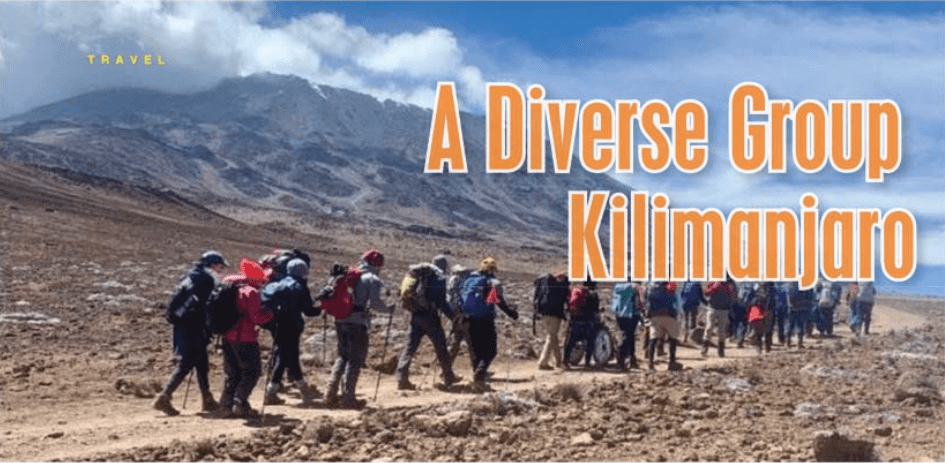
Twenty-seven climbers with different abilities—many with strong connections to Brooklyn and Long Island— recently returned from the adventure of a lifetime—climbing up Tanzania’s Mount Kilimanjaro. The
climb benefited Friends of Access Israel (FAISR), an organization promoting accessibility, inclusion, and respect for people of all abilities around the world. FAISR’s collaborative partner, Access Israel, was founded just over 20 years ago in Israel and hosts an international conference each year, called “Feasts of the Senses.” The organization consults on accessibility and inclusion worldwide. The climb was the brainchild of Jamie Lassner, Executive Director of FAISR, to make a statement that in life large goals are often #AccessibleTogether

Continue reading….

Read more

Original Article Published in The Paa Tanzania page 30-31

Climbing Mt. Kilimanjaro is a tough task for anyone, but for four
paraplegic climbers it was the ultimate challenge. This year, thanks
to the latest in durable climbing chairs and a team of Tanzanian
and international alpinists, the quartet’s lifelong dreams to reach
the ‘roof of Africa’ were realised. Here writer Howard Blas, who was
part of the expedition, reveals the collective effort involved.

Arnold John always dreamed of climbing Mount Kilimanjaro. The 44-year-old Tanzanian father of three grew up at the base of the dormant volcano and has family members who have worked as porters, yet he never had
the opportunity to attempt the strenuous, multi-day trek to the top. As a teenager, the talented student and soccer player was struck with an acute illness that left him paralysed and dependent on crutches and a wheelchair to get around. Despite his condition, John’s dream of reaching the summit never left him and this February he saw it come true – thanks to the support of Friends of Access Israel (FAISR), an organisation promoting
accessibility and inclusion, and 27 fellow climbers – including three others with paraplegia.
The Kilimanjaro climb was the brainchild of the executive director of FAISR,
James Lassner, and drew the support of the organisation’s collaborative partner, Access Israel.

Lassner was delighted when the climb’s architect and co-ordinator Sabino ‘Sabi’ Kweka – a former porter and guide, who is now owner of the popular Moshi tour operator Popote Africa Adventures – suggested John be included in the expedition. Kweka had drawn up the expedition to follow the Marangu route, also known as the Coca Cola trail, and to involve overnight stays in the Mandara Hut (2,700 metres), Horombo Hut (3,700 metres), and
the Kibo Hut (4,700 metres) on the way up.
The group would then attempt the final all-night ascent to the 5,895-metre Uhuru Peak Lassner said: “Every day people with disabilities face many personal mountains to climb, some visible but most hidden.
They are no different than anyone else as they have the same dreams, desires, hopes, and aspirations including ‘bucket list’ items.”
The FAISR Kilimanjaro 2020 Team included hikers from the Caribbean island of Aruba and Israel as well as Texas, Montana, Pennsylvania, New
York, and New Jersey in the United States.
Other hikers with physical disabilities who participated in the climb included Starla Hilliard-Barnes of Utah, a twice-paralysed participant; Marcela Maranon, an amputee who is also a paraplegic; and Arnon Amit,
paralysed in a car accident during his time in the Israel Defense Forces.

State-of-the-art chair

It was a big operation. Climbers were accompanied by three cooks, 11 guides and 70 porters. The latter carried all participants’ clothing and sleeping bags as well as their food, water and cooking supplies. Cooks provided kosher meals both at the huts and along the route.
Regular food breaks were crucial: daily mileage ranged from 3.1 miles on the acclimation days, to 13.7 miles during the final midnight to sunrise ascent to the summit. The climb was made possible for the participants with paraplegia thanks to the Patatrek Trekker, a durable chair designed by Israeli participant Omer Zur, who is the chief executive of the Israeli Paratrek company. He designed the special chair to enable his paralysed father to enjoy outdoor adventures with friends with and without disabilities.
Each trekker was pulled, pushed and guided by a dedicated team of six porters. Participants without disabilities divided into teams – Team Marcela, Team Starla, Team Arnon and Team Arnold – and hiked together through five climatic zones and often rough terrain.

Triumph of teamwork

Peruvian-born and Dallas, Texas-based Maranon, 38, who has 48,000 Instagram followers keeping up with her solo globetrotting adventures, found the climb a challenging, but ultimately rewarding experience. “For me it was very hard,” she says. “It was so steep. Thirty minutes before we got to the summit, you could just look down and see all the way down.
It was so scary.”
Hilliard-Barnes, who made the trip with her husband, Shannon Barnes, kept a positive attitude throughout the trip, including on the last day when she fell ill.
“The last day I was in pain but just tried to smile” she says. “I just tried to stay positive. That was me, happy and smiling the whole
time.” She offered comfort and encouragement to fellow climbers throughout the trip – even as they experienced difficulties on the climb.
Zur saw the climb as a triumph of teamwork. He says: “Ascending the peak
of Kilimanjaro is a dream come true not because of the mountain. That was never a dream of mine. The dream that we fulfilled is to see this group – people with and without disabilities – climbing together, as a group, as people who see each other as equals. To see that, out there in a super
non-accessible trail, that for me is a reason to continue doing what we do!”
Thankfully, every participant reached one of Mt Kilimanjaro’s three summits— Stella’s Point (5,756 metres), Gilman’s Point (5,685 metres) or Uhuru Peak (5,995 metres).
Lassner is very proud of everyone involved. He says: “Our successful summiting of Mt Kilimanjaro was fueled by the diverse abilities and deep inner strengths of each individual that they contributed to enhance the experience of team.”

Read more

The Original Article published On The New York Jewish Week

Howard Blas was live at an amazing showcase of young musical talent–all to benefit AKIM, Israel’s organization for people with intellectual disabilities.

The Musical Showcase to Celebrate Diversity, Ability and Inclusion Featuring the Awesome Talent of NYC Teens and Young Adults was set to start at 12:30 pm at Manhattan’s Cutting Room.  Yet, by noon, the funky musical venue was already buzzing with excitement. A large group of students from such New York schools as Blessed Sacrament, Horace Mann and Avenues were practicing on stage for their opening number, “Tequila.” Emily Negron, 15, of the Bronx, was getting in some last minute practicing of “All You Need is Love” at the rear of the venue with fellow Ideal School students, Vita Krasny and Laura Lyle. “Turn that way when you feel me put my hand on your shoulder,” Negron instructed her fellow performers.

When the concert began, a performer with a visible disability informed the crowd that she may be singing off pitch. The crowd clapped and went wild.  A brother and sister team, with the brother performing two songs from his walker, brought the house down.

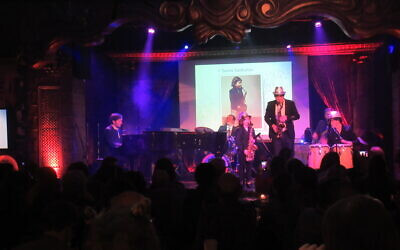
Logan Riman of Edward R Murrow School sat at a piano and flawlessly played Billy Joel’s “Piano Man,” as a photo of Riman with The Piano Man appeared on the screen.

Other acts in the eclectic afternoon were electric, including Daniel Becker of the Rebecca School playing the Violent Femmes “Blister in the Sun” and the Beatles’ “Back in the USSR,” accompanied by drums and guitar.

Angelica Mroczek, Miss Staten Island Outstanding Teen 2020, a student at Curtis High School and Myles Roven, of the Packer Collegiate Institute, welcomed the crowd to the second annual AKIM event and thanked its sponsor, the Building Bridges Conference.  AKIM is the National Organization for People with Intellectual Disabilities in Israel—founded in 1951. Mroczek’s twin sister Tatiana also performed in the concert.

The pair introduced Ami Ayalon, Chair of AKIM Israel and former Chief of the Israeli Navy and Former Head of Israel’s Secret Service. Ayalon, who came from Israel to address the crowd, was emotional and passionate as he told the story of his niece, Zahara, who, with disabilities and great charm, taught his own children “how to respect the other” and in the process, they “became better people.” Ayalon offered his remarks after the first two songs and playfully said, “I am glad my wife is not here. It is the first time in 50 years she did not come with me.  She would be crying in the last five minutes.” Ayalon explained that AKIM is responsible for 35,000 people with disabilities in Israel, and their 150,000 family members and has thousands of volunteers.

AKIM’s 65 national centers are in 85 towns throughout Israel in both Jewish and Arab sectors. “We advocate for all people with special needs in Israel—Jew and Arab, Christian, Muslim and Hindu, religious and not religious.  AKIM is an island of sanity in a society of tribes.  Our vision is our mission statement—to create a better Israeli society.”  Ayalon was particularly excited about a concert featuring such a diverse group of performers. “We are humans—and music connects us!”

Robert Ukrainsky, a student at Avenues School and a saxophone player who performed with numerous groups throughout the concert, has been involved with AKIM for many years. “I learned about AKIM when I was looking for a Bar Mitzvah project. When I heard about a new program being set between AKIM and Tel Aviv University Dental Center that will allow your adults with intellectual disabilities be trained and get jobs, I got fascinated. The idea of giving someone an opportunity to live independently and instilling social equality resonated with me,” he said.  Ukrainsky’s mother, Rada Sumareva, is a periodontist implant surgeon, AKIM board member and one of the organizers of the concert.  Ukrainsky visited the program in Israel last summer and met with the four students in the first cohort of the program. 

Ukrainsky was delighted to have the opportunity to participate in the concert. “I feel fortunate to be a part of the inclusion concert as we all can learn about each other’s differences and bring the best of our abilities to make music together. We are all part of the same team, share our interest in music, and truly enjoy new friendships and stage collaborations. I made new friends through this concert and also was able to reconnect with my old friends who joined the team this year.”

His mother, Rada, added, “The concert was especially meaningful for Robert as it not only enabled him to collaborate with all these incredible musicians different in various ways and help AKIM, but also it was a stage debut of his own student who is now 8 and who started saxophone lessons with Robert when he was 6. It warmed my heart that his first question after the show yesterday was not about his performance, it was about his student’s performance!”

Robert Ukrainsky and his musical protege in the Musical Showcase benefitting AKIM. Courtesy of Howard Blas

At this year’s event, performers, family members and guests didn’t want to leave—even when they concert officially ended. They stayed for an informal jam session and drum circle.  Ideal student Emily Negron enjoyed performing with her two friends from the Ideal School and summed it up best and will hopefully be back for next year’s 3rd annual event. “It is an amazing opportunity. I sing daily. I love to participate with others. I love it all!”

Read more