Home Front Command

Originally appeared in jns.org, March 19, 2026

Home Front Command and “purple” initiatives help vulnerable populations access shelters, information and essential services.

As Iranian and Hezbollah missile attacks continue across Israel, people with disabilities and the elderly face unique and often overlooked challenges—from reaching shelters in time to coping with overstimulating environments once inside.

In response, the Home Front Command and a range of civil society initiatives are working to ensure that vulnerable populations remain safe, informed and supported.

For many, the obstacles are immediate and practical. Individuals who are deaf or hard of hearing may not hear warning sirens. Those with mobility impairments may struggle to access shelters. People with autism can find crowded, noisy spaces overwhelming.

“The most important thing is planning ahead and knowing the safest place,” said Tami Durst, the Home Front Command’s professional academic officer and desk commander for people with disabilities. “It is proven that following the guidelines and getting to a shelter on time saves lives.”

The Home Front Command has adapted its emergency guidance to reach diverse populations, offering materials in multiple languages, including English, Russian and Amharic, and tailoring content for different disabilities.

Services include sign-language training videos with subtitles, phone alerts using repeated vibrations or flashing lights for those who are deaf, and simplified, illustrated materials for people with intellectual disabilities.

“Booklets have illustrations and simply explain things such as what a missile is,” Durst said.

The agency conducts daily Zoom sessions for people with disabilities, partnering with organizations such as ALUT (autism), Elwyn (multiple disabilities) and Migdal Or (visual impairments).

In Israel, families can call 104 for assistance or request group briefings.
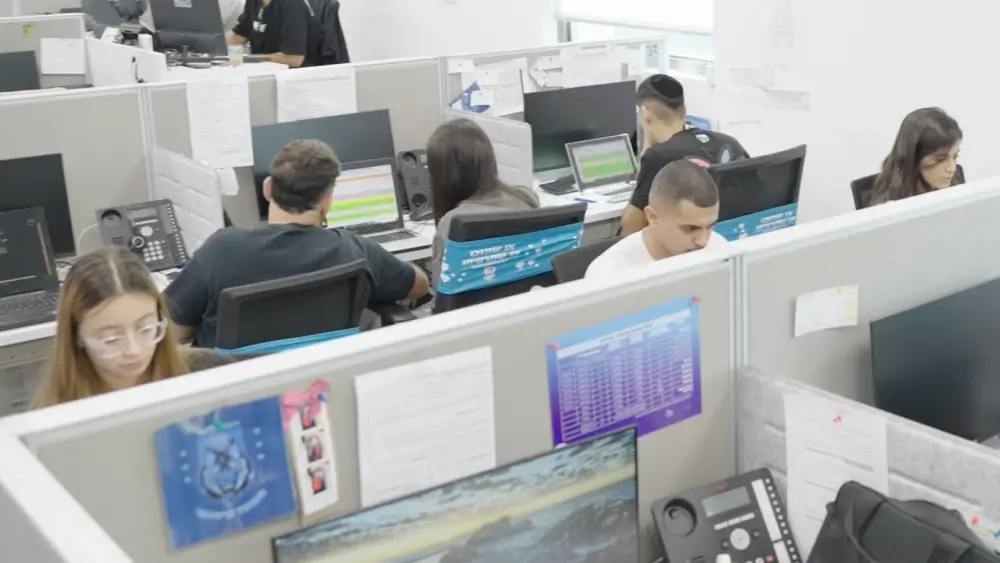
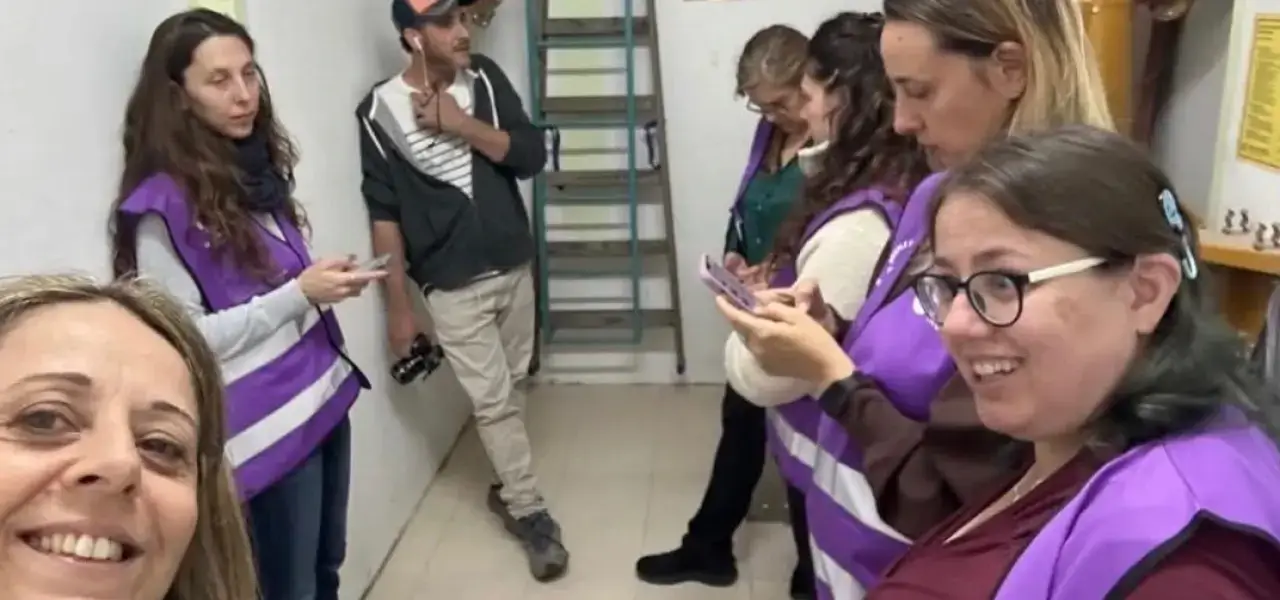
Shavvim volunteers operating the Purple Hotline, March 2026. Credit: Shavvim.

Nonprofits play key role

Beyond government efforts, nonprofit organizations are playing a critical role.

Access Israel estimates that roughly 25% of Israel’s population—about 2.6 million people—are individuals with disabilities or older adults who may need assistance during emergencies.

Shavvim, an advocacy and media platform focused on disability issues, estimates that more than 1.6 million Israelis live with disabilities, a number that has risen sharply since Oct. 7, 2023, due to injuries and trauma.

Both groups operate initiatives known as “purple” campaigns, a reference to the color associated with International Day of Persons with Disabilities.

Access Israel’s Purple Vest Mission mobilizes trained volunteers to assist individuals in reaching accessible shelters, relocating to protected housing when necessary and obtaining essential supplies during prolonged emergencies.

“Emergencies do not affect everyone equally,” said Michal Rimon, founder of the Purple Vest Mission and CEO of Access Israel. “For people with disabilities and older adults, it takes more time to reach safety; even a few seconds can mean the difference between safety and tragedy.”

Jamie Lassner, executive director of Accessibility Accelerator and a volunteer with the initiative, said the program’s impact lies in preparation.

“They understand accessibility, they understand disability, and they act with urgency, compassion and dignity,” she said. “That preparation is no longer theoretical. It is saving lives.”

Shavvim operates a “Purple Hotline,” offering emergency assistance and rights-based support for people with disabilities and their families.

The hotline grew out of an operations center established after the Oct. 7, 2023, attacks, fielding calls from individuals unable to reach shelters, access medication or evacuate safely. It also assisted newly injured reservists in navigating rehabilitation systems and the families of children with complex needs.

“We received calls from wheelchair users who couldn’t get to a safe room, from people needing food or medicine, and from parents struggling to care for children with special needs during constant alerts,” said Idan Motola, founder and CEO of Shavvim.

The hotline, relaunched on March 1 after a previous pause, has assisted more than 4,500 people to date. Among its efforts, volunteers distributed hundreds of tablets to children with autism spending extended periods in shelters.

Motola said hotline operators were called, inter alia, by families without protected spaces and from those unable to obtain medication or food, calls from parents of children with complex needs who could not evacuate safely, and from newly injured reservists encountering Israel’s rehabilitation and welfare systems for the first time.

“We received calls from wheelchair users who couldn’t get to a safe room or shelter, and from people with food requests, those with husbands on reserve duty, those needing to buy medicine and people needing help babysitting kids while they ran an errand. We also got requests for tablets for families of children with autism spending a lot of time in the shelter. We gave out 250!”

Shirly Pinto Kadosh, Israel’s first deaf member of Knesset and a longtime advocate for accessibility, said the initiative addresses critical gaps.

“People with disabilities in Israel still face dangerous barriers during war and daily life alike,” she said. “The Purple Hotline is meant to ensure that no one is left alone when systems become impossible to navigate.”

As the war continues, organizers said the goal is not only to respond to immediate needs but to build lasting systems of support that extend beyond times of crisis.
Read more

Originally appeared in jns.org on March 11, 2026

As classes, internships and jobs halt during the war, thousands of young adults on Masa Israel Journey programs are volunteering across Israel while also taking respites in safer areas such as Eilat and the Dead Sea.

For Josh Nevins and Simone Basharel, both of whom are in Israel on Masa gap-year programs, classes, internships and jobs largely ground to a halt when “Operation Roaring Lion” began on Feb. 28.

To fill their time meaningfully and maximize safety, nearly 5,000 Masa participants have been spending more time volunteering—and enjoying brief respites at hotels in places such as the Dead Sea and Eilat—courtesy of Masa Israel Journey.

Nevins, 23, of Greenwich, Conn., tells JNS the past 10 months working as a Masa Israel Teaching Fellow—teaching English to Sephardic teenage boys in Bat Yam—have been both invigorating and challenging. He estimates that he is one of about 140 fellows teaching English in Bat Yam and Rishon LeZion.

When the war began, in-person classes—and his teaching position—essentially stopped pending further guidance from the Home Front Command. Nevins joined his head teacher for a Zoom meeting with students last week.

“I wanted to be there for my students. A lot of them were scared and I wanted to say a few words to them. I told them that they should all be very proud of their country and of President Trump and that this war was to ensure the future and the safety of the world.”

He added, “I feel blessed to be here.”

While such meetings were useful for offering encouragement, Nevins observed that Zoom has not been very effective as a teaching tool and that regular online lessons have not taken place.

Nevins, a self-described historian with an expertise in the Mediterranean, Middle East and North Africa and a deep interest in Israel, had been considering spending a year in the country for some time.

“I was eager to go to Israel when I was in college—even before Oct. 7.”

He connected with Masa and opted for a 10-month program after graduating from the University of California, Santa Cruz, one year ago.

In addition to teaching English to students ages 14 to 18, Nevins—who lives in Bat Yam—has also been volunteering “mostly on kibbutzim and moshavim in the area of Gaza,” helping with agricultural work on a watermelon farm, assisting with building projects and volunteering in Sderot.

“We came from that bubble where we look down at our iPhone. Here, we can give back to Israel,” he said. “I am doing what I can to help.”

Nevins, who also “makes videos in front of historical places and disproves lies” on YouTube and Instagram and is known on social media as “Bat Yam Boy,” spoke with JNS from his hotel in Ein Bokek at the Dead Sea, where he and hundreds of other Masa participants were spending a week recharging.

“Our boss, David, randomly said, ‘We are taking you to the Dead Sea to recharge and to escape during the war.’”

Nevins said he expected to return to Bat Yam when the respite ends later this week.

“We will see what happens. I am optimistic,” he said, adding that he is considering returning to Israel once his program ends. “I want to come back ASAP! My hope is to stay!”

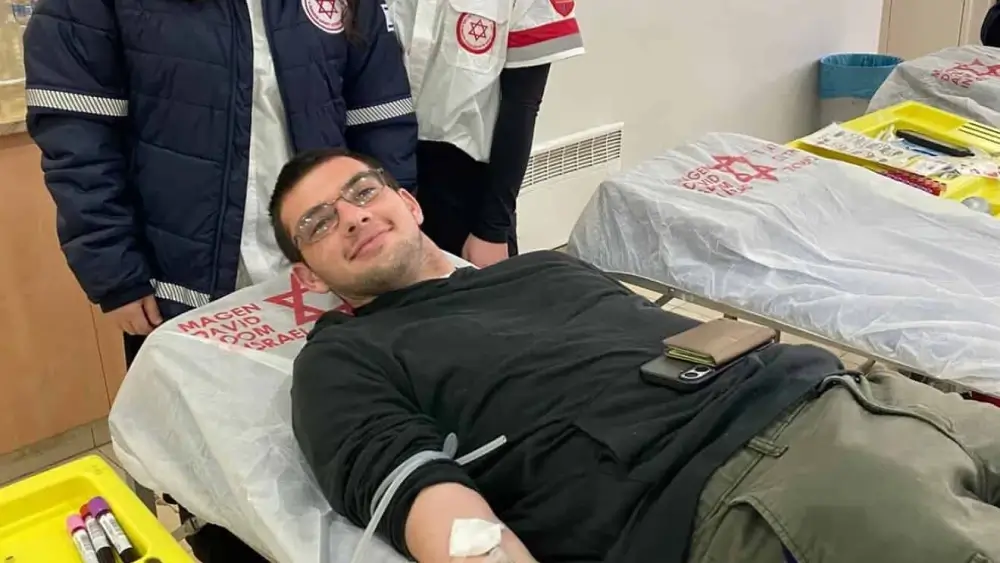
Masa fellows donating blood in Jerusalem, March 5, 2026. Credit: Masa.

Donating blood and volunteering

Simone Basharel, 19, of Los Angeles, has been working as an intern at a photo and social media company since arriving in Israel in January to participate in the Aardvark Israel–Classic gap-year program.

When the war began, she and fellow participants were relocated to Eilat. Unlike many others, Basharel has been able to continue her internship remotely.

She normally photographs events and “makes reels of pub crawls” and compiles promotional videos of Tel Aviv, but she has shifted to working from her hotel room in Eilat, continuing to write and edit content.

Basharel said she has been busy with her internship and has not had time to volunteer, though many friends have. They have been donating blood, volunteering at Hadassah Medical Center in Jerusalem and assembling care packages for those in need.

Basharel said she appreciated that Masa relocated participants “out of Tel Aviv, which has been a target,” to Eilat.

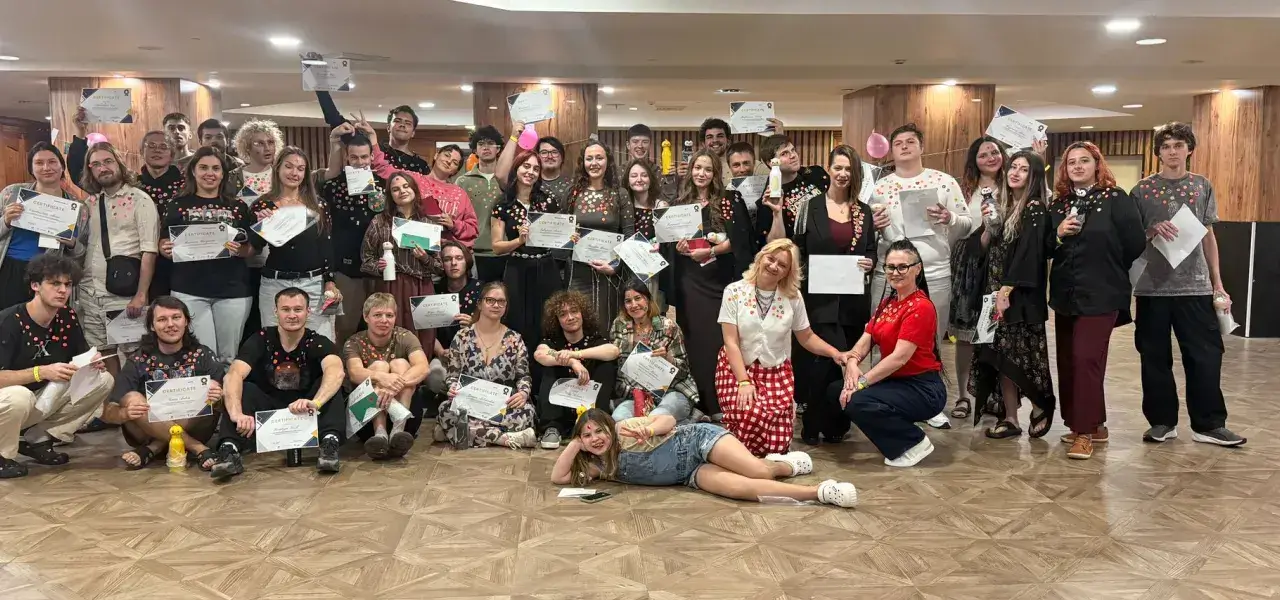
At the hotel, participants can choose from a range of activities, including drama workshops, sessions with a rabbi on Talmudic teachings, and discussions on creativity and innovation.

She is also pleased that her sister, who is participating in another Masa program, is staying at a nearby hotel in Eilat.

So far, about 1,500 Masa participants have taken part in similar respite trips, with another 3,000 signing up. The goal is to give fellows a chance to reset in calm, security-approved areas of the country. Masa is funding transportation as well as full-board hotel accommodations.

“At Masa, the safety and security of our fellows has always been our highest priority, and that commitment becomes even more critical in times like these,” said Meir Holtz, CEO of Masa Israel Journey.

“Over more than two decades, we have gained extensive experience operating in complex and emergency situations, and we are prepared to respond responsibly to any scenario,” he said. “At the same time, we know how to transition into what we call a ‘wartime routine’—ensuring that our fellows remain safe while continuing to experience meaningful programming, volunteering opportunities, and educational engagement during their time in Israel.”

He added, “I am incredibly proud of our fellows for the resilience and positive spirit they continue to show, and for the deep commitment to Israel they demonstrate even during challenging moments.”

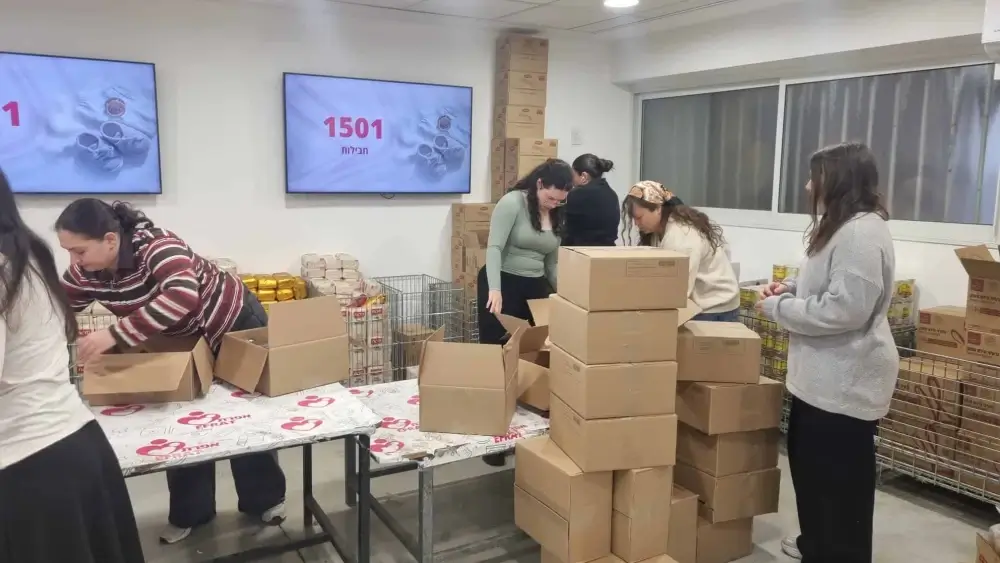
Masa fellows volunteer in Jerusalem to prepare packages for families in need, March 8, 2026. Credit: Masa.

Since its founding in 2004 by the Jewish Agency for Israel and the Government of Israel, Masa has offered immersive, long-term educational experiences in Israel for young adults. More than 200,000 participants from 60 countries have taken part in programs lasting from one to 10 months, including teaching fellowships, volunteer opportunities and career internships.

The Masa Israel Teaching Fellows program, established in partnership with Israel’s Education Ministry, was created in response to the country’s shortage of English teachers.

Each year, fellows—native English speakers who have graduated from university—arrive from the United States, the United Kingdom, Australia, South Africa and Canada to teach spoken English in schools in Bat Yam, Rishon LeZion, Tel Aviv, Beit She’an and elsewhere.

Read more

It is both mind-blowing and beautiful to watch Israel return to normal following two straight weeks of anxiety, terror and the unknown.


View original article on JNS.org

The kids went back to school on Monday. The adults returned to work. And the pools, gym and tennis courts reopened.

Early next week, summer camps should be in full swing.

Still, the sense of sudden normalcy doesn’t feel normal. It certainly doesn’t for me. I just made aliyah, and as such, experienced war as a new immigrant. I had more at stake this time.

And this war, it was different. I don’t think there has been a conflict in recent memory when friends outside of Israel could follow events so closely in real time. From WhatsApp groups like Jewish Breaking News and Israel Live News, to i24News, coupled with apps of the Israel Defense Forces Home Front Command and the incessant Red Alert one, there is an overabundance of reporting from the Jewish state—and the Mideast as a whole—these past 21 months. Because that’s how long it has been. It started with the Hamas-led terrorist attacks in southern Israel on Oct. 7, 2023, followed by a regional wave of terror and transformation ever since.

In past wars and periods of tension in the Middle East, I was one of those who sat in the United States, glued to the news. Now that I am here for good, I have a new perspective. When friends and colleagues in America reach out and check in, it’s clear that the news sources they follow are not nuanced or always accurate.

When we were greeted on Friday, June 13, at 3 a.m., to a shrill sound on our phones, no one knew at first what was happening. It turns out that the alert was meant to inform Israelis to “sit tight.”

Something, of course, was happening. Israel was bombing Iran, and retaliation was imminent.

As the day unfolded, that “pre-snowstorm in America” feel was in the air. Something was about to happen for sure; it was just a matter of time. The Home Front Command announced no school, no work (except for essential services), no social outings, no simchas. Ben-Gurion International Airport was closed.

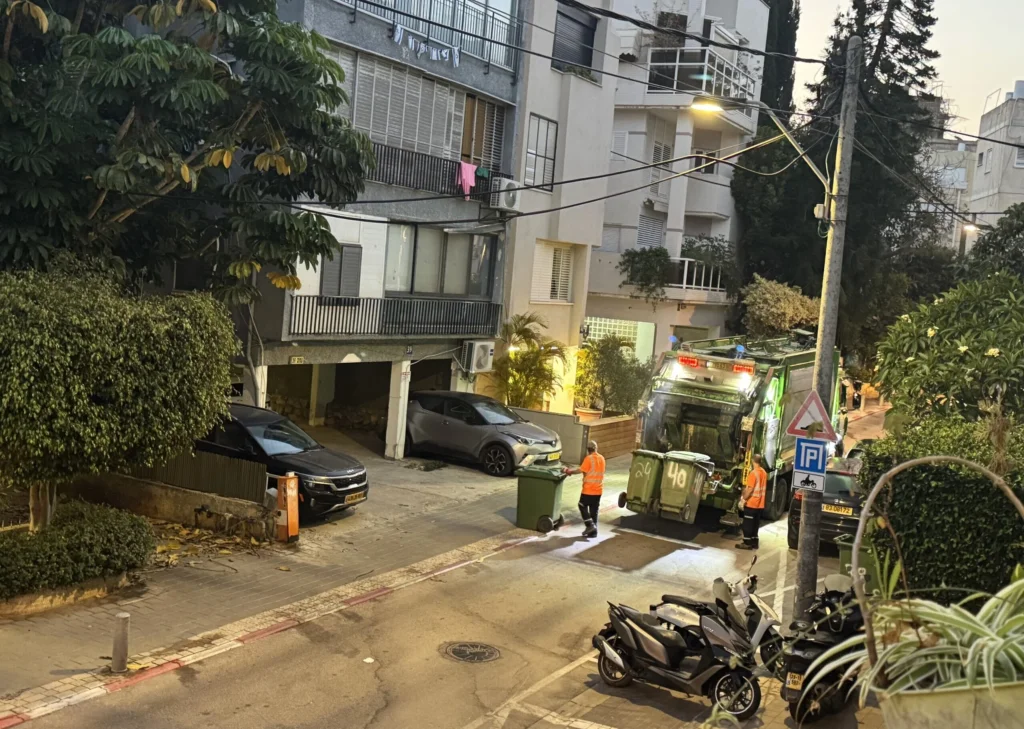
A garbage truck is one of the lone vehicles out prior to the start of the 12-day war with Iran, June 13, 2025. Photo by Howard Blas.

By 7:45 a.m., I ventured to the nearest grocery store for essentials for Shabbat. We all knew the azakah, or “warning siren,” could go off any minute. We grabbed the basics—milk, challah rolls, fruit and vegetables, hummus, some snacks—and hustled home, relieved that we could all survive the next few days, if necessary.

Shabbat services were soon canceled countrywide. A popular Tel Aviv Modern Orthodox synagogue sent a message in the WhatsApp group telling people to come by the shul at 4 p.m. to pick up some “take-home cholent, since it is already made.”

Parents of young children who look forward to the weekly camaraderie and kiddush associated with the Children’s Tefillah session arranged to meet at 10:30 a.m. on Shabbat in the local playground, which features a huge bomb shelter seconds away. Bleary-eyed moms and dads, who found themselves in and out of shelters with kids and even with their own parents between 9 p.m. and 5 a.m. Friday night and into Saturday morning couldn’t stop talking about their experiences.

The lucky ones have a mamad, a safe room in their apartment or apartment building. Most Israelis don’t. Instead, they rely on small, dusty bomb shelters serving an entire apartment building, or they go a few blocks to a local community shelter. Some, like in Tel Aviv, are like modern Jewish Community Centers with multiple safe rooms. These often feature electrical outlets, children’s sleep mattresses and air-conditioning, if you are lucky enough to get a coveted spot. They fill quickly. Hundreds come, along with babies, kids of all ages, even pets. They fill to capacity with the overflow waiting it out in the stairwells.

For parents, work is put on the back burner and is optional for most. Some have spouses—doctors, nurses, other caretakers—who staff Israel’s hospitals, which means that one parent is flying solo with few activities available. Caretakers often can’t make it to work due to erratic public transportation or because they have their own kids or parents to manage. I have learned that in some industries, parents of children up to age 15 or parents of children with disabilities up to age 21 cannot be called in to work; there are similar rules protecting those whose spouses are on IDF reserve duty.

Sunset in Beersheva, the largest city in southern Israel, in between attacks during the 12-day war, June 2025. Photo by Howard Blas.

Waze, unsurprisingly an Israeli innovation, just announced a new feature where the user can easily locate the nearest bomb shelter while out driving or with kids at a playground. It offers some peace of mind to veteran Israelis and new immigrants alike.

On several playgrounds, I saw kids playing a game called azakah and mamad. One child screams out azakah—“bomb alert.” The others scream mamad—“bomb shelter.” They run, pointedly, in search of safety. They must know what psychologists have known for decades: Play is an effective medium for processing trauma. Maybe so, but I’d prefer to see these kids on a swing set.

It is both mind-blowing and beautiful to watch Israel return to normal following two straight weeks of anxiety, terror and the unknown. Yes, we still always remember the hostages in Gaza, the soldiers who have given their lives in battle, and sadly, those who died in the Iranian missile attacks. But by 7 a.m., there were 20 people in front of me at the Maccabi Health Clinic waiting for blood and other lab tests. The local tennis center was open for business. All nine courts were in use by 9 a.m.

Just two days ago, a couple with two young children were considering a temporary move to the States via Jordan so they could do their jobs, so that their children could get a good night’s sleep and maybe even attend a local summer camp.

Now, that’s off the table. Ben-Gurion International Airport is open. Some foreigners are trying to get out, and Israelis are trying to get in. Summer programs that were recently canceled will be jump-started next week, including the Birthright Israel program. It’s too late to bring the Maccabiah Games back, but athletes are sure to be here in even greater numbers next summer. 

It may just be a wonderful summer, after all. Israelis are hopeful, but realistic. Everything can change in just about the time it takes to get to the nearest bomb shelter.

Read more