Israel

Original Article On the Jerusalem Post

Sitting at the Nalaga’at (“Please Touch”) Center in Jaffa, Howard Blas, special educator and social worker from New York, sits down to speak with The Jerusalem Post about a fascinating group of young men and women who have come to Israel for a 10-day trip. The travelers, all affiliated with the Conservative movement’s Camp Ramah, are developmentally disabled and their experiences, their counselors tell the Post, have allowed them to see this country through fresh eyes.

As several deaf waiters weave among tables ” the center is a major employer of the handicapped and an inspiration to the campers whom they are serving ” Blas explains how the trip has helped bond his charges to both nation and religion.

The campers all belong to the Tikvah program, a track at the Ramah summer camps for those with special needs. All eight of the campers on this specific trip fall into the higher-functioning spectrum and some are even taking classes at community colleges back in the US.

The group that’s here on the Israel trip are some of the older members of our group, Blas tells the Post. The youngest is turning 19 today and I guess that the oldest is probably 25 or 26.

The idea of an Israel trip, Blas continues, was the brainchild of Herb and Barbara Greenberg, now residents of Israel, who believed that this population, who had been learning about Israel at camp… had the same love for Israel and the same right to travel to our homeland as any Jew.

Since the first trip in 1984, Camp Ramah has brought Tikvah participants to Israel numerous times. A number of the campers on this trip have been here before.

We stress Israel [and] Zionism at camp and this is their chance to really [experience that] Blas says.

The trip, which brings the campers, who normally prefer stability and routine, to different destinations every day, really focuses on their independence, he explains.

Some of the higher-functioning campers will have been together so many years in camp, some have been in camp for 10 years, so some know how to help each other… and compensate for each other’s shortcomings.

According to Blas, in a new country there are a lot of new systems to learn, so even something as simple as the shower, the shower works differently. We go to three different hotels. It’s a different experience in each place so we even have to go ahead and figure that out quickly and then explain it to them… It’s a very frenetic pace.

This is my fourth or fifth trip that I’ve done he says, and the founders did eight or nine trips when they were the directors and with each trip you really fine-tune what you do so you pick hotels that don’t have a lot of extra room for wandering around [for example].

By bringing the campers to Israel without their parents, he continues, they’re learning life skills. Small things like packing in a hotel, it’s all part of life skills. That’s really what the goal is: to prepare them for living as independently as they can.

We give them a lot of running commentary and try to connect what they are seeing with things that they have learned in camp, but they’ve been fantastic, the director enthuses about his campers.

THE TIKVAH program itself was founded at Camp Ramah in 1970 by the Greenbergs, who now live in Raanana. In its first year, the program enrolled eight campers classified by their respective school systems as brain-injured, learning disabled and emotionally disturbed, says Blas. Over the years, it has enrolled children and adolescents with Down syndrome, autism, neurological impairments, developmental delays and rare disorders such as Smith-Magenis and Prader-Willi syndrome.

As the director of one of the first such programs in the Jewish world, Blas is noticeably pleased with his work, telling the Post that Tikvah is a trailblazer.

Are very proud of the fact that we are probably the first program [of its type], he says. One of the few places where there is real collaboration in Judaism is around special needs.

Howard Blas’s son, Daniel, a 19-year-old freshman at the University of Pennsylvania, is one of the counselors on this year’s trip, his second time coming to Israel with Tikvah.

Daniel believes that by being forced to explain things to his campers in a simplified manner, he has to reevaluate everything he knows, thus gaining a deeper understanding of Israel and [his] beliefs in general.

Asked to give a specific example, Daniel says that when explaining to his campers why there are soldiers everywhere, he must confront head-on the fact that Israel is a “country in conflict.” This helps him recognize why the soldiers are there in the first place [and] the fact that at this point, after many Israel trips, I’ve just taken [many things] for granted in general.

Avriel Feiner, known as Avi, also serves on the staff of the Tikvah program. A 22-year-old senior at the University of Maryland, Feiner is studying special education, in large part because of her involvement with the special campers of Camp Ramah.

This is my first time ever going [to Israel] with this population it’s really interesting and inspiring to see Israel through their eyes, she says, concurring with Daniel.

I was complaining today No, not the Palmah Museum again, she says. We walked out and they were like ‘my gosh, this was so cool, we love this. History is so awesome, that was so intense.

Many experiences, such as visiting the Western Wall, Feiner says, have lost their excitement to someone who has been there numerous times. However, going with the Tikvah participants this time, she says that “the guys were dancing like crazy [on the men’s side] for an hour and a half. That’s amazing. Where else are they going to have that?

Moreover, Daniel interjects, the campers have had an influence on everyone who we’ve seen, not just on me and Avi as the leaders.

Daniel recounts that on one occasion, one of the campers entered the dining room of their hotel to say goodbye to the participants of an unrelated Birthright trip, many of whom called out goodbye to him by name, despite the two groups not having had any official contact.

He’s just been so friendly to everyone and everyone’s been amazed, Daniel says, smiling.

THE CAMPERS who spoke with the Post seem to back up their counselors assertions, smiling and regaling this reporter with stories of their experiences. Many, Howard Blas asserts, have minimal contact with Jewish life outside of camp, making this experience even more important to them on a personal and spiritual level.

Sarah, a sweet girl the same age as Feiner, attends a boarding school in Connecticut where she is studying the life skills necessary so that she can be mainstreamed into as normal a life as possible. These skills will be especially important as she plans to move into her own apartment for the first time next year.

The trip, she says, is very nice and not “boring like Birthright. Now I learn more, she says.

Her favorite part of the trip, she says, is “making candles. This is a typical type of project for the campers, providing a physical stimulus and engaging them in a hands-on activity. The campers have also picked vegetables for charity and engaged in an archeological dig at the Beit Guvrin national park.

Such outings have even more meaning for Sarah than for most of the campers, as her time at camp accounts for all her Jewish experiences for the entire year, which makes this trip something of a bittersweet experience.

The skills she had learned in the Tikvah program, Blas says, will serve her well in life. Ramah special-needs campers perform jobs at camp, enabling them to learn skills that many people take for granted.

With guidance here and there, some of the campers on this trip, Feiner believes, could function independently soon.

Chiming in, Daniel Blas adds that “In general, we try to focus on abilities rather than disabilities.

Jason, a 27-year-old participant who is studying journalism, among other subjects, at a community college, is a good example of this mind-set.

Coming to Israel, Jason says, means connecting with “different areas of Israeli history and culture [and] to better understand what’s going on inside the country. This, he explains, makes it more easier to understand what may happen later and possibly in the future.

The experience for the special campers of the Tikvah Program is best summed up by their visit to Mount Herzl, the burial place of Theodor Herzl.

We also went to Har [Mount] Herzl, someone who believed in a State of Israel because he saw that the Jews couldn’t live in Germany because the French accused them of treason, says Avi, another Tikvah participant.

[The French] tried to execute them so Herzl brought many Jews to Israel.

The visit, explains Daniel, allowed trip participants to discuss their dreams and aspirations in a comfortable way while connecting to their heritage as Jews and Zionists.

Sitting in the military cemetery, we were trying to find a way to have them connect to all these graves, Daniel says, and we decided to speak about dreams and setting goals for ourselves because a lot of what we do [in camp] is about setting goals.

Sarah and Avi said that one of their goals is to become more independent but really to live in an apartment, so their goal for the future is to move out of a group home and out of the boarding school [and to gain independence] and that’s a way we helped them to connect [to Herzl and Zionism].

Sitting and speaking with the Post on their final evening in Israel, the campers and their caretakers seem happy yet exhausted. After returning home from Israel, Howard Blas says, he will need a vacation from this vacation.



Read more

Original Article On The Jerusalem Post

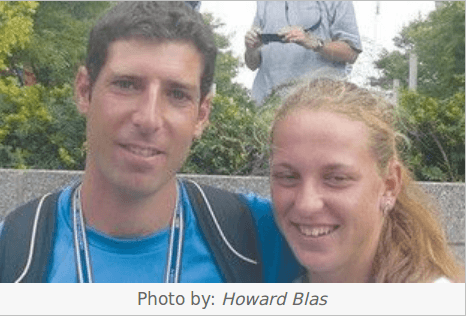
Currently ranked 708 in the world for singles and 848 for doubles, Valeria Patiuk is the youngest player on Israel’s Fed Cup team.

NEW YORK It is hard to resist the comparisons between Valeria Patiuk and her idol, Shahar Peer.

Both are hard-hitting tennis players who grew up on the courts of the Israel Tennis Centers, and both reached their first professional final at the age of 15 Peer in 2002, and Patiuk earlier this year in Ra’anana, at an Israel Tennis Federation tournament.

Shahar is my role model. She is a fighter, she plays with her heart and soul, and she does a good job representing Israel, noted Patiuk, at a pre-US Open match interview, in front of Arthur Ashe Stadium at the USTA Billie Jean King National Tennis Center in Flushing Meadows, Queens, New York.

The 15-year-old Patiuk, known as Lera, earned a spot in the juniors tournament after winning two matches in this week’s qualifying tournament.

The number 16 seed defeated Katrine Steffensen of the United States 6-3, 4- 6, 7-5, and Natalia Maynettoof the United States 6-2, 6-4.

After earning her spot in the main draw, Patiuk scored a 6-4, 6-3 win over Ukraine’s Ganna Poznikhirenko on Monday before facing Grace Min of the US late Tuesday night.

Patiuk, born in the Ukraine, moved to Israel at age one, and has been playing tennis since age six. She trains daily in Ramat Hasharon as part of the Elite Program of the Israel Tennis Centers.

Currently ranked 708 in the world for singles and 848 for doubles, she’s the youngest player on Israel’s Fed Cup team, where she plays with Pe’er.

Lera is a unique young lady, said Asaf Yamin, Patiuk’s coach for the past year. She is dedicated, likes to practice, and she is open.

I hope she can keep her character on the court. She is serious, and intense, and enjoys what she does.

Everybody compares Lera to Shahar on a daily basis, he added. Shahar is a good role model, but Lera has to focus on Lera and keep progressing. I hope she’ll have a career similar to Shahar’s.

Yamin is delighted that three Israelis have qualified for the main juniors draw: Patiuk, Or Ram-Harel and Bar Botzer.

It has been more than ten years since three Israelis have made it into the main juniors draw, noted Yamin.

All three will also play in the junior doubles tournament.

A fourth Israeli, Daniel Skripnik lost to Brazilian Karue Sell 7-6, 6-1 in his first-round qualifying match.

Danny Gelley, CEO of Israel Tennis Centers, is similarly pleased.

We are very proud and happy with the progress of our top juniors this year, Gelley said. The long and winding road to the top is paved by thousands of grueling hours in the sun, on the court and in the gym. I take my hat off to the players and their dedicated coaches for this milestone success and look forward to many more good things which I am sure are going to happen.

All three Israelis played their first round singles matches Monday, on court 15.

In the first match of the day, Ram-Harel, a 16-year-old right-handed player from Haifa, defeated Dennis Novak of Austria 7-6, 3-6, 6-3.

The trainer was called to attend to Ram-Harel in both the first and second sets.

My body was hurting, Ram-Harel said. I had cramps in my legs, and my head felt like it was spinning.

The three hour, ten minute match took place under very hot, humid midday conditions, and Ram- Harel playing in his first Grand Slam event appreciated the support and chants of the pro-Israeli crowd.

He played Joao Pedro Sorgi of Brazil (the 14th seed) in the second round on Tuesday.

Coach Yamin describes Ram-Harel as a big fighter with good court presence. He plays every point with his heart.

Yamin is impressed that he is already in the main draw at age 16, still with two years of junior eligibility left.

Yamin, who is traveling with and supervising all four players while in New York, coached the 17-year-old Bar Botzer when he was 13.

Botzer is very unique and very mature, Yamin said. He is always improving and has great potential.

Botzer squandered a firstset win in his first round match against Kaichi Uchida of Japan, and Uchida went on to win 4-6, 6-4, 6-2.

Today I lost because my biggest weapon, my serve, didn’t work, Botzer said.

At the conclusion of the Botzer match, Lera Patiuk took the court against Poznikhirenko.

Patiuk experienced abdominal pain while up 5- 4 in the first set, but went on to win 6-4, 6-3.

I served very well today. My serve was the key for the match, reported Patiuk. I have had pain in my stomach muscles for the past two weeks. It is getting better day by day, but I felt stomach pain while serving.

The hard-hitting, grunting Patiuk gave herself encouragement through shouts of Come on! and Kadima! This is my first time playing in the US Open and my first Grand Slam, she says.

I think my two qualifying matches gave me confidence and I am beginning to believe in myself again.


Read more

Last Motzei Shabbat, at the C Hacienda Forestview Hotel in Maalot, Israel, 40 plus Ramah Galil bikeriders celebrated Lag B’Omer with a bonfire and performance by the Shuk, featuring former Amitzim rosh edah and voc ed advisor, Ami Yares. This allowed me to spend ever more time with my mentors, Herb and Barbara Greenberg, founders and directors for 29 years of the TIkvah Program at Camp Ramah in New England. I was privileged to work with and learn from the for 6 years prior to their making aliyah. Since taking over as director 11 years ago, I continue to be in regular contact.

Last Shabbat, the Greenbergs and I had an opportunity to lead two session for the riders on the history of Tikvah. The 40 riders and various guests were amazed to hear about the early years–trying to get camps to agree to “take” Tikvah, trying to recruit campers and staff, etc. And they were treated to stories illustrating how far we have come–Tikvah Israel trips, an inclusion program, extensive vocational training opportunities, and special needs programs in many Ramah camps in the US and Canada.

The riders, who raised more than $205,000, which will be distributed to the various Ramah camps and National Ramah to support special needs camping, left with a strong connection to the cause they are riding for!

Read more

Original Article Published on The BabagaNewz

Is Israel behind the worm that is wreaking havoc on Iran’s nuclear program?

It is 2:00am and the room is dark, lit only by the screen of his laptop. While the rest of the city sleeps, he is wide awake, programming. It’s a test of skill, a quest for power. He wants to see if he can do it, if he has what it takes to penetrate a secure network and spread a computer virus throughout the world.

Or maybe he is a she. The sun shines brightly in the afternoon sky as she works to create a worm that will wreak havoc in Iran’s nuclear power plants. For her, it’s all in a days work. She was trained by an Israeli intelligence unit for just such a mission. Many lives millions of Israeli lives depend on her unit’s success.

Or maybe the hacker is someone else entirely.

SPREADING STUXNET

Worms and viruses are forms of malware, or malicious software. They are designed to access a computer system without permission in order to harm the data or performance of the computer whether it belongs to an individual, a company, or a country. Worms use computer networks to send copies to other computers on the network. They are the ones who raid your e-mail address book and send messages to all your friends.

The creator of a worm known as Stuxnet whether similar to one of these fictional sketches or not is responsible for much destruction. The worm, first detected in 2009, has spread through computers in Indonesia, Pakistan, India, Russia, and Iran. Sixty percent of the computers world-wide infected by Stuxnet were in Iran, including a command module at an Iranian nuclear facility. The fact that so many Iranian computers were infected suggests that Iran is the real target of the malicious virus. It’s pretty clear based on the infection behavior that installations in Iran are being targeted, explained Kevin Hogan, Senior Director of Security Response at Symantec.

But who is doing the targeting? Where did the worm come from and why does it target Iran? Only the real programmer knows for sure who produced this nearly untraceable, imperceptible worm. But, at the moment, many fingers are pointed at Israel.

WHY SUSPECT ISRAEL?

The Stuxnet worm is slowing down Iran’s efforts to develop nuclear weapons by sabotaging its computers. The United States and Israel are top Stuxnet suspects because both countries openly admit that they want to undermine Iran’s uranium enrichment plant. Mahmoud Ahmadinejad, president of Iran, has repeatedly said that the Jewish state will die, and many perceive his speeches as calls to destroy Israel. Israel wants to prevent Iran from having the weapons to do just that.

In addition, Israel has emerged as a top suspect because of a possible link to the Purim story. One of the files in the Stuxnet code is called Myrtus, which some security experts believe is an allusion to Esther, the well-known queen of King Achashverosh. In Megillat Esther we learn that Esther had two meaningful names: And [Mordechai] had reared Hadassah, she is Esther¦ (Esther 2:7). The name Esther means hidden. The name Hadassah, on the other hand, comes from the Hebrew word hadas, or myrtleone of the plants also used in the four species of Sukkot since her complexion was olive green like myrtle leaves. In addition, the Purim story took place in Iran.

Although Myrtus, as used in the Stuxnet worm, might simply refer to the myrtle, a plant important to many cultures in the region, some are fairly convinced of the Esther/Hadassah/Myrtle/Myrtus connection and its implication of an Israeli link. Yossi Melman, a reporter for Israel’s Haaretz newspaper, told the New York Times that he suspects Israel was involved. Others, including Shai Blitzblau, an Israeli information security expert, doubt that Israel had a hand in spreading the worm. Blitzblau computer warfare company studied the worm extensively and he is convinced that Israel had nothing to do with Stuxnet. For now, at least, this case remains unsolved.

THE JEWISH VIEW

In the Purim story, Haman plotted to annihilate the Jews. Instead of accepting their fate, however, the Jews staged a successful pre-emptive strike against Haman, his ten sons, and the people in Achashverosh kingdom who were out to kill. This was clearly an act of self-defense against a rodef (an attacker who presents a clear and direct threat to human life).

Judaism permits people to defend themselves against an unjust pursuer of human life a rodef and even kill the rodef to save a human life when no other way to save innocent people is presented (Shemot 22:1 and Sanhedrin 72a). Although Jewish law does not allow the destruction of someone else’s property for no reason (including someone else’s computer system), such destruction would be permitted to save the life of a human being.

If Iran is in fact developing nuclear weapons in order to wipe out Israel, then the State of Israel has the right to protect its citizens from nuclear annihilation, if need be, by killing the people who are constructing these weapons of mass destruction, and certainly by inflicting damage to property of those who are seeking to kill its citizens. Indeed, Jewish law maintains as do most legal systems that while one cannot kill innocent people to save the life of other innocent people, one may damage the property of innocent people to save human lives. Even if innocent computers were destroyed by the Stuxnet virus, that would be permitted to save the lives of innocent people.

Read more