Originally appeared in jns.org on March 16, 2026
Across Israel, doctors push aside personal loss and damaged homes to care for their patients during the war with Iran.
Fulfilling “The Oath of the Hebrew Physician”—the 10-part medical covenant that serves as Israel’s equivalent of the Hippocratic Oath—is not always easy during wartime, especially when a physician’s own home has recently been destroyed or badly damaged by Iranian missiles.
The oath’s first clause states: “You will fulfill your duty day and night to stand by the sick in their distress at any time and at any hour.”
Across Israel—from Eilat to Beersheva and Tel Aviv—physicians continue caring for patients even as they deal with personal losses, damaged homes and temporary relocations.
Dr. Amir Shahar, 76, a senior physician in the Emergency Medicine Department at Clalit’s Yoseftal Medical Center in Eilat and a self-described pioneer of emergency medicine in Israel, was driving from the hospital in Eilat to his home in Tel Aviv on March 15 when his son called to say their home had been badly damaged by a missile launched from Iran.
Fortunately, his son and granddaughters—who live on the first floor of the five-story building—reached the building’s shelter when the alarm sounded and were unharmed.
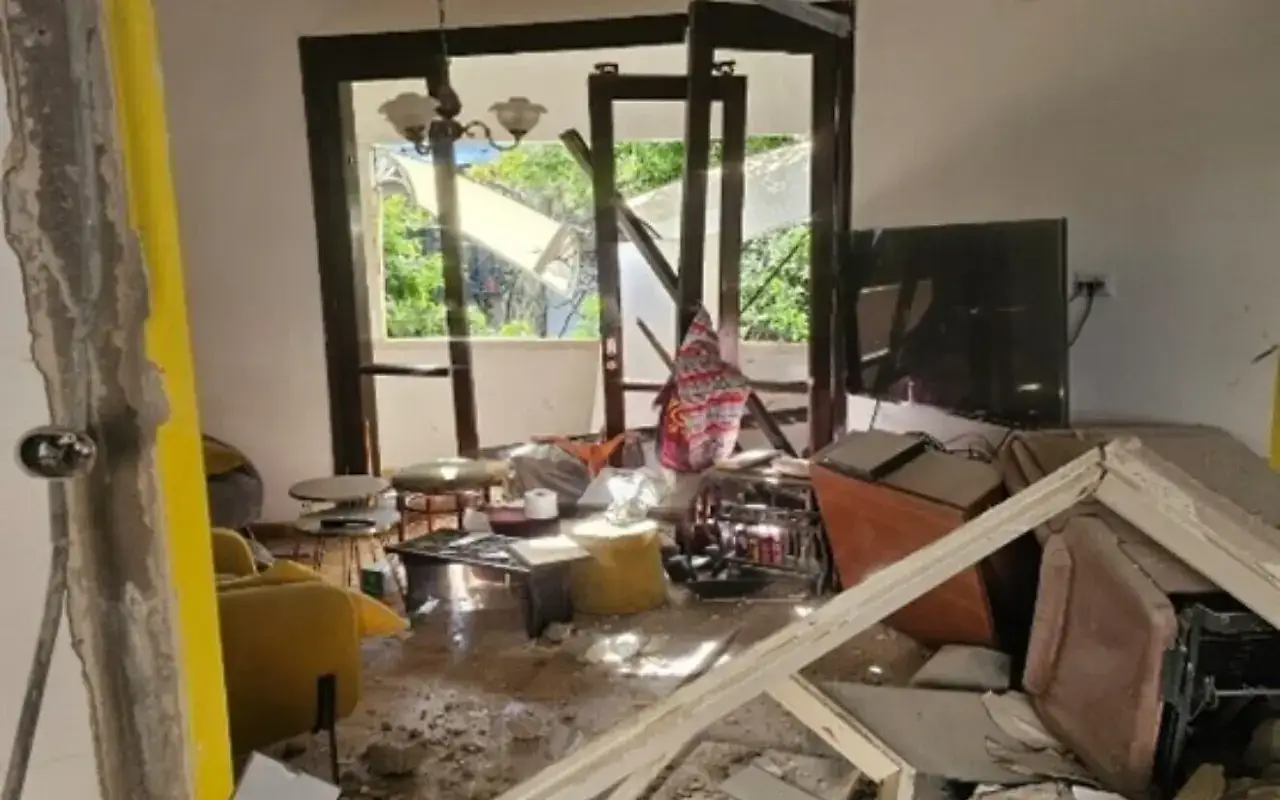
Shahar’s apartment, located on the second floor of the building built by his grandfather more than 100 years ago, sustained extensive damage.
“Twelve to 14 small bombs from a cluster bomb rocked the house,” Shahar told JNS. “All that is left is a skeleton of the house—no walls, no furniture.”
Shahar said he was currently staying in an apartment in Ramat Gan while continuing his work at Yoseftal Medical Center in Eilat.
He noted that three people in Eilat were recently injured by shrapnel from a missile. Despite the destruction, Shahar maintains both his sense of humor and perspective.
“Unfortunately, I have faced the angel of death many times—with patients and myself—in the army, recovering from leukemia, etc. So, we are acquaintances,” he said.
As he prepared to return to Eilat, Shahar reflected on the support he had received. “You can’t be in Israel without being optimistic. We have a very warm and sensitive society,” he said.
He described how many of his son’s army friends, who served with him more than 30 years ago, came to the apartment to help repair the damage over two days.
“You don’t have this anywhere else in the world,” he said.
Balancing patients and family in Beersheva
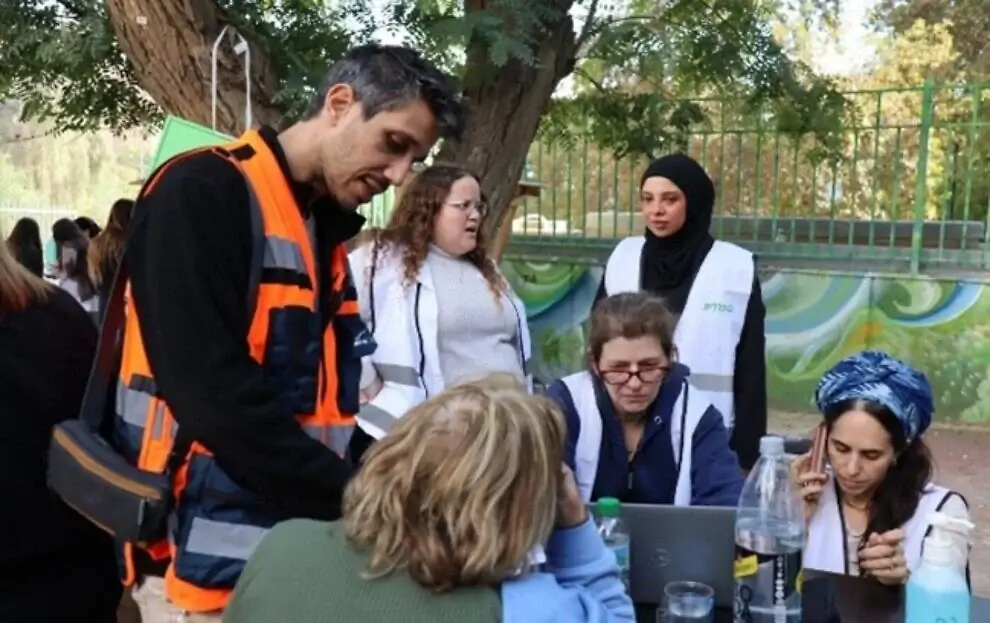
In Beersheva, Dr. Roi Levinzon, 38, a family physician at Clinic T in Clalit’s Southern District who also has extensive emergency experience through his 25 years with Magen David Adom (MDA), found himself balancing patient care with concern for his family.
On March 2, Levinzon was seeing patients when a missile alert sounded. He joined colleagues and elderly patients—many “with fear in their eyes”—in the shelter.
“We heard a huge blast and knew it hit the neighborhood,” Levinzon told JNS. “There was dust coming into the shelter from the ventilation system. We knew it wasn’t going to be a good outcome.”
“There was a huge panic in the shelter. People were shouting and crying.”
Although Israel’s Home Front Command recommends waiting for the official “all clear,” Levinzon knew he needed to respond.
“I waited five minutes. In my mind, I knew I couldn’t stay. In my mind, you always think of worst-case scenarios,” he said.
Outside, he saw extensive damage to cars and six nearby buildings. At the same time, he worried about his wife, who was home alone in their 15th-floor apartment a five-minute walk from the strike site.
He continued treating those with “face bleeding, anxiety and pretty mild casualties” before heading home to check on his wife, a social worker in the hematology department at Clalit’s Soroka Medical Center.
“I saw her panicked. She was afraid to leave the shelter. She was afraid that there was nothing left,” he said.
Ten minutes later, Levinzon received a call from Dr. Tsafnat Test, deputy medical director at Clalit’s Southern District.
“Maybe you can go back down to Ground Zero,” she asked.
Levinzon returned to help establish stations where evacuees could speak with social workers, receive emergency prescriptions and obtain assistance from municipal services.
He left his wife, who, he noted, is “used to dealing with anxiety” in her professional work. “She tried to relax. She is a yoga teacher and did deep breathing. After an hour, she calmed down,” he said.
Their home suffered damage to the entrance and shattered windows.
“Thank God it is not huge damage. We can still live there—we are waiting for repairs.”
Levinzon said many residents forced to evacuate their homes faced immediate medical challenges.
“In one second, they have nothing available,” he said. “Some of them have chronic medical issues, so we contacted their pharmacies so they could get their medications renewed.”
Many evacuees were relocated to the Leonardo Hotel, where Levinzon and other aid workers continued assisting them.
Back at his clinic, Levinzon is also helping develop new responses to potential mass-casualty events. Through the Team Shachar rapid-response initiative—a joint emergency medical team created by Clalit’s Southern District together with Magen David Adom—he is helping train physicians and clinics to treat trauma victims if hospitals such as Soroka become overwhelmed.
Sirens in Tel Aviv
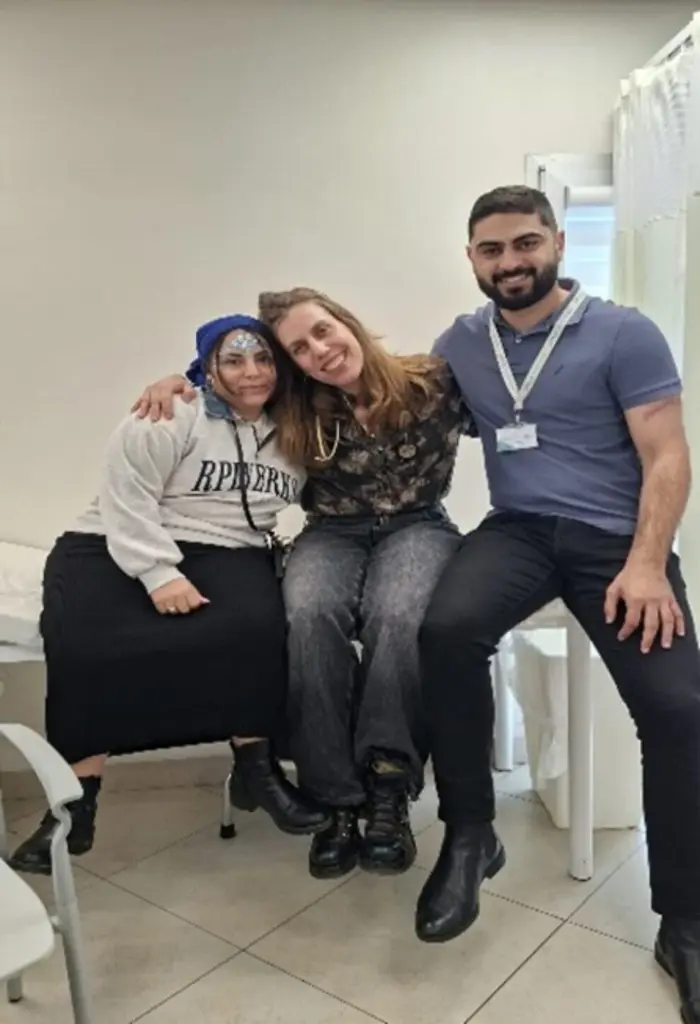
Dr. Michal Gur Dick, 44, director of the Plotkin Clinic in Clalit’s Tel Aviv–Jaffa District, worried about the safety of her three children—ages 13, 9 and 5—when she heard the first sirens on Saturday morning, Feb. 28.
She quickly packed clothes, computers and medicine and drove them from their apartment in central Tel Aviv to her parents’ home on Moshav Orat. “I feel lucky and privileged that my children are safe,” she said.
She soon learned that a missile had struck near her home, but that did not deter her. The family medicine specialist returned to work the next day to continue caring for patients.
“I needed to both tell the children their house got damaged and open our clinic in a new place,” she told JNS. “It was very important for me to continue the routine of the clinic—both for my patients and for me.”
Her clinic did not have a bomb shelter. Dick and her team relocated temporarily to the nearby Yad Eliyahu Clinic.
She soon learned that a missile had struck near her home, but that did not deter her. The family medicine specialist returned to work the next day to continue caring for patients.
“I needed to both tell the children their house got damaged and open our clinic in a new place,” she told JNS. “It was very important for me to continue the routine of the clinic—both for my patients and for me.”
Her clinic did not have a bomb shelter. Dick and her team relocated temporarily to the nearby Yad Eliyahu Clinic.
She says the experience deepened her understanding of the role physicians play during crises.
“My broken windows and walls will be fixed,” she said. “It is a privilege to be with people in their broken moments—it gives me strength. That is when we are most needed.”
Each morning, Dick now makes the 40-minute drive from her parents’ moshav to the relocated clinic in Tel Aviv.
She says the experience reinforced something essential.
“When my home was damaged, I realized that routine is not just a work tool—it is part of the healing for all of us,” she said.
“My work gives me a deep sense of purpose and stability. When my home was damaged, I understood that even more clearly. Our patients are looking for an anchor in the storm. When they walk into the clinic and see that the team is there, that care continues and that one thing has not changed, it restores their sense of security. My private home may need rebuilding, but I will not give up on the professional home of my patients.”
Dick hopes the repairs will be completed soon. “The kids really miss their friends—and their routine,” she said.