Published Articles

Originally appeared in JNS, www.jns.org, Mar 06, 2026.

From roadside missile strikes to reinforced wards, two physicians tell JNS how their hospitals adapt under fire—and why they remain committed to their work.

Before March 1, all of Dr. George Asfour’s medical interventions took place in hospital operating rooms. They did not involve running from his car on a highway after a missile attack, assessing the wounded, extracting a patient with a head injury and treating him on the spot.

But that changed one night in Jerusalem, a day after the United States and Israel launched a joint military operation against Iran.

Dr. George Asfour, a surgeon at Kaplan Medical Center, March 1, 2026. Credit: Kaplan Spokesperson/Clalit Health Services.

Asfour, 36, thought his day of caring for patients—which began at 7 a.m. that Sunday—had ended after completing his rounds, performing three scheduled surgeries and checking on his patients one last time.

The Jerusalem resident, a senior surgeon at Kaplan Medical Center in Rehovot, was driving home around 10 p.m. when he heard sirens on a main road near the Ramat Shlomo neighborhood.

“I heard a siren, then saw and heard a missile explode on the opposite side of the road,” Asfour tells JNS in a video interview.

“I stopped the car, checked to make sure there were no injuries, saw three damaged cars and heard people shouting. Without thinking, I ran and removed a man from the car and helped evacuate them.”

“When I saw these cars, I only thought if they needed help—and jumped from the car.  In that moment, I didn’t think of anything else,” he adds.

One man had head and eye injuries, while two others sustained milder wounds, he recalls. After ambulances and police arrived and transported the injured to the hospital, Asfour drove home.

Back home, he turned on the television and reflected on what had just happened. His wife questioned his decision to run toward the blast scene. He did not tell his daughter, 7, or his son, 3, about the incident, though he acknowledges they may eventually see footage of it online.

Even his boss, Dr. Barak Bar-Zakay, director of the Hepatopancreatic and Biliary Tract Surgery Unit at Kaplan Medical Center, was surprised to see him back at work early the next morning.

“He was in shock,” Asfour says. “He asked, ‘What are you doing here?’ and said what I did was fabulous.”

For Asfour, his response was part of the job—especially during wartime.

The Jerusalem native studied medicine for six years in Egypt before completing internships and residencies at Hadassah Medical Center in Jerusalem and Kaplan Medical Center in Rehovot.

He had originally been scheduled to be off on Saturday, Feb. 28. Instead, a call from Bar-Zakay changed his plans.

By 10 a.m., he and his team had moved patients, equipment, supplies and medications from the fourth floor to the safer first floor.

“It was a hard day,” Asfour recalls. He left the hospital around 9 p.m. and returned by 7 a.m. the next morning.

After 8 a.m. rounds, the team discovered that three patients—including one suffering from sepsis, a potentially life-threatening condition that can lead to shock and organ failure—required surgery.

“We prepare for surgery at 9 a.m., but there are only a limited number of operating rooms because not all of them are protected,” he says.

War transformed the hospital environment dramatically, he explains. “Everything changes,” Asfour says. “It is a stressful place.”

Patients were moved to the first floor, where departments shared crowded spaces.

“It is not your department with patients in their own rooms,” he says. “It feels like the emergency room with all the beds together. No one feels comfortable because there is another patient right next to you.”

Asfour and his colleagues divided their time among the emergency room, intensive-care unit and operating rooms.

Despite the pressure, he says the hospital staff functions like a family. “All of the doctors respect each other and treat each other like family,” he tells JNS.

He adds that he has never been treated differently because he is an Arab physician. “I feel like I am home,” he says “Everyone in the hospital loves each other.”

For that reason alone, he says, he is willing to drive 40 minutes each way to the hospital every day.

The patient he treated at the roadside, he reported, is now recovering at Shaare Zedek Medical Center in Jerusalem.

Dr. Tiffany Schatz, a surgeon at Soroka Medical Center in Beersheva, March 1, 2026. Credit: Soroka Spokesperson/Clalit Health Services.

From Philadelphia to Beersheva

At Soroka Medical Center in Beersheva, cardiothoracic surgeon Dr. Tiffany Schatz says her patient care has remained inside the hospital.

The Philadelphia native, a mother of three children aged 7 to 15, completed medical school at Ben-Gurion University of the Negev in Beersheva and surgical training in the United States. After years of practice in the U.S., she and her family made aliyah in April 2025, and she began working as a surgeon at Soroka.

Schatz, 43, says her medical expertise is frequently sought outside the hospital as well. “Last week we were having dinner with friends who mentioned a respiratory problem going on for two months,” she tells JNS. “I helped him get admitted to Soroka.”

Since the start of the current war, dubbed “Operation Roaring Lion,” Schatz says the hospital has maintained a sense of normalcy while adapting to wartime conditions.

Patients who could be discharged were sent home and elective surgeries were canceled. But cancer operations—her specialty—continued. “There is still lots of cancer surgery,” she says, as the hospital continues handling routine emergencies. “We treat someone who falls from a ladder and are ready for anything to happen.”

On Purim, nurses tried to maintain a festive spirit. “They wore silly wigs and took normal care of patients,” she says, smiling. “But the news was playing at the corner of the desk—a reminder that things are not normal.”

Another reminder came when a nurse arrived for work, reporting that a rocket strike in her neighborhood had blown out the windows of her home.

“There is no ability to stop and lament,” Schatz says. “Israelis just show that life goes on.”

Although her duties had not changed significantly so far, Schatz says staff members remained ready to be reassigned wherever needed. One colleague, she notes, was recently relocated to Yoseftal Medical Center in Eilat.

Balancing hospital responsibilities while her children remained home from school during wartime was challenging. Some acquaintances in the United States asked whether she planned to return.

But Schatz says she has no regrets about making aliyah. “Some people think we are nuts,” she says. “But this is where we are supposed to be. The war is not a reason to reconsider. This is part of the deal. This is our chance to help keep Israel going and be part of its future.”

Read more

Originally appeared in Jerusalem Post, www.jpost.org, Feb 20, 2026, IN JERUSALEM magazine.

When the Birthright group I was leading, comprised of 23 people with autism, found ourselves unable to leave Jerusalem for the Dead Sea and Ein Gedi because the roads were closed due to rain, we had to find an alternative plan – FAST! And it had to be in Jerusalem so we would stay on track for our lunch reservations at Focaccia Bar and doing community service at Colel Chabad’s Pantry Packers. With such a busy day ahead, the chosen activity would have to start in half an hour! 

The tour guide and I got off the bus when we got the last-minute news of the road closure, took out our phones, put on our thinking caps, and began to brainstorm from the limited number of indoor options that could accommodate a fairly large group at a moment’s notice. We took a chance and called a place we hadn’t known about: The Hebrew Music Museum.

Within 30 minutes, our group, which included a participant with quadriplegia who required a fully accessible space, were exploring and sampling instruments which most of us had never heard of from various countries and periods of history. This gem of a museum, in the Nahalat Shiva neighborhood at Kikar Hamusica (Music Square), had a talented musician and guide on hand, Roi Baruch, who could demonstrate the instruments and explain them in English. Available languages for tours also include Spanish, Hebrew, French, and Russian – but not usually at the drop of a hat like ours.

Our tour included explanations, stories, and demonstrations – and, perhaps most importantly, a chance for our Birthright participants to try out the instruments. It is also possible to tour the museum’s seven rooms in a most impressive architectural structure using audio-visual technology with “Grandpa Levi,” its animated guide.

Each room presented a different region or culture: Central Asia; Morocco-Andalusia; Europe-Ashkenaz; Africa, Ethiopia, and Yemen; the Balkan Peninsula; Iraq, Syria, and Egypt; and ancient Hebrew nations. The latter includes instruments of ancient times and a virtual reality tour of the instruments used by the Levites in the Temple.

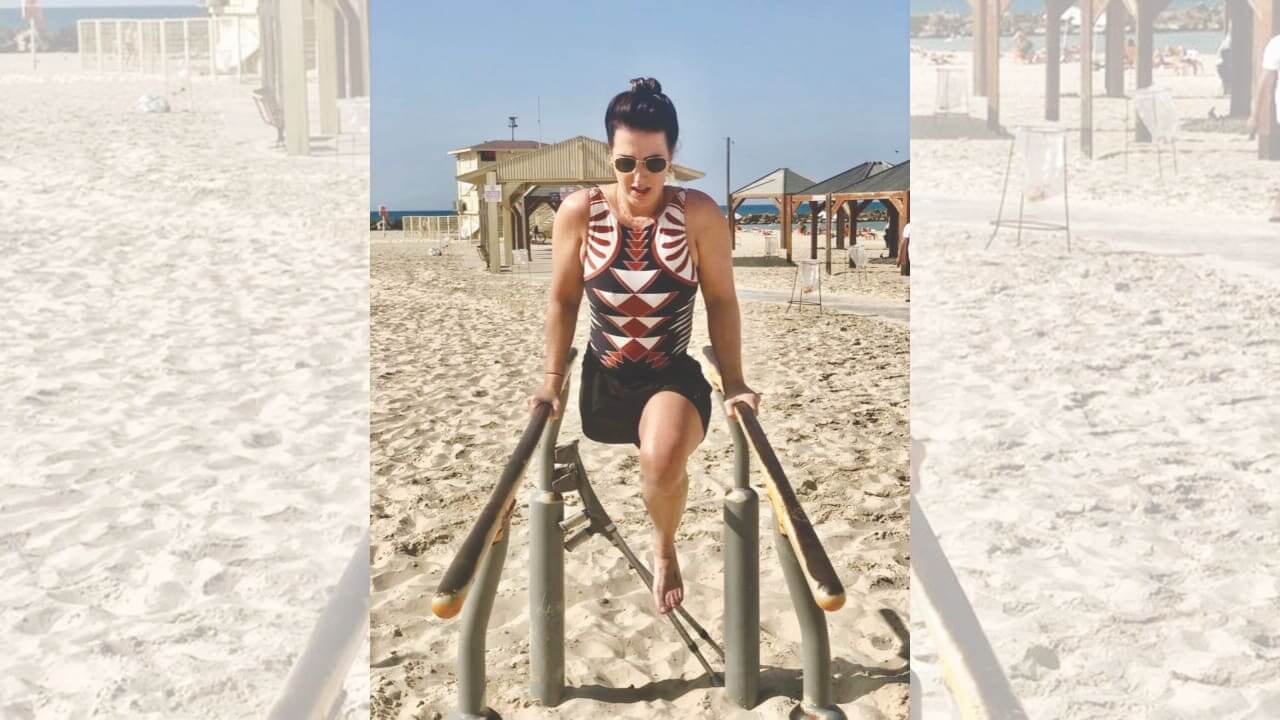
Birthright group for people with autism spectrum disorder enjoy the Hebrew Music Museum, a fortunate last-minute substitution when the road to the South was closed due to heavy rain. (credit: HOWARD BLAS)

It was my first time experiencing virtual reality, and I was mesmerized by the Holy Temple – and its sacrifices – coming alive. I should have listened to Baruch when he suggested that I take a seat. The 3-D experience was so realistic, that I felt unstable standing while watching the action unfold in front of me.

School groups and most casual visitors will be so taken by the instruments and the Temple that they may not stop to contemplate how this privately funded museum got here and how it fits into the larger gem of a “musical square” in the heart of Jerusalem. Museum founder Laurent Levy, a lifelong lover of music – and CEO of the successful Optical Center chain – has reported that he draws inspiration from many places, including the Temple Mount in Jerusalem.

“The idea becomes tangible, and I conceptualize innovative concepts to the last detail,” Levy said. “I instill in each of these works a strong desire that every user can see the beauty and hear the good, and hence make the world a better place.” He added, “I am also inspired from study of the Torah, the Talmud, the Kabbalah, and the biblical prophets. I consider every human being a source of inspiration and try to learn from everyone, regardless of age, culture, or nationality.”

Instruments on display at the Hebrew Music Museum. (credit: Courtesy Hebrew Music Museum)

Levy made aliyah in 2005, established an online optical center in 2006, and opened his first Israel Optical Center in Jerusalem in 2007. A year later, the center also included a hearing aid department.

Music Square becomes cultural hub

The entrepreneurial, creative Levy next launched a Jerusalem apartment rental website, wrote a book titled The Seven Keys to Success, and in 2014 ventured into the Jerusalem music sphere. He opened Kikar Hamusica that year, followed by the Blue Hall Music pub and the Kinor b’Kikar (Violin in the Square) restaurant. In 2016, he opened the Hebrew Music Museum and has since established his sixth restaurant in Music Square.

Thanks to Levy, visitors of all ages to Jerusalem have ample opportunities to experience music – and get a great pair of glasses! Our Birthright group is appreciative that Levy and the talented staff of the museum truly helped turn our rainy-day disappointment into a morning of fun and engagement through music. I look forward to bringing future groups in nicer weather to experience daily live performances in Music Square of every genre – from jazz and samba to rock and roll, reggae, and klezmer.

Live music, interesting instruments, and flavorful food – all in one place, all provided by one enterprising guy!

Hebrew Music Museum 
10 Yoel Moshe Salomon St. 
Tel: (02) 540-6505 
Sun.-Thurs., 10 a.m.-7 p.m. 
Fri., 10 a.m.-2 p.m.
NIS 60 adults. NIS 45 children 
and senior citizens. 
NIS 40 students. NIS 32 soldiers and people with disabilities.
hebrewmusicmuseum.com/

Read more

Originally appeared in Jewish News Syndicate, www.jns.org, February 20, 2026

Not many soldiers in the Israel Defense Forces could get away with giving an order to the IDF chief, but Private Raz Azulay is a rare exception. Azulay wheeled himself onto the stage and interrupted IDF Chief of Staff Lt. Gen. Eyal Zamir mid-speech in Tel Aviv Tuesday—and no one tried to stop him.

Wearing his IDF uniform and an orange beret, Azulay rolled forward from his wheelchair at Hangar 11 and motioned for Zamir to approach. He then handed the chief of staff his gold dog tag. Zamir bent down, accepted it with a smile and continued speaking to the crowd of about 1,200 gathered to mark the 13th anniversary of the Special in Uniform program.

The IDF chief praised the participants’ determination. “You are proof that challenges can be overcome,” he said. “There is a place for everyone in the IDF. You are not only G’dolim B’Madim (“Great in Uniform,” the Hebrew name of Special in Uniform) but g’dolim b’ruach—great in spirit. The IDF is proud of you!”  

The initiative, run by Jewish National Fund-USA in partnership with the Israel Defense Forces, integrates young adults with disabilities into meaningful military service.

Israeli President Isaac Herzog, JNF-USA CEO Russell Robinson, Zamir and senior officers joined hundreds of soldiers and their families for the celebration, which organizers described as the program’s “bar mitzvah year.”

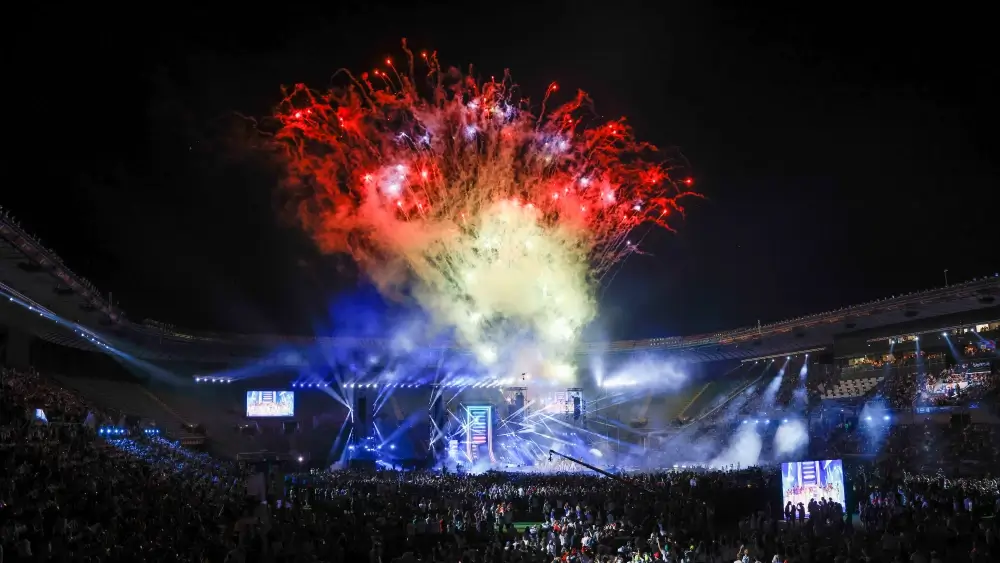
Some 1,200 people packed Tel Aviv’s Hangar 11 to celebrate 13 years of the Special in Uniform Program, Feb. 17, 2026. Photo by Howard Blas.

From dream to national movement

Lt. Col. (res.) Tiran Attia, executive director of Special in Uniform, watched as videos showed soldiers with autism, visual and hearing impairments, intellectual disabilities and mobility challenges working in IDF logistics centers, supply rooms and communications units at more than 50 bases across the country.

“What began 13 years ago with just 50 soldiers in a handful of bases has grown into a national movement of more than 1,200 soldiers serving across Israel,” Attia said.

“This growth did not happen by chance. It happened because of our belief, the soldiers’ dedication, and our unwavering commitment to the idea that every young person in Israel deserves the right to serve, to belong, and to contribute. They are shaping our nation’s moral strength. I am profoundly proud to lead this program with our amazing team.”

To date, some 3,000 soldiers with disabilities have completed the program.

Herzog recalled the program’s early days. “It started as a dream—to serve and to integrate. You had to believe,” he said, adding that the presence of soldiers with disabilities strengthens both the army and Israeli society.

Robinson called the initiative “the definition of who we are as a Jewish people,” adding, “Israel is the only place on the face of the earth that has an army that is so inclusive. It reminds us what life is and what our values are!”

A choir of Special in Uniform participants led by the IDF’s chief cantor, Lt. Col. Shai Abramson, performed the Mi Sheberach prayer for the safety and success of soldiers serving in the Israeli military.

As the evening concluded with singing and dancing, sparklers illuminated the stage and the number “6,770” appeared—representing the estimated number of additional Israelis with disabilities currently eligible and willing to serve.

“That is the potential target,” Attia said proudly.

Read more

Originally appeared in Jewish News Syndicate, www.jns.org, February 18, 2026

Hundreds of mental-health professionals gathered for the 2026 ICAR Summit to align treatment strategies and coordinate a national response.

Even though clinical social worker and therapist Lisa Sturm had made aliyah from New Jersey only three weeks earlier, she felt compelled to travel from her new home in Jerusalem to attend the 2026 ICAR Summit in Tel Aviv this week.

She came, she told JNS at the opening of the two-day summit on Sunday, “to learn as much as possible about trauma and to become more connected.”

Dvora Kravitz, a social worker who immigrated to Israel from Los Angeles 14 months ago, similarly attended the two-day conference “to find out more about services here and to see how I can contribute to the healing process.”

According to a January 2026 Israeli Health Ministry study, one in five Israelis experiences emotional distress frequently or continuously; roughly 19–25% likely suffer from PTSD, depression or anxiety. The public sector recorded 3.5 million patient-therapist sessions—a 42% increase since 2022.

The 2026 ICAR Summit at the Tel Aviv Expo, titled “Accelerating Trauma Healing Through Collaboration,” brought together several hundred participants from government agencies, academia, mental-health professions, high-tech, nonprofits and philanthropy to examine Israel’s trauma-healing ecosystem and treatment methods.

ICAR, the Israel Collective Action for Resilience—is a national coordinating initiative that maps, connects and aligns organizations across government, nonprofit, academic and private sectors to strengthen Israel’s trauma recovery and mental-health resilience.

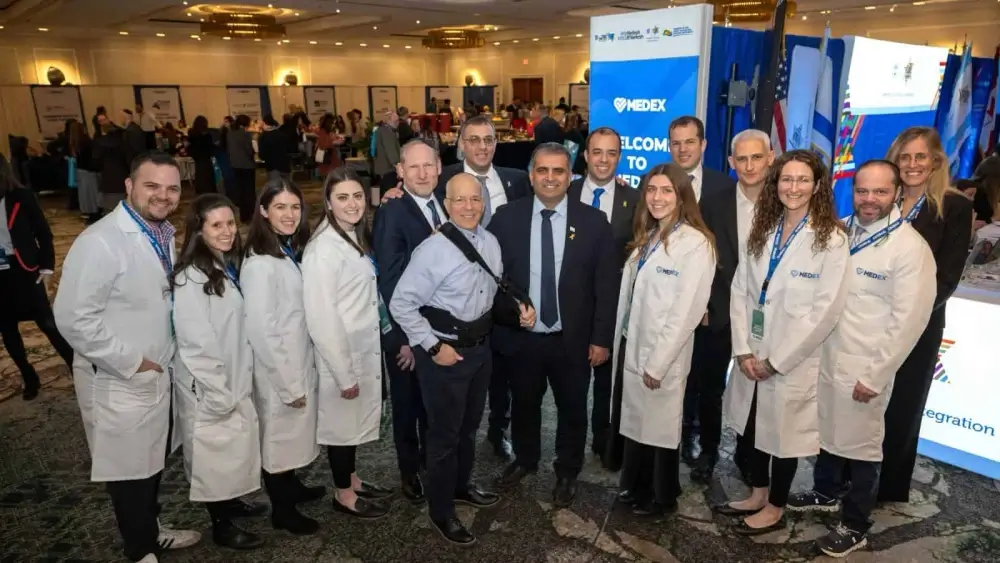
ICAR co-founder and CEO Gila Tolub addresses the opening of the 2026 ICAR Summit in Tel Aviv, Feb. 15, 2026. Photo by Howard Blas.

Building bridges

Before the opening session, participants eased into the day with chair yoga led by Neta Margalit of Brothers in Yoga. They also explored treatment options presented by organizations working with survivors and caregivers.

In opening remarks, ICAR co-founder and CEO Gila Tolub emphasized that the conference aimed “to build bridges.” The central challenge, she said, is not a lack of effort but a lack of coordination among the hundreds of organizations operating in the field.

At the Beit Mazen’s “Home for Hope” booth, Yael Eden Baruch and Gitit Harlev described three community-based homes offering ongoing mental-health care. “It is not a hospital. It is a very beautiful home-like place where people get the professional help they need in the community,” Eden Baruch said.

Nearby, Mashiv Haruach social worker Tzrurya Schweiger said the group’s two-day Dead Sea workshops were designed to “help the helpers,” including doctors, psychologists, social workers and ZAKA volunteers coping with secondary trauma.

Booths of vendors at the 2026 ICAR Summit in Tel Aviv, Feb. 15, 2026. Photo by Howard Blas.

Mapping the trauma ecosystem

The first day focused on reflection and alignment. Sessions reviewed the past year, assessed the national recovery and examined trauma across key populations—children, soldiers and veterans, workplaces and women affected by the war.

A keynote by Professor Michael Grinstein-Weiss of the Myers-JDC-Brookdale Institute addressed long-term monitoring of the war’s societal effects.

The second day shifted toward implementation. Panels explored integrating research, innovation and technology into nationwide care systems, including AI-assisted treatment, nature-based therapies and pharmacological developments. The conference concluded with an “Impact Showcase” presenting new clinical and digital treatment models.

From fragmentation to coordination

Tolub, formerly a management-consulting partner at McKinsey & Company, had been working on women’s health and organizational resilience even before Oct. 7, 2023. After the Hamas attack, she volunteered at Chavat Ronit, assisting Nova music festival survivors and quickly recognized a systemic problem.

“They had no one place to go,” she said. “Things were extremely fragmented.”

Her team began mapping the sector. “Last year, there were 344 organizations. Now we have 418,” she noted.

ICAR’s goal is to connect public health bodies, NGOs, academia and research institutions into a coordinated national framework for trauma recovery. The initiative aims to create a long-term roadmap built on data, transparency and evidence-based interventions.

Rather than replacing existing services, participants said, the summit marked a shift toward cooperation—turning a patchwork of well-intentioned efforts into a structured national resilience strategy for the years ahead.

Read more