Published Articles

Original Article Published on The Chabad.ORG

Tell a friend you are going to federal prison and responses vary from surprise, to sarcastic comments, to questions about why a person would spend precious volunteer time visiting someone who had committed a crime. When I was asked to take part in a new visitation program as a reporter, my own first reaction to the assignment was one of nervousness and even embarrassment. What could I possibly have in common with these guys, even if we were both Jewish? What would we talk about? How would I explain my participation in this program to my friends and family members? Why would I go through an application and screening process just to visit people who had done something bad?

I spoke to a few friends who, much to my surprise, shared with me that each of their communities had several members who had spent time in prison. I began to think about those inmates’ families and what it must be like to have a family member in prison. I wondered what it’s like being Jewish in prison, and what the process of re-entering the Jewish community after release is like.

I’d have to venture inside a facility to find out.

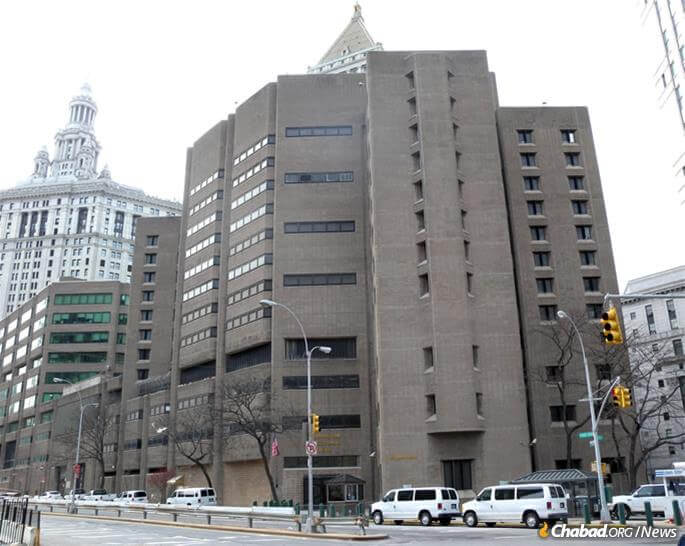
A few months later, with the help and guidance of the Chabad-Lubavitch affiliated Aleph Institute—the leading Jewish organization caring for the incarcerated and their families—I found myself passing through a metal detector and having my hand stamped at the Metropolitan Correctional Center (MCC) in New York, not far from City Hall. A federal facility known for its strict security, MCC is a 12-story concrete fortress in the heart of Manhattan, a place The New York Times quotes an inmate describing as “less hospitable than Guantanamo Bay”—he would know, he’d been in both. MCC is adjacent to the courthouse where I’ve gone for jury duty, but I’d never even known of its existence. Stripped of my phone, keys and wallet, and with only my reporter’s notebook and pen in hand, an officer led me through a series of claustrophobic passageways, eventually to the visitation floor.

In the small, triangular-shaped room where I was told to wait for the Jewish inmates I’d be meeting one at a time, I noticed a would-be inspirational poster on the wall. “Make it happen,” it cheerily read. “There is no challenge too great for those who have the will and heart to make it happen.”

It dawned on me that though geographically close to my own home, I was in an alternate universe.

Visitation Opens Up
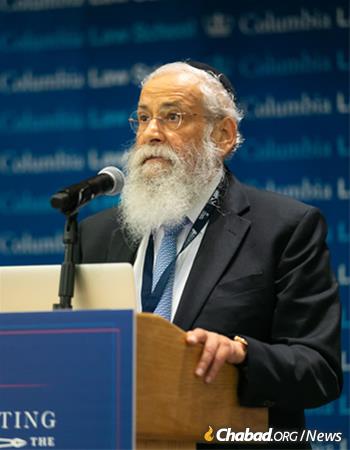
The Aleph Institute was founded in 1981 by Rabbi Sholom Ber Lipskar at the express direction of the Rebbe, Rabbi Menachem M. Schneerson, of righteous memory, who was an early and passionate proponent of criminal justice reform. With the goal of reaching out to Jews in limited environments, Aleph has a division dedicated to the incarcerated and a separate one working with the military. It has been a pioneer in both fields.

The guiding principle behind Aleph’s prisoner initiatives, following the Rebbe’s leadership, is that someone who has committed a criminal act is still dear to G‑d and created in His image, with religious responsibilities, the ability to improve, and human emotional needs. Above all, each person has a unique role to play in the world, and the goal must be to assist them in reintegrating into society, where they can resume their individual missions.

“When a person finds himself in a situation of ‘after the sunset,’” the Rebbe wrote in a November 1977 Chanukah letter addressed to prisoners, “when the light of day has given way to gloom and darkness—as was the case in those ancient days under the oppressive Greek rule—one must not despair, G‑d forbid, but on the contrary, it is necessary to fortify oneself with complete trust in G‑d, the Essence of Goodness, and take heart in the firm belief that the darkness is only temporary, and it will soon be superseded by a bright light, which will be seen and felt all the more strongly through the supremacy of light over darkness, and by the intensity of the contrast.”

Despair and despondency is part and parcel of prison life, a feeling of being alone in a harsh, dark world. That’s why Aleph’s motto is: “No one alone, no one forgotten.”

And by feeling “not forgotten,” the chances of making a smooth post-prison transition improves drastically. Of the nearly 2.2 million people incarcerated in the United States today, nearly 75 percent will return to prison within five years of release. As reform advocates continue to work on various programs across the system to lower the recidivism rate—including pre-sentencing diversion, drug rehabilitation and, crucially, educational efforts—one aspect that has continuously borne results are visitation programs. Prisoners who maintain connections with the world outside, members of their families and communities, have a far better chance of landing on their feet once they re-enter society.

Aleph has facilitated prison visits by Chabad rabbis and rabbinical students for decades, but as I learned from Aleph Visitation Circle coordinator Binah Banayan, the process is now opening up. In fact, the Aleph Visitation Circle recently became the first organized volunteer effort in the Jewish community to involve “regular people” outside the rabbinate in one on one prisoner visitation.

“The visitation program was started with the idea in mind that there are a lot of inmates that do not get any visits from their friends or family,” explains Rabbi Dovid Raigorodsky, also an Aleph Visitation Circle coordinator. “This can leave them feeling very lonely, almost like they don’t matter.”

Aleph contacted the Bureau of Prisons (BOP) to begin the work of setting up a one-on-one volunteer visitation program, and BOP eventually granted permission. Since September of 2018 the program has enlisted 65 active volunteers who have visited 20 different federal institutions nationwide, making over 250 visits to date. Another 30 volunteers are currently pending approval by the BOP.

The process of becoming a volunteer is fairly straight-forward. When I decided to make the plunge, I completed the online application form, provided references, and a few weeks later was accepted and offered several possible visitation dates at MCC.

I carefully read the rules about the prison dress code required for visitors and policies on what they may take inside into the prison (essentially nothing). Several days before my first visit, I was given the names and inmate numbers of two Jewish prisoners and told to report at MCC.

I found the entrance and approached the check- in window—not entirely confident the clerk would find the folder with the letter authorizing my visit. To my surprise, they had the information, and I headed in.

In the Tank

Like the rest of the building, and despite the inspirational posters, the visitation floor is not very welcoming. Several of the rooms were occupied by attorneys meeting with their clients, clad in their drab, brown prison garb. The vending machine, I noticed, was broken.

My meetings would last an hour each, and as I waited for the guards to return with the first inmate I’d spend time with, I wondered what we’d discuss.

The first prisoner, “S,” was a man approximately 55 years old. He immediately put me at ease. We spoke about our lives and learned that we had children studying in the same university, lived in a similar neighborhood and were deeply connected to Jewish practice.

Though I didn’t ask, he proceeded to tell me about his financial crimes. “Everybody has problems and makes mistakes,” he told me. He’d already served 15 years in prison.

S spoke fondly and with great appreciation of the rabbis who visit regularly. “You meet these people, and you are magnetized to them. Getting visits means you are alive. Visitations are called ‘not forgetting;’ in here, you are forgotten to the world.”

He seemed to know all of the Jewish inmates, including two women who work in the commissary. He described the experience of being a Jew in prison. “It is difficult. We are a minority in the U.S., and especially here!”

S expressed great appreciation for the visitation program. “Aleph is important because when you are in here, you live in a different world than outside; you are not in touch with society. Aleph helps you know what is going on outside; we live vicariously through others.” S feels that the visits by Aleph will greatly help him make the adjustment to the outside world easier after all his years behind bars. “Aleph gives services for people to re-enter society, funds for relocating and to get on our way.”

Minutes after S left our meeting to return to his job, “V,” a muscular man in his mid-30s, entered the small room. He, too, is committed to Jewish practice and belief, and is upset at what he describes as the lack of services Jewish prisoners receive. “There are no religious services for Jews; we get juice on Friday nights for Shabbat—no challah. This year, we did start getting matzah for Passover.”

V proudly says that he puts on his tallit and tefillin each day, and prayers three times a day.

V has struggled with addiction for many years, and acknowledges his past errors. ”Everybody makes mistakes in life,” he says, noting that “addiction is a sickness.” At the same time, he points out, ”everybody deserves a second chance … we are not bad people.”

V, too, feels a kinship with other Jewish prisoners. Although it will be years before he is released, V remains positive. “I know G‑d is with me. I have faith. I keep going.”
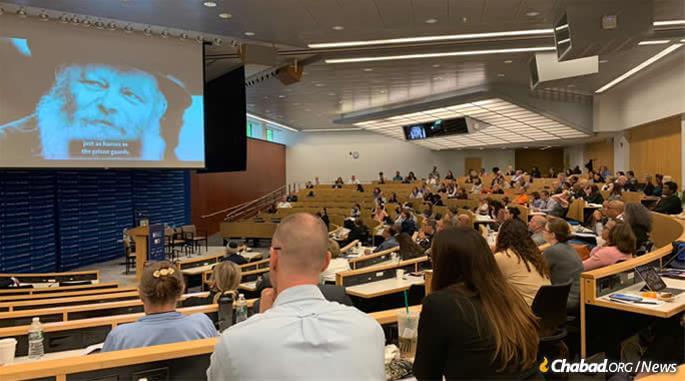
A Fulfilling Experience

Though my first prison visit went smoothly, on the second attempt I learned it’s not always that easy. For some reason the clerk at MCC couldn’t find my authorization and I was sent away without seeing the inmates I was scheduled to visit. Even more frustrating, I had no way of communicating with the inmates to explain to them what happened.

I had never met or spoken with others who have decided to spend time visiting prisoners, and I wondered if their experience was similar to mine. What did they do or speak about on their visits?

Avrumi Frankel of Lakewood, N.J., has been visiting prisoners at nearby FCI (Federal Correctional Institution) Fort Dix for about a year. After seeing an ad looking for people to read the Megillah on Purim, Frankel eventually connected with the Aleph Visitation Circle and completed all the paperwork. He has made 15 prison visits since. As opposed to the MCC, where I had been, Frankel says the visiting room at FCI Fort Dix is one big room where he can meet with many inmates at once, a reflection of the various rules and regulations that govern each facility differently.

“It is a very fulfilling experience,” Frankel says. “You feel that they are desperate for visitors, and that they really appreciate it. They feel good that people are thinking about them.” Frankel points out that even people not on his list come over to him during the visiting time.

Frankel has developed an ongoing, evolving relationship with the Jewish prisoners, and he makes a point to say that he never judges them—that job has already been done by someone else.

“I don’t think they are bad people,” says Frankel. “I think they are good people who have made bad choices.”

Another volunteer I got the chance to speak with was Rabbi Zalman Gansburg. Gansburg is co-director, together with his wife, Chani, of Chabad of Palmetto Bay and Deering Bay in Florida, but as opposed to going in as a rabbi, Gansburg chose to visit prison through the Aleph Visitation Circle the same way that all non-rabbinic visitors do.

“There is a special spiritual fulfillment visiting someone in prison; the impact you have on his life is amazing,” Gansburg explains. As a Chabad emissary Gansburg is no stranger to assisting people from all walks of life, and yet he feels there is something special about the simple act of visiting the incarcerated.

“You see the impact right away,” he says. “How can you not when the inmate tells you you’re the first visitor they have had in over a year?”

The experience has shaped the way Gansburg views and relates to all people. “It’s humbling. It brings you down to reality.”

Gansburg’s visits have also developed over time, and what started as friendly talk about life experiences and the like now involve a formal learning component. One of the men he visits got himself a Tanya, the foundational text of Chabad Chassidic philosophy, and each of them study the same section of the Tanya. Since Gansburg isn’t allowed to bring in books, now when he visits they’re able to discuss their studies and trade perspectives on the Torah they’ve both learned.
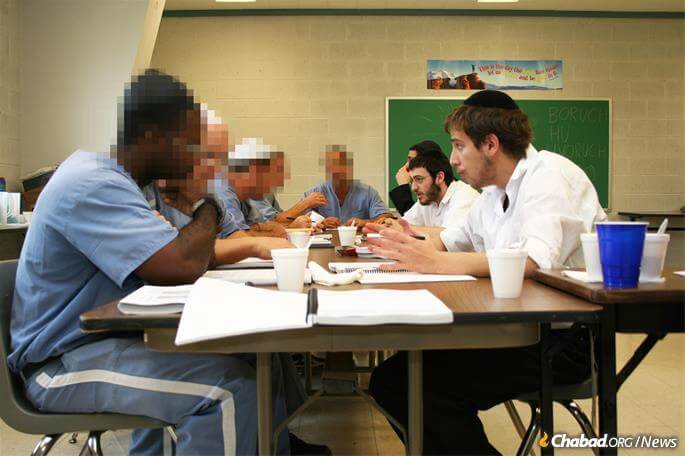
Gansburg hopes his own experience will encourage others to volunteer with the Aleph Visitation Circle. “When you go into a prison and interact with someone behind bars, and talk to him and try to understand him, you expand your views on life and you are able to understand people more and life more. It makes you a better father, husband, son, brother, and above all, a better person.”

Judging by my own experience 1,200 miles north, I couldn’t agree more.

As the program expands, volunteers are needed in every city and state—especially Brooklyn, Miami, Los Angeles, and Chicago. To date, over one hundred and four prisoners have received visitors thanks to the program. The goal, Aleph says, “is to reach every Jewish prisoner and remind them that even in prison they are never alone or forgotten.”

To volunteer for the Aleph Visiting Circle, visit their website or contact Sara Schmukler at sara@aleph-institute.org, 310-598-2142 ext. 231.

Read more

Original Article published on The Camp Ramah Northern California

Tikvah changed my life. In 1984, I was hired to work in the kitchen at Camp Ramah in New England. A day before my arrival, I was asked if I would fill a last minute opening in the Tikvah Program. “What is Tikvah?” I asked. My experience that summer led to my pursuing a career in disabilities inclusion. I spent a total of 21 years working with Tikvah at Ramah New England and have been working as the director of our National Ramah Tikvah Network for five years. In that capacity, I work with the Tikvah directors of all Ramah camps, sharing best practices, discussing vocational training, staff recruitment, Israel trips and more. Three years ago, I was privileged to have my Ramah affiliations include Ramah Galim.

When I speak about Tikvah nationally and internationally, I point out that there was a lot of pushback in the late 1960s when Herb and Barbara Greenberg proposed the idea for Tikvah. Tikvah opened in 1970 in Glen Spey, New York and soon after moved to Ramah New England. Camp by camp, Tikvah was incorporated in to each camp. We recently celebrated 50 years of Tikvah in Israel during our recent Tikvah Ramah Bike Ride and Hike.

At Ramah Galim, Tikvah was fully a part of camp from the outset. Rabbi Sarah Shulman and the board of directors felt strongly that Ramah Galim should not open its doors without Tikvah. How far we have come in four years!

In 2015, my colleague Elana Naftalin Kelman, the longtime Tikvah director at Ramah California in Ojai, directed a one week Tikvah Program. I was privileged to join the Galim family the following year when Tikvah expanded to a two-week program. With the support and visionary leadership of Rabbi Sarah, we started a two week Ezra vocational training program that summer—with two participants. We soon expanded the Ezra Program to two sessions (one or two session option), and our numbers increased in both Amitzim and Ezra.

Amitzim campers are full members of the camp community. We participate in all camp-wide activities, live in the bayit and eat meals with the camp community in the chadar ochel, participate in Shabbat davening and daily mincha moments—and boogie board, kayak, ride horses, climb the climbing wall, farm and more with our peers from other edot.

Members of the Ezra Program set up the dining room, sort and deliver mail and packages, sort and deliver nishnoosh (snack), work with farm animals at the horse barn, and will soon launch an as of now “secret” in camp business (shhhhh!).

We are pleased that to report that Tikvah has 13 members this session—7 in Amitzim and 6 in Ezra. The participants are excited for their first Shabbat with members of the larger camp community, and they are preparing for their masa (camping trip) next week.

I have been privileged to direct Tikvah year round and in person for the past three years. My in-person work with Tikvah is drawing to a close. In my National Ramah role, I will continue visiting Tikvah programs across North America. I will also be visiting innovative vocational training programs across the country. I will continue to be in close contact with Tikvah and with the Ramah Galim community. We are so proud of the inclusive community Ramah Galim continues to be!

Read more

Original Article Published on The Respect Ability

This week’s Shabbat Smile was written by Howard Blas about a recent Access Israel conference.

Yuval Wenger knows a thing or two about accessibility and inclusion in Israel—and he has been sharing it with Israel and the international community for over two decades. As Founder and President of Access Israel, the NGO that promotes accessibility in Israel, he spoke at its recent international conference.

Yuval depicted Israel’s transformation in accessibility through his family’s own story: he grew up with a father in a wheelchair, and later became a wheelchair user himself. As a child, Yuval simply accepted the fact that he and his siblings would have to help their father navigate the inaccessible world of Israel. This sometimes meant carrying him to get places.

Many years later, as a 22-year-old pilot in the Israeli Air Force, Yuval Wenger became paralyzed when his helicopter crashed. He later married, had three children, and enjoyed family time. But living with a disability in Israel reached a peak during a family vacation: despite being told that lodging would be accessible, Wenger was unable to enter the bathroom in his wheelchair. Outraged, Wenger wrote about his plight to then-President Ezer Weizman, also a former pilot. To Wenger’s surprise, he received a response two days later from Weizman, ordering him to start Access Israel and come to his home six months later to celebrate its founding.

Years later, Access Israel and Wenger have accomplished a great deal.

The Access Israel conference featured 800 people from 22 countries. Conference attendees included inclusion and accessibility professionals, product and application engineers, foundation and program heads, government officials, journalists and accessible designers from countries including Australia, Bulgaria, Canada, Chile, Germany Hungary, Ireland, Latvia, Sweden, the United States, and more. Israelis in attendance included representatives from all walks – and wheels – of life.

As a disabilities inclusion professional and as a writer, I have been privileged to attend many conferences and trade shows in great settings with top sessions and networking opportunities. But the Access Israel conference provided all of this and more. There were many opportunities throughout the conference for meaningful conversation across a wide range of settings—from Shabbat dinner at Wegner’s home to the Feast for the Senses, where we experienced dining without the use of our vision, hearing, or hands.

Among the most impressive aspects of the conference was its model of widespread inclusion. People with disabilities were prominently featured in every aspect of the conference. There were presenters with disabilities, journalists with disabilities and commissioners on disabilities from the mayor’s offices of New York and Chicago. Additionally, accommodations for all attendees were seamlessly supported with closed captioning and sign language in Hebrew and English.

The program itself also provided attendees with a glimpse into the latest thinking and technology in the disability community. One such highlight was a Google presentation on accessibility. Eight members of Google’s accessibility team from New York and California hosted an Accessible Technologies Speed Dating event in which pairs of delegates briefly toured seven stations, learning about such technologies as SignTime (translates texts in to sign languages), Steps (online map), and some Israeli startups: EyeControl (screenless device, assistive technology), Right Hear (turns public spaces into accessible environments for people with orientation challenges), StepHear (orientation and guidance systems for blind and visually impaired), Accessible Roads (navigation on accessible streets and roadways), Travaxy (accessible travel), and GalaPrompter (vocal recognition and audio description software for deaf, hard of hearing, blind and low vision theatre-goers).

The conference showcased Israel’s people, technology, food and “Start-Up Nation” status in the most favorable of lights. We learned, for example, that Israel has a type of legislation that requires Israel’s government institutions with more than 100 employees to fill at least five percent of jobs with disabilities; Israel’s beaches also boast several access points and ramps; and Israeli ambassadors are working in local communities in Bulgaria and Ecuador to help their local communities build accessible playgrounds.

As Commissioner Victor Calise of NYC’s Mayor’s Office for People with Disabilities said, “It is always a pleasure to travel around the world to see what our international partners are doing to improve accessibility. Israel is no exception as I truly enjoyed going to the 7th Annual Access Israel Conference and learning more about the accessible and inclusive technology they are developing. . . . While New York City is working to become the most accessible city in the world, it’s important to see what others are doing to advance disability rights on the global stage to motivate and learn from one another.”

Thank you, Yuval Wegner for sharing such a powerful story; for founding Access Israel; and for the remarkable conference that brought so many interesting, wonderful people together to learn from one another. Hope to see you all next year!

Read more

Original Article Published on The Jerusalem Post

Over 800 people from 22 countries participated in Access Israel’s 7th International Conference.

When paralyzed former helicopter pilot Yuval Wenger wrote in 1998 to a fellow former pilot, President Ezer Weizman, to complain about lack of access in Israel for people with disabilities, he didn’t expect a prompt reply – and a demand. Wenger followed Weizman’s terse response to do something about it and start an NGO. He called it Access Israel, and six months later met Weizman at the President’s Residence. Twenty years later, Access Israel’s impact on access and inclusion of people with disabilities is now felt worldwide.

Over 800 people from 22 countries participated in Access Israel’s 7th International Conference, which was held last month in Tel Aviv and throughout the country. The fast-paced conference, entitled “The Future of Accessibility,” kept participants moving – between sessions within a given event space, and to various cities in Israel.

Meetings on the first day of the conference were held at the Export Institute in Tel Aviv, where participants were welcomed by representatives of the Foreign Affairs and Tourism ministries. They were later welcomed by Avremi Torem, Commissioner for Equal Rights of Persons with Disabilities in Israel. Some participants toured and experienced disabilities simulation activities at Wingate Institute, Israel’s National Center for Physical Education and Sport.

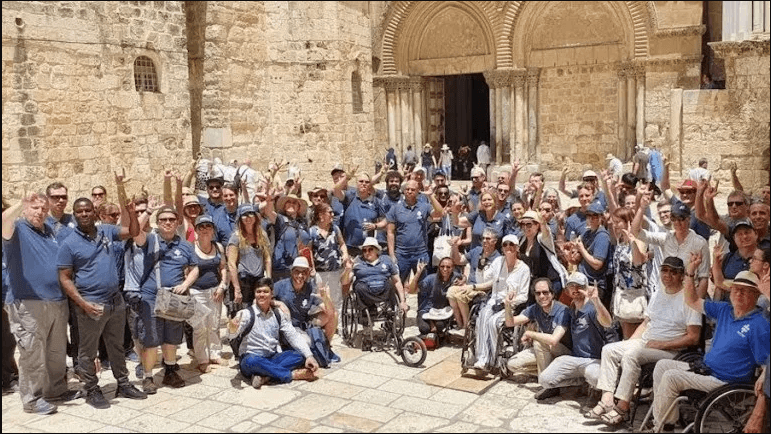
Friday was spent in Jerusalem, viewing the city from Mt. Scopus, and touring such sites in the now-accessible Old City as the Church of the Holy Sepulcher and the Western Wall. The international delegation continued to bond at a traditional Shabbat dinner at Wegner’s home, and during Shabbat tours of Tel Aviv-Jaffa, including several of Tel Aviv’s accessible beaches.

A NUMBER of sessions took place at Avenue Convention and Events Center in Airport City and at Beit Hagimlai in Shoham. Many were attended by Israeli disability professionals, representatives of municipalities, ministries, banks, insurance companies, accessibility coordinators from leading companies in Israel, IT and website experts, representatives of Israeli technologies, CEOs of Israeli accessibility start-ups and companies and policy makers.

Conference attendees and presenters included many people with visible disabilities, including app and product designers from around the world, commissioners on disabilities from the mayor’s offices of New York and Chicago, and even the co-founder of Space IL, Yariv Bash, paralyzed from the waist down two years ago in a French skiing accident.

Attendees heard from access and inclusion experts on such topics as Accessible Technology; Barrier-Free Tourism; Urban Accessibility Initiatives and Challenges from Around the World; and Global Models for the Implementation of Technology. And they participated in customized sessions – and panels – on such topics as Inclusive Design, Culture for All, Justice and Democracy for All, Inclusive Education, Inclusive Technology, Accessible Websites and Applications and Workplace Accessibility.
The conference’s largest delegation came from Austria (20 people), with Google’s Accessibility Team coming in second place with seven representatives. Google Israel hosted a well-received Accessible Technologies Speed Dating event where pairs of delegates spent ten minutes at each of seven stations, learning about such technologies as StepHear (orientation and guidance systems for the blind and visually impaired), Travaxy (accessible travel), Accessible Roads (navigation on accessible streets and roadways) and SignTime (translates texts in to sign languages).

VIENNA RESIDENT Hugo Furtado displayed his Dreamwaves Navigation System at the Google-hosted event. The Portuguese-born PhD completed his electrical engineering training in Switzerland, Slovenia and Austria, and has created a navigation system to guide blind and visually impaired people in unknown environments.

“I attended the event because I had heard that the topic of accessibility has become very important in recent years,” he said.
The well-traveled Furtado was particularly excited to make his first trip to Israel. “Israel is a famous start-up nation. Within this framework, it was a great opportunity for me to learn and to further develop the business. As Dreamwaves is a start-up developing a navigation app for blind and low-vision people, the fit could hardly be better,” he said. “Both things were confirmed: One can see the big effort that is being put into making the public spaces accessible – I can imagine the challenge to make visiting Jerusalem accessible – and bringing the topic into the authorities’ agenda.

“Also, it was especially valuable for me to learn why Israel is such a strong start-up nation. In my view, the energy and will power that people put into what they do plays a huge role. This was impressive for me in the country in general. People put a lot of energy into making things happen instead of worrying about smaller detail. That’s what you need in a start-up,” Furtado said.
Others came from Sweden, Latvia, Chile, Bulgaria, Canada, Germany, Ireland and Australia. Some has been to Israel four or five times – like Martin Essl, head of the Essl Foundation, which coordinates The Zero Project, focusing on the rights of persons with disabilities globally. It also focuses on social projects in Austria, with an emphasis on the inclusion of persons with disabilities in the open labor market, and in accessibility and inclusive education.

The excitement for Israel on the part of foreign attendees was a familiar trope; they consider Israel to be the Start-Up Nation and a world-leader in accessibility and inclusion.

KJELL STJERNHOLM of Stockholm, Sweden, was invited to the conference by Access Israel after having been awarded an international best practice by Zeroproject.org. The good natured Stjernholm, who founded and directed a disabilities acting troupe in Sweden where actors were paid market wages, currently works in the field of accessible elections. In this capacity, Stjernholm is working to teach people “what we are voting about,” and to assure that “the very politics needs to be accessible.”

Stjernholm enjoyed both the conference and the country. “I’ve learned heaps of things. Among the most usable to me: interpretation techniques within easy read, accessibility to the arts and some amazing tech-projects.” He says that, “Israel is a beautiful country. I am impressed by the high aims of accessibility, and the use of the law to enforce it,” referring to a law where government-funded bodies with more than 100 employers are committed to ensuring that at least five percent of its workforce are employees with disabilities.

IRISH INCLUSIVITY activist, Caroline Casey – whose TED Talk, “Looking Past Limits,” has had more than 2.2 million viewers – described learning about her near total blindness due to ocular albinism – she had unknowingly been diagnosed with it as a child – at age 17. She left a promising career in managing consulting and has committed her career to inclusion in general, and to inclusion in the work place in particular.

Casey was curious to visit Israel for the first time, since her father had shared stories about his time here in the early 60s while he was living on a kibbutz. Prior to her visit, she noted that: “Over the years, I have witnessed the extraordinary development and impact of Access Israel. It has truly amazed me how far both the country and the organization have come in their accessibility journey.”

The inclusivity activist loved what she saw and experienced in Israel. “The food, the archaeology, the history, the heat, the sense of historic civilization – for an ex-archaeologist – unbelievable,” reported Casey. “But no doubt: The real draw was and is the people. I love their energy, their straightness, their attitude to “getting stuff done”; their warmth, humor and ambition. They seem to work with the intention of solutions, not problems.”

Casey followed Space IL co-founder Yariv Bash and Bank HaPoalim CTO, Haim Pinto, by delivering what were billed as “Inspiring Opening Lectures” on the Sunday of the conference. Casey, like most attendees, raced between sessions, met with colleagues and made many new friends.

And she never stopped appreciating the fact that she was in Israel. “It was so great to go to a global conference like that and it not be in the ‘typical’ place,” she said. “I think we can learn a huge amount by going to different places and immersing ourselves in cultures completely different from our own – and I knew so little about Israel, I wanted more time there – much more.”

Casey and hundreds of others will surely be back for next year’s 8th International Conference.

Read more