Published Articles

Original Article Published on The New York Jewish Week

Howard Blas shares an important lesson from the Access Israel Conference.

I have been struggling with the role of disabilities simulation activities for many years.  Five days at the Access Israel Conference, where such activities were handled thoughtfully, sensitively and mostly facilitated and processed by people with disabilities—has convinced me that they can play an important role in changing society’s attitudes toward people with disabilities. Let me explain.

In 2015, when Lisa Tobin, the then Director of Inclusion Initiatives at the Foundation for Jewish Camp and I were completing our 201-page Inclusion resource guide, we received some feedback from members of the disabilities community that we should reconsider including disabilities simulation activities. In short, they argued that such activities do not really replicate the disability experience and they can leave participants with increased negative perceptions of disability including feelings of pity.

We ultimately decided to include some simulation activities in the training manual —with a caveat: “They are intended to offer a glimpse into the very complex world of disability.” Five days at Access Israel’s recent 7th International Conference in Tel Aviv Access Israel Conference demonstrated that it is possible to effectively and sensitively use simulations in teaching about disabilities. They key ingredient is involving people with disabilities in the training.
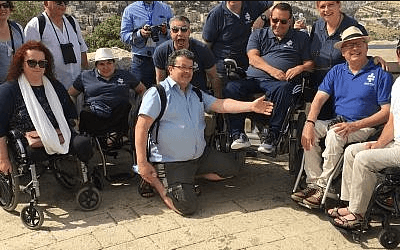
At the Access Israel Conference. Courtesy of Howard Blas

The Access Israel conference brought together over 500 people from 22 countries. Attendees heard from experts on access and inclusion on such topics as Accessible Technology, Barrier-Free Tourism, Urban Accessibility Initiatives and Challenges from Around the World, and Global Models for the Implementation of Technology. They participated in customized sessions—and panels—on such topics as Inclusive Design, Culture for All and Justice and Democracy for All, visited Israeli programs, and toured the now-accessible Old City of Jerusalem and Tel Aviv/Jaffa. Many conference attendees and presenters were people with disabilities including app and product designers, government officials and even the co-founder of Space IL, Yariv Bash.

On the first day of the conference, several attendees toured the Wingate Institute, Israel’s National Centre for Physical Education and Sport. We had the opportunity to experience a simulation activity, set up by Access Israel, during an Israeli Junior Olympics competition, which provided the judo participants, swimmers, and others the chance to play basketball with an Israeli wheelchair player, Liron Levy, navigate an obstacle course in a wheelchair, and eat a mystery cold substance in a cup—while blindfolded.

Our adult group also had the opportunity to participate in the basketball and ice cream eating activity. Liron shared his experience as a person who uses a wheelchair, and a young woman who is blind spoke to us about her experience being blind, completing university, etc. Such simulations take place with school children throughout Israel—and are always facilitated by people with disabilities. Participants in the simulation not only had a momentary glimpse in to the experience of navigating the world as a blind person, or as a wheelchair user; we had the opportunity to hear about the real life experience of people with disabilities as they navigate the world. And we engaged in a dialogue. As we better got to know our instructors who had disabilities, we did not feel pity, as critics had cautioned; rather, we felt better informed of their daily experiences navigating the world, including getting dressed, eating and traveling.

Three days later, as the main part of the conference got underway at Avenue Convention and Events Center in Airport City, conference attendees were greeted with many simulation stations as they passed through registration, on the way to the main conference hall. Again, people with disabilities were on hand to explain the simulation and to share their experiences of being blind, deaf or using a wheelchair. Many tried learning and communicating in Hebrew sign language, navigating a blind obstacle course and taking a wheelchair through a series of obstacles.
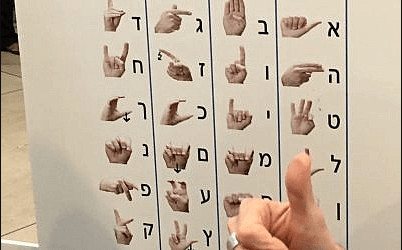
At the Access Israel Conference. Courtesy of Howard Blas

Later that evening, conference participants enjoyed a Feast of the Senses dinner. Following cocktails on a lovely Renanna event space terrace, everyone received an Access Israel blindfold and was escorted in to dinner. People in wheelchairs commented about the unique, important opportunity to experience the disabilities of others. Staff members patiently and carefully showed us to our seats, where we encouraged to feel our way to two wine glasses—and determine through our other senses which was white and which was red. And we were challenged to figure out which vegetables and fruits were in our salad.
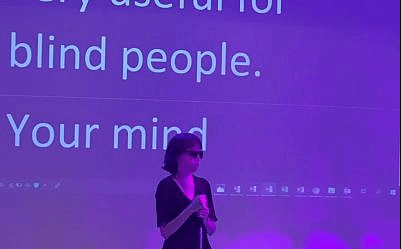
At the Access Israel Conference. Courtesy of Howard Blas

Michal Rimon, CEO of Access Israel, introduced the meal. “We will be joined by people who live with disabilities. They will talk to you about their challenges, triumphs and successes. The more your let yourselves dive in, the more you will get from the experience.” Rimon, who has led this exercise at many past dinners, knew what the diners were going through. “Right now, you are compensating—you are using other senses more.” This helped explain my increased sensitivity to the noise in the room—and to my walking in to the room very intentionally, trying to maintain my balance.

Our blindfolds were removed and we engaged in a dialogue with an Israeli woman who lost her sight at age three and learned Braille at age four. She reported that only 10% of blind people know Braille since many lose their sight later in life, when it is very hard to learn. “Learning Braille is the greatest gift I was ever given,” our guide reported. One participant asked, “What do you see in dreams?”

Our second course was a sensory course, where each participant was challenged to eat with cooking mitts—with a wooden flat board inside. Finally, our last course was a deaf simulation. A deaf man shared his experiences navigating the world as another man translated for the audience.

As the third successful simulation drew to a close, I continued to wonder why our camping inclusion manual simulation activities were met with pushback, and what made the Access Israel exercises so successful? Rimon patiently considered my questions and conceded that they too had some difficulties at first. “In the beginning, it was a big challenge to do such activities. People thought such simulations would be bad for the kids, it would make them sad, so we had to find one or two schools to start.”

Rimon describes the four pillars to their approach: knowledge, experience, knowing the person behind the disability, and paying it forward. Rimon stresses the importance of giving participants in each class the tools to pass on the experience to others. Students are given homework to go home and discuss what they have learned with their families. She notes that” schools now stand in line to participate in the program.” Rimon feels the program is “changing the DNA of the children.”
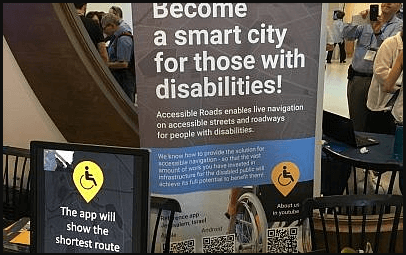
At the Access Israel Conference. Courtesy of Howard Blas

The simulation activities we experienced at the Access Israel conference were useful. Spending five days of the conference sharing and learning, eating meals, riding the tour bus and navigating the Old together with colleagues and new friends with disabilities—from a German reporter and two commissioners on disabilities of major US cities who use wheelchairs, to a deaf museum executive, to a blind member of the Google Accessibility team–went even further in changing our DNA.

Read more

Original article published on The New York Jewish Week

AKIM’s Dental Training Program, in collaboration with the TAU dental school and Israel’s Ministry of Labor and Social Affairs teaches employment skills in the dental field.

Visitors to Tel Aviv University’s Goldschleger School of Dental Medicine see something innovative and unsurprising as they enter the building–a vending machine sponsored by Colgate dispensing toothbrushes, mouthwash and other dental equipment. A red heart on the glass reads in Hebrew “My health begins in my mouth.”

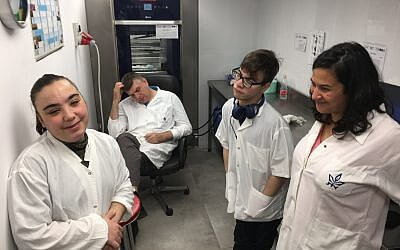
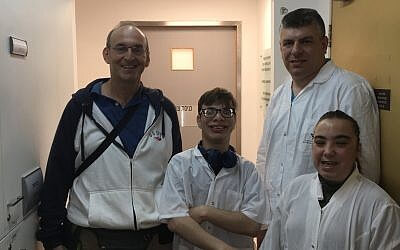
When visitors go down one flight, they see something even more extraordinary and innovative—four enthusiastic men and women from AKIM, the National Organization for People with Intellectual Disabilities, in their white lab coats, studying and working at the dental school. These young adults with intellectual and developmental disabilities make up the first cohort in the Dental Sterilization Officer Training Program, a collaborative venture of AKIM, the TAU dental school, and the Ministry of Labor and Social Affairs.

The one-year training program started in October, 2018. Trainees participate five days a week—from Sundays through Thursdays–in theoretical and practical coursework. They learn important terminology and receive theoretical training in sterilization, disinfection and hygiene. They collect equipment from various departments, sterilize instruments and carefully scan codes to assure proper tracking of sterilized equipment. Participants work in the dental warehouse, where they prepare and deliver orders of equipment and substances for various clinics, and they learn and perform various administrative tasks.

The author with participants in AKIM Dental Training Program. Courtesy of Howard Blas

In addition, the trainees interact on a daily basis with the university’s dental students. They learn together in some classes, work in the dental clinics, and socialize in the hallways and dining rooms. The participants with disabilities have the additional important job of working in a TAU dental clinic which specializes in treating people with disabilities. Shani Yeshurun, AKIM Israel’s director of international relations, explains, “Everybody feels anxious when they go to the dentist. By seeing and interacting with people like themselves, the stress level of the patient with a disability is reduced.”

On a recent visit, three participants—Amir, Michael and Yael and their mentor, Donna, invited me to tour and witness the sophisticated sterilization equipment. They took turns explaining how the state-of-the-art autoclave sterilizes the equipment, is logged in and prepared for delivery. Michael travels independently each day for Netanya and hopes to get a job closer to home upon graduation. Yael patiently demonstrated how sterilized equipment is packaged and arranged in the store room.

A participant in AKIM Dental Training Program. Courtesy of Howard Blas

Dr. Rada Sumareva, a New York and New Jersey area periodontist and implant surgeon, sees tremendous benefits of the program beyond the practical job skills obtained by the trainees. “By training next to the dental students, the dental students will have a different perspective on people with disabilities. It is one thing to know about disabilities in theory; it is another to have a classmate with a disability and to train together, side by side. This will be very useful when they one-day employ the program graduates in their offices.” She is confident that this will “lead to a culture change in the way we train dentists.”

Sumareva also notes “a tremendous sense of ambassadorship” by having people with disabilities work in the clinics with patients with disabilities. “Patients and their families will see that people with disabilities can integrate, have a job and have a purpose in life!”

Sumereva serves as vice president of AKIM USA and is a member of TAU’s Board of Governors and American Friends of Tel Aviv University’s Board of Directors. Despite her personal deep connection to both dentistry and disabilities, it was her son, Robert Ukrainsky, who helped create the dental sterilization officer training program. While studying for his bar mitzvah several years ago, he participated in the “Give a Mitzvah, Do a Mitzvah” program of the UJA-Federation of New York. Robert, now a 10th grader at the Avenues: The World School in New York City, is a founding member and chair of the Young Friends of AKIM and has donated over $22,000 to date for the TAU/KAIM dental training program.

The first group of graduates will be employed by both the Tel Aviv University Dental Clinic and by AKIM’s network of 22 specialized dental clinics throughout Israel which specialize in treating people with disabilities. AKIM will offer ongoing employment guidance and job placement services to graduates, who will also have the option of working in other AKIM] [non-dental clinics throughout the country

AKIM was founded in 1951 and strives to promote quality of life and improve the welfare of people with Intellectual disabilities and their relatives. They currently work throughout Israel to serve 35,000 people and 140,000 family members.

Sumareva dreams of bringing both specialized clinics for people with disabilities and a dental training program like the one at Tel Aviv University to the United States.

The issue of lack of adequate dental care for people with disabilities has been in the news a lot in recent weeks:

To address this problem, in 2012 the Commission on Dental Accreditation mandated that all dental students learn to assess the treatment needs of people with disabilities. And New York University recently open the N.Y.U. College of Dentistry’s Oral Health Center for People with Disabilities. It will both offer exceptional care for patients with a wide range of disabilities, and it will provide dentists with necessary skills and experience for treating patients with disabilities. Dr. Ronald Kosinski, the Center’s director, acknowledges the historical lack of adequate care for people with disabilities—and of negative attitudes toward people with disabilities. He is insistent that society begin to do a better job. “People are afraid of them,” he said. “They are not looked at like people. We need to train dental students to stop throwing their hands up and to start embracing them.”

Thanks to AKIM and Tel Aviv University, important efforts are already underway in Israel for training dental students and people with disabilities, and attitudes are changing. The United States and other countries can surely benefit from Israel’s experiences thus far.

Read more

Original Article at JNS

The Jewish Tennis Project is a nonprofit foundation that seeks to provide participants with the opportunity to train and reach a world-class, competitive level of play, combining tennis instruction with education to instill a connection to Jewish culture and Israel.

Israeli tennis legends Shlomo Glickstein and Shahar Peer continue to represent Israel and the Jewish people on and off the court. The two top players were honored at a series of events in mid-March in South Florida marking the launch of the Jewish Tennis Project (JTP).

The JTP is a nonprofit foundation that seeks to provide Jewish tennis players an opportunity to train and reach a world-class, competitive level of play. The program combines tennis instruction with high-quality education geared to instill a deep connection to Jewish culture and Israel.

The idea grew out of a four-week visit to Hungary by Assaf Ingber, Israeli high-performance coach and former coach of Israeli tennis player Julia Glushko. Ingber spent a summer teaching tennis at Szarvas, a summer-camp program in Hungary that serves 1,600 children from 30 countries in a series of 12-day sessions.

“I heard the kids say what it means to them and how it changed their lives,” reports Ingber, referring to the sense of Jewish identity the participants gained at the camp, immersed in Jewish living and learning. Ingber reflected on his own experience as a child athlete: “When I was a player, all I did was play tennis, only hitting the ball.” He had little time to focus on Jewish culture and identity.

Ingber notes that “the JTP program combines top-level tennis, including the best facilities, atmosphere and tournaments, with a secular and Jewish education.” He is realistic in also noting the need to provide an education for the aspiring tennis players. “Just in case their children don’t become [Roger] Federer or Serena [Williams], they will have a tennis education, and a general and Jewish education.”

Israeli tennis pros Shahar Peer and Shlomo Glickstein with chairman Ian Halperin and founder Assaf Ingber at the Pro-AM event in Aventura, Fla. Credit: Jewish Tennis Project.

The program is part of the David Posnack Jewish Day School in Davie, Fla. “It is such a good educational environment with great courts and gyms—and their Jewish identity won’t suffer,” says Ingber. “They won’t have to feel shy, scared or insecure to say they are Jewish.”

The program will initially support five or six students, including two Israelis, which Ingber feels will “help integration and make the program great.” The American students will also hear Hebrew and develop a connection with Israel. The goal of the program is to train 20 to 30 students into high-performance players in the first two years at bases in both Davie and Aventura, Fla. Programs will also take place in Mexico, Panama, Colombia and Brazil, serving a total of 500 young players at all levels. Participants will share Jewish experiences and travel to Israel.

‘Very positive, professional, educational project’

Shlomo Glickstein, who retired from professional tennis in 1988, reached a career-high singles’ ranking of World No. 22, played in all four tennis Grand Slams and reached the quarterfinals of Wimbledon in 1981, was on hand in Florida to play in a number of exhibition matches, as well as coach local children and greet supporters.

Glickstein served until recently as CEO of the Israel Tennis Association. He was approached by Ingber about potentially getting involved in a number of tennis-related projects. “I thought the JTP program was a very positive, professional, educational project, so I got involved,” he reports. He reiterates the goals of the program: “to give mainly Jewish American kids a chance to get to the top of the tennis world, to get a Jewish education and to connect to Israel. It will also give them an opportunity to connect to all of the Jewish people in Florida and elsewhere.”

Shahar Peer, 31 and five months pregnant, enjoyed participating in the JTP kickoff. “It was an honor to join the JTP at their event last weekend in Florida. I enjoyed sharing the court with Shlomo and coming out to support this important new program to develop Jewish tennis players. It is exciting that there is a program to focus on tennis skills, Jewish identity and connection to Israel.”

Peer reached the highest ranking of any Israeli tennis player in history: Her best singles’ ranking was No. 11; she reached No. 14 in doubles. She won five career singles and three doubles titles on the Women’s Tennis Association (WTA) tour. Peer retired from professional tennis in February 2017

Fans were impressed with Glickstein and Peer’s commitment to the new organization—and, of course, with their skills on the court. In a phone interview with JNS in Israel, Glickstein says he “plays sometimes,” noting that “you never forget how to play; it is still in your blood.”

He adds, “I can still hit the ball,” though concedes that it’s “a little harder on the legs. I don’t move as well as I used to!”

Canadian documentary filmmaker, writer and investigative journalist Ian Halperin was one of the honored guests at the March 16 weekend tennis event. He is the author and/or co-author of nine books about such celebrities as Michael Jackson, Celine Dion, James Taylor and Kurt Cobain. He recently served as executive producer of the movie, “Wish You Weren’t Here: The Dark Side of Roger Waters.”

Halperin shares that his father, a Holocaust survivor, had to hide in a hole when he was 6 years old to survive. “When Roger Waters said that Israel is worse than Nazi Germany, I couldn’t stand it.” He made the film about Waters, following him all over North America in the attempt to get “under his skin.”

But the weekend in South Florida was not at controversial. An elated Halperin tweeted a picture with himself, Peer and Glickstein and wrote, “Honored to have played this weekend with top two Israeli players ever, Shahar Peer and Shlomo Glickstein. Jewish Tennis Project #saynotobds.”

Halperin states that “Glickstein is to Israeli and Jewish athletes what Jackie Robinson was to the African-American community!” He was impressed that both sports stars played three hours a day “and didn’t miss a ball.” Halpern describes Peer as “the best volleyer in the game, even at five months pregnant.”

He says the “weekend was monumental and historic,” as it not only brought the top two Israeli tennis legends on the same court, but more importantly, put smiles on the kids’ faces.

Read more

Original Article on The OKClarity

Passover is known in our tradition as the holiday of freedom and liberation. Yet, the Pesach season is often muddled with anxiety and family stress. This time of year is especially difficult for individuals and families dealing with mental health and substance abuse issues, and in today’s world who isn’t dealing with something?

“The Jewish holidays and Pesach in particular can be festive and meaningful,” observes Rabbi Elie Weinstock of Congregation Kehilath Jeshurun on Manhattan’s Upper East Side. “But Pesach can be very stressful, especially for those with mental health issues. Whether it be the obsessive cleaning or the ingathering of family, the Pesach infrastructure tends to increase family stress and anxiety.”

Additionally, students are on break from their studies. This means a long period of time with little structure. Structure tends to be a positive thing for most people. The lack of structure during the Passover season tends to increase anxiety and create more space for individual & family stress to surface.

Veteran therapists working with the Orthodox Jewish community offer insights and suggestions for better managing this pre-Passover and Passover stress and anxiety. The first step is always understanding what Pesach represents and brings up for each of us as we prepare to be with nuclear and extend families.

Your expectations and their connection to Pesach anxiety and family stress


Michelle Halle, a licensed clinical social worker in Lakewood, New Jersey, acknowledges that Passover stress “has a lot to do with expectations and self-care.” She reports, “A lot of people don’t think about giving themselves what they need.” We tend to swamp ourselves with the needs, wants, and expectations of others and ignore the most vital person, ourselves.

She goes further to highlight how “Passover often serves as a measuring stick,” which only increases pre-Passover stress and anxiety. People often have expectations of where they will be by the time Pesach rolls around. They hoped they would be married, have a child, or find a dream job before the upcoming Passover. “When these things didn’t happen, they get down, blame themselves, and add to the anxiety and family stress that already exists.”

What can we do to reduce Passover anxiety and family stress?

1- Identify expectations, feelings, and practice sitting with discomfort

Halle encourages her clients to spend time working to understand what is contributing to Passover anxiety and family stress.

Acknowledge the sadness and disappointment. Sit with the thoughts and acknowledge them.

Halle notes that, “People aren’t in the habit of doing this. However, once they develop this important life skill, they can use it all year long. Ultimately, we need replace self-judgment with compassion and add meaning to our lives so we feel empowered instead of disappointed and discouraged.”

2- Avoid regressing along with family members

Halle encourages her clients to be aware of possible triggers and regressive pulls which are often at play when people get together with families of origin. She notes a common phenomenon, during the holidays people often regress to the family dynamics of an earlier stage in life. Staying mindful of this tendency ensures you respond verses react to sudden changes in family dynamics. This of course will diffuse much family stress and tension.

3- Take advantage of support groups

Rabbi Weinstock notes an additional area of family stress and anxiety. “The seder is a reminder of who is NOT around the table.”

He has noticed a preponderance of support groups for bereaved individuals before holidays – especially Rosh Hashanah, Chanukah, and Pesach. He encourages people to take advantage of these supports so they are reminded they are not alone in their pain and loss.

4- Watch out for obsessive tendencies

“Mitzvah observance has the potential to increase obsessive tendencies”, observes Rabbi Weinstock. This is not necessarily a bad thing if done in moderation. However, when it spirals out of control, it is very unhealthy and extra stressful.”

Since there are so many Mitzvos associated with Pesach, those who are prone to obsessive tendencies need to watch that they don’t spiral out of control. Keep your therapist and Rabbi close by!

5- Be proactive and communicative

Menachem Kiwak, LMHC and adjunct professor in the clinical mental health counselor program of Touro College, observes increased stress levels in nearly all of his private clients in the weeks leading up to Passover. “The time before Pesach is literally crazy. People expect so much from themselves!”

Kiwak suggests using communication in the pre-Passover time to effectively reduce family stress, tension, and anxiety. When spouses and families sit down together to jointly devise a plan which may include “where family members can help, when to have a cleaning lady, and where we can settle,” the holiday will be more relaxing and joyous. If you can’t do this with your spouse, do it with a trusted friend, relative, therapist, or mentor.

6- Avoid going to extremes in your Pesach preparation

Kiwak feels that many in his practice “tend to go overboard” with their Passover expectations and preparations. Remember the distinction between what is required by Halacha (Jewish law), and extra strictures individuals place on themselves.

Kiwak recommends that people remember to make a distinction between Pesach cleaning and spring cleaning. “Be realistic and honest with yourself about what you want to do, and what you need to do, and what you cando.”

Kiwak observes the wisdom of the rabbis who came up with a formula for nullifying chametz—as a way of assuring we don’t go to extremes. “If we have this formula, why not use it?” Halacha is giving us permission to not go overboard.

7- Remember the goal is Simchas Yom Tov, not Passover anxiety and family stress

Kiwak further reminds clients, “Simchas yom tov  – the joy of the holiday – is also a mitzvah!” He tells his clients, “Don’t be so hard on yourself–and don’t compare yourselves to others.”


Passover preparation and the seders can induce anxiety and family stress. However, careful preparation and honest conversations will maximize your chances for a joyous Yom Tov.

Read more