Tikvah changed my life. In 1984, I was hired to work in the kitchen at Camp Ramah in New England. A day before my arrival, I was asked if I would fill a last minute opening in the Tikvah Program. “What is Tikvah?” I asked. My experience that summer led to my pursuing a career in disabilities inclusion. I spent a total of 21 years working with Tikvah at Ramah New England and have been working as the director of our National Ramah Tikvah Network for five years. In that capacity, I work with the Tikvah directors of all Ramah camps, sharing best practices, discussing vocational training, staff recruitment, Israel trips and more. Three years ago, I was privileged to have my Ramah affiliations include Ramah Galim.
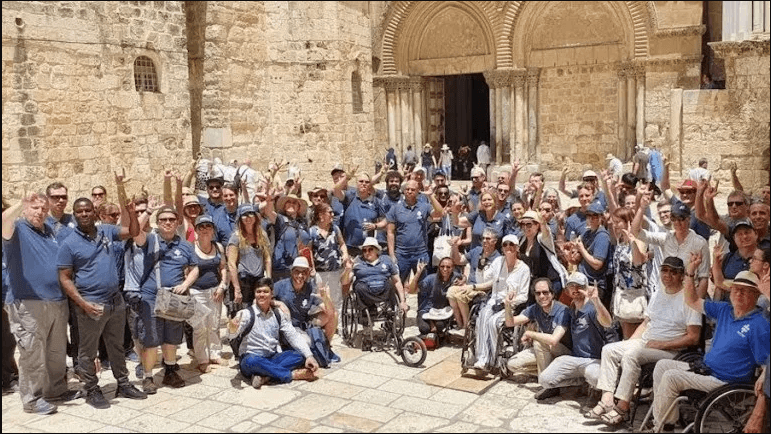
When I speak about Tikvah nationally and internationally, I point out that there was a lot of pushback in the late 1960s when Herb and Barbara Greenberg proposed the idea for Tikvah. Tikvah opened in 1970 in Glen Spey, New York and soon after moved to Ramah New England. Camp by camp, Tikvah was incorporated in to each camp. We recently celebrated 50 years of Tikvah in Israel during our recent Tikvah Ramah Bike Ride and Hike.
At Ramah Galim, Tikvah was fully a part of camp from the outset. Rabbi Sarah Shulman and the board of directors felt strongly that Ramah Galim should not open its doors without Tikvah. How far we have come in four years!
In 2015, my colleague Elana Naftalin Kelman, the longtime Tikvah director at Ramah California in Ojai, directed a one week Tikvah Program. I was privileged to join the Galim family the following year when Tikvah expanded to a two-week program. With the support and visionary leadership of Rabbi Sarah, we started a two week Ezra vocational training program that summer—with two participants. We soon expanded the Ezra Program to two sessions (one or two session option), and our numbers increased in both Amitzim and Ezra.
Amitzim campers are full members of the camp community. We participate in all camp-wide activities, live in the bayit and eat meals with the camp community in the chadar ochel, participate in Shabbat davening and daily mincha moments—and boogie board, kayak, ride horses, climb the climbing wall, farm and more with our peers from other edot.
Members of the Ezra Program set up the dining room, sort and deliver mail and packages, sort and deliver nishnoosh (snack), work with farm animals at the horse barn, and will soon launch an as of now “secret” in camp business (shhhhh!).
We are pleased that to report that Tikvah has 13 members this session—7 in Amitzim and 6 in Ezra. The participants are excited for their first Shabbat with members of the larger camp community, and they are preparing for their masa (camping trip) next week.
I have been privileged to direct Tikvah year round and in person for the past three years. My in-person work with Tikvah is drawing to a close. In my National Ramah role, I will continue visiting Tikvah programs across North America. I will also be visiting innovative vocational training programs across the country. I will continue to be in close contact with Tikvah and with the Ramah Galim community. We are so proud of the inclusive community Ramah Galim continues to be!
This week’s Shabbat Smile was written by Howard Blas about a recent Access Israel conference.
Yuval Wenger knows a thing or two about accessibility and inclusion in Israel—and he has been sharing it with Israel and the international community for over two decades. As Founder and President of Access Israel, the NGO that promotes accessibility in Israel, he spoke at its recent international conference.
Yuval depicted Israel’s transformation in accessibility through his family’s own story: he grew up with a father in a wheelchair, and later became a wheelchair user himself. As a child, Yuval simply accepted the fact that he and his siblings would have to help their father navigate the inaccessible world of Israel. This sometimes meant carrying him to get places.
Many years later, as a 22-year-old pilot in the Israeli Air Force, Yuval Wenger became paralyzed when his helicopter crashed. He later married, had three children, and enjoyed family time. But living with a disability in Israel reached a peak during a family vacation: despite being told that lodging would be accessible, Wenger was unable to enter the bathroom in his wheelchair. Outraged, Wenger wrote about his plight to then-President Ezer Weizman, also a former pilot. To Wenger’s surprise, he received a response two days later from Weizman, ordering him to start Access Israel and come to his home six months later to celebrate its founding.
Years later, Access Israel and Wenger have accomplished a great deal.
The Access Israel conference featured 800 people from 22 countries. Conference attendees included inclusion and accessibility professionals, product and application engineers, foundation and program heads, government officials, journalists and accessible designers from countries including Australia, Bulgaria, Canada, Chile, Germany Hungary, Ireland, Latvia, Sweden, the United States, and more. Israelis in attendance included representatives from all walks – and wheels – of life.
As a disabilities inclusion professional and as a writer, I have been privileged to attend many conferences and trade shows in great settings with top sessions and networking opportunities. But the Access Israel conference provided all of this and more. There were many opportunities throughout the conference for meaningful conversation across a wide range of settings—from Shabbat dinner at Wegner’s home to the Feast for the Senses, where we experienced dining without the use of our vision, hearing, or hands.
Among the most impressive aspects of the conference was its model of widespread inclusion. People with disabilities were prominently featured in every aspect of the conference. There were presenters with disabilities, journalists with disabilities and commissioners on disabilities from the mayor’s offices of New York and Chicago. Additionally, accommodations for all attendees were seamlessly supported with closed captioning and sign language in Hebrew and English.
The program itself also provided attendees with a glimpse into the latest thinking and technology in the disability community. One such highlight was a Google presentation on accessibility. Eight members of Google’s accessibility team from New York and California hosted an Accessible Technologies Speed Dating event in which pairs of delegates briefly toured seven stations, learning about such technologies as SignTime (translates texts in to sign languages), Steps (online map), and some Israeli startups: EyeControl (screenless device, assistive technology), Right Hear (turns public spaces into accessible environments for people with orientation challenges), StepHear (orientation and guidance systems for blind and visually impaired), Accessible Roads (navigation on accessible streets and roadways), Travaxy (accessible travel), and GalaPrompter (vocal recognition and audio description software for deaf, hard of hearing, blind and low vision theatre-goers).
The conference showcased Israel’s people, technology, food and “Start-Up Nation” status in the most favorable of lights. We learned, for example, that Israel has a type of legislation that requires Israel’s government institutions with more than 100 employees to fill at least five percent of jobs with disabilities; Israel’s beaches also boast several access points and ramps; and Israeli ambassadors are working in local communities in Bulgaria and Ecuador to help their local communities build accessible playgrounds.
As Commissioner Victor Calise of NYC’s Mayor’s Office for People with Disabilities said, “It is always a pleasure to travel around the world to see what our international partners are doing to improve accessibility. Israel is no exception as I truly enjoyed going to the 7th Annual Access Israel Conference and learning more about the accessible and inclusive technology they are developing. . . . While New York City is working to become the most accessible city in the world, it’s important to see what others are doing to advance disability rights on the global stage to motivate and learn from one another.”
Thank you, Yuval Wegner for sharing such a powerful story; for founding Access Israel; and for the remarkable conference that brought so many interesting, wonderful people together to learn from one another. Hope to see you all next year!
Over 800 people from 22 countries participated in Access Israel’s 7th International Conference.
When paralyzed former helicopter pilot Yuval Wenger wrote in 1998 to a fellow former pilot, President Ezer Weizman, to complain about lack of access in Israel for people with disabilities, he didn’t expect a prompt reply – and a demand. Wenger followed Weizman’s terse response to do something about it and start an NGO. He called it Access Israel, and six months later met Weizman at the President’s Residence. Twenty years later, Access Israel’s impact on access and inclusion of people with disabilities is now felt worldwide.
Over 800 people from 22 countries participated in Access Israel’s 7th International Conference, which was held last month in Tel Aviv and throughout the country. The fast-paced conference, entitled “The Future of Accessibility,” kept participants moving – between sessions within a given event space, and to various cities in Israel.
Meetings on the first day of the conference were held at the Export Institute in Tel Aviv, where participants were welcomed by representatives of the Foreign Affairs and Tourism ministries. They were later welcomed by Avremi Torem, Commissioner for Equal Rights of Persons with Disabilities in Israel. Some participants toured and experienced disabilities simulation activities at Wingate Institute, Israel’s National Center for Physical Education and Sport.
Friday was spent in Jerusalem, viewing the city from Mt. Scopus, and touring such sites in the now-accessible Old City as the Church of the Holy Sepulcher and the Western Wall. The international delegation continued to bond at a traditional Shabbat dinner at Wegner’s home, and during Shabbat tours of Tel Aviv-Jaffa, including several of Tel Aviv’s accessible beaches.
A NUMBER of sessions took place at Avenue Convention and Events Center in Airport City and at Beit Hagimlai in Shoham. Many were attended by Israeli disability professionals, representatives of municipalities, ministries, banks, insurance companies, accessibility coordinators from leading companies in Israel, IT and website experts, representatives of Israeli technologies, CEOs of Israeli accessibility start-ups and companies and policy makers.
Conference attendees and presenters included many people with visible disabilities, including app and product designers from around the world, commissioners on disabilities from the mayor’s offices of New York and Chicago, and even the co-founder of Space IL, Yariv Bash, paralyzed from the waist down two years ago in a French skiing accident.
Attendees heard from access and inclusion experts on such topics as Accessible Technology; Barrier-Free Tourism; Urban Accessibility Initiatives and Challenges from Around the World; and Global Models for the Implementation of Technology. And they participated in customized sessions – and panels – on such topics as Inclusive Design, Culture for All, Justice and Democracy for All, Inclusive Education, Inclusive Technology, Accessible Websites and Applications and Workplace Accessibility.
The conference’s largest delegation came from Austria (20 people), with Google’s Accessibility Team coming in second place with seven representatives. Google Israel hosted a well-received Accessible Technologies Speed Dating event where pairs of delegates spent ten minutes at each of seven stations, learning about such technologies as StepHear (orientation and guidance systems for the blind and visually impaired), Travaxy (accessible travel), Accessible Roads (navigation on accessible streets and roadways) and SignTime (translates texts in to sign languages).
VIENNA RESIDENT Hugo Furtado displayed his Dreamwaves Navigation System at the Google-hosted event. The Portuguese-born PhD completed his electrical engineering training in Switzerland, Slovenia and Austria, and has created a navigation system to guide blind and visually impaired people in unknown environments.
“I attended the event because I had heard that the topic of accessibility has become very important in recent years,” he said.
The well-traveled Furtado was particularly excited to make his first trip to Israel. “Israel is a famous start-up nation. Within this framework, it was a great opportunity for me to learn and to further develop the business. As Dreamwaves is a start-up developing a navigation app for blind and low-vision people, the fit could hardly be better,” he said. “Both things were confirmed: One can see the big effort that is being put into making the public spaces accessible – I can imagine the challenge to make visiting Jerusalem accessible – and bringing the topic into the authorities’ agenda.
“Also, it was especially valuable for me to learn why Israel is such a strong start-up nation. In my view, the energy and will power that people put into what they do plays a huge role. This was impressive for me in the country in general. People put a lot of energy into making things happen instead of worrying about smaller detail. That’s what you need in a start-up,” Furtado said. Others came from Sweden, Latvia, Chile, Bulgaria, Canada, Germany, Ireland and Australia. Some has been to Israel four or five times – like Martin Essl, head of the Essl Foundation, which coordinates The Zero Project, focusing on the rights of persons with disabilities globally. It also focuses on social projects in Austria, with an emphasis on the inclusion of persons with disabilities in the open labor market, and in accessibility and inclusive education.
The excitement for Israel on the part of foreign attendees was a familiar trope; they consider Israel to be the Start-Up Nation and a world-leader in accessibility and inclusion.
KJELL STJERNHOLM of Stockholm, Sweden, was invited to the conference by Access Israel after having been awarded an international best practice by Zeroproject.org. The good natured Stjernholm, who founded and directed a disabilities acting troupe in Sweden where actors were paid market wages, currently works in the field of accessible elections. In this capacity, Stjernholm is working to teach people “what we are voting about,” and to assure that “the very politics needs to be accessible.”
Stjernholm enjoyed both the conference and the country. “I’ve learned heaps of things. Among the most usable to me: interpretation techniques within easy read, accessibility to the arts and some amazing tech-projects.” He says that, “Israel is a beautiful country. I am impressed by the high aims of accessibility, and the use of the law to enforce it,” referring to a law where government-funded bodies with more than 100 employers are committed to ensuring that at least five percent of its workforce are employees with disabilities.
IRISH INCLUSIVITY activist, Caroline Casey – whose TED Talk, “Looking Past Limits,” has had more than 2.2 million viewers – described learning about her near total blindness due to ocular albinism – she had unknowingly been diagnosed with it as a child – at age 17. She left a promising career in managing consulting and has committed her career to inclusion in general, and to inclusion in the work place in particular.
Casey was curious to visit Israel for the first time, since her father had shared stories about his time here in the early 60s while he was living on a kibbutz. Prior to her visit, she noted that: “Over the years, I have witnessed the extraordinary development and impact of Access Israel. It has truly amazed me how far both the country and the organization have come in their accessibility journey.”
The inclusivity activist loved what she saw and experienced in Israel. “The food, the archaeology, the history, the heat, the sense of historic civilization – for an ex-archaeologist – unbelievable,” reported Casey. “But no doubt: The real draw was and is the people. I love their energy, their straightness, their attitude to “getting stuff done”; their warmth, humor and ambition. They seem to work with the intention of solutions, not problems.”
Casey followed Space IL co-founder Yariv Bash and Bank HaPoalim CTO, Haim Pinto, by delivering what were billed as “Inspiring Opening Lectures” on the Sunday of the conference. Casey, like most attendees, raced between sessions, met with colleagues and made many new friends.
And she never stopped appreciating the fact that she was in Israel. “It was so great to go to a global conference like that and it not be in the ‘typical’ place,” she said. “I think we can learn a huge amount by going to different places and immersing ourselves in cultures completely different from our own – and I knew so little about Israel, I wanted more time there – much more.”
Casey and hundreds of others will surely be back for next year’s 8th International Conference.
The Cleveland Cavaliers, the former NBA team of such basketball greats as LeBron James, Kyrie Irving, as well as beloved Israelis Omri Casspi and David Blatt, ended their abysmal 2018/19 season with a 19-63 record, in 14th place out of 15 teams in the Eastern Conference.
Their .232 winning percentage tied for next-to-last among the 30 teams in the entire NBA. But there is a glimmer of hope for the Cavaliers, thanks to the signing of Liron Fanan.
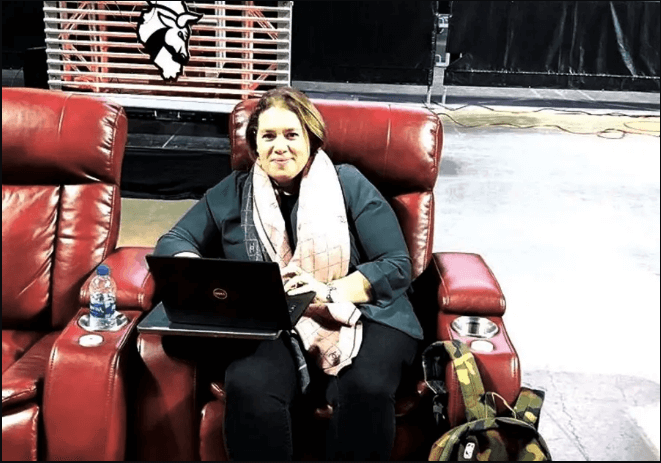
Fanan is not the latest up-and-coming hoops phenom. In September, the Israeli was named director of G League player development for the Cavaliers. The G League, short for sponsor, Gatorade, was formerly known as the D League and serves as the official minor league for all NBA teams. Fanan is also an important part of the Cavs scouting department Fanan has basketball in her blood.
As Cavs GM Koby Altman said: “She’s a basketball lifer with incredible experience internationally and has great basketball acumen. We are fortunate to have her.”
Fanan is more than a lifer; she is a member of one of Israel’s most well-known basketball family. The Fanans are like Israeli basketball royalty. Liron’s father, Moni, was manager and vice chairman of Maccabi Tel Aviv for nearly 30 years. He was mostly beloved, known for his generosity and hands-on approach with his players – from meeting foreign players at the airport upon their arrival in Israel to helping them with routine household chores. Fanan was known to function as a surrogate parent for his players.
Liron’s brother, Regev, is also deeply connected to Israel basketball. He played for Maccabi Tel Aviv from 2000-2002, and again from 2004-2008 with additional playing stints with Hapoel Galil Elyon (2002-2003) and Ironi Ramat Gan (2003-2004). He has served as head strength and conditioning coach for Maccabi Tel Aviv since 2013.
“My whole life revolved around Maccabi Tel Aviv,” said Fanan to The Jerusalem Post in a phone interview from the Cavaliers’ head offices, in which she recounted her unique, enviable career path. She happily reported that she has been around basketball since she was three years old.
Fanan served in the IDF from 1997-1999 as an intelligence liaison, focusing on counterterrorism initiatives against global terrorist groups. She came to America to attend New York University in Manhattan where she received a bachelor of arts in sports marketing and sports management. Fanan could not get sports, especially basketball, out of her system.
After graduating college in 2005, she served as assistant to the Maccabi Games organizing committee chairman. From 2005-2009, Fanan was assistant general manager for Maccabi Tel Aviv, where she had a fully immersive hoops experience – she was responsible for basketball operations, marketing strategies, and ticket sales; she organized team travel and made all arrangements for tournaments, and was in charge of community relations. She also got to know then-Maccabi player Casspi personally.
Toward the end of Liron’s stint with Maccabi Tel Aviv, father Moni’s long relationship with the club came to an end. He retired in 2008 after a reported long-standing dispute with members of Maccabi Tel Aviv’s management and began working as a player agent.
One year later, his life came to a shocking and tragic end at the age of 63. Fanan reportedly took his life by hanging. He reportedly had debts amounting to millions of shekels after players invested with him on the promise of high returns.
Many from the Maccabi Tel Aviv organization including players, coaches and members of management attended his funeral and reflected on his generosity, kindness and his legacy.
The Fanan family’s impact on the world of professional basketball continues through Liron’s evolving, impressive course.
From 2009 until signing with the Cavs, Liron got to explore a different side of basketball.
“I left Maccabi Tel Aviv because I felt like I did everything I could,” she said. “I didn’t’ know if I wanted to go straight to the NBA or be an agent before. I was lucky enough to be close to Omri [Casspi] and started working with him and managing him. I connected him with his American agency and managed everything he did off court on the marketing side, and in his personal life. I did that for 10 years.”
Through her work with Casspi, Fanan decided to start her own agency, 2Talent Sports Management, where she served as an agent and player services professional. In that capacity, Fanan placed 48 players in Europe each year, signing them to teams and handling all of their needs. Clients of note have included Amar’e Stoudemire, Kostas Papanikolau, Donta Smith and Shawn James.
Fanan found that work rewarding but noted that “after 10 years of doing that, I kind of got tired. I had a lot of connections through my work in the NBA summer league doing international relations. I began telling people I was thinking of making a transition and was lucky enough to get a few offers from teams. What the Cavs offered me helped make the decision easy to come here.”
Fanan knows her job is unique and coveted by so many and doesn’t take it for granted.
“An Israeli coming to the NBA is not something you see every day,” she said. “I definitely know I should be proud of an achievement like that. I worked really, really hard in the last 15 years to get where I am today and achieve my dreams.”
Fanan’s daily life during the regular season with the Cavaliers organization consists of upwards of 90% of the time traveling. As director of G League player development for the Canton Charge, she is responsible for running day-to-day operations for the team, yet often manages to drive the 60 miles (100 km) to Cleveland for Cavaliers’ games. She is also assisting the Cavs scouting department and Altman.
Toward the end of the Cavs season, she managed to spend two weeks traveling with the team for their West Coast games.
But Fanan currently spends most of her time and energy working with her mainly 19-to-26-year-old Canton development league players. Her lifetime of acquiring technical skills and basketball know-how around the game are only part of what she taps in to in her work in player development.
“The main thing in G League is to develop guys – to give them the tools to handle all kinds of situations. I help them with all aspects of being an athlete – culture, media, finances. You can be a great talent on the court, but you need to develop as a whole person.”
This training in being part life skills coach, part big sister, and part parent comes largely from her own family.
“My dad was an owner and GM, but he was not the technical definition of a GM – players were around our house and he took care of them, like his own kids,” she recalled. “I was quite close to him and helped take care of the players’ day-to-day needs.”
Fanan acknowledged that the players relate to her “in a certain way at first,” given that she is a woman, but, “by the end of the season, they can relate to me, respect me for what I am and see that I am here to help them achieve goals on and off the court.”
Fanan has seen first-hand the impact basketball players, and all pro athletes, can have on the game and in the world, most notably from her work with Casspi, as a friend and as the mission director of the Omri Casspi Foundation from 2015-16.
“I am so proud of Omri and his ability to take his role as an NBA player and put his dream to work,” said Fanan. “He wanted to do his part to bring his NBA friends to this great country so they could see real life in Israel. I was fortune to produce it and be part of it.”
Casspi helped organize two trips to Israel as a joint initiative between NBA Cares and the Omri Casspi Foundation for 20 players, family members and friends. NBA players on the trips included DeMarcus Cousins, Rudy Gay, Caron Butler, Iman Shumpert, Alan Anderson, and Chandler Parsons.
The trips included visits to historic sites in Israel, beaches, night life, restaurants, a visit to the Friends of Zion Museum to learn about the history of friendship and cooperation from non-Jews during the Holocaust and basketball clinics with Maccabi Tel Aviv’s youth clubs.
“All the players will tell you that the trip was one of the best experiences of their lives,” said Fanan.
Fanan was especially pleased that the NBA took notice of the impact and success of the trip.
“As a result, the NBA decided to run Basketball Without Borders every summer in a different country.”
Fanan is proud of her friend.
“The idea came completely from Omri. He is very creative. He felt his calling as an ambassador for Israel.”
Fanan, while not currently involved professionally with Casspi, is hopeful that Casspi will return to playing professional basketball once fully rehabbed from his recent knee surgery.
While the 2018/2019 NBA season is over for all but the Toronto Raptors and the Golden State Warriors, Fanan is still going strong.
She just returned to Cleveland after several weeks on the road scouting in both Europe and Israel. And she will be the road again until various summer leagues and camps wind down in August. Fanan hopes she will have a little time in Israel to catch up with friends and family – before a hopefully more successful 2019/20 Cavs’ season gets under way.
“My life is tiring,” Fanan admits. “But it is super exciting and I wouldn’t change a thing.”