No one disputes that we are living in challenging times.   And there are tremendous challenges which Covid-19 has posed for the Jewish community.  This is also a time of tremendous innovation.

For each challenge below, there has been a “virtual” innovation.  A few examples:

-life cycle events now include only immediate family (when permitted) and most guests “attend” Zoom brisses, baby namings, b’nai mitzvah, weddings, funerals and shivas

-Jewish studies classes for all ages—from Hebrew School to adult education—no longer meet in person—they have lost the “in person face-to-face touch” but have increased attendance as they transitioned to Zoom

-Minyanim (prayer services with a quorum) are no longer in person, though we are slowly easy back to outdoor or small group, by pre-reservation.  However, Zoom has made it possible for people to say kaddish with a community, and attend seders with family members thousands of miles away.

-Nearly every Jewish summer camp is cancelled—and virtual summer camping is taking off.  Campers (and sometimes family members) attend Kabbalat Shabbbat, Havdalah, color war/Maccabiah, dancing, singing, challah baking and more.

The Jewish community is wondering what the “new normal” will look like down the road.  What will life cycle events, Jewish education and synagogues look like?  Here and now, synagogue leaders are considering dozens of scenarios for what Rosh Hashanah and Yom Kippur will look like—practically and financially.  What will synagogues do on the three days a year when the entire (dues paying) community is unable to come together?  Will members tune in from home?  Pray in small indoor spaces?  Pray in the parking lot outdoors, weather permitting?  Take a family walk in the park? Have a shofar blower walk the streets so all can fulfill this mitzvah?

While this is an unsettling period, I am confident we will find ways to innovate.  We have been doing that for all of Jewish history.  Read about Yohanan ben Zakkai, and some of his important enactments. We transitioned from a Temple-based religion, to one that thrives all around the world without a central temple.  We transitioned from karbanot (sacrifices) to prayer.  We are in transition. 

This is a wonderful opportunity to reconsider how we do things in the Jewish world.  Do services need to last 3-1/2 hours on Shabbat mornings?  Might some students benefit from Jewish studies instruction partially online? (I am finding many students do very well with 30 minute Jewish Studies and b’nai mitzvah lessons on FaceTime).    

Some wonderful “adjustments” have been happening naturally.  To respect social distancing, I have heard of shuls meeting in person—outside, or inside with space markers on the floor.  And, when it gets to the torah reading, no one ascends the bima.   Imagine that?!  There are two options: the torah reader says the blessing before and after all the aliyahs, or the honoree says the blessing from his or her spot.  Imagine how beneficial that would be at all times for some older people, or others with mobility issues. Maybe there are halachic ways to better use technology for everyone’s benefit. 

As the saying goes, where there is a rabbinic will, there is a halachic way.  I hope these tough times will continue to lead us to innovate.  

Read more

This morning started like any other minor fast day—waking up in the dark (3:45 am!) to drink coffee, hydrate and have some food.   Today is the not-so-well-known Fast of the 17th of Tammuz, and the start of The Three Weeks, which will end with Tisha B’av on July 30th.

Today is also a reminder of how important Jewish summer camp is in the lives of Jewish children and young adults.  Jews who do know about these holidays no doubt know about them from summer camp.  These are not holidays students learn much about in Hebrew school as they occur during the summer, when Hebrew school is on break.  Not only do people who attend Jewish summer camps know about these holidays they experience them.

Observances of these special days vary from camp to camp and person to person.   In more traditional camps, there is no swimming, live music or eating of meat (except on Shabbat) during the 9 days of Av.  Camps tend to make a siyum, the completion of a study of a Jewish holy book at some point during the 9 days, as this permits the eating of meat for one meal.  The camp wide learning and experiencing of the siyum has potential to be a wonderful educational opportunity.

Tisha B’Av is very memorable to anyone who has ever attended an overnight camp.  Who doesn’t remember sitting in a circle as a bunk, outside in the dark, with a candle illuminating Eicha (Lamentations) books, as readers sing or read the traditional biblical text in low voices?  

Tisha B’av usually means cancelation of such activities as swimming and boating and climbing.  Some post b’nai mitzvah campers fast so competitive basketball, soccer, tennis and softball are also out. They are usually replaced by special programming about the destruction of the Temples and expulsions from various countries throughout history.  Some camps run simulations, stations, walks through periods of Jewish history.  

As the day ends, there is a shift toward thinking about rebuilding.  The mood begins to shift at mincha, when we put on tallit and tefillin—which were “skipped” during the morning service. 

Many campers have memories of Israeli mishlachat (delegation) members planning a special program on the lake at the end of Tisha B’av, which somehow meaningfully involved lighting rope which formed a word or phrase in Hebrew letters for all to see.  We then break our fast when it gets dark, after 9 pm.

Tisha B’av is a little easier to relate to than the 17th of Tammuz as we have rituals and read a book of the bible on Tisha B’av. The 17th of Tammuz, which marks the start of “The Three Weeks,” is a bit harder.  It is not well known at all.

And it is especially hard to mark when at home, away from a community.

One way to mark the day is by learning what it is about in the first place:

In the Mishna Taanit (4:6), we learn:

חֲמִשָּׁה דְבָרִים אֵרְעוּ אֶת אֲבוֹתֵינוּ בְּשִׁבְעָה עָשָׂר בְּתַמּוּז וַחֲמִשָּׁה בְּתִשְׁעָה בְאָב. בְּשִׁבְעָה עָשָׂר בְּתַמּוּז נִשְׁתַּבְּרוּ הַלּוּחוֹת, וּבָטַל הַתָּמִיד, וְהֻבְקְעָה הָעִיר, וְשָׂרַף אַפּוֹסְטֹמוֹס אֶת הַתּוֹרָה, וְהֶעֱמִיד צֶלֶם בַּהֵיכָל. בְּתִשְׁעָה בְאָב נִגְזַר עַל אֲבוֹתֵינוּ שֶׁלֹּא יִכָּנְסוּ לָאָרֶץ, וְחָרַב הַבַּיִת בָּרִאשׁוֹנָה וּבַשְּׁנִיָּה, וְנִלְכְּדָה בֵיתָר, וְנֶחְרְשָׁה הָעִיר. מִשֶּׁנִּכְנַס אָב, מְמַעֲטִין בְּשִׂמְחָה:


There were five events that happened to our ancestors on the seventeenth of Tammuz and five on the ninth of Av. On the seventeenth of Tammuz: The tablets were shattered; The tamid (daily) offering was cancelled; The [walls] of the city were breached; And Apostomos burned the Torah, and placed an idol in the Temple. On the ninth of Av It was decreed that our ancestors should not enter the land, The Temple was destroyed the first and the second time, Betar was captured, And the city was plowed up. When Av enters, they limit their rejoicing.

So what should a person stuck at home, likely indoors due to Covid and 90 plus degree weather, do today?   We can reflect on the above text, and consider the importance of the temple in Jerusalem.  We are taught in the Jerusalem Talmud that the walls of both temples were breached on that day.  But that is admittedly a pretty abstract and far off for most kids. 

Perhaps children can better relate to the famous biblical story of Moses, the tablets, and the Golden Calf.  Consider reading this story today.  It is at the same time a well-known story child can understand, and it is also a complex story. 

The Seventeenth of Tammuz occurs forty days after the Jewish holiday of Shavuot. Moses ascended Mount Sinai on Shavuot and remained there for forty days. The Children of Israel made the Golden Calf on the afternoon of the sixteenth of Tammuz when it seemed that Moses was not coming down when promised.  There are questions about the exact counting of the days, but Moses descended the next day (which was forty days, by his count).  He saw that the Israelites had constructed the Golden Calf—in violation of the laws Moses received from God, and he smashed the tablets.

The rabbis offer various views on what exactly happened. May focus on Moses’ anger.  Here is a useful article exploring these various views.

This 17th of Tammuz, many children are feeling sad and maybe even a bit angry that camp is not taking place.  It may be a nice time to unpack the Moses story and discuss what we do with our anger.   How can we use our anger productively?  Remember that Moses got a second chance and a “redo” when he got a 2nd set of tablet—but this time he had to do the writing!

May we all have an easy fast and a meaningful Three Weeks.


Read more

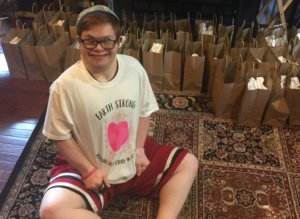
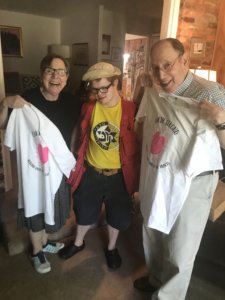
So far, I have chosen to cover a given subject only once in this blog.  Some amazing people are worth two or even three mentions.  (Re) meet Uriel Levitt, artist, participant in Camp Ramah in New England’s Tikvah Program, and baal tzedakah (charitable person).  Uriel just raised over $1,400 through sales of a t-shirt he designed–to donate to four organizations he cares deeply about.

This is actually my third post about Uriel.  And he deserves it!

I am intentionally not hyperlinking these articles so readers can track the evolution and progress of Uriel’s project:

https://howardblas.com/2020/05/24/turning-sadness-about-no-camp-into-giving-back-one-tikvah-entrepreneurs-t-shirt-venture/

https://howardblas.com/2020/05/25/update-on-uriels-t-shirt-project-the-village-comes-together-in-support/

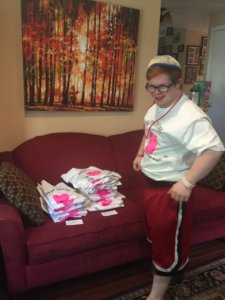
In short, Uriel, like most campers around the country, was sad when he learned that camp would be cancelled this summer due to concerns around Covid-19.  He had a lot of time on his hands as his job working in food services at the University of Maryland Hillel was shut down.  He got busy with his art and designed a t-shirt, showing the strength and love of the people inhabiting this planet during this challenging time.

Uriel and his family thought they’d sell 40 t-shirts.   His mother, Dina, reports, “It has morphed into something much bigger, beyond what we ever thought possible!  We placed an order for 210 shirts, and now people want us to place another order!  We are so proud of Uriel.”

Uriel and his parents wanted to express their gratitude to several organizations which have been providing online activities and events during this difficult Covid-time. Uriel is donating 50% of his profits to Camp Ramah New England, Friendship-Circle Maryland, Spirit Club, and VisAbility Art Lab.

So far, Uriel has raised over $1400 to donate to these amazing organizations!

I know Uriel from many years together at Camp Ramah in New England, and through his participation in the National Ramah Tikvah Network’s virtual vocational training program.  I am therefore delighted to learn that Uriel has so far raised $710.33 for Ramah Palmer!  These are tough times for our camps, and every donation helps. 

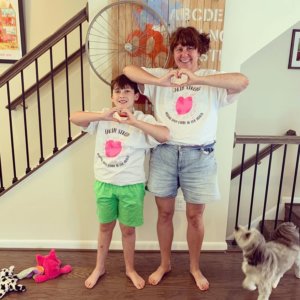
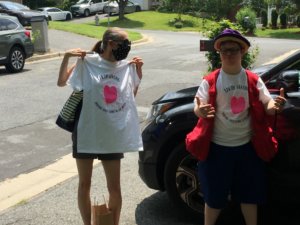
Uriel and his family demonstrate how far a little creativity and a lot of determination can go in helping others, and putting a smile on people’s faces.  Enjoy the photos below showing Uriel wearing, packaging and delivering the shirts—and note how happy the recipients are.

If you live in Montgomery County, MD, Uriel and family will personally deliver the shirt to you If you live elsewhere, don’t despair.  You can still order.  Shipping for free!

Use this link to order:  https://www.tinyurl.com/EarthStrongTshirtForm

They will send you an email confirming your order and with instructions on how to pay.


Read more

See the Original Article

Jewish Journeys: Tikvah’s Role in the Jewish Disability Narrative

Facilitators: Howard Blas, Director, National Ramah Tikvah Network; Dr. Audra Kaplan, Director of Camper Care and Tikvah Support Program at Ramah Darom
Date: Wednesday, July 22
Time: 8:00 – 9:00 PM ET
Description: A discussion about the growth and impact of Ramah’s Tikvah programs over the past fifty years, through the lens of Tikvah alumni, participants, and staff

Here’s the zoom REGISTER link of the meeting: https://us02web.zoom.us/meeting/register/tZYudOCuqzkjHdKn15cCvqSVTsjrOJBC_tDN

Update:-

Read more